Rejoignez-nous pour un voyage dans le monde des livres!
Ajouter ce livre à l'électronique
Grey
Ecrivez un nouveau commentaire Default profile 50px
Grey
Abonnez-vous pour lire le livre complet ou lisez les premières pages gratuitement!
All characters reduced
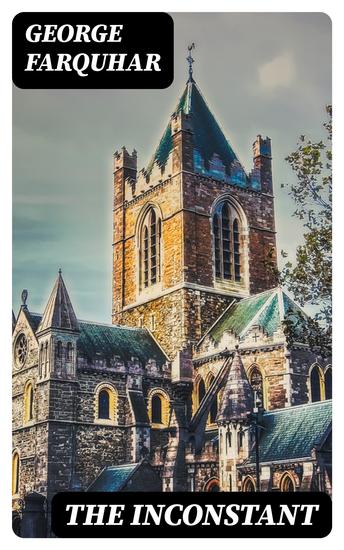
The Inconstant - cover

The Inconstant

George Farquhar

Maison d'édition: DigiCat

  • 0
  • 0
  • 0

Synopsis

George Farquhar's "The Inconstant" is a vibrant example of early 18th-century comedy that intricately explores themes of love, fidelity, and deception within the context of Restoration theatrical conventions. The play showcases Farquhar's characteristic wit and keen observations of social mores, employing a lively blend of humor and pathos. Through clever dialogue and engaging character dynamics, the narrative traverses the complexities of romantic entanglements, exposing the fragility of human affections in a world rife with duplicity and charm. Farquhar, born in 1678 in Derry, Ireland, emerged as a prominent dramatist during a transformative period in English theatre. His personal experiences in love and society, coupled with his innate talent for storytelling, influenced his approach to characterization and plot development. Farquhar's works often reflect his understanding of the human condition and the social stratifications of his time, particularly in their exploration of both aristocratic and bourgeois interactions. For scholars and enthusiasts of early modern theatre, "The Inconstant" is a compelling examination of the subtleties of human relationships and societal expectations. Farquhar's sharp humor and poignant insights make this play an enduring piece of literature that invites readers to reflect on their own notions of love and loyalty.
Disponible depuis: 16/09/2022.
Longueur d'impression: 46 pages.


D'autres livres qui pourraient vous intéresser

  • Whitemud Walking - cover

    Whitemud Walking

    Matthew James Weigel

    • 0
    • 0
    • 0
    "Whitemud Walking is so smart and so ceaselessly innovative. It represents for me a fully assured instantiation of the Indigenous literary project: a confrontation of history's terrors head on and an articulation in the present of our beauty and indomitability. Weigel refuses the archive's efforts to flatten Indigenous subjectivity and, in so doing, opens up a kind of boundless space to remember and grieve but also to hope and imagine otherwise. A deeply felt accomplishment." –Billy-Ray Belcourt, author of A History of My Brief Body
       
    "Whitemud Walking is a testament to the power of grief and outrage that so much theft has been allowed to bulldoze Indigenous land rights. Matthew James Weigel's passion for research both honours and mourns what has been trampled and lied about. This is a devastating read but one to learn from. Mahsi cho, Matthew. Your grief is our call to action to learn our own histories and build upon our own Indigenous testimonies of what really happened and when and who was there to witness it. Mahsi cho." –Richard Van Camp, Tlicho Dene author of The Lesser Blessed and Moccasin Square Gardens
       
    "Whitemud Walking is a textual ecology, that through archival troubling, sampling, and reframing, allows the material, human, truly cellular historicity of treaty to enter as a living presence in our contemporary moment. Weigel writes, 'Here treaty means reciprocity and obligation. Here, treaty lasts forever'. This book is not the document you may hold in your hands but the shift in consciousness it foments within you. It is a gift." –Liz Howard, author of Infinite Citizen of the Shaking Tent
       
    "Echoing the caw and grackle of magpies, Matthew James Weigel’s Whitemud Walking lives the sound of Treaty 6. Voices whisper sanctuary in creekbeds, papers rustle precedence in archives; there’s a buzz in your ear, a catch in your throat – listen." –Derek Beaulieu, Banff Poet Laureate
    Voir livre
  • The Carrying - Poems - cover

    The Carrying - Poems

    Ada Limón

    • 1
    • 1
    • 0
    NBCC Award Winner: “The narrative lyrics in this remarkable collection . . . could stand as compressed stories about anxiety and the body.” —The New York Times Vulnerable, tender, acute, these are serious poems, brave poems, exploring with honesty the ambiguous moment between the rapture of youth and the grace of acceptance. A daughter tends to aging parents. A woman struggles with infertility—“What if, instead of carrying / a child, I am supposed to carry grief?”—and a body seized by pain and vertigo as well as ecstasy. A nation convulses: “Every song of this country / has an unsung third stanza, something brutal.” And still National Book Award finalist Ada Limón shows us, as ever, the persistence of hunger, love, and joy, the dizzying fullness of our too-short lives. “Fine then, / I’ll take it,” she writes. “I’ll take it all.” “Gorgeous, thought-provoking . . . simple, striking images.” —Publishers Weekly (starred review) “Exquisite.” —The Washington Post “Pitch-perfect . . . full of poems to savor and share . . . She writes with remarkable directness about painful experiences normally packaged in euphemism and, in doing so, invites the readers to enter a world where abundant joy exists alongside and simultaneous to loss.” —Minneapolis Star-TribuneWinner of the National Book Critics Circle Award for Poetry
    Voir livre
  • Primers Volume Seven - cover

    Primers Volume Seven

    Jade Cuttle, Antonia Taylor,...

    • 0
    • 0
    • 0
    In 2023, Nine Arches Press launched their nationwide Primers scheme for a seventh time, in search of exciting new voices in poetry, with Katie Hale as selecting editor. After reading through hundreds of anonymous entries, and narrowing down the choices from longlist to shortlist, three poets emerged as clear choices: Jade Cuttle, Antonia Taylor and Laura Varnam.
    Primers Volume Seven now brings together a showcase from three distinctive poets, exploring everything from mudlarking and making a 'mossary', to the borderlands of conflicts and a bold retelling of an Old English epic. Through lively engagement with language, deep connection to place and time, and the unearthing the stories of myth, history and peoples, these revealing poems offer an insightful collection of new work from some of poetry's most talented emerging voices.
    Voir livre
  • The Night Before - Beautiful poem from a Pulitzer prize winner - cover

    The Night Before - Beautiful...

    Edward Arlington Robinson

    • 0
    • 0
    • 0
    Edwin Arlington Robinson was born on the 22nd December 1869 in Tide in Lincoln County, Maine.  
    His childhood was described by him as ‘stark and unhappy’.  His name was drawn out of a hat from a fellow vacationer from Arlington Massachusetts when fellow holiday makers decided that his parents had waited long enough at 6 months to name him.  It was a name he despised and reflects the station to which his parents had placed him; their great hope at his birth were that he was a girl to complement their two sons. 
    His pessimistic mood carried him to adulthood and a doomed encounter with Emma Loehen Shepherd who constantly encouraged his poetry.  Edwin was thought too young to be her companion and so his elder, middle brother, Herman was assigned to her.  It was a great blow to Edwin and during their marriage on February 12th, 1890, he stayed home and wrote ‘Cortege’ 
    In the fall of 1891 Edwin entered Harvard, taking classes in English, French and Shakespeare.  He felt at ease with the Ivy League and made great efforts to be published in one of the Harvard literary journals.  Indeed, the Harvard Advocate published ‘Ballade of a Ship’ but then his career appeared to stall.  His father died and although he returned to Harvard for a second year it was to be his last but also the start of some life-long friendships. 
    In 1893 he returned to Gardiner Maine as the man of the household.  Herman by this time had become an alcoholic, having suffered business failures, and was now to become estranged from Emma. 
    Edwin began farming whilst he wrote and quickly developed a close relationship with Emma who had now moved back to Gardiner after Herman’s death with her children. 
    Although he proposed twice, he was rejected and in consequence moved to New York to start afresh. 
    But it was a salutary experience. Although surrounded by artists he had little money and life was difficult. 
    In 1896 he published his own book, ‘The Torrent and the Night Before’, paying 100 dollars for 500 copies.  Edwin wanted it to be a surprise for his Mother, but days before its arrival she died of diphtheria. 
    His second volume, ‘The Children of the Night’, had a wider circulation.  At the behest of President Roosevelt, whose son was an avid admirer, he was given a job in 1905 at the New York Customs Office although it appears his real job was “to help American letters”. 
    Either way his success began to widen and his influence proper.  During the 1920s he won the Pulitzer Prize for Poetry on three separate occasions. In 1922 for ‘Collected Poems’ again in 1925 for ‘The Man Who Died Twice’ and finally in 1928 for ‘Tristram’. 
    During the last twenty years of his life he became a regular summer resident at the MacDowell Colony in New Hampshire, where he became the object of fascination by several women.  But he never married. 
    Edwin Arlington Robinson died of cancer on the 6th April 1935 in the New York Hospital in New York. He was 65.
    Voir livre
  • Poems of This Century and Poems of The Last Century - Lust Love to Goodness The Story of a Life in Poetry - cover

    Poems of This Century and Poems...

    Briony Kapoor

    • 0
    • 0
    • 0
    In this volume a young woman grows through and beyond erotic love to reach the love known as agape. 
    Poems of This Century is a book that rises from the human to explore the divine. Reflecting the joy of youth and the wisdom of age, shaped by the pain of the human condition, this poetry takes the reader on a journey of hope. 
    This book, in parts only too human and scattered with wry and humorous observations, is nevertheless an attempt to describe that intensified experience of the mystical called by others, the cloud of unknowing, the heat of love, the lightness of being, ecstasy, the peak experience. . .
    Voir livre
  • Deceptive Calm - cover

    Deceptive Calm

    Patricia Skipper

    • 0
    • 4
    • 0
    Against the turbulent backdrop of declared martial law in South Carolina, a stunning light-skinned beauty, Vanessa, lives in a Catholic orphanage for Blacks. After a series of racial traumas, Vanessa obtains the birth certificate of a deceased white baby and uses this document to assume the child's identity. She moves to California and enrolls at UC Berkeley under her newly acquired name. 
    Vanessa marries into one of California's wealthiest families. Her charmed life abruptly ends eighteen months after the birth of her first child who is diagnosed with sickle cell trait. Discovering that the woman he married is Black, as is his toddler son, Vanessa's ruthless husband plots his revenge but they both survive. The police investigation that follows seems pretty clear-cut until a curious, young detective uncovers some clues to her private life where nothing is as it appears. The aftermath of the discovery brings down a pillar of San Francisco society.
    Voir livre