Begleiten Sie uns auf eine literarische Weltreise!
Buch zum Bücherregal hinzufügen
Grey
Einen neuen Kommentar schreiben Default profile 50px
Grey
Jetzt das ganze Buch im Abo oder die ersten Seiten gratis lesen!
All characters reduced
Romola - cover

Romola

George Eliot

Verlag: Bu Classics Books

  • 0
  • 0
  • 0

Beschreibung

Set in Renaissance Florence, this historical romance follows a young woman's intellectual and spiritual journey amidst the turmoil of Savonarola's rise. Betrayal and political chaos force her to forge a new path, blending deep scholarship with a gripping narrative of moral awakening.
Verfügbar seit: 05.03.2026.
Drucklänge: 893 Seiten.


Weitere Bücher, die Sie mögen werden

  • The Art Of Money Getting - cover

    The Art Of Money Getting

    P. T. Barnum

    • 0
    • 0
    • 0
    The Art of Money Getting was written by P. T. Barnum, who is widely known as an important historical entrepreneur as founder of the famous traveling circus, but in this publication, Barnum shares his knowledge of business and teaches readers how to be successful in making money. This is an excellent book for individuals who are interested in learning from an important historical business leader's own personal success and also serves as an excellent motivational writing intended for those looking to be successful and make lots of money.Phineas Taylor Barnum was an American showman, businessman, and politician remembered for promoting celebrated hoaxes and founding the Barnum & Bailey Circus with James Anthony Bailey.
    Zum Buch
  • Mathilda - cover

    Mathilda

    Mary Wollstonecraft Shelley

    • 0
    • 0
    • 0
    A haunting confession unfolds in solitude. 
    From her deathbed, Mathilda tells the story she has carried in silence—one marked by love, loss, and a devastating truth that reshaped her life forever. Orphaned young and raised in emotional distance, she is reunited with her father only to face a revelation so profound it fractures their bond and drives him toward irreversible despair. 
    In the aftermath, Mathilda retreats into isolation, burdened by grief and guilt, seeking meaning in a world that feels irreparably altered. Her only connection comes through Woodville, a compassionate poet whose presence offers brief solace but cannot reach the depths of her inner turmoil. 
    Written by Mary Wollstonecraft Shelley during a period of personal tragedy, Mathilda is an intimate Gothic novella that examines the psychological weight of forbidden emotion, the fragility of human connection, and the quiet unraveling of a soul in retreat from the world. 
    Narrated with emotional clarity by Liz Leafloor, this production brings Shelley's deeply personal and rarely discussed work to life with sensitivity and restraint.
    Zum Buch
  • Uncomfortable Bed An - From their pens to your ears genius in every story - cover

    Uncomfortable Bed An - From...

    Guy de Maupassant

    • 0
    • 0
    • 0
    Henri René Albert Guy de Maupassant was born on August 5th, 1850 near Dieppe in France.  
    Maupassant’s early life was badly torn when at age 11 (his younger brother Hervé was then five) his mother, Laure, a headstrong and independent-minded woman, risked social disgrace in order to obtain a legal separation from her husband. 
    After the separation, Laure kept custody of her two boys. With the father now forcibly absent, Laure became the most influential and important figure in the young boy's life.   
    Maupassant’s education was such that he rebelled against religion and other societal norms but a developing friendship with Gustave Flaubert began to turn his mind towards creativity and writing. 
    After graduation he volunteered for the Franco-Prussian war. With its end he moved to Paris to work as a clerk in the Navy Department.  Gustave Flaubert now took him under his wing.  Acting as a literary guardian to him, he guided the eager Maupassant to debuts in journalism and literature.  For Maupassant these were exciting times and the awakening of his creative talents and ambitions. 
    In 1880 he published what is considered his first great work, ‘Boule de Suif’, (translated as ‘Dumpling’, ‘Butterball’, ‘Ball of Fat’, or ‘Ball of Lard’) which met with a success that was both instant and overwhelming.  Flaubert at once acknowledged that it was ‘a masterpiece that will endure.’ Maupassant had used his talents and experiences in the war to create something unique.  
    This decade from 1880 to 1891 was to be the most pivotal of his career.  With an audience now made available by the success of ‘Boule de Suif’ Maupassant organised himself to work methodically and relentlessly to produce between two and four volumes of work a year.  The melding of his talents and business sense and the continual hunger of sources for his works made him wealthy. 
    In his later years he developed a desire for solitude, an obsession for self-preservation, and a fear of death as well as a paranoia of persecution caused by the syphilis he had contracted in his youth.  
    On January 2nd, 1892, Maupassant tried to commit suicide by cutting his throat.  Unsuccessful he was committed to the private asylum of Esprit Blanche at Passy, in Paris.  It was here on July 6th, 1893 that Henri René Albert Guy de Maupassant died at the age of only 42.
    Zum Buch
  • The Fortune of the Rougons - cover

    The Fortune of the Rougons

    Émile Zola

    • 0
    • 0
    • 0
    We enter the world of a fictional town of Plassans in Zola's native region of Provence and we are introduced to the eccentric heroine Adelaide Fouque, later known as Tante Dide, who becomes the common ancestor for both the Rougon and Macquart families. Her legitimate son from her short marriage to her late husband, a labourer named Rougon who worked on Dide's land, is forced to grow up alongside two illegitimate children.
    Zum Buch
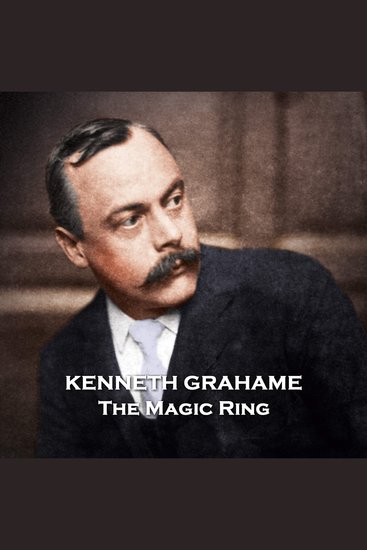
  • The Magic Ring - From their pens to your ears genius in every story - cover

    The Magic Ring - From their pens...

    Kenneth Grahame

    • 0
    • 0
    • 0
    Kenneth Grahame was born on 8th March 1859 in Edinburgh. 
    At age 5 his mother succumbed to puerperal fever.  His father, who had a drinking problem, now sent his 4 children to live with their grandmother at her large house in Cookham, Berkshire. Here the children lived in large open grounds next to the river.  These early experiences would in later years, be retold in his writing through a myriad of characters. 
    Grahame loved being a pupil at St Edward's School, Oxford and wanted to enroll at the university there but his guardian demurred on account of the cost. 
    Instead, a banking career was chosen for him, starting in 1879 at the Bank of England, where he rose steadily to the rank of its Secretary until retiring, with a pension, in 1908 due to ill health. 
    Alongside his commercial career Grahame had written and published various stories and essays in several periodicals. Some were anthologized as ‘Pagan Papers’ in 1893, and two years later ‘The Golden Age’ and later still ‘Dream Days’ and its masterpiece ‘The Reluctant Dragon’ became part of many home libraries.  His ability to view life through the lens of a young and curious child was superb, enabling the reader to easily identify with the character.   
    Grahame married Elspeth Thomson in 1899 and they had one child; Alastair, born semi-blind and plagued by health problems.  In a heart-rending tragedy he would later take his own life whilst attending Oxford University in 1920.   
    In 1908 Grahame reworked many of the bedtime stories he had fashioned for his son into the enduring favourite; ‘The Wind in the Willows’, describing the heart-warming adventures of Mr Toad and his friends.   
    Kenneth Grahame died in Pangbourne, Berkshire, on 6th July 1932.
    Zum Buch
  • The Red Fairy Book - cover

    The Red Fairy Book

    Andrew Lang

    • 0
    • 0
    • 0
    Brought to you by Altrusian Grace Media and narrated by Matthew Schmitz. 
    The Red Fairy Book, compiled by Andrew Lang and first published in 1890, is a richly imaginative collection of classic fairy tales drawn from a wide array of cultural traditions, including Russian, Norse, French, and German folklore. Featuring stories such as “The Twelve Dancing Princesses,” “The Death of Koschei the Deathless,” and “The Master Thief,” the book weaves a tapestry of magical quests, enchanted creatures, clever tricksters, and timeless moral lessons. Each tale is steeped in symbolic resonance—princes undergo trials, maidens are tested, and villains often meet poetic justice—capturing the essence of the mythic imagination. Imbued with the mystique of oral tradition, The Red Fairy Book stands as one of the most enduring volumes in Lang’s influential series, offering readers a glimpse into the enchanted realms of old-world wonder.
    Zum Buch