Rejoignez-nous pour un voyage dans le monde des livres!
Ajouter ce livre à l'électronique
Grey
Ecrivez un nouveau commentaire Default profile 50px
Grey
Abonnez-vous pour lire le livre complet ou lisez les premières pages gratuitement!
All characters reduced
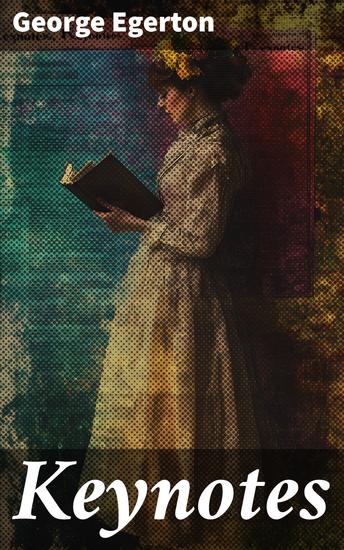
Keynotes - cover

Keynotes

George Egerton

Maison d'édition: Good Press

  • 0
  • 0
  • 0

Synopsis

In 'Keynotes,' George Egerton crafts a remarkable collection of short stories that explore the complexities of female identity in the late Victorian era. Characterized by its modernist narrative style, the book employs vivid imagery and a stream-of-consciousness technique, inviting readers to delve into the psychological experiences of its diverse female protagonists. Through themes of desire, social constraints, and the quest for autonomy, Egerton challenges traditional gender roles and highlights the often-neglected inner lives of women during a time of cultural and societal transition. George Egerton, a pioneering figure of the fin-de-siècle literary movement, was instrumental in bringing the female perspective to the forefront of literature. Born Mary Chavelita Dunne Bright in 1859, her own experiences as a woman navigating the constraints of society influenced her writings. Living in an era marked by burgeoning feminist ideologies, Egerton's works encapsulated the angst and aspiration of women grappling with their roles in a patriarchal landscape, allowing her to resonate deeply with contemporary readers and beyond. 'Keynotes' is an essential read for those interested in feminist literature and the evolution of modern prose. Egerton's unique voice and keen social observation make this collection an enduring testament to the struggles of women seeking agency in an oppressive world. Readers will find themselves compelled by her rich characterizations and thought-provoking narratives, applicable to today's discussions on gender and identity.
Disponible depuis: 24/04/2025.
Longueur d'impression: 200 pages.
D'autres livres qui pourraient vous intéresser

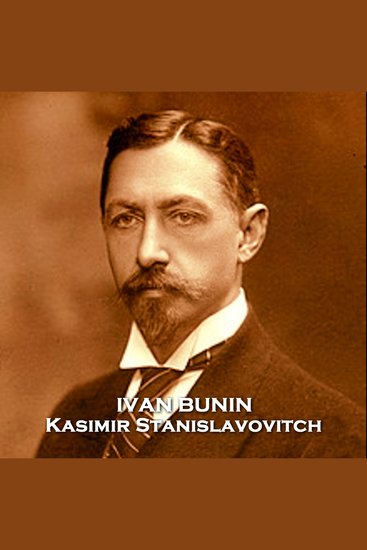
  • Kasimir Stanislavovitch - From their pens to your ears genius in every story - cover

    Kasimir Stanislavovitch - From...

    Ivan Bunin

    • 0
    • 0
    • 0
    Ivan Alekseyevich Bunin was born on 22nd October 1870 in Voronezh province, in the South-West of the Russian Empire. 
    His early life was plagued by his Father’s gambling habits which caused his education to be erratic and the family to lose most of their wealth. 
    Bunin published his first poem in 1887 in St Petersburg and later in Oryol he worked for the local paper and became its editor, handily allowing him to publish his own poems and short stories.  There he met and married Varvara Pashchenko.  Ivan Bunin's debut book of poetry ‘Poems (1887–1891)’ was published in 1891. 
    This poetry and his translation of Longfellow garnered him his first Pushkin Prize.  Now he switched to writing prose and his novella ‘Antonov Apples’ is regarded as his first masterpiece.  Many more would follow. 
    The October Revolution of 1905 found Bunin in the Crimea.  Scenes of ‘class struggle’ he saw more as the oppressed people's craving for anarchy and destruction. 
    In November 1906 he began a passionate affair with Vera Muromtseva, within a few months they were touring through Egypt and Palestine.  ‘The Bird's Shadow’ collection was the result.   
    His second Pushkin Prize came in 1909 for Poems (1903–1906) and further translations.  He was now elected to the prestigious Russian Academy. 
    More widespread fame came in 1910 with ‘The Village’, a controversial and bleak portrayal of Russian country life.  Travel too beckoned them back to the Middle East, Ceylon (now Sri Lanka) and for winters in Capri with their friend Maxim Gorky.  
    That friendship suddenly ended in April 1917 as the revolution began to ferment in war-ravaged Russia.  After the Bolsheviks took power and the upheavals continued, he decided to leave Russia, finally achieving that in early 1920.  
    It would take some time to heal the wounds and stress he had been under and for his writing to begin again.  Settled in France, Bunin published many of his previous works and collections of novellas.  He also made regular contributions to the Russian emigre press.  
    Although reluctant to become involved in politics, Bunin was now feted as both a writer and the figurehead of non-Bolshevik Russian values and traditions.  In 1933 he became the first Russian to be awarded the Nobel Prize for Literature ‘for following through and developing with chastity and artfulness the traditions of Russian classic prose.’  
    In 1938 Bunin began working on the celebrated cycle of nostalgic, and erotically themed stories known Dark Avenues (or Dark Alleys).  
    As World War II broke out he chose to remain in Grasse spending the war at his remote Villa Jeanette, high in the mountains.  
    Ivan Bunin was a staunch anti-Nazi, and often, under difficult conditions, sheltered fugitives after Vichy was occupied by the Germans.  He wrote but did not publish during these years until on August 23rd the Nazi’s fled Grasse without a fight.  The next day the Americans came.  
    In May 1945 he returned to Paris and, apart from convalescing at times in Juan-les-Pins, he stayed for the rest of his life. 
    After 1948, with his health deteriorating, Bunin concentrated upon writing his memoirs and a book on Chekhov.  His last years were overshadowed by bitterness and despair at the situation in Russia and the treatment of its peoples.  He was suffering now from asthma, bronchitis and chronic pneumonia. 
    Ivan Alekseyevich Bunin died in a Paris attic flat on 8th November 1953.  Heart failure, cardiac asthma and pulmonary sclerosis were given as the causes of death.  He was 83.
    Voir livre
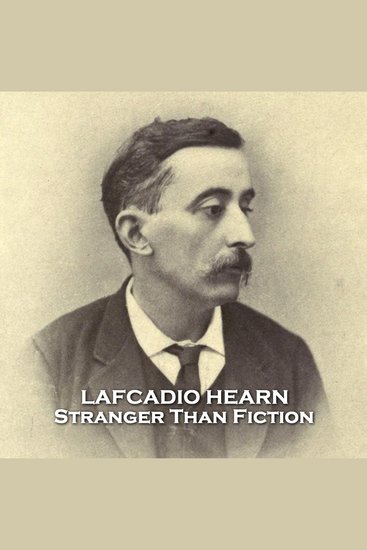
  • Stranger Than Fiction - From their pens to your ears genius in every story - cover

    Stranger Than Fiction - From...

    Lafcadio Hearn

    • 0
    • 0
    • 0
    Lafcadio Hearn was born on the 27th June 1850 on the Ionian isle of Levkás in Greece to a British Army officer and a Greek Mother. 
    His father, fearing for his career prospects at being married to a Greek Orthodox wife, sent them to Dublin whilst he continued to advance his career with further postings.  Life there was difficult for mother and son.  His father returned, wounded and traumatised, when Lafcadio was three.  He annulled the marriage and she remarried but had to give up care of Lafcadio to her sister-in law.   
    After brief periods for Catholic education in England and France he emigrated to Ohio in the United States when he was 19, taking on a series of casual jobs before embarking on a career as a journalist, publishing poems and essays in Cincinnati.  It was whilst here that he began a side-line in translating, starting with Gautier and Flaubert.  He married in 1874 to a 20 year old African-American woman in violation of Ohio's anti-miscegenation law.  The marriage soon failed. 
    In 1877 he relocated to New Orleans to write on a variety of themes before picking up a two year assignment from Harper’s to write in the West Indies, where he also wrote his first novel. 
    In 1890 Harper’s sent him to Japan.  Here he left journalism and took the remarkable decision to become a schoolteacher in the north of Japan.   Enraptured by the culture he was driven to explain it in various Western publications to those who had little, if any, knowledge of its culture.  Within the year he had fallen in love with, and married, a high-born Japanese lady, together they would have four children.   
    In 1895 he became a Japanese national and took the name Koizumi Yakumo, Koizumi being his wife’s family name. 
    The following few years, whilst a professor of Literature at the Imperial University of Japan, were his most creative and admired period.   
    Lafcadio Hearn died of heart failure on the 26th of September 1904, in Tokyo, Japan shortly before leaving to deliver a series of lectures at Cornell University in New York State.  He was 54.
    Voir livre
  • The Middle Of Things - cover

    The Middle Of Things

    J. S. Fletcher

    • 0
    • 0
    • 0
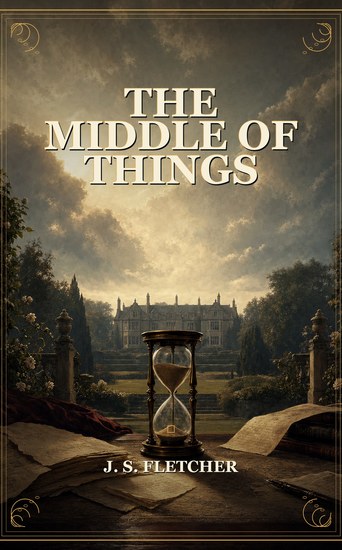
    Shortly after Richard Viner complains to his murder-mystery-loving aunt with whom he lives that such fiction couldn't possibly "really represent life," he himself finds a dead body in the lane behind his home. It turns out to be his neighbor, a man in his sixties, recently returned to England from Australia to care for the affairs of his ward, an accomplished young woman not long out of school. The police seem content to regard the crime as motivated by robbery, but Viner and his aunt, like the lawyers who get embroiled in the case, are convinced there is more to it than that. It seems clear that J. S. Fletcher took at least some inspiration for this work from the famous Tichborne case, one of the most celebrated legal mysteries of late nineteenth century England. It involved a contested identity which, if proved, would bring an enormous inheritance and position of privilege. Fletcher puts his own spin on things and constructs yet another intriguing plot line, solved only with the help of his intrepid amateur sleuths. J. S. Fletcher (died 1935) was a major literary figure of the early 20th century. Their work has endured across generations and continues to be read and studied worldwide. As a work of classic literary fiction, The Middle Of Things exemplifies the narrative craft and social insight that defined great storytelling of its era. Literary fiction of this period was characterized by careful attention to character psychology, social milieu, and the moral questions that animated public discourse.
    Voir livre
  • The Eater of Souls - cover

    The Eater of Souls

    Henry Kuttner

    • 0
    • 0
    • 0
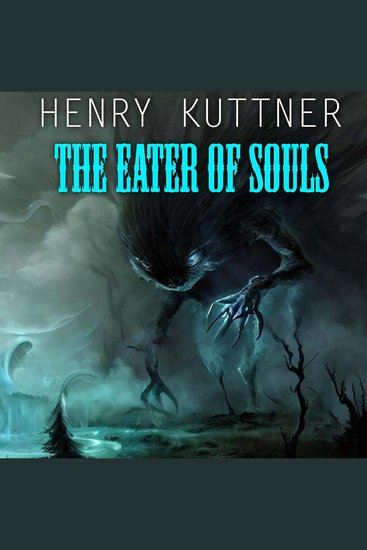
    "The Eater of Souls" by Henry Kuttner tells the story of Sindara, the ruler of Bel Yarnak, who confronts a monstrous entity known as the Eater of Souls. This entity's call has been drawing his people to their deaths in the Gray Gulf of Yarnak. Sindara, rejecting the advice of his necromancers and hydromancers, turns to his god, Vorvadoss, for help. After a harrowing battle, Sindara undergoes a horrific transformation, merging with the Eater of Souls to break the cycle of despair. The story ends with his tragic descent into darkness, forever separated from the beauty of his homeland.
    Voir livre
  • From the Earth to the Moon - Audiobook - cover

    From the Earth to the Moon -...

    Jules Verne, Classic Audiobooks,...

    • 0
    • 0
    • 0
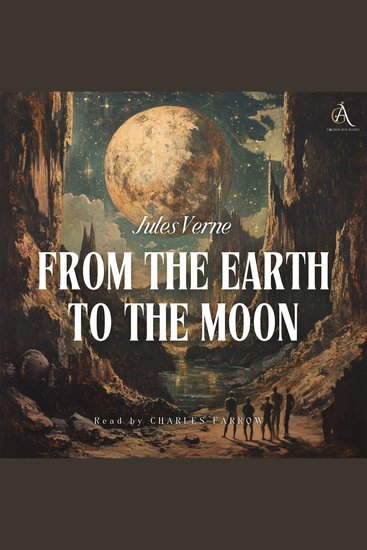
    With From the Earth to the Moon, Jules Verne launched not only a projectile toward space but also the modern imagination toward the stars. Written in 1865, this novel envisions an audacious experiment — the attempt to reach the Moon using the ingenuity and willpower of humankind. It is both a celebration of scientific curiosity and a satire of human ambition.Verne's protagonists, a band of American inventors and dreamers, transform post-Civil War rivalry into a race toward the heavens. With meticulous technical detail and infectious enthusiasm, Verne brings to life the excitement of discovery and the humor of innovation gone wild.A century before the Apollo missions, From the Earth to the Moon predicted space travel with uncanny accuracy. Yet its true power lies in its optimism — a belief that imagination, courage, and reason can lift humanity beyond its earthly limits.
    Voir livre
  • Emma - cover

    Emma

    Jane Austen

    • 0
    • 0
    • 0
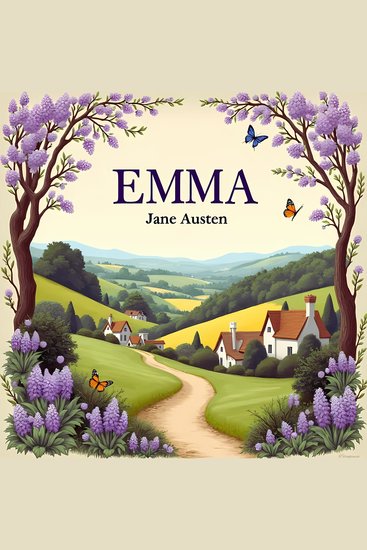
    Emma by Jane Austen is a delightful and witty novel about Emma Woodhouse, a charming and independent young woman who takes pleasure in matchmaking among her friends, despite her own lack of romantic interest. Set in the idyllic English countryside, the story humorously explores themes of love, friendship, social class, and personal growth as Emma’s well-meaning meddling leads to unexpected consequences. Filled with Austen’s sharp observations on human behavior, Emma remains a timeless classic that blends romance with keen social satire.
    Voir livre