Begleiten Sie uns auf eine literarische Weltreise!
Buch zum Bücherregal hinzufügen
Grey
Einen neuen Kommentar schreiben Default profile 50px
Grey
Jetzt das ganze Buch im Abo oder die ersten Seiten gratis lesen!
All characters reduced
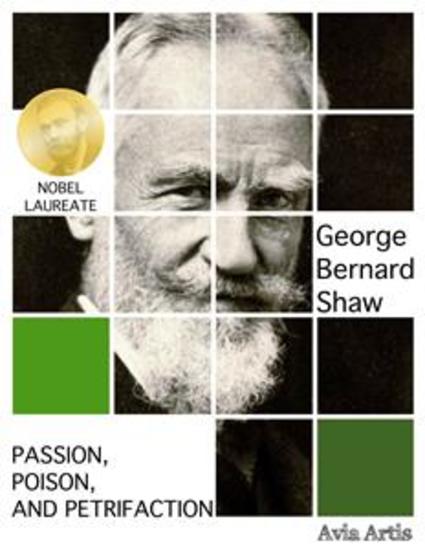
Passion Poison and Petrifaction - cover

Passion Poison and Petrifaction

George Bernard Shaw

Verlag: Avia Artis

  • 0
  • 0
  • 0

Beschreibung

“Passion, Poison, and Petrifaction” is a play by George Bernard Shaw, an Irish playwright who became the leading dramatist of his generation, and in 1925 was awarded the Nobel Prize in Literature.

Passion, Poison, and Petrifaction is a short play by Bernard Shaw. It is a comic mock-melodrama, written to raise funds for charity.
Late at night, Phyllis, the maid, is combing the hair of her employer, Lady Magnesia FitzTollemache. Phyllis expresses foreboding and the fear that she will never see her beloved mistress again. Magnesia retires to sleep, serenaded by a heavenly choir singing "Won't You Come Home Bill Bailey". A murderous figure enters, brandishing a dagger. Before he can stab Magnesia she wakes, and recognises her husband.
Verfügbar seit: 07.01.2022.

Weitere Bücher, die Sie mögen werden

  • Selected Poems - cover

    Selected Poems

    Robert Frost

    • 0
    • 0
    • 0
    Robert Frost's "Selected Poems," published in 1923 by Henry Holt and Company, is a collection that showcases the poet's mastery of language, rhythm, and imagery. This anthology features a selection of Frost's most celebrated works, providing readers with a glimpse into the breadth and depth of his poetic talent. 
    The collection opens with Frost's iconic poem "The Road Not Taken," a meditation on choices, paths, and the uncertainties of life. Throughout the anthology, Frost explores themes such as nature, human experience, and the passage of time. His poems often depict rural landscapes, reflecting his deep connection to the New England countryside. 
    In "Selected Poems," readers encounter Frost's keen observations of the natural world, where he finds both beauty and brutality. From the tranquil scenes of snowy woods to the harsh realities of farm life, Frost's poetry captures the essence of rural existence with vivid clarity. 
    Beyond his depictions of nature, Frost delves into the complexities of human relationships and emotions. He explores themes of love, loss, isolation, and resilience, offering poignant insights into the human condition. 
    Throughout the collection, Frost's language is deceptively simple yet rich with layers of meaning. His use of meter, rhyme, and metaphor imbues his poems with a timeless quality, inviting readers to contemplate life's profound mysteries. 
    "Selected Poems" by Robert Frost is not merely a compilation of verses but a journey through the landscapes of the poet's imagination. With its lyrical beauty and profound insights, this anthology continues to captivate readers and solidify Frost's place as one of America's greatest poets.
    Zum Buch
  • Lyrics & Lines by "Carolus" - cover

    Lyrics & Lines by "Carolus"

    Unknown Unknown

    • 0
    • 0
    • 0
    Written under the pseudonym "Carolus", Lyrics & Lines is a book of poems written, probably circa 1890 - 1900, as a gift to one he had loved and lost.Love, Humour,  Moralisation and the Macabre all come together in a most readable and enjoyable manner. Who he was, when and exactly where he lived and his age at the time he wrote this book  are unknown. That he was a modest man can be gleaned from his description of himself as "...a poetaster". Beautifully written; these poems should not only appeal to lovers of poetry but to those who would never normally consider reading verse.
    Zum Buch
  • cliche - cover

    cliche

    Lee Brady

    • 0
    • 0
    • 0
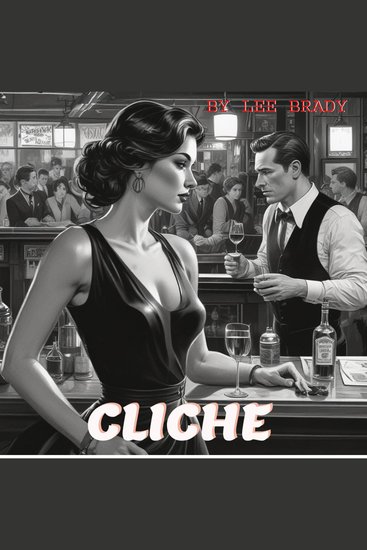
    A chance meeting between a performance artist and a bartender at a bar sparks some intriguing insights.
    Zum Buch
  • The Letters of Jane Austen - cover

    The Letters of Jane Austen

    Jane Austen

    • 0
    • 0
    • 0
    Jane Austen’s letters afford a unique insight into the daily life of the novelist: intimate and gossipy, observant and informative–they read much like the novels themselves. They bring alive her family and friends, her surroundings and contemporary events, all with a freshness unparalleled in modern biographies. Most importantly, we recognize the unmistakable voice of the author of such novels as Pride and Prejudice and Emma. We see the shift in her writing from witty and amusing descriptions of the social life of town and country, to a thoughtful and constructive tone while writing about the business of literary composition. 
      
    Austen’s personal correspondence has stirred up controversy since her untimely death in 1817 at age 41. The next year her brother Henry Austen wrote in the ‘Biographical Notice of the Author’ included with the publication of her novels Northanger Abbey and Persuasion that she ‘never dispatched a note or a letter unworthy of publication’. Years later, a niece Caroline Austen did not agree, ‘there is nothing in those letters which I have seen that would be acceptable to the public.’ In comparison to her published works, the letters do dwell upon ‘little matters’ of domestic life in the county, but to the patient reader we begin to understand Austen’s life and experiences beyond the minutia and realize through her clever descriptions and acerbic observations how this simple parson’s daughter became the author of novels that are so valued and cherished close to 200 years after their publication. 
      
    The author gained far more status after her death, and her six fulllength novels have rarely been out of print. A significant transition in her posthumous reputation occurred in 1833, when her novels were republished in Richard Bentley's Standard Novels series, illustrated by Ferdinand Pickering, and sold as a set.  
     
    Zum Buch
  • The Usefulness of Hippopotamus - A Humorous Chapbook for Trying Times - cover

    The Usefulness of Hippopotamus -...

    Vincent J. Tomeo

    • 0
    • 0
    • 0
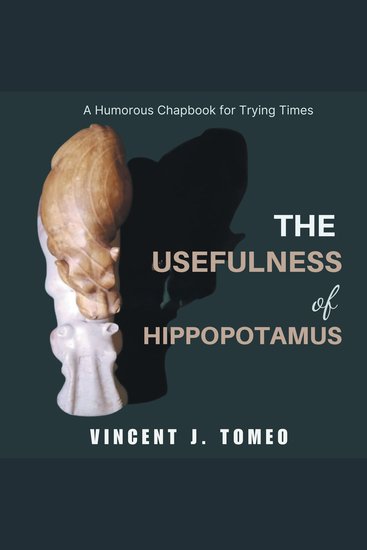
    I am staring at a blank piece of paper, wondering what to write. Where do I begin? My mind begins to wander—pleasant thoughts of Disney's Fantasia dance in my head. The dancing hippopotamus comes to mind, and this made me laugh. The result: I penned a poem on the hippopotamus from which a chapbook was born: The Usefulness of Hippopotamus: A Humorous Chapbook for Trying Times. 
    One cannot imagine a world without humor. Without humor, the world will be dark, cold, and a sad place, tragically lacking joy, cheerfulness, and laughter. 
    Humor is medicine. During rough times, humor will help lighten and lessen physical and mental anxiety. 
    In challenging times, I chose humor. During the Pandemic, I had to deal with my bladder cancer. In my struggle not to get depressed or dwell in negativity, to find solace, contentment, and peace, I chose to seek out beauty and laugh. 
    In search of happiness, the humor worked its charm, resulting in a treasure chest of joy. So, I wrote my chapbook, The Usefulness of Hippopotamus: A Humorous Chapbook for Trying Times, and discovered humor even among the hippopotami! 
    You can, too. 
    Peace & flowers. 
    Love & light. 
    Vincent J. Tomeo, Author/Poet
    Zum Buch
  • When Winston Went to War with the Wireless - cover

    When Winston Went to War with...

    Jack Thorne

    • 0
    • 0
    • 0
    In May 1926, Britain grinds to a halt, as workers down tools for the General Strike.
    With the printing presses shut down, the only sources of news are the government's British Gazette, edited by Chancellor of the Exchequer Winston Churchill, and the independent, fledgling British Broadcasting Company, led by John Reith. The stage is set for a fierce battle over control of the news and who gets to define the truth.
    Jack Thorne's When Winston Went To War With The Wireless is a gripping play about the birth of a great British institution and its efforts to stay impartial. It premiered at the Donmar Warehouse, London, in June 2023, directed by Katy Rudd, with Stephen Campbell Moore as Reith, Adrian Scarborough as Churchill, and Haydn Gwynne as Stanley Baldwin.
    'Jack Thorne never ceases to stimulate and entertain'Evening Standard
    Zum Buch