Rejoignez-nous pour un voyage dans le monde des livres!
Ajouter ce livre à l'électronique
Grey
Ecrivez un nouveau commentaire Default profile 50px
Grey
Abonnez-vous pour lire le livre complet ou lisez les premières pages gratuitement!
All characters reduced
Caesar and Cleopatra - cover

Caesar and Cleopatra

George Bernard Shaw

Maison d'édition: Avia Artis

  • 0
  • 0
  • 0

Synopsis

“Caesar and Cleopatra” is a play by George Bernard Shaw, an Irish playwright who became the leading dramatist of his generation, and in 1925 was awarded the Nobel Prize in Literature.

Caesar and Cleopatra is a play written by George Bernard Shaw that depicts a fictionalized account of the relationship between Julius Caesar and Cleopatra. Shaw wanted to prove that it was not love but politics that drew Cleopatra to Julius Caesar. He sees the Roman occupation of ancient Egypt as similar to the British occupation that was occurring during his time. Caesar understands the importance of good government, and values these things above art and love.
Disponible depuis: 07/01/2022.

D'autres livres qui pourraient vous intéresser

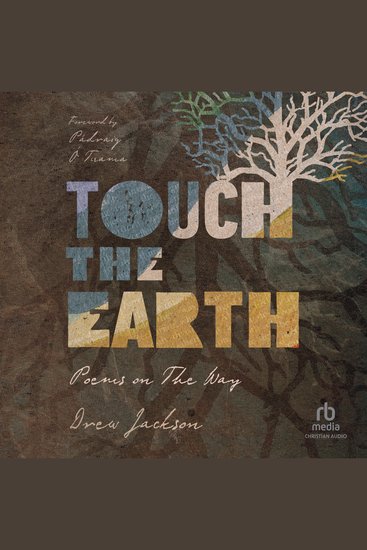
  • Touch the Earth - Poems on The Way - cover

    Touch the Earth - Poems on The Way

    Drew Jackson

    • 0
    • 0
    • 0
    Gather it from memory. Let it touch the earth. 


    In Touch the Earth, Drew Jackson continues the project he began in God Speaks Through Wombs, reflecting on the Gospel of Luke through poetry. Touch the Earth picks up in chapter nine and continues through the end of Luke's Gospel. Part protest poetry, part biblical commentary, Jackson presents the gospel story in all its liberative power. Here the gospel is the "fresh words / that speak of / things impossible." 


    From the feeding of the multitude ("The best hosts always provide / take home containers”) to the resurrection of Jesus ("the belly of mother Earth / is, indeed, a womb . . . the humus of life is where we become fully human"), this collection helps us hear the hum of deliverance—against all hope—that's been in the gospel all along.
    Voir livre
  • Life Is - Forty poems of freedom fortitude and friendship - cover

    Life Is - Forty poems of freedom...

    Tom Stodulka

    • 0
    • 0
    • 0
    In his fourth publication, Tom Stodulka AM brings to you Life Is...: Forty poems of freedom, fortitude and friendship to give the reader moments of reflection and gratitude; for you to fill in the space of what Life Is....
    Voir livre
  • Dybbuk Americana - cover

    Dybbuk Americana

    Joshua Gottlieb-Miller

    • 0
    • 0
    • 0
    Inventive poetry explores Jewish identity in America"How can I teach a prayer / I only know how to recite?" "America, whose death / didn't you come from?" These are some of the questions that poet Joshua Gottlieb-Miller wrestles with in his beautiful, gripping new collection. By turns experimental and documentary, Dybbuk Americana draws out the questions around Jewish identity in the United States, and what it means to pass on Jewish identity to one's child. This hybrid text draws on art, mysticism, and history, taking the dybbuk, a figure from Jewish folklore, as its central metaphor. A dybbuk is a restless spirit who inhabits another's body, and as a possessing spirit the dybbuk is often treated as a demonic force, but it can be read as merely trying to climb the ladder of the afterlife. In other words, a kind of striver. Enacting the idea of competing selves in one body, Dybbuk Americana plays with form via a series of text boxes that create a multi-channel effect on the page. The body of the poem can be read with surrounding and intercutting text boxes to generate multiple interpretations. This innovative poetic technique maintains a dialogue with Jewish literary lineages: Talmudic commentary and interpretation of the oral law, as well as the fragmented nature of geniza, a place where Jews store sacred documents when they fall out of use. Dybbuk Americana weaves together the father-son arc within a larger socio-political commentary and historical narrative. Poems move deftly between the ironic and the mystic, from aphoristic questioning and inventive narratives, to interview, oral history, and archival materials. In these lines, "the angels./ They get as close as they can." Witty, curious, warm, and searching, Dybbuk Americana signals a fresh voice in Jewish-American poetry.
    Voir livre

  • Ten Bridges I've Burnt - A Memoir in Verse - cover

    Ten Bridges I've Burnt - A...

    Brontez Purnell

    • 0
    • 0
    • 0
    In Ten Bridges I've Burnt, Brontez Purnell—the bard of the underloved and overlooked—turns his gaze inward. A storyteller with a musical eye for the absurdity of his own existence, he is peerless in his ability to find the levity within the stormiest of crises. Here, in his first collection of genre-defying verse, Purnell reflects on his peripatetic life, whose ups and downs have nothing on the turmoil within. "The most high-risk homosexual behavior I engage in," Purnell writes, "is simply existing." 


    The thirty-eight autobiographical pieces pulsing in Ten Bridges I've Burnt find Purnell at his no-holds-barred best. He remembers a vicious brawl he participated in at a poetry conference and reckons with packaging his trauma for TV writers' rooms; wrestles with the curses, and gifts, passed down from generations of family members; and chronicles, with breathless verve, a list of hell-raising misadventures and sexcapades. Through it all, he muses on everything from love and loneliness to capitalism and Blackness to jogging and the ethics of art, always with unpredictable clarity and movement. 


    With the same balance of wit and wisdom that made 100 Boyfriends a sensation, Purnell unleashes another collection of boundary-pushing writing with Ten Bridges I've Burnt, a book as original and thrilling as the author himself.
    Voir livre
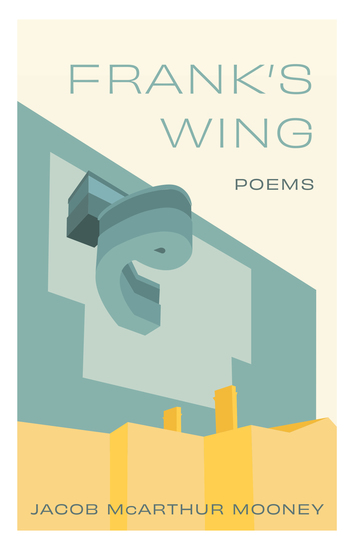
  • Frank’s Wing - Poems - cover

    Frank’s Wing - Poems

    Jacob McArthur Mooney

    • 0
    • 0
    • 0
    “… my relationship with most art living or lost / is the same as yours: we will pass it by” bemoans the last poem in Jacob McArthur Mooney’s latest collection. Written as a sequence of “ghost ekphrastics” (poems inspired by works of art that neither the poet nor most living people have ever seen), Frank’s Wing constructs a whole world of lost or destroyed artifacts that have been rearticulated and resurrected, brought back to life by a fictional property baron as a dying gift to Toronto’s Art Gallery of Ontario.
    		 
    From “decadent” modern paintings torched by Nazis, to lost films, to never-performed performance art, the abiding premise of the book is that art invites mourning: not because it is mournful, but because it is vast. It taunts the plans of mortals while “a week / of kids’ videos and lip syncs / siphon through the internet each second.” Bordering ideas about FOMO and mortality are considerations of destruction itself, as the book recalls loss events predicted by both the considered works’ historical contexts and the frailties of their makers. Concerned with consuming art as much as with making it, Frank’s Wing examines the positions made available to the art-consumer: owner, overhearer, interrogator, and potentially, both destroyer and the thing that art destroys.
    Voir livre
  • The Poetry of John Clare - A major poet who focused on celebrating being in nature and the simple countryside life - cover

    The Poetry of John Clare - A...

    John Clare

    • 0
    • 0
    • 0
    John Clare was born on 13th July, 1793 in Helpston, a few miles north of Peterborough. 
    Schooled only until the age of 12 his early career was that of agricultural labourer, pot boy, gardener and lime burner.  His early life of hardship and frequent malnutrition led to his diminutive stature of five feet and contributed to his later health problems. 
    In 1820 his first poems were published and began to earn him a reputation as the “Northamptonshire Peasant Poet”. 
    His poetry sold well but only occasionally did that and other incomes keep his head above water.  Married with seven children the burden was huge and demanding.  Frequently penniless his health began to dissolve. 
    He last published in 1835 and by 1837 with his drinking out of control and his mental state shredded he entered a mental institution.  He was to reside in such unhappy places until his death. 
    He died aged 71 on 20th May 1864. His remains were returned to Helpston for burial in St Botolph’s churchyard. 
    Today he is considered one of the greatest of English poets.  His lyrical works on nature and the countryside earn him this just praise. 
    This volume comes to you from Portable Poetry, a specialized imprint from Deadtree Publishing.  Our range is large and growing and covers single poets, themes, and many compilations.
    Voir livre