Begleiten Sie uns auf eine literarische Weltreise!
Buch zum Bücherregal hinzufügen
Grey
Einen neuen Kommentar schreiben Default profile 50px
Grey
Jetzt das ganze Buch im Abo oder die ersten Seiten gratis lesen!
All characters reduced
Annajanska the Bolshevik Empress - cover

Annajanska the Bolshevik Empress

George Bernard Shaw

Verlag: Avia Artis

  • 0
  • 0
  • 0

Beschreibung

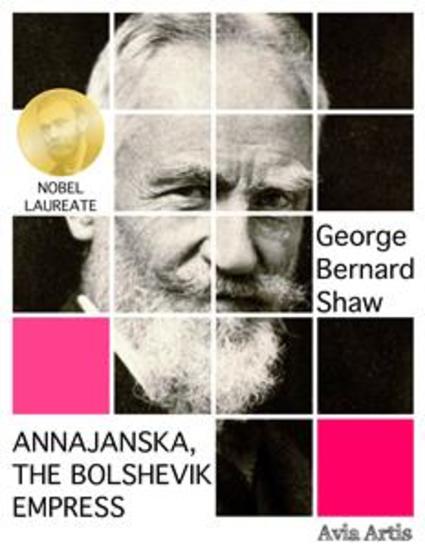
“Annajanska, the Bolshevik Empress” is a play by George Bernard Shaw, an Irish playwright who became the leading dramatist of his generation, and in 1925 was awarded the Nobel Prize in Literature.

“Annajanska, the Bolshevik Empress” is a one-act play by George Bernard Shaw, written in 1917.
The play is obviously influenced by the Russian Revolution that year. It takes place in an imaginary country which has recently experienced a similar revolution. The two main characters are the daughter of the ruler, who once ran away to join the circus as a girl, and now supports the revolution, and an army officer who opposes it.
Verfügbar seit: 07.01.2022.

Weitere Bücher, die Sie mögen werden

  • Mrs Warren's Profession - cover

    Mrs Warren's Profession

    Bernard Shaw

    • 0
    • 0
    • 0
    'I am my mother's daughter. I am like you. But my work is not your work, and my way is not your way.'
    Vivie Warren is a woman ahead of her time. Estranged from her wealthy mother, she delights in a glass of whisky and a good detective story, and is determined to carve herself a sparkling legal career in an age ruled by men.
    Her mother, however, is a part of that old patriarchal order. Exploiting it has earned Mrs. Warren a fortune and paid for her daughter's expensive education – but at what cost?
    Bernard Shaw's incendiary moral classic was written in 1893, but, after being banned by the Lord Chamberlain, didn't receive a full public production in London until 1925. This version of the play, edited and introduced by director Dominic Cooke, was produced at the Garrick Theatre in London's West End in 2025, starring real-life mother and daughter Imelda Staunton and Bessie Carter.
    Zum Buch
  • Getting Through What You're Going Through - Notes and Poems - cover

    Getting Through What You're...

    Tanner Olson

    • 0
    • 0
    • 0
    Read by the author.  
    Find hope and purpose as you discover that you’re right where you’re supposed to be. 
    Maybe you thought you’d be further along by now. Or have a different kind of life. Maybe you thought that relationship would have happened, that dream would have come true, that path would have opened up—and it didn’t. Or you feel stuck, behind, not sure if you made a wrong turn somewhere. You’re trying to make sense of what is, even if what “is” is not what you thought it would be. Or maybe you’re searching for a moment of peace before carrying on. 
    Getting Through What You’re Going Through by poet and writer Tanner Olson explores these ideas and offers you hope through it all. You don’t have to just “get through”; you can “go through”—all the ups and downs, disappointments, unexpected surprises—knowing that God is present and hope remains. In this collection of over one hundred poems and reflections, Tanner shows that God’s timing may be slow until it isn’t. Every day presents a gift to open. And hope is there to be found in the simplest things—a cup of coffee, a good friend, a single pancake. 
    If you’re feeling stuck, unsettled, or even just happy to be here, know that hope remains and you’re right where you’re supposed to be.
    Zum Buch
  • In The Lily Room - cover

    In The Lily Room

    Erica Hesketh

    • 0
    • 0
    • 0
    Erica Hesketh's debut collection In the Lily Room tells a story of early motherhood. It examines a new mother's journey through mental illness, her relationships with her body, her baby and other people, and the often surreal landscape of mothering, against a backdrop of a changing and uncertain world.
    A dreamlike birth sequence full of eels, foxes and floodwater empties onto a London postnatal ward, where reality sets in. Rudderless and anxious, the new mother writes notes to herself, joins support groups and tries medication. She climbs into myth and prayer, nightmare and song, criss-crossing her neighbourhood with a pram, until she starts to feel better. Hesketh's poems speak of the many things motherhood can mean, the structures it is made to fit inside. Clear-eyed and full of hard-won love, this a story of one of the most common experiences there is, told in a dazzlingly original way.
    Zum Buch
  • pensing for the mutual monologue - this is for you - cover

    pensing for the mutual monologue...

    Anetha Yu

    • 0
    • 0
    • 0
    HELLO everybody!!! THANK YOU for coming. This is Anetha Yu. Autumn is the special season for me. Autumn is starting next month. To celebrate it, I brought the audio book. THIS IS FOR YOU!!
    Zum Buch
  • A Young Boy Named David Book 11 - cover

    A Young Boy Named David Book 11

    David M. Smith

    • 0
    • 0
    • 0
    The “Young Boy Named David” series is designed to help young people deal with difficult situations that are hard to talk about and adults reconnect to their disconnected childhood helping heal broken pasts. In Book 11, David finally meets new friends his age who take him on adventures, give him new feelings, and teach him new things.
    Zum Buch
  • Symphonies - The first Southern poet to win the Pulitzer Prize - cover

    Symphonies - The first Southern...

    John Gould Fletcher

    • 0
    • 0
    • 0
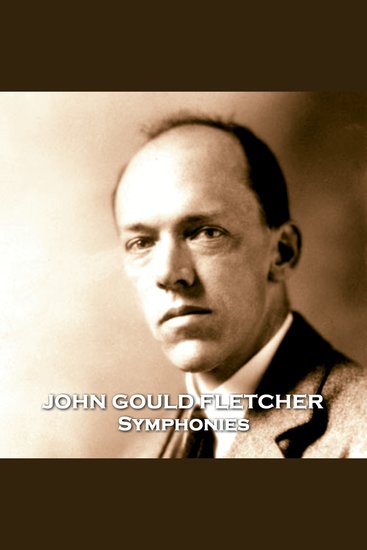
    John Gould Fletcher was born in Little Rock, Arkansas on the 3rd of January 1886 to a socially prominent family.  
     
    He was educated at Phillips Academy, Andover before advancing to Harvard University, which he attended from 1903 to 1907, before dropping out after his father's death. 
     
    As a young man Fletcher spent many years in England where he became part of the influential Imagist group of poets together with Amy Lowell and Ezra Pound.   
     
    His first marriage came from a resumed relationship with the now married Florence Emily ‘Daisy’ Arbuthnot.  Her adultery with Fletcher was the grounds for her divorce.  They married on 5th July 1916 but later divorced.  
     
    Fletcher first published in 1912, with ‘The Dominant City’ to much praise and admiration and followed this with other well-regarded volumes such as ‘Irradiations: Sand and Spray’, and ‘Goblins and Pagodas’. 
     
    In the late 1920s and 1930s Fletcher became increasingly active with a group of Southern writers and poets known as the Southern Agrarians. They published the classic ‘I'll Take My Stand: The South and the Agrarian Tradition’. 
     
    Although he was highly regarded as a poet, he was not very prolific.  However, such was the undoubted quality that in 1939 he received the Pulitzer Prize for his work ‘Selected Poems’.  He was the first poet from the south to receive such an accolade.  Fletcher’s other passion and pursuit was as an authority on modern painting, a subject on which he also published. 
     
    A second marriage followed in 1936 to the children’s author, Charlie May Simon.  They built ‘Johnswood’, a residence on the bluffs of the Arkansas River and travelled frequently to New York for shots of modern culture and intellectual stimulation as well as to the American West and South for the climate after Fletcher developed chronic arthritis. 
     
    In 1937 he wrote his autobiography, ‘Life is My Song’. 
     
    His developing passion for his roots and background resulted in the writing of a history of his State and published in 1947; ‘Arkansas’. 
     
    By now Fletcher was suffering from bouts of depression and on 10th May 1950, he committed suicide by drowning himself in a pond near his home in Little Rock, Arkansas.  He was 64.
    Zum Buch