Rejoignez-nous pour un voyage dans le monde des livres!
Ajouter ce livre à l'électronique
Grey
Ecrivez un nouveau commentaire Default profile 50px
Grey
Abonnez-vous pour lire le livre complet ou lisez les premières pages gratuitement!
All characters reduced
Beyond Racial Division - A Unifying Alternative to Colorblindness and Antiracism - cover

Beyond Racial Division - A Unifying Alternative to Colorblindness and Antiracism

George A. Yancey

Maison d'édition: IVP

  • 0
  • 0
  • 0

Synopsis

Christianity Today Book Award—Politics and Pubilc Life
Efforts at colorblindness and antiracism have not been very effective in addressing racial tensions in the United States. Colorblindness ignores the realities of race and the history of injustice. On the other hand, antiracism centers racial concerns and in so doing often alienates people who need to be involved in the process. Sociologist George Yancey offers an alternative approach to racial relations where all parties contribute and are mutually accountable to one another for societal well-being. He provides empirical rationale for how collaborative conversations in a mutual accountability model can reduce racial division. History and societal complexity mean that different participants may have different kinds of responsibility, but all are involved in seeking the common good for all to thrive. Avoiding unilateral decisions that close off dialogue, Yancey casts a vision for moving beyond racial alienation toward a lifestyle and movement of collaborative conversation and mutuality.
Disponible depuis: 15/03/2022.
Longueur d'impression: 224 pages.

D'autres livres qui pourraient vous intéresser

  • Stories Dice and Rocks That Think - How Humans Learned to See the Future–and Shape It - cover

    Stories Dice and Rocks That...

    Byron Reese

    • 0
    • 0
    • 0
    What makes the human mind so unique? And how did we get this way? 


    This fascinating tale explores the three leaps in our history that made us what we are—and will change how you think about our future. 


    Look around. Clearly, we humans are radically different from the other creatures on this planet. But why? Where are the Bronze Age beavers? The Iron Age iguanas? In Stories, Dice, and Rocks That Think, Byron Reese argues that we owe our special status to our ability to imagine the future and recall the past, escaping the perpetual present that all other living creatures are trapped in. 


    Envisioning human history as the development of a societal superorganism he names Agora, Reese shows us how this escape enabled us to share knowledge on an unprecedented scale, and predict—and eventually master—the future. 


    Thoughtful and witty, this must-listen book unravels our history as an intelligent species in three acts. A fresh new look at the history and destiny of humanity, listeners will come away from Stories, Dice, and Rocks That Think with a new understanding of what they are—not just another animal, but a creature with a mastery of time itself.
    Voir livre
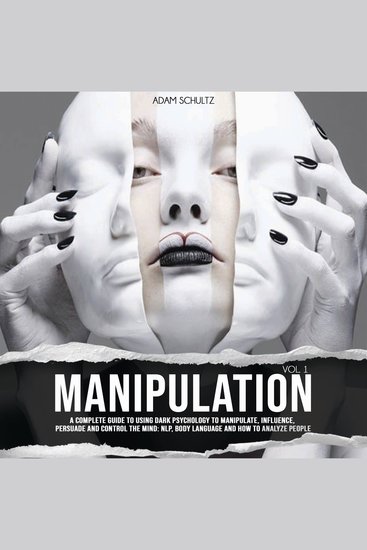
  • Manipulation - A Complete Guide To Using Dark Psychology To Manipulate Influence Persuade And Control The Mind: NLP Body Language and How to Analyze People (Vol 1) - cover

    Manipulation - A Complete Guide...

    Adam Schultz

    • 0
    • 0
    • 0
    Highly Effective Techniques to Persuade and Influence Anyone! – Vol. 1 
    Manipulation can take many different forms. It can be used as a way of asking for a favor or manipulating others without being aware of it. Essentially, this is a tactic that is used to get someone to do something important. The following audiobook discusses 30 techniques that you can use to help you control somebody properly. While many people will see manipulation as a dishonest act, something that is evil and difficult to counter, manipulation is actually manipulating others to do what you want them to do. Whether you're trying to sell a product, a service, or just get someone to do you a favor, you're going to learn that coercion will help you get those kinds of results. 
    The fact is, we are imperfect human beings. We have some vulnerabilities. And if you research and get to know these vulnerabilities, you're going to have a huge power in your hands. Once you learn the right manipulation techniques, the real ones, it's entirely possible to manipulate other people's thoughts and make them do what you want. 
    Here's what you'll master with this bundle (Vol. 1 and Vol. 2):Using body language to become a fantastic communicatorInterpreting gestures, and subtle signs to analyze othersPersuading people with easeRecognizing when someone is manipulating youDefending yourself from every type of manipulatorDealing with an abusive or manipulative partnerUsing manipulation as a means of persuasionRaising your emotional intelligence and self-awarenessKnowing exactly how to act in any type of social or work situation 
    And much more! 
    So, What You're Waiting For, Get Started Today!
    Voir livre
  • Fighting From Above - A Combat History of the US Air Force - cover

    Fighting From Above - A Combat...

    Brian D. Laslie

    • 0
    • 0
    • 0
    The story of the United States Air Force (USAF) stretches back to aerial operations prior to the First World War and looks forward to a new era of airpower in space. Fighting from Above presents a concise account of this history, offering a new perspective on how the air forces of the United States created an independent way of warfare over time. 


    From the earliest battles of the USAF's predecessor organizations to its modern incarnation, Brian D. Laslie identifies four distinct ways of war that developed over four distinct epochs. Beginning with the development of early air power (1906–1941), he highlights the creation of roles and missions. An era of strategic dominance (1942–1975) followed in which the ideas of strategic bombardment ruled the air force; when such notions were unceremoniously proven false during the Vietnam-era conflicts, a period of tactical ascendancy (1975–2019) began. Finally, Laslie considers the current environment, where much of the story of the USAF remains unwritten as it grapples with the prospects and challenges posed by drones and the U.S. Space Force. 


    While detailing combat operations, Fighting from Above also pays close attention to technology, politics, rivalries, logistics, policy, organization, equipping, and training. It is an authoritative history of the development of American airpower.
    Voir livre
  • Tides of Fortune - The Rise and Decline of Great Militaries - cover

    Tides of Fortune - The Rise and...

    Zack Cooper

    • 0
    • 0
    • 0
    An ambitious look at how the twentieth century's great powers devised their military strategies and what their implications mean for military competition between the United States and China 


    How will the United States and China evolve militarily in the years ahead? Many experts believe the answer to this question is largely unknowable. But Zack Cooper argues that the American and Chinese militaries are following a well-trodden path. For centuries, the world's most powerful militaries have adhered to a remarkably consistent pattern of behavior, determined largely by their leaders' perceptions of relative power shifts. By uncovering these trends, this book places the evolving military competition between the United States and China in historical context. 


    Drawing on a decade of research and on his experience at the White House and the Pentagon, Cooper outlines a novel explanation for how militaries change as they rise and decline. Tides of Fortune examines the paths of six great powers of the twentieth century, tracking how national leaders adjusted their defense objectives, strategies, and investments in response to perceived shifts in relative power. All these militaries followed a common pattern, and their experiences shed new light on both China's recent military modernization and America's potential responses.
    Voir livre
  • Eurotrash - Why America Must Reject the Failed Ideas of a Dying Continent - cover

    Eurotrash - Why America Must...

    Anonyme

    • 0
    • 0
    • 0
    Why should America try to be more like countries that are worse in nearly every way?  
    Europe has been declining under the weight of its antiquated institutions, economic fatigue, moral anemia and cultural surrender. Yet American politicians, technocrats, academics, and pundits argue, with increasing popularity, that Americans should look across the Atlantic for solutions to the nation’s problems, including on issues like health care, the welfare state, immigration, and a bloated bureaucracy. 
    In Eurotrash, David Harsanyi argues we are looking in the wrong place. By every economic and societal measure, the United States is more tolerant than Europe. It is more welcoming of immigrants, but also far more successful at assimilating them. Minorities do far better in United States. Our economy is dominant. Only one European company appears in top 10 corporate powerhouses in the world and only seven in the top 50. Americans make up nearly half of the list. 
    Americans are far more charitable and happier than Europeans. Our slightly lower life expectancy and our slightly higher infant mortality rate are not a result of substandard care, but a statistical misunderstanding based on the fact we treat every life as one worth saving. 
    In this biting, fast-moving, and well-researched polemic, Harsanyi debunks prevailing notions about European supremacy and makes an unapologetic case for American exceptionalism, offering insight and reasoned arguments to counter current policy prescriptions.
    Voir livre
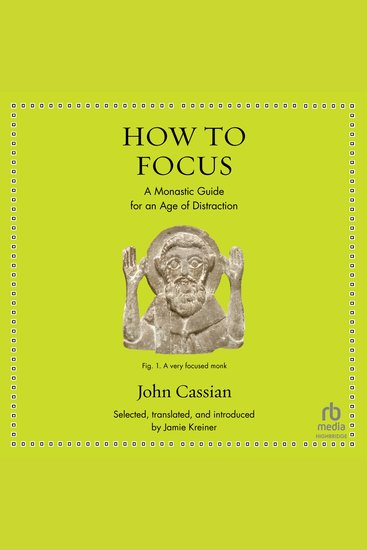
  • How to Focus - A Monastic Guide for an Age of Distraction - cover

    How to Focus - A Monastic Guide...

    John Cassian, Jamie Kreiner

    • 0
    • 0
    • 0
    Distraction isn't a new problem. We're also not the first to complain about how hard it is to concentrate. Early Christian monks beat us to it. They had given up everything to focus on God, yet they still struggled to keep the demons of distraction at bay. But rather than surrender to the meandering of their minds, they developed powerful strategies to improve their attention and engagement. How to Focus is an inviting collection of their strikingly relatable insights and advice—frank, funny, sympathetic, and psychologically sophisticated. 


    This wisdom is drawn from John Cassian's Collationes, one of the most influential manuals for monks from late antiquity. The Collationes follow Cassian and his friend Germanus as they travel around Egypt, asking a series of sage monks how they can make their minds stronger. In response, these monks offer a range of techniques for increasing focus, including setting goals, training the body, managing the memory, using mantras, taking breaks, consulting others—and, most of all, being honest about yourself. As Cassian and Germanus eventually realize, we can't escape distraction—but we can learn how to confront it and, eventually, to concentrate. 


    Featuring an engaging new translation by Jamie Kreiner, How to Focus can help even the least monkish of us to train our attention on what matters most.
    Voir livre