Unisciti a noi in un viaggio nel mondo dei libri!
Aggiungi questo libro allo scaffale
Grey
Scrivi un nuovo commento Default profile 50px
Grey
Iscriviti per leggere l'intero libro o leggi le prime pagine gratuitamente!
All characters reduced
The Philosophy of Fine Art (Vol 1-3) - Complete Edition - cover

The Philosophy of Fine Art (Vol 1-3) - Complete Edition

Georg Wilhelm Friedrich Hegel

Traduttore Francis Plumptre Beresford Osmaston

Casa editrice: Good Press

  • 0
  • 0
  • 0

Sinossi

In "The Philosophy of Fine Art," Georg Wilhelm Friedrich Hegel delves into the intricate relationship between art, philosophy, and the unfolding of human spirit. Spanning three volumes, Hegel articulates a comprehensive framework that positions art as a manifestation of the Absolute Spirit, evolving through historical contexts and aesthetic paradigms. His dialectical method, characterized by a synthesis of opposing ideas, presents art not merely as an object but as a dynamic process that reflects the cultural and intellectual milieu of its time. Hegel's prose, while dense and philosophical, is imbued with a passion for art that invites readers to explore the depths of beauty and meaning within cultural artifacts. Hegel, an influential German philosopher and a key figure in German Idealism, emerged from a background steeped in history, theology, and metaphysics, which profoundly shaped his thoughts on aesthetic theory. His intellectual journey through the tumultuous political landscape of early 19th-century Europe also fed into his contemplation of art's role in societal development. Experiencing various forms of art from classical to contemporary, Hegel's observations are suffused with a belief in art's capacity to express the ethical life of its time. This seminal work is essential for both students and scholars of philosophy and the arts, providing a rich, philosophical explorative ground for understanding the evolution of aesthetics. Readers seeking to unravel the complexities of art's significance within human culture will find Hegel's profound insights a compelling and transformative experience.
Disponibile da: 13/12/2023.
Lunghezza di stampa: 1368 pagine.

Altri libri che potrebbero interessarti

  • The Spirit of Philanthropy - Fundraising for a Better World - cover

    The Spirit of Philanthropy -...

    Frank Pisch

    • 0
    • 0
    • 0
    In The Spirit of Philanthropy, Frank Pisch dissects fundraising, showing how it is both an art and a science. Pisch, the founder of The Compass Group, uses his knowledge in the field to give philanthropists an understanding of best practices for fundraising. Building a great team, finding the best volunteers, creating a Gifts Chart, and more are discussed in this easy-to-read guide. From the early stages of a fundraising campaign to the days after it’s done, The Spirit of Philanthropy will be your blueprint for raising money for your nonprofit and more.
    Mostra libro
  • How Nations Escape Poverty - Vietnam Poland and the Origins of Prosperity - cover

    How Nations Escape Poverty -...

    Rainer Zitelmann

    • 0
    • 0
    • 0
    During the twentieth century, Vietnam and Poland were both victims not only of devastating wars, but also of socialist planned economies that destroyed whatever war hadn’t already. In 1990, Vietnam was still one of the poorest countries in the world, while Poland was one of the poorest in Europe. But in the three decades since then, both countries have drastically improved their citizens’ standards of living and escaped the vicious cycle of national poverty. 


    In this book, Rainer Zitelmann identifies the reasons behind the sensational growth of both nations' economies, drawing out the lessons that other countries can learn from these two success stories. To explain the source of their success, he returns to Adam Smith's 1776 treatise, The Wealth of Nations: the only way to overcome poverty is through economic growth, and economic freedom is the crucial prerequisite for such growth. Developments over the past 250 years have proved Smith right. 


    Despite these strides, almost ten percent of the world's population still lives in extreme poverty. So, what measures actually help to alleviate poverty today? Through a wealth of data and stories from the everyday lives of Polish and Vietnamese people who experienced reforms, Zitelmann demonstrates the persistent relevance of Smith's ideas to economic flourishing in the twenty-first century.
    Mostra libro
  • Egyptian Symbolism - The Meaning and Use of Symbols in Ancient Culture - cover

    Egyptian Symbolism - The Meaning...

    Omar Khalil

    • 0
    • 0
    • 0
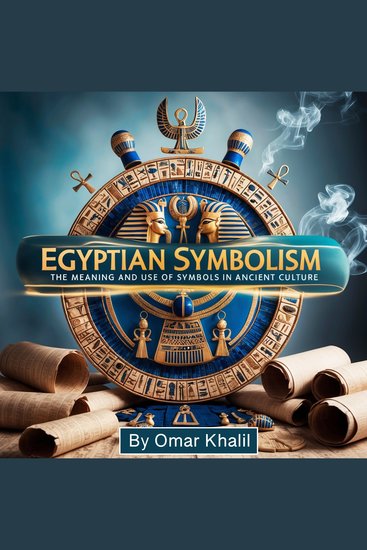
    Egyptian symbolism is one of the most captivating aspects of ancient Egyptian culture, reflecting their deeply spiritual worldview and providing insight into their daily lives, religious practices, and understanding of the universe. From the majestic pyramids to the intricate hieroglyphs on temple walls, symbolism played a crucial role in conveying meanings that went beyond the literal. It was a tool to communicate with the gods, mark divine power, and ensure continuity in both life and the afterlife. 
    At the heart of Egyptian symbolism was the belief that the world was filled with hidden meanings and spiritual forces, each symbol carrying its own power. This belief was manifested in art, architecture, rituals, and even the everyday objects used by the ancient Egyptians. Symbols were not just representations; they were believed to hold an active force that could influence the material world and the spiritual realm. For example, the Ankh, a symbol resembling a cross with a loop at the top, represented life and was often used in funerary texts to ensure immortality for the deceased. 
    In Egyptian society, symbols were central to religious practices. The gods and goddesses, each represented by specific symbols and animal forms, embodied different aspects of life, death, and the cosmos. The sun god Ra, for instance, was depicted as a falcon, symbolizing both the sun’s power and the bird's dominance in the sky. The scarab beetle, a symbol of rebirth and protection, was commonly used in amulets and artifacts, signifying the cyclical nature of life and the hope for resurrection.
    Mostra libro
  • The Myth of the Caudillo - How Francisco Franco Rewrote History to Rule Spain - cover

    The Myth of the Caudillo - How...

    Davis Truman

    • 0
    • 0
    • 0
    Power was not enough for Francisco Franco — he needed a legend. 
    In The Myth of the Caudillo, Davis Truman unveils the untold story of how Spain’s dictator didn’t just win a civil war — he reinvented the past to secure his future. Through propaganda, censorship, and the rewriting of national memory, Franco transformed himself from a ruthless general into “El Caudillo,” the savior Spain supposedly needed. 
    Blending rigorous scholarship with gripping narrative, this groundbreaking work exposes how Franco’s regime weaponized history itself — turning defeat into destiny, and dictatorship into divine mandate. From the manipulation of textbooks to the orchestration of monuments and myths, The Myth of the Caudillo reveals the deliberate creation of a false Spain—one that still haunts the nation today. 
    Drawing on newly uncovered archives and testimonies suppressed for decades, Davis Truman dismantles the story Franco told the world—and the one Spain was forced to believe. 
    A masterful blend of history, politics, and psychology, The Myth of the Caudillo is essential reading for anyone who wants to understand how power sustains itself — not just through fear, but through the stories we choose to remember.
    Mostra libro
  • History of Argentina - From the Arrival of the Spanish to the 20th Century - cover

    History of Argentina - From the...

    Kelly Mass

    • 0
    • 0
    • 0
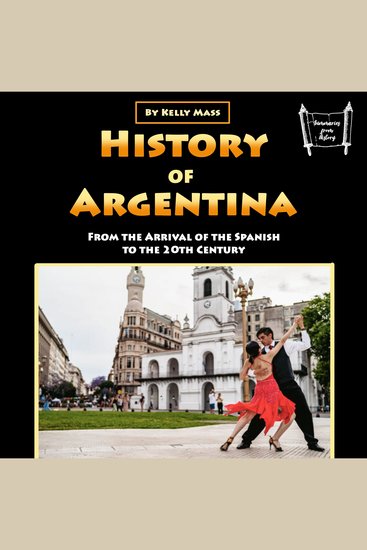
    Argentina's history is a rich tapestry that can be divided into four distinct periods: the pre-Columbian or early history (up to the sixteenth century), the colonial period (1530–1810), the nation-building period (1810–1880), and contemporary history (from approximately 1880 to the present). Each phase shaped the region, transforming it from sparsely inhabited land into the modern Argentine Republic. 
    Human presence in what is now Argentina dates back approximately 13,000 years, with evidence of early settlements in Patagonia. Archaeological findings suggest human activity through the Paleolithic, Mesolithic, and Neolithic periods. However, a significant depopulation of large interior areas occurred between 4000 and 2000 B.C., likely due to a prolonged period of drought. Over time, indigenous peoples in the region evolved into diverse cultural groups with varying levels of complexity. 
    Uruguayan archaeologist Raúl Campá Soler categorized Argentina’s indigenous peoples into three groups: basic hunters and food gatherers without pottery; advanced gatherers and hunters; and basic farmers who developed pottery. The Pampas and Patagonia were dominated by the first group, while the second included tribes like the Charrúa, Minuane, and Guaraní. The third group, inhabiting regions such as the Quebrada de Humahuaca, adopted farming practices and pottery.
    Mostra libro
  • Women Intersectionality & Europe - Exploring lived realities and the path to gender equality - cover

    Women Intersectionality & Europe...

    Tamara Makoni

    • 0
    • 0
    • 0
    How does identity shape the lives of women in Europe today? And what steps can we take to empower all women and thus achieve true gender equality? 
    Women, Intersectionality & Europe offers a clear and insightful look at what it means to be a woman in 21st century Europe. It brings together academic research, personal stories and case studies from across the continent to explore how women live, the unique challenges that they face, and how we can use this understanding to create a more inclusive future. It will engage your curiosity, deepen your awareness and inspire you to imagine a fairer, more equal future. 
    About the author 
    Tamara Makoni is an inclusion and culture specialist who in 2024 was named one of Europe's leading voices on diversity, equity and inclusion. She works extensively on inclusive community building, intersectionality and gender equality, and her thought leadership has been featured by several leading publications.
    Mostra libro