Rejoignez-nous pour un voyage dans le monde des livres!
Ajouter ce livre à l'électronique
Grey
Ecrivez un nouveau commentaire Default profile 50px
Grey
Abonnez-vous pour lire le livre complet ou lisez les premières pages gratuitement!
All characters reduced
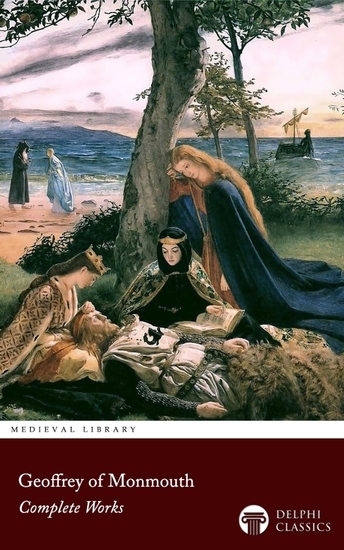
Delphi Complete Works of Geoffrey of Monmouth Illustrated - cover

Delphi Complete Works of Geoffrey of Monmouth Illustrated

Geoffrey of Monmouth

Maison d'édition: Delphi Publishing Ltd

  • 0
  • 0
  • 0

Synopsis

The twelfth century chronicler Geoffrey of Monmouth was the author of one of the most famous and influential works of the Middle Ages. ‘History of the Kings of Britain’ brought the figures of Arthur and Merlin into European literature, ensuring a popularity that continues to this day. It relates the purported history of Britain, from its first settlement by Brutus of Troy to the death of Cadwaladr in the seventh century. It also covers Caesar’s invasions of Britain, Kings Leir and Cymbeline and one of the earliest developed narratives of the fabled King Arthur. Denounced from the first by sober historians, this fictional history still exerted an enormous influence on the course of English literature. Delphi’s Medieval Library provides eReaders with rare and precious works of the Middle Ages, with noted English translations and the original texts.  This eBook presents Geoffrey’s complete works, with illustrations, informative introductions and the usual Delphi bonus material. (Version 1)

 
* Beautifully illustrated with images relating to Geoffrey's life and works* Features the complete extant works of Geoffrey, in both English translation and the original Latin* Aaron Thompson’s celebrated translation of ‘History of the Kings of Britain’, with J. A. Giles’ 1905 revisions and hyperlinked footnotes* Concise introductions to the works* Excellent formatting of the texts* Easily locate the sections you want to read with individual contents tables* Includes Geoffrey’s rare work ‘The Life of Merlin’ (tr. John Jay Parry, 1925), first time in digital print* Provides a special dual English and Latin text, allowing readers to compare the sections paragraph by paragraph — ideal for students* Features a bonus biography — discover Geoffrey's medieval world

 
CONTENTS:

 
The TranslationsThe History of the Kings of Britain (c. 1136)The Life of Merlin (c. 1150)

 
The Latin TextsContents of the Latin Texts

 
The Dual TextHistoria regum Britanniae

 
The BiographiesGeoffrey of Monmouth (1900) by Henry Richard TedderGeoffrey of Monmouth (1902) by A. G. LittleGeoffrey of Monmouth (1911) by Henry William Carless DavisGeoffrey of Monmouth (1922) by Andrew Lang
Disponible depuis: 26/03/2024.
Longueur d'impression: 1136 pages.

D'autres livres qui pourraient vous intéresser

  • Dark Destinations - A Journey through Dark Tourism And Death Adventures - cover

    Dark Destinations - A Journey...

    Davis Truman

    • 0
    • 0
    • 0
    This audiobook is narrated by an AI Voice.   
    "Dark Destinations: A Journey through Dark Tourism and Death Adventures" explores the world's most intriguing and morbid travel experiences. In this thought-provoking book, readers embark on a chilling journey to destinations associated with death, tragedy, and the macabre. From haunted locations and infamous crime scenes to eerie catacombs and bone-chilling museums, this book delves into the darker side of tourism, offering a unique perspective on the allure of morbid curiosity and the stories surrounding these ominous places. As you turn the pages of "Dark Destinations," you'll discover the fascinating history, legends, and motivations behind these eerie spots, making it a fascinating read for anyone intrigued by the mysteries of the human psyche and the allure of the macabre.
    Voir livre
  • Ottoman Empire’s Worst Defeats The: The History and Legacy of the Decisive Battles that Checked the Ottomans’ Expansion into Europe - cover

    Ottoman Empire’s Worst Defeats...

    Editors Charles River

    • 0
    • 0
    • 0
    In the wake of taking Constantinople, the Ottoman Empire would spend the next few centuries expanding its size, power, and influence, bumping up against Eastern Europe and becoming one of the world’s most important geopolitical players. It was a rise that would not truly start to wane until the 19th century. 	The long agony of the “sick man of Europe,” an expression used by the Tsar of Russia to depict the falling Ottoman Empire, could almost blind people to its incredible power and history. Preserving its mixed heritage, coming from both its geographic position rising above the ashes of the Byzantine Empire and the tradition inherited from the Muslim Conquests, the Ottoman Empire lasted more than six centuries. Its soldiers fought, died, and conquered lands on three different continents, making it one of the few stable multiethnic empires in history, and likely one of the last. Thus, it’s somewhat inevitable that the history of its decline is at the heart of complex geopolitical disputes, as well as sectarian tensions that are still key to understanding the Middle East, North Africa and the Balkans.  
    	When studying the fall of the Ottoman Empire, historians have argued over the breaking point that saw a leading global power slowly become a decadent empire. The defeat in the Battle of Lepanto stopped the Ottomans from pushing further into the Mediterranean, and the Battle of Vienna in 1683 was certainly an important turning point for the expanding empire, as the defeat of Grand Vizier Kara Mustafa Pasha at the hands of a coalition led by the Austrian Habsburg dynasty, Holy Roman Empire and Polish-Lithuanian commonwealth marked the end of Ottoman expansionism. It was also the beginning of a slow decline during which the Ottoman Empire suffered multiple military defeats, found itself mired by corruption, and had to deal with the increasingly mutinous Janissaries (the Empire’s initial foot soldiers).
    Voir livre
  • España - A Brief History of Spain - cover

    España - A Brief History of Spain

    Giles Tremlett

    • 0
    • 0
    • 0
    Bestselling author Giles Tremlett traverses the rich and varied history of Spain, from prehistoric times to today, in a brief, accessible primer for visitors, curious listeners and hispanophiles. 
     
    Spain's position on Europe's south-western corner has exposed it to cultural, political and actual winds blowing from all quadrants. Africa lies a mere nine miles to the south. The Mediterranean connects it to the civilizational currents of Phoenicians, Romans, Carthaginians, and Byzantines as well as the Arabic lands of the near east. Hordes from the Russian steppes were amongst the first to arrive. They would be followed by Visigoths, Arabs, Napoleonic armies and many more invaders and immigrants. Circular winds and currents linked it to the American continent, allowing Spain to conquer and colonize much of it. 
     
    As a result, Spain has developed a sort of hybrid vigour. Whenever it has tried to deny this inevitable heterogeneity, it has required superhuman effort to fashion a 'pure' national identity – which has proved impossible to maintain. In España, Giles Tremlett argues that, in fact, that lack of a homogenous identity is Spain's defining trait. 
     
    PRAISE FOR GILES TREMLETT: 
     
    'Lively and well-informed ... At once a history, a journalistic inquiry and a travel book' Sunday Telegraph. 
     
    'A feast of a book' Irish Times. 
     
    'A transfixing, elegantly written account of Spain today' Metro. 
     
    'Tremlett writes with humour, modesty and a great affection for his subject'. --Daily Telegraph 
     
    'An invaluable book ... Ghosts of Spain has become something of a bible for those of us extranjeros who have chosen to live in Spain ... A country finally facing its past could scarcely hope for a better, or more enamored chronicler of its present' New York Times Book Review.
    Voir livre
  • Unlocking Language - From Syntax to Semantics: A Comprehensive Exploration - cover

    Unlocking Language - From Syntax...

    Liam Connors

    • 0
    • 0
    • 0
    Embark on a captivating journey into the heart of human communication with "Unlocking Language: From Syntax to Semantics - A Comprehensive Exploration." This groundbreaking book invites you to delve deep into the intricacies of language, unraveling the mysteries of syntax and semantics that form the bedrock of our daily interactions. 
    Discover the rich historical tapestry of language evolution, from its humble origins to its pivotal role in shaping cultures and societies worldwide. Explore the dynamic interplay between syntax and semantics, gaining insights into how the structure of sentences and the meanings of words profoundly influence our thoughts, actions, and perceptions. 
    As you navigate through the pages, witness the synergy between syntax and semantics and how they transcend linguistic boundaries. Develop a keen understanding of the universal principles governing language while appreciating the cultural nuances that make communication a genuinely diverse and vibrant experience. 
    Equip yourself with practical insights into effective communication bolstered by a comprehensive grasp of syntax and semantics. From enhancing language skills to navigating the ever-evolving landscape of artificial intelligence and cross-cultural interactions, "Unlocking Language" empowers you to apply newfound knowledge in both personal and professional realms.
    Voir livre
  • History of Mexico - The Mayans the Aztec and the Mexican Revolution - cover

    History of Mexico - The Mayans...

    Kelly Mass

    • 0
    • 0
    • 0
    This combo contains the following topics: 
    1 - Have you ever wondered what the Maya people did? How they lived? How their empire grew? Then this is the right book for you. In this book, we'll go over the most important discoveries about the Mayans, the Central American inhabitants that were in the region hundreds of years before the journey to the New World by European settlers and conquistadores. 
    2 - When you think of the Aztecs, you might think of certain movies you have seen or what you've been taught in history class. And although some of those images and descriptions fit the main narrative, there is still much left to be discovered. This brief book will take you on a journey and kidnap your imagination to a faraway place in time. 
    3 - It’s a hard name to pronounce, but hey, it’s been the legend of Native American peoples for centuries. Was it a man? Was it a god? Was it a white person? Or was it some animal or strange thing? Quetzalcoatl is an Aztec divine being whose name originates from the Nahuatl language and meaning "valuable snake" or "Quetzal-feathered Snake." "Quetzalcoatl, in its actual sense, means 'snake of valuable plumes,' but in the allegorical sense, 'best of men,'" said Ixtlilxóchitl, a descendant of Aztec royalty and history expert of the Nahua people, in the 17th century. 
    4 - Emiliano Zapata Salazar was a revolutionary in Mexico. He was a key figure in the Mexican Revolt of the years 1910 until 1920, and also the primary leader of the people's revolution in the Mexican state of Morelos and the creator of the Zapatismo agrarian movement.
    Voir livre
  • Gettysburg and Vicksburg: The Civil War Turning Points of 1863 - cover

    Gettysburg and Vicksburg: The...

    Editors Charles River

    • 0
    • 0
    • 0
    Without question, the most famous battle of the American Civil War took place outside of the small town of Gettysburg, Pennsylvania, which happened to be a transportation hub, serving as the center of a wheel with several roads leading out to other Pennsylvanian towns. From July 1-3, Robert E. Lee’s Confederate Army of Northern Virginia tried everything in its power to decisively defeat George Meade’s Union Army of the Potomac, unleashing ferocious assaults that inflicted nearly 50,000 casualties in all.  
    	Day 1 of the battle would have been one of the 25 biggest battles of the Civil War itself, and it ended with a tactical Confederate victory. But over the next two days, Lee would try and fail to dislodge the Union army with attacks on both of its flanks during the second day and Pickett’s Charge on the third and final day. Meade’s stout defense held, barely, repulsing each attempted assault, handing the Union a desperately needed victory that ended up being one of the Civil War’s turning points.  
    	The Confederates had lost control of several important states throughout 1862, and after New Orleans was taken by the Union, the North controlled almost all of the Mississippi River, which Confederate general James Longstreet called “the lungs of the Confederacy”. By taking control of that vital river, the North would virtually cut the Confederacy in two, putting the South in a dire situation.  
    The only domino left to fall was the stronghold of Vicksburg, and both sides knew it. The Union Army of the Tennessee, led by Ulysses S. Grant, would spend months trying to encircle the army and eventually force John Pemberton’s Confederate army to surrender. Grant eventually succeeded on July 4, 1863, but since it came a day after the climactic finish of the Battle of Gettysburg, Vicksburg was (and still is) frequently overlooked as one of the turning points of the Civil War. 
    Voir livre