Begleiten Sie uns auf eine literarische Weltreise!
Buch zum Bücherregal hinzufügen
Grey
Einen neuen Kommentar schreiben Default profile 50px
Grey
Jetzt das ganze Buch im Abo oder die ersten Seiten gratis lesen!
All characters reduced
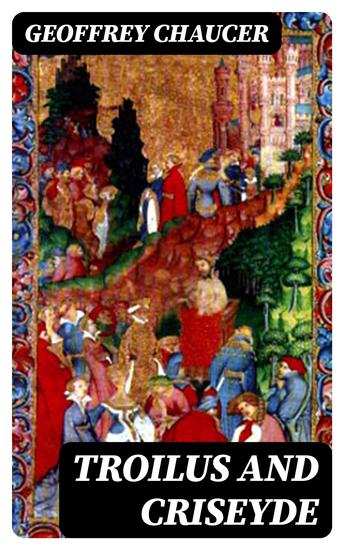
Troilus and Criseyde - cover

Troilus and Criseyde

Geoffrey Chaucer

Verlag: DigiCat

  • 0
  • 0
  • 0

Beschreibung

In "Troilus and Criseyde," Geoffrey Chaucer masterfully weaves a tale of love, betrayal, and the complexities of human emotion set against the backdrop of the Trojan War. Written in rhyme royal, a form he popularized, the narrative blends elements of romance and philosophy, exploring the tumultuous relationship between the titular characters. Chaucer's work is notable for its rich character development and introspective style, delving into the moral ambiguities of love and fortune. The poem also reflects the cultural and social milieu of the 14th century, providing insight into the medieval worldview and the interplay between fate and free will. Geoffrey Chaucer, often regarded as the Father of English literature, was profoundly influenced by the political and social dynamics of his time. His experiences in courtly service, including roles as a diplomat and civil servant, likely contributed to his nuanced understanding of human behavior and societal norms. Chaucer's exposure to various literary traditions, particularly Italian poetry, shaped his storytelling techniques and thematic concerns, making "Troilus and Criseyde" a pivotal work in the evolution of English literature. For readers captivated by the intricacies of love and the stratagems of fate, "Troilus and Criseyde" offers a poignant exploration of these timeless themes. Scholars, lovers of poetry, and casual readers alike will find Chaucer's poignant narrative and profound insights into human relationships both engaging and thought-provoking, marking this work as essential for anyone seeking to understand the depth of medieval literature.
Verfügbar seit: 28.05.2022.
Drucklänge: 155 Seiten.

Weitere Bücher, die Sie mögen werden

  • The Muse in the Body - A Collection of Erotic Poetry - cover

    The Muse in the Body - A...

    Catherine Barnett

    • 0
    • 0
    • 0
    How have women poets approached the question of eros throughout history? This collection explores the poetry of both physical and spiritual longing and fulfillment from ancient Greece to New York's East Village. In 50 poems, more than a dozen women poets express all the facets of desire. Included in this collection are Sappho, Mirabai, Hilda Dolittle [H.D.], Emily Dickinson, Anne Waldman, Olga Broumas, Brenda Coultas, Julie Patton, Eleni Siké lianò s, and Marina Tsvetayeva, as well as Pulitzer Prize-winners Jorie Graham, Mary Oliver, and Anne Sexton.
    Zum Buch
  • Octaves - Poem from a Pulitzer prize winner - cover

    Octaves - Poem from a Pulitzer...

    Edward Arlington Robinson

    • 0
    • 0
    • 0
    Edwin Arlington Robinson was born on the 22nd December 1869 in Tide in Lincoln County, Maine.  
    His childhood was described by him as ‘stark and unhappy’.  His name was drawn out of a hat from a fellow vacationer from Arlington Massachusetts when fellow holiday makers decided that his parents had waited long enough at 6 months to name him.  It was a name he despised and reflects the station to which his parents had placed him; their great hope at his birth were that he was a girl to complement their two sons. 
    His pessimistic mood carried him to adulthood and a doomed encounter with Emma Loehen Shepherd who constantly encouraged his poetry.  Edwin was thought too young to be her companion and so his elder, middle brother, Herman was assigned to her.  It was a great blow to Edwin and during their marriage on February 12th, 1890, he stayed home and wrote ‘Cortege’ 
    In the fall of 1891 Edwin entered Harvard, taking classes in English, French and Shakespeare.  He felt at ease with the Ivy League and made great efforts to be published in one of the Harvard literary journals.  Indeed, the Harvard Advocate published ‘Ballade of a Ship’ but then his career appeared to stall.  His father died and although he returned to Harvard for a second year it was to be his last but also the start of some life-long friendships. 
    In 1893 he returned to Gardiner Maine as the man of the household.  Herman by this time had become an alcoholic, having suffered business failures, and was now to become estranged from Emma. 
    Edwin began farming whilst he wrote and quickly developed a close relationship with Emma who had now moved back to Gardiner after Herman’s death with her children. 
    Although he proposed twice, he was rejected and in consequence moved to New York to start afresh. 
    But it was a salutary experience. Although surrounded by artists he had little money and life was difficult. 
    In 1896 he published his own book, ‘The Torrent and the Night Before’, paying 100 dollars for 500 copies.  Edwin wanted it to be a surprise for his Mother, but days before its arrival she died of diphtheria. 
    His second volume, ‘The Children of the Night’, had a wider circulation.  At the behest of President Roosevelt, whose son was an avid admirer, he was given a job in 1905 at the New York Customs Office although it appears his real job was “to help American letters”. 
    Either way his success began to widen and his influence proper.  During the 1920s he won the Pulitzer Prize for Poetry on three separate occasions. In 1922 for ‘Collected Poems’ again in 1925 for ‘The Man Who Died Twice’ and finally in 1928 for ‘Tristram’. 
    During the last twenty years of his life he became a regular summer resident at the MacDowell Colony in New Hampshire, where he became the object of fascination by several women.  But he never married. 
    Edwin Arlington Robinson died of cancer on the 6th April 1935 in the New York Hospital in New York. He was 65.
    Zum Buch
  • The Poetry of Thomas Chatterton - Despite tragically committing suicide at only 17 Chattertons influence would stretch far beyond his years being a huge spark to poets such as Shelley Keats Wordsworth and Coleridge - cover

    The Poetry of Thomas Chatterton...

    Thomas Chatterton

    • 0
    • 0
    • 0
    Thomas Chatterton was born in Bristol on 20th November 1752 some 15 weeks after the death of his father. For a time he was admitted to Edward Colston's Bristol charity school, on a limited curriculum of reading, writing, arithmetic and the catechism. 
      
    Although fascinated by the church of St Mary Redcliffe where his uncle was sexton, he was liable to fits of abstraction, sitting for hours in a trance or crying for no reason. When Chatterton was 8 he was so eager for books that he would read and write all day long and by 11 he had become a contributor to Felix Farley's Bristol Journal. He lived in thought with his 15th-century heroes and heroines. 
      
    The first of his literary mysteries, the dialogue of "Elinoure and Juga," was written before he was 12, and he showed it to the usher at the boarding school Colston's Hospital where he was a pupil, pretending it was the work of a 15th-century poet. Chatterton remained a boarder at Colston's Hospital for more than six years. His little pocket-money was spent borrowing books from a circulating library and always attempting to ingratiate himself with book collectors. 
      
    His holidays were mostly spent at his mother's house, and much of that in the attic study living for the most part in an ideal world of his own, centered on his mid-15th century imaginary world. 
      
    Chatterton soon conceived the romance of Thomas Rowley, an imaginary monk of the 15th century, and adopted for himself the pseudonym Thomas Rowley for poetry and history. He imagined he would become a famous poet who by his talents would be able to rescue his mother from poverty. 
      
    Chatterton needed a patron. Many were not interested. Horace Walpole was but discovering that the poems were most probably fake and Chatterton himself only 16 scornfully sent him away. 


    Badly hurt by Walpole's snub, Chatterton wrote very little for a summer. Then he turned his attention to periodical literature and politics, and the London periodicals. He was frequently published but received little reward for his startling efforts. 
      
    Chatterton wrote at Easter 1770, ‘‘Last Will and Testament,’’ a satirical mix in jest and seriousness. The will was possibly prepared so that John Lambert, the attorney to whom he was apprenticed, cancelled his indentures. His friends and acquaintances, having donated money, Chatterton proceeded to London. 
      
    He continued to write and publish in various styles and was paid little for his efforts. He wrote hopefully to his mother and sister, and spent his first earnings in buying gifts for them. 
      
    In June 1770, after nine weeks in London, he moved from a shared room in Shoreditch to an attic in Brook Street, Holborn. He now enjoyed uninterrupted solitude and now could write all night. The romance of his earlier years revived, and he transcribed from an imaginary parchment of the old priest Rowley his "Excelente Balade of Charitie." This poem, disguised in archaic language, he sent to the editor of the Town and Country Magazine, where it was rejected. 
      
    A neighbouring apothecary, repeatedly invited him to come for dinner or supper; but he refused. His landlady also, suspecting his necessity, pressed him to share her dinner, but in vain. "She knew," as she afterwards said, "that he had not eaten anything for two or three days." But he assured her that he was not hungry. 
      
    In August 1770, while walking in St Pancras Churchyard, Chatterton was much absorbed in thought, and did not notice a newly dug open grave in his path, and subsequently tumbled into it. His walking companion helped Chatterton out of the grave, and told him that he was happy in assisting at the resurrection of a genius. Chatterton replied, "My dear friend, I have been at war with the grave for some time now." 
     
    On 24th August 1770, Thomas Ch
    Zum Buch

  • Waiting for Godot by Samuel Beckett (Book Analysis) - Detailed Summary Analysis and Reading Guide - cover

    Waiting for Godot by Samuel...

    Bright Summaries

    • 0
    • 0
    • 0
    In this clear and detailed reading guide, we've done all the hard work for you!Waiting for Godot is one of Samuel Beckett's most famous plays. It shows how Vladimir and Estragon wait for a mysterious character called Godot. Nothing happens aside from the dialogue between the two protagonists, yet the implications of this very successful play are numerous. Find out everything you need to know about Waiting for Godot in just a few minutes!This practical and insightful reading guide includes:   • A complete plot summary   • Character studies   • Key themes and symbols   • Questions for further reflectionWhy choose BrightSummaries.com?Available in print and digital format, our publications are designed to accompany you in your reading journey. The clear and concise style makes for easy understanding, providing the perfect opportunity to improve your literary knowledge in no time.Shed new light on the very best of literature with BrightSummaries.com!
    Zum Buch
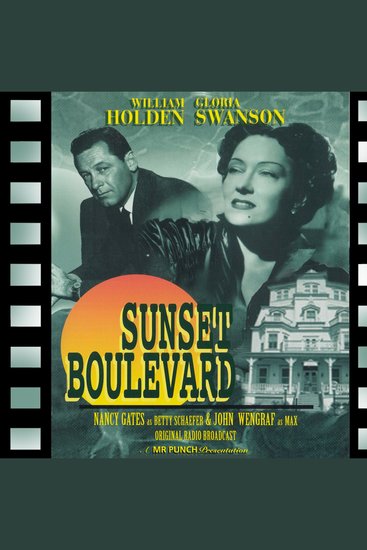
  • Sunset Boulevard - Adapted from the screenplay & performed for radio by the original film stars - cover

    Sunset Boulevard - Adapted from...

    Mr Punch

    • 0
    • 0
    • 0
    Mr Punch Presents: SUNSET BOULEVARD, nominated for eleven Academy Awards, Billy Wilder’s brilliant 1950 film is about the flamboyant silent movie star Norma Desmond (Gloria Swanson) and her pitiful attempt to stage a comeback to the silver screen through her friendship with the young opportunistic screenwriter, played by William Holden. Recreated for the radio with the original stars in this special radio production. 
     
    This high-quality audiobook has been re-mastered and re-edited from the original radio broadcast. 
      
    Also available as part of the Hollywood Playhouse BOX SET, a collection of 14 Oscar winning ear-movies, adapted from the original screenplays & performed for the radio by many of the original film stars in front of a live studio audience. 
      
    These radio dramas were….to become as popular as the movies themselves. Hollywood Movie Memories 
      
    This is an excellent audio product that will appeal to the majority of audiobook listeners. Talking Business 
      
    A lovely series to add to any film, audio or crime lovers’ collection. Audio World
    Zum Buch
  • A Family Memory - Philosophical drama story - cover

    A Family Memory - Philosophical...

    Amr Mounir

    • 0
    • 0
    • 0
    On a train that travels far, she finds herself immersed in a whirlpool of memories… faces from the past, forgotten voices, and unhealed pain. Every stop brings back fragments of her painful past with her family. But are these just memories, or is the train itself carrying her to a confrontation she did not expect?
    Zum Buch