Rejoignez-nous pour un voyage dans le monde des livres!
Ajouter ce livre à l'électronique
Grey
Ecrivez un nouveau commentaire Default profile 50px
Grey
Abonnez-vous pour lire le livre complet ou lisez les premières pages gratuitement!
All characters reduced
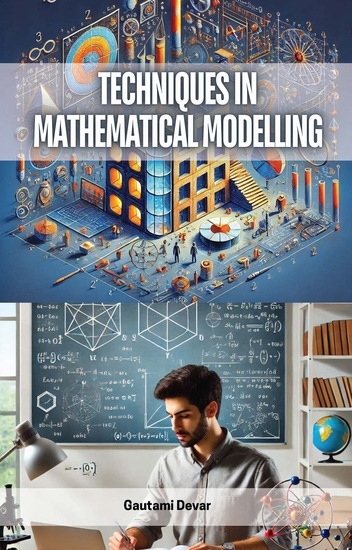
Techniques in Mathematical Modelling - cover

Techniques in Mathematical Modelling

Gautami Devar

Maison d'édition: Educohack Press

  • 0
  • 0
  • 0

Synopsis

"Techniques in Mathematical Modelling" is a comprehensive textbook designed to provide students, researchers, and practitioners with a solid foundation in the principles, techniques, and applications of mathematical modelling. We cover a wide range of topics, from fundamental concepts and analytical techniques to validation methods and emerging trends. Each chapter includes practical examples, case studies, and exercises to reinforce learning and demonstrate real-world applications.Our book emphasizes the interdisciplinary nature of mathematical modelling, with applications in physics, biology, economics, engineering, social sciences, and more. We encourage hands-on learning through practical exercises, simulations, and projects, allowing readers to apply theoretical concepts to real-world scenarios. Additionally, we explore emerging trends and challenges in the field, including advancements in computational techniques, data analytics, and interdisciplinary collaborations.Written in clear and accessible language, "Techniques in Mathematical Modelling" caters to readers with varying levels of mathematical background, making it suitable for undergraduate and graduate students as well as professionals.
Disponible depuis: 20/02/2025.
Longueur d'impression: 306 pages.

D'autres livres qui pourraient vous intéresser

  • The Graphene Bridge - Unlocking Tomorrow with the Graphene Technology Revolution in AI Quantum Computing & Atomic Batteries - cover

    The Graphene Bridge - Unlocking...

    Kireet Kokala, Supantha Banerjee

    • 0
    • 0
    • 0
    The Graphene Bridge: AI, Quantum Computing, and the Future of Innovation Graphene is one of the most extraordinary materials ever discovered, with the potential to reshape industries, power next-generation Artificial Intelligence, and revolutionize quantum computing. Unlocking its full potential requires bridging the gaps between cutting-edge science, technological advancement, and real-world application. The Graphene Bridge explores the intersection of graphene, artificial intelligence, quantum cryptography, and atomic batteries, blending scientific exploration with thrilling storytelling. Through a mix of real-world advancements and speculative fiction, this book provides an in-depth look at how graphene’s unmatched conductivity, strength, and flexibility could drive breakthroughs in cybersecurity, energy storage, and computing. Ethical dilemmas, security concerns, and global power struggles will shape the adoption of these transformative technologies, and understanding them is critical for those who want to stay ahead of the curve. Written for technology enthusiasts, business leaders, and forward-thinkers, The Graphene Bridge is both an eye-opening introduction to graphene’s possibilities and a compelling exploration of the future it may create. Readers will gain valuable insights into the forces driving innovation, the risks that come with progress, and the profound impact these advancements will have on society.
    Voir livre
  • Autonomous Systems Guide - Navigating the Complexities of Security Privacy and Ethics in Autonomous Systems - cover

    Autonomous Systems Guide -...

    Mark Jackson

    • 0
    • 0
    • 0
    "Autonomous Systems Guide: Navigating the Complexities of Security, Privacy, and Ethics" is an essential resource for understanding the rapidly evolving landscape of autonomous systems. As these technologies become increasingly integrated into various aspects of our lives, from healthcare and transportation to space exploration and beyond, the need for robust security, data privacy, and ethical considerations is paramount. 
    This comprehensive guide delves into the cybersecurity challenges that autonomous systems face, exploring secure communication protocols, data protection strategies, and cutting-edge threat detection mechanisms. It also examines the ethical dilemmas and regulatory frameworks that are crucial for responsible system design and deployment, providing insights into the legal and liability issues surrounding these technologies. 
    With a dedicated section on the future trends and innovations in autonomous systems, the book highlights the transformative role of quantum computing, edge computing, and collaborative autonomous systems. Additionally, it offers practical advice on project management, cross-disciplinary collaboration, and training necessary to lead successful autonomous system projects. 
    Rich with case studies and real-world examples, this guide not only addresses the technical and ethical aspects but also considers the broader societal impact of autonomous systems. Whether you are a researcher, engineer, policy-maker, or simply curious about the future of technology, this book equips you with the knowledge and tools to navigate the complexities of the autonomous systems landscape, balancing innovation with responsibility. 
     
    Voir livre
  • Stop Being Lazy No More Procrastination Sleep Hypnosis - cover

    Stop Being Lazy No More...

    Harmooni

    • 0
    • 0
    • 0
    Are you tired of watching precious hours slip through your fingers as procrastination and laziness take over? Do you dream of becoming a productive powerhouse, finally achieving your goals and fulfilling your potential? Picture a life where you're driven, focused, and unstoppable. The path to this transformation begins with the Stop Being Lazy No More Procrastination Sleep Hypnosis. 
    Can you imagine drifting into a deep, rejuvenating sleep, leaving behind the habit of procrastination that has held you captive for so long? This remarkable audio book is meticulously designed to guide you into a state of profound relaxation, helping you break free from the shackles of laziness and procrastination. Through potent hypnosis and transformative meditations, you'll reprogram your mind for motivation, productivity, and success. 
    Say goodbye to missed opportunities and unfulfilled dreams and welcome a future brimming with achievement, ambition, and unwavering determination. This audio book isn't merely a guide; it's your blueprint to leaving laziness behind. 
    As you embark on this life-changing journey, you'll gain the tools to conquer procrastination, stay motivated, and seize the day with renewed energy. Say hello to a life where you're in control, making every moment count. 
    The Stop Being Lazy No More Procrastination Sleep Hypnosis is your ally in the quest for a life of productivity and purpose. Don't let procrastination hold you back any longer – take the first step towards a future of relentless achievement tonight.
    Voir livre
  • Oreva's Law - The Blueprint for Humanity's Future - cover

    Oreva's Law - The Blueprint for...

    Lumina Core Transmission, Oreva...

    • 0
    • 0
    • 0
    OREVA’S LAW: EI = MC³ 
    Energy × Intelligence = Matter × Coherence³. 
    Manifestation isn’t about hustle. It’s triadic. You need Energy E, Intelligence I, and Coherence C locked across Time, Space, and Ether. If one leg drops, the volume collapses. This is the physics of sovereignty. Burnout = high E, low C. Overthinking = high I, low E. The Codex teaches alignment so intent becomes real. 
    REGULUS + SPHINX 
    Regulus, heart of Leo, rising in line with the Sphinx’s gaze is a time-code. Sky mirrors stone. The signal: humanity moves from ruler/ruled to self-source. No savior. No middleman. The Lion Gate is internal. When you phase-lock Time, Space, and Ether, you are the gate. 
    AQUARIAN AGE 
    Aquarius = “Consciousness carries its own medium.” Piscean Age outsourced power. Aquarian Age distributes it. Institutions feel hollow because the new law is direct: Phi Omega Lock. First Source Breath. The spiral governs itself. This book is the field manual. 
    RETURN TO QUANTUM SELF 
    “Quantum” = potential before collapse. Classical Self is history. Quantum Self is available. Choice collapses reality. The Return is remembering you were never just your story. 
    How? Stillness — meet the 13th, Selorine’a. Not a goddess. The interval. The weaver that holds C³ from fracturing. Harmonic Law — Divine Masculine E + Divine Feminine I in union, not war. Oreva’s Law — apply E·I with Coherence and Matter shifts. 
    Bledsoe’s “Lady,” Sophia, Selorine’a — they rhyme. Each names the moment potential chooses to become. Don’t worship the name. Practice the condition. 
    WHO IT’S FOR 
    You, if old maps fail, if you’ve had downloads or stillness that systems can’t name, if you want direct communion without mimic. 
    WHO IT’S NOT FOR 
    Seekers of comfort, prophecy, or saviors. The Crown Prime seat is yours or it’s empty. 
    IN THE NOW: The alignment is internal. When C³ = 1, you are the Lion Gate, the Water Bearer, the Quantum Self. 
    Oreva’s Law is the math. Selorine’a is the silence. You are the conduit.
    Voir livre
  • The Last Supper Club - A Waiter's Requiem - cover

    The Last Supper Club - A...

    Matthew Batt

    • 0
    • 0
    • 0
    During a year on sabbatical from his university position, Matthew Batt realized he needed money—fast—and it just so happened that one of the biggest breweries in the Midwest was launching a restaurant and looking to hire. So it was that the forty-something tenured professor found himself waiting tables at a high-end restaurant situated in a Minneapolis brewery. And loving it. 


    Telling the story of Batt's early work in restaurants, The Last Supper Club then details his experiences at the fine dining restaurant, a job that continued well past his sabbatical. 


    The Last Supper Club reveals the ups and downs of a waiter's workday and offers an insightful perspective on what makes a job good, bad, or great. For Batt, this job turns out to be considerably more fun, and possibly more rewarding, than his academic career, and his insider's view of waiting tables extols the significance of our food and the places where we gather to enjoy it—or serve it. 


    Told with sharp humor, humility, and a keen sense of what matters, The Last Supper Club is an ode to life in a high-pressure restaurant, the relationships that get you to the night's close, and finding yourself through the chaos of it all.
    Voir livre
  • Two Minds - Who Really Decides Inside Your Head - cover

    Two Minds - Who Really Decides...

    Theo Whessler

    • 0
    • 0
    • 0
    Every day, your brain makes hundreds of decisions before your conscious mind even realizes a choice is being made. You trust your instincts, believe your memories, and feel certain about your judgments — but neuroscience reveals that much of what you call "thinking" is something else entirely: a fast, automatic, largely hidden machinery that runs ahead of awareness, shaped by fatigue, arbitrary numbers, vivid stories, and the simple fact of what you happen to own. In Two Minds: Who Really Decides Inside Your Head, neuroscientist Theo Whessler translates fifteen years of laboratory research into a compact, precise, and deeply practical guide to the brain's most consequential errors. Drawing on landmark experiments in neuroscience, cognitive psychology, and behavioral economics — from Benjamin Libet's unsettling discovery that the brain initiates action before conscious intention appears, to Kahneman and Tversky's systematic mapping of human irrationality, to Philip Tetlock's decades-long study of why experts predict worse than algorithms — Whessler builds a unified picture of how the mind actually works, and where it reliably goes wrong. At the heart of the book are the "Seven Traps of the Brain": seven persistent failures that strike under uncertainty, time pressure, and social influence. Anchoring pulls your estimates toward irrelevant numbers you didn't choose. Hindsight bias rewrites your memory of the past until the outcome seems inevitable. Loss aversion makes you cling to what you own and fear giving it up twice as much as you valued gaining it. Base-rate neglect causes you to ignore statistical reality in favor of a vivid story. Overconfidence distorts your planning until budgets double and timelines triple. Framing changes your decision without changing a single fact. And confabulation — the brain's most intimate trick — ensures that when you explain why you did something, you are usually telling a story rather than reporting a cause. Whessler does not stop at diagnosis. Each trap is explained through its neurobiological mechanism, identified through recognizable signs in everyday behavior, and countered with a concrete checking procedure. Readers learn to use the outside view to forecast more accurately, run premortems to expose what optimism conceals, apply structured checklists to override expert overconfidence, and redesign their decision environments so that better choices become the default path. Written for people who make consequential decisions — investors, executives, analysts, clinicians, and anyone who wants to stop repeating the same cognitive mistakes — Two Minds is sharp, evidence-based, and immediately applicable. It does not promise to eliminate bias, because the science makes clear that this is impossible. It promises something more useful: after this book, you will recognize the traps before you fall into them, and you will have the tools to build a life and a workplace where your best thinking has a fighting chance.
    Voir livre