Begleiten Sie uns auf eine literarische Weltreise!
Buch zum Bücherregal hinzufügen
Grey
Einen neuen Kommentar schreiben Default profile 50px
Grey
Jetzt das ganze Buch im Abo oder die ersten Seiten gratis lesen!
All characters reduced
Pictographs of the North American Indians - Illustrated Edition - cover

Pictographs of the North American Indians - Illustrated Edition

Garrick Mallery

Verlag: e-artnow

  • 0
  • 0
  • 0

Beschreibung

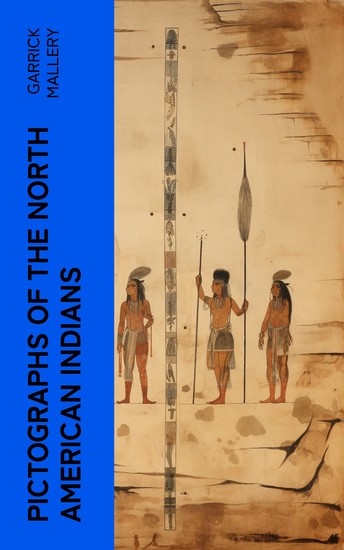
A pictograph is a writing by picture. It conveys and records an idea or occurrence by graphic means without the use of words or letters. The execution of the pictures of which it is composed often exhibits the first crude efforts of graphic art, and their study in that relation is of value. When pictures are employed as writing the conception intended to be presented is generally analyzed, and only its most essential points are indicated, with the result that the characters when frequently repeated become conventional, and in their later forms cease to be recognizable as objective portraitures. A general deduction made after several years of study of pictographs of all kinds found among the North American Indians is that they exhibit very little trace of mysticism or of esotericism in any form. They are objective representations and cannot be treated as ciphers or cryptographs in any attempt at their interpretation. A knowledge of the customs, costumes, including arrangement of hair, paint, and all tribal designations, and of their histories and traditions is essential to the understanding of their drawings, for which reason some of those particulars known to have influenced pictography are set forth in this book, and others are suggested which possibly had a similar influence.
Verfügbar seit: 15.12.2023.
Drucklänge: 243 Seiten.

Weitere Bücher, die Sie mögen werden

  • In Their Own Words - Testimony from the Students of Canada’s Indigenous Residential School Program - cover

    In Their Own Words - Testimony...

    Darren Grimes

    • 0
    • 0
    • 0
    What is the cost of an education? 
    Is education an additive process or a reductive one? 
    How does one weigh the benefits of tradition against the threat of being at odds with the future? 
    How does one refuse the offer of a better life for their children? 
    What if the offer is compulsory? 
    What happens when the tree of knowledge bares rotten fruit? 
    While the history of Canada's Residential School program is only just beginning 
    to be unearthed, there are already enough first hand accounts to begin asking 
    some of these questions. The words of the individuals included in this book 
    offer just a glimpse of the results of the effort of one group of people to 
    educate people who were in many cases not seeking the knowledge being 
    offered. These are tales of lessons learned, languages lost, traditions 
    replaced, & charity corrupted.
    Zum Buch
  • Banking on Slavery - Financing Southern Expansion in the Antebellum United States - cover

    Banking on Slavery - Financing...

    Sharon Ann Murphy

    • 0
    • 0
    • 0
    A sobering excavation of how deeply nineteenth-century American banks were entwined with the institution of slavery. 
     
    It’s now widely understood that the fullest expression of nineteenth-century American capitalism was found in the structures of chattel slavery. It’s also understood that almost every other institution and aspect of life then was at least entangled with—and often profited from—slavery’s perpetuation. Yet as Sharon Ann Murphy shows in her powerful and unprecedented book, the centrality of enslaved labor to banking in the antebellum United States is far greater than previously thought. 
      
    Banking on Slavery sheds light on precisely how the financial relationships between banks and slaveholders worked across the nineteenth-century South. Murphy argues that the rapid spread of slavery in the South during the 1820s and ’30s depended significantly upon southern banks’ willingness to financialize enslaved lives, with the use of enslaved individuals as loan collateral proving central to these financial relationships. She makes clear how southern banks were ready—and, in some cases, even eager—to alter time-honored banking practices to meet the needs of slaveholders. In the end, many of these banks sacrificed themselves in their efforts to stabilize the slave economy. Murphy also details how banks and slaveholders transformed enslaved lives from physical bodies into abstract capital assets. Her book provides an essential examination of how our nation’s financial history is more intimately intertwined with the dehumanizing institution of slavery than scholars have previously thought.
    Zum Buch
  • Collective Action and the Evolution of Social Norms: Book Summary & Analysis - cover

    Collective Action and the...

    Briefly Summaries

    • 0
    • 0
    • 0
    This is a concise summary and analysis of Collective Action and the Evolution of Social Norms, by Elinor Ostrom.
     
    It is not the original book and is not affiliated with or endorsed by 
     Elinor Ostrom.
     
    Ideal those seeking a quick and insightful overview.
     
    This insightful book delves into the complexities of collective action and how social norms evolve to facilitate cooperation among individuals and communities. Exploring the intersection of economics, sociology, and political science, it examines the mechanisms through which trust, reciprocity, and shared understanding emerge in diverse social contexts. Through real-world examples and rigorous analysis, the book challenges traditional theories of centralized authority, offering a groundbreaking perspective on how communities self-organize to address common-pool resource problems and other collective challenges.
    Zum Buch
  • Traces of Enayat - cover

    Traces of Enayat

    Iman Mersal

    • 0
    • 0
    • 0
    "A subtle and universal exploration of identity." —Aida Alami, the New York Times 


    Cairo, 1963: four years before her lone novel is finally published, the writer Enayat al-Zayyat takes her own life at age twenty-seven. For the next three decades, it's as if Enayat never existed at all. 


    Years later, when celebrated Egyptian poet Iman Mersal stumbles upon Enayat's long-forgotten Love and Silence in a Cairo book stall, she embarks on a journey of reflection and rediscovery that leads her ever closer to the world and work of Enayat al-Zayyat. 


    In this luminous biographical detective story, Mersal retraces Enayat's life and afterlife though interviews with family members and friend, even tracking down the apartments, schools, and sanatoriums where Enayat spent her days. As Mersal maps two simultaneous psychogeographies—from the glamor of golden-age Egyptian cinema to the Cairo of Mersal's own past—a remarkable portrait emerges of two women striving to live on their own terms. With Traces of Enayat, Iman Mersal embraces the reciprocal relationship between a text and its reader, between past and present, between author and subject.
    Zum Buch
  • How to Have a Life - An Ancient Guide to Using Our Time Wisely - cover

    How to Have a Life - An Ancient...

    Séneca

    • 0
    • 0
    • 0
    A vibrant new translation of Seneca's "On the Shortness of Life," a pointed reminder to make the most of our time 


    Who doesn't worry sometimes that smart phones, the Internet, and TV are robbing us of time and preventing us from having a life? How can we make the most of our time on earth? In the first century AD, the Stoic philosopher Seneca the Younger offered one of the most famous answers to that question in his essay "On the Shortness of Life"—a work that has more to teach us today than ever before. In How to Have a Life, James Romm presents a vibrant new translation of Seneca's brilliant essay, plus two Senecan letters on the same theme, complete with an inviting introduction. 


    With devastating satiric wit, skillfully captured in this translation, Seneca lampoons the ways we squander our time and fail to realize how precious it is. We don't allow people to steal our money, yet we allow them to plunder our time, or else we give it away ourselves in useless, idle pursuits. Seneca also describes how we can make better use of our brief days and years. In the process, he argues, we can make our lives longer, or even everlasting, because to live a real life is to attain a kind of immortality.
    Zum Buch
  • The Self-Esteem Workbook - A Beginner's Guide to Improving Self-Esteem and Achieve Your Goals Release Self-Doubt Build Self-Compassion and Improve Your Life - cover

    The Self-Esteem Workbook - A...

    Marika L. Jordan

    • 0
    • 0
    • 0
    The Self-Esteem Workbook is an essential guide for anyone looking to improve their self-esteem and live a more fulfilling life. This comprehensive workbook is filled with practical exercises, strategies, and techniques that are designed to help you build confidence, overcome self-doubt, and develop a healthy sense of self-worth. 
    With clear and concise language, Marika L. Jordan guides you through a step-by-step process that will help you identify your limiting beliefs, challenge negative self-talk, and cultivate a more positive mindset. Through journaling prompts, reflection exercises, and other powerful tools, you'll learn how to recognize your strengths and achievements, set realistic goals, and establish healthy boundaries. 
    Whether you're struggling with low self-esteem, anxiety, or depression, or simply looking to boost your confidence and self-assurance, The Self-Esteem Workbook is the ultimate resource for anyone seeking to cultivate a more positive and empowering self-image. So why wait? Start your journey toward self-discovery and personal growth today!
    Zum Buch