Begleiten Sie uns auf eine literarische Weltreise!
Buch zum Bücherregal hinzufügen
Grey
Einen neuen Kommentar schreiben Default profile 50px
Grey
Jetzt das ganze Buch im Abo oder die ersten Seiten gratis lesen!
All characters reduced
Death in Irish prehistory - cover

Death in Irish prehistory

Gabriel Cooney

Verlag: Royal Irish Academy

  • 0
  • 0
  • 0

Beschreibung

This is a book about life and death over 8,500 years in Ireland. It explores the richness of the mortuary record that we have for Irish prehistory (8000 BC to AD 500) as a highlight of the archaeological record for that long period of time. Because we are dealing with how people coped with death, this rich and diverse record of mortuary practice is also relevant to understanding how we deal with death today, which is just as central a social issue as it always was.
Verfügbar seit: 31.10.2023.
Drucklänge: 456 Seiten.
Weitere Bücher, die Sie mögen werden

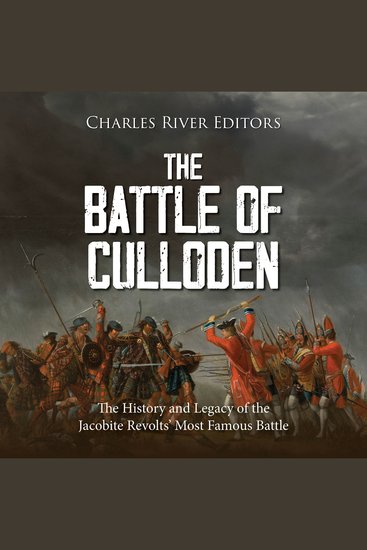
  • Battle of Culloden The: The History and Legacy of the Jacobite Revolts’ Most Famous Battle - cover

    Battle of Culloden The: The...

    Editors Charles River

    • 0
    • 0
    • 0
    The Jacobites conjure up many images to 21st century Britons, including romantic heroism, the Outlander series, and Bonnie Prince Charlie as the doomed hero of the cause, but Jacobitism was a cause that had far reaching consequences across 18th century Europe. The Jacobites were not only supporters of the exiled Stuart monarchy, but also against the political and religious settlements agreed to across the British Isles. As Jacobite historians such as Daniel Szechi and Frank McLynn have noted, the specter of the Jacobite threat was present for the British government and monarchy in their dealings with European powers throughout the 18th century. This was especially true in France, the country that supported the exiled Stuarts and gave them a home until 1714. This soured the French monarchy’s relationship with Britain, and the Hanoverian kings who replaced the Stuarts were always aware of it. 
    Of all the fighting conducted by the Jacobites, the Battle of Culloden, fought on April 16, 1746, was probably the most famous battle of them all, and it was a complete disaster for the Jacobite army. The government army outnumbered and outgunned the Jacobites, and when snow fell that morning, it left the battlefield wet and boggy. The exposed field also meant there would be nowhere for the Jacobites to avoid the enemy’s gunfire. The battle began around 1:00 p.m. with British artillery fire that the Jacobites struggled to respond against, and the famous Highland charge employed by the Scottish clans was hopeless in a boggy field. Their opposition had learned from previous encounters by attacking their opponent on the right instead of straight ahead, which bypassed the Highlanders’ shield. The battle lasted about an hour, and in that time the Jacobites lost about 2,000 men, a resounding defeat that marked the end of the Jacobites’ struggle to restore a Stuart to the throne.
    Zum Buch
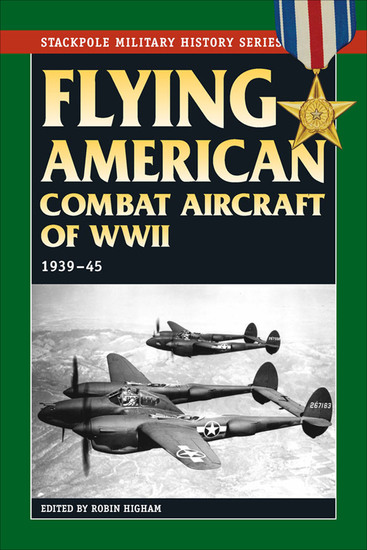
  • Flying American Combat Aircraft of World War II - 1939–45 - cover

    Flying American Combat Aircraft...

    Carol Williams, Robin Higham,...

    • 0
    • 0
    • 0
    WWII fighter pilots share stories of flying into battle from Berlin to Tokyo in Mustangs, Spitfires, Flying Fortresses and more. In Flying American Combat Aircraft of World War II, U.S. Air Force veterans recount thrilling tales that put readers in the cockpit. These personal remembrances of aerial combat offer vividly detailed depictions of fighting across Europe as well as in the Pacific.   The twenty-nine contributors also cover a wide range of America’s WWII-era combat aircraft, including the B-25 Mitchell, B-29 Superfortress, P-47 Thunderbolt, P-40 Kittyhawk, B-18 bomber, and many others. Their stories are enhanced by dozens of photographs of the planes and the pilots who flew them.
    Zum Buch
  • A Rare Recording of President Calvin Coolidge - cover

    A Rare Recording of President...

    Calvin Coolidge

    • 0
    • 0
    • 0
    Calvin Coolidge (July 4, 1872 - January 5, 1933) was the 30th president of the United States from 1923 to 1929. Born in Vermont, Coolidge was a Republican lawyer from New England who climbed up the ladder of Massachusetts state politics, becoming the state's 48th governor. His response to the Boston Police Strike of 1919 thrust him into the national spotlight as a man of decisive action. Coolidge was elected the country's 29th vice president the next year, succeeding the presidency upon the sudden death of President Warren G. Harding in 1923. Elected in his own right in 1924, Coolidge gained a reputation as a small-government conservative distinguished by a taciturn personality and dry sense of humor, receiving the nickname "Silent Cal".
    Zum Buch
  • The Way of Heaven and Earth - From Either Or to the Catholic Both And - cover

    The Way of Heaven and Earth -...

    Matthew Becklo

    • 0
    • 0
    • 0
    A crisis of polarization more and more threatens the future of civilization. Whether it’s philosophy, theology, politics, or culture, we find ourselves falling into stark either/or dilemmas: Religion or science? Conservative or liberal? Faith or works? We can’t help but choose one idea at the expense of the other, falling into zero-sum games, mutual extremes, and the endless division of human life.   In The Way of Heaven and Earth, Matthew Becklo offers a way of interpreting this crisis: Christ and “the Catholic both/and.” Framing our greatest dilemmas as “heaven-earth dilemmas”—choices between God or man, God’s place or man’s place, the spiritual or the physical, or the spirit or the flesh—Becklo shows that our greatest hope for overcoming our divisions is in Christ, who is “the Way of heaven and earth,” and the Catholic Church, which is the fullness of the Way.   With the help of Scripture, Catholic teaching, St. Augustine, St. Thomas Aquinas, and various philosophers, theologians, and artists, The Way of Heaven and Earth finds new hope in this forgotten Way, which calls us into the paradoxes of the human journey. 
    Zum Buch
  • Paranormal Zones - cover

    Paranormal Zones

    Joslan F. Keller

    • 0
    • 0
    • 0
    The ghosts of Hollywood, the death of Edgar Allan Poe, the loving Martian, the Zone of Silence, cursed diamonds. Joslan F. Keller tells us eighteen disturbing stories that defy reason. Eighteen paranormal zones from around the world, all authentic and documented by the author, which shake our certainties—the unexplained phenomena in the sky, the incursions into the world of spirits, encounters with unusual characters, close encounters with UFOs, visits to disturbing places.
    
    Doesn't the improbable arise from our still-limited knowledge and our inability to rationally explain phenomena that go beyond our understanding? The world is neither black nor white. Are there not an infinite number of grey areas, at the frontiers of the unknown, dominated by forces whose mechanisms are little explored, or not at all?
    Zum Buch
  • Rules - A Short History of What We Live By - cover

    Rules - A Short History of What...

    Lorraine Daston

    • 0
    • 0
    • 0
    Rules order almost every aspect of our lives. They set our work hours, dictate how we drive and set the table, tell us whether to offer an extended hand or cheek in greeting, and organize the rites of life, from birth through death. We may chafe under the rules we have, and yearn for ones we don't, yet no culture could do without them. In Rules, historian Lorraine Daston traces their development in the Western tradition and shows how rules have evolved from ancient to modern times. Drawing on a rich trove of examples, including legal treatises, cookbooks, military manuals, traffic regulations, and game handbooks, Daston demonstrates that while the content of rules is dazzlingly diverse, the forms that they take are surprisingly few and long-lived. 


    Daston uncovers three enduring kinds of rules: the algorithms that calculate and measure, the laws that govern, and the models that teach. She illustrates how rules can change—how supple rules stiffen, or vice versa, and how once bothersome regulations become everyday norms. Rules have been devised for almost every imaginable activity and range from meticulous regulations to the laws of nature. Daston probes beneath this variety to investigate when rules work and when they don't, and why some philosophical problems about rules are as ancient as philosophy itself while others are as modern as calculating machines.
    Zum Buch