Rejoignez-nous pour un voyage dans le monde des livres!
Ajouter ce livre à l'électronique
Grey
Ecrivez un nouveau commentaire Default profile 50px
Grey
Abonnez-vous pour lire le livre complet ou lisez les premières pages gratuitement!
All characters reduced
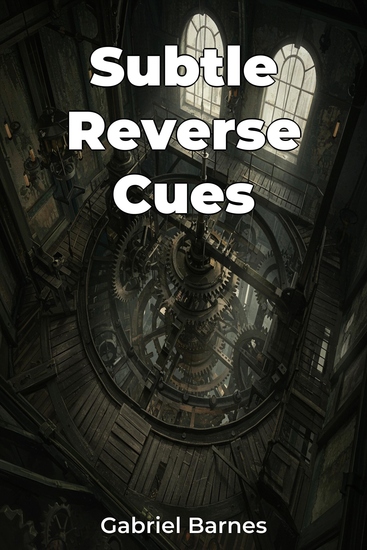
Subtle Reverse Cues - cover

Subtle Reverse Cues

Gabriel Barnes

Traducteur A AI

Maison d'édition: Publifye

  • 0
  • 0
  • 0

Synopsis

Subtle Reverse Cues explores the hidden world of reverse psychology, revealing the subtle cues and psychological triggers that influence our daily decisions. It examines how understanding these almost invisible signals can empower you in social dynamics, enhance your influence ethically, and deepen your self-awareness. The book highlights the importance of recognizing these cues, as human behavior is often less rational than we think. For example, subtle social pressures, as demonstrated in historical experiments like the Milgram experiment, can significantly sway individual actions. This self-help guide focuses on identifying covert triggers, understanding the mechanics of reverse psychology, and applying these techniques ethically.

 
The book progresses from introducing core concepts to exploring the psychological principles behind reverse psychology, such as reactance theory. Major sections cover identifying verbal and non-verbal cues, practical techniques for applying reverse psychology in negotiation and relationships, and a detailed examination of ethical considerations.

 
Providing unique value, Subtle Reverse Cues hones in on the almost invisible signals that prime individuals for influence, rather than overt manipulation tactics.
Disponible depuis: 27/02/2025.
Longueur d'impression: 88 pages.

D'autres livres qui pourraient vous intéresser

  • Thirteenth: Greatest of Centuries - cover

    Thirteenth: Greatest of Centuries

    James Joseph Walsh

    • 0
    • 0
    • 0
    It cannot but seem a paradox to say that the Thirteenth was the greatest of centuries. To most people the idea will appear at once so preposterous that they may not even care to consider it. A certain number, of course, will have their curiosity piqued by the thought that anyone should evolve so curious a notion. Either of these attitudes of mind will yield at once to a more properly receptive mood if it is recalled that the Thirteenth is the century of the Gothic cathedrals, of the foundation of the university, of the signing of Magna Charta, and of the origin of representative government with something like constitutional guarantees throughout the west of Europe. The cathedrals represent a development in the arts that has probably never been equaled either before or since. The university was a definite creation of these generations that has lived and maintained its usefulness practically in the same form in which it was then cast for the seven centuries ever since. The foundation stones of modern liberties are to be found in the documents which for the first time declared the rights of man during this precious period. (Summary from Preface)
    Voir livre
  • The Ballad Of The White Horse - An epic poem about King Alfred's Christian endeavors resisting the Viking conquest of England - cover

    The Ballad Of The White Horse -...

    Gilbert Keith Chesterton

    • 0
    • 0
    • 0
    "The Last Great Epic Poem in the English Language"- Dale Ahlquist"The ending is absurd. The brilliant smash and glitter of the words and phrases (when they come off, and are not mere loud colours) cannot disguise the fact that G. K. C. knew nothing whatever about the 'North', heathen or Christian."- JRR TolkienThe tale of King Alfred, the Christian king who in 878AD battled a Viking invasion that had conquered the rest of England and burnt some cakes. He then became the last holdout of resistance against the invaders and forced the conversion of the Danish king Guthrum to Christianity after the battle of Ethandun. Chesterton says "This ballad needs no historical notes, for the simple reason that it does not profess to be historical. All of it that is not frankly fictitious, as in any prose romance about the past, is meant to emphasize tradition rather than history. That is the use of tradition: it telescopes history."Named after the chalk horses carved into English hills (and partly set at Uffington), it begins with an exhortation to true Christianity in the face of despair and defeat, and ends with a prediction of more barbarian invasions. It focuses on the nature of faith in times of despair, and on the true strength of local kings in the face of empires."... you and all the kind of ChristAre ignorant and brave,And you have wars you hardly winAnd souls you hardly save...."In some far century, sad and slow,I have a vision, and I knowThe heathen shall return...."They shall come mild as monkish clerks,With many a scroll and pen;And backward shall ye turn and gaze,Desiring one of Alfred's days,When pagans still were men."
    Voir livre
  • Rifles - Six Years with Wellington's Legendary Sharpshooters - cover

    Rifles - Six Years with...

    Mark Urban

    • 0
    • 0
    • 0
    The 95th Rifles - Wellington's sharpshooters - first into battle and last out.Acclaimed military writer Mark Urban explores the extraordinary story of these military pioneers; the toughest and deadliest infantrymen in Wellington's Army.Immortalised in Bernard Cornwell's Sharpe novels, the 95th Rifles were skirmishers tasked with acting as Wellington's advanced guard. It was new technology for the warfare of the time: they travelled light, moved rapidly, armed with the accurate rifles that would allow them to take shots from distance. The 95th Rifles were the prototype of the modern infantryman.Mark Urban's fascinating history of the 95th is a must-listen for anyone interested in military history.From the author of Task Force Black, Big Boys' Rules and The Tank War.'If you like Sharpe, then this book is a must, your Christmas present solved.' Bernard Cornwell, Daily Mail
    Voir livre
  • The New Censorship - How the War on the Media is Taking Us Down - cover

    The New Censorship - How the War...

    Ayala Panievsky

    • 0
    • 0
    • 0
    'Essential' - Alan Rusbridger'Riveting' - Arash Azizi, The Atlantic'Exceptional' - Michael Hauser-Tov, Haaretz 'Profound, compelling, and fascinating' - Emily Maitlis, The News Agents'A must-read' - Jane Martinson, The GuardianAs we find ourselves in a time of democratic decay all over the world, with relentless attempts to undermine truth and facts and unprecedented technological tools to spread disinformation and incite violence, brave journalism is needed more than ever. In The New Censorship esteemed academic, former journalist and activist Ayala Panievsky focuses on the unfortunate and unexpected mechanisms through which today's media has inadvertently amplified the anti-democratic movement that looms over our societies. From the birth of 'the strategic bias' to weaponising liberal norms against liberal democracy, the populist right has found a way to exercise a more effective and socially acceptable type of silencing and manipulation. Instead of banning stories, they spread flows of disinformation, which take hours and days to debunk. Instead of silencing, they shout louder. Instead of blue-pencilling, they employ fake users, bots, and outrageous smear campaigns to dominate the conversation. Heavy-handed censorship is unnecessary when one can manipulate people to censor themselves, or simply stop listening. Based on cutting-edge empirical research, personal experience in newsrooms and parliament corridors and a decade of living under populism in power in Israel, Panievsky will not only explain how we got here but also lay out what we all could (and should) do to restart the conversation and protect our right to know.
    Voir livre
  • The Prophet - by Kahlil Gibran - cover

    The Prophet - by Kahlil Gibran

    Kahlil Gibran

    • 0
    • 0
    • 0
    The Prophet by Khalil Gibran is a timeless masterpiece of poetic prose that explores universal themes of love, life, and the human experience. Written in a deeply lyrical and spiritual tone, the book follows Almustafa, a wise prophet, as he prepares to leave the city of Orphalese after twelve years. Before his departure, the townspeople gather to seek his counsel, prompting him to share profound reflections on 26 essential aspects of life, including love, marriage, work, freedom, joy, and sorrow. Through its eloquent and thought-provoking insights, The Prophet offers readers an inspiring guide to living with purpose, compassion, and self-awareness. Its enduring relevance and universal wisdom have made it a beloved literary treasure across generations.
    Voir livre
  • Stories on lord Ganesh series - 19 - From various sources of Ganesh purana - cover

    Stories on lord Ganesh series -...

    Anusha HS

    • 0
    • 0
    • 0
    Lord Ganesh is the son of Goddess Parvati and Lord Shiva. He is the first one to get worshipped before worshipping any other god. We can say in short that there is no Hindu who doesn't perform Lord Ganesh’s worship. In Ramayana Lord Rama had worshipped Lord Ganesh. 
    In Mahabharata Lord Krishna had also worshipped Lord Ganesh. They have become the role models to the whole world. Before the beginning of any work it is common to worship Lord Ganesh. There are many Holy hymns on Lord Ganesh. Lord Ganesh’s favorite food is modak. 
    He gets pleased if we offer Durva grass to him. He also loves red Hibiscus flower. He is called the vighnaharta because he wards off all the obstacles in our life. He is also called vighnaraja. There are infinite names to Lord Ganesh which we cannot explain. He ties a snake around his waist. 
    The vehicle of Lord Ganesh is mouse in Hindu culture. Lord Ganesh is worshipped all over India. His miracles have been described in all of the 18 Puranas. There are many forms of Lord Ganesh. 
    He has got two wives one is riddhi and the other is siddhi.Lord Ganesh has got 32 forms of incarnations. The modak which you offer to Lord Ganesh will give you good results. Lord Ganesh does not bias among his devotees. He is specially worshipped on sankashti days. On Ganesh Chaturthi people fast and perform vrath.On this day it is forbidden to see Chandra the moon.
    Voir livre