Begleiten Sie uns auf eine literarische Weltreise!
Buch zum Bücherregal hinzufügen
Grey
Einen neuen Kommentar schreiben Default profile 50px
Grey
Jetzt das ganze Buch im Abo oder die ersten Seiten gratis lesen!
All characters reduced
Sound Therapy Effects - cover

Sound Therapy Effects

Gabriel Barnes

Übersetzer A AI

Verlag: Publifye

  • 0
  • 0
  • 0

Beschreibung

Sound Therapy Effects explores how sound frequencies, vibrations, and music can significantly impact mental well-being. The book argues that sound is an underutilized resource, delving into how specific auditory stimuli affect brain activity and can be harnessed to alleviate stress, manage mood disorders, and enhance cognitive function. For example, certain sound patterns can modulate the nervous system, influencing emotional states.

 
The book is structured around the neuroscience of sound, practical applications of sound therapy, and the future of sound-based interventions. It examines techniques like guided meditation with music, binaural beats, and sound baths, offering a comprehensive view of their mechanisms and effectiveness.

 
What sets this book apart is its emphasis on personalized sound interventions, tailoring programs to individual needs rather than a one-size-fits-all approach. Readers will learn how to apply sound-based practices in their daily routines, such as using calming music or practicing mindfulness with nature sounds.

 
By synthesizing empirical research, clinical observations, and expert opinions, Sound Therapy Effects empowers readers to actively manage their mental health and complement existing therapeutic interventions.
Verfügbar seit: 23.02.2025.
Drucklänge: 86 Seiten.


Weitere Bücher, die Sie mögen werden

  • Empathy Takes Action - An Autistic Therapist on the Radical Work of Connection - cover

    Empathy Takes Action - An...

    Aimee Cliff

    • 0
    • 0
    • 0
    Mainstream psychology has long accepted that some people (like those with autism) are naturally more logical and unemotional, while others (like so-called empaths) intuitively experience the feelings of those around them as deeply as their own. 
     
    But this is wrong. Aimee Cliff, an autistic psychotherapist who empathizes for a living, knows this firsthand. We are all are capable of empathy, because empathy is something you do, not something you are―meaning you can get better at it if you choose to practice. 
     
    Drawing on scientific research, clinical experience, and interviews with neurodivergent people, Cliff examines how empathy works in the brain and body and lays out the five pillars of true empathy: Empathy is humble, empathy is embodied, empathy is amoral, empathy is radical, and empathy is work. 
     
    At the heart of this expansive new definition is the promise that every one of us can learn to improve our relationships with our fellow humans. We just have to be willing to do the work to close the space between us. 
     
    Empathy Takes Action shows us the way to build more loving, kind, and supportive communities and to make room for every kind of mind.
    Zum Buch
  • Reconstructing the Dreamland - The Tulsa Riot of 1921: Race Reparations and Reconciliation (Updated Edition) - cover

    Reconstructing the Dreamland -...

    Alfred L. Brophy

    • 0
    • 0
    • 0
    The 1921 Tulsa Race Riot was the country's bloodiest civil disturbance of the century. Thirty city blocks were burned to the ground, perhaps 150 died, and the prosperous black community of Greenwood, Oklahoma, was turned to rubble.Alfred L. Brophy draws on his own extensive research into contemporary accounts and court documents to chronicle this devastating riot, showing how and why the rule of law quickly eroded. Brophy shines his lights on mob violence and racism run amok, both on the night of the riot and the following morning. Equally important, he shows how the city government and police not only permitted looting, shootings, and the burning of Greenwood, but actively participated in it by deputizing white citizens haphazardly, giving out guns and badges, or sending men to arm themselves. Likewise, the National Guard acted unconstitutionally, arresting every black resident they found, leaving property vulnerable to the white mob.Brophy's stark narrative concludes with a discussion of reparations for victims of the riot through lawsuits and legislative action. That case has implications for other reparations movements, including reparations for slavery. This updated edition features a new foreword by Randall Kennedy.
    Zum Buch
  • How Fascism Works: Book Summary & Analysis - cover

    How Fascism Works: Book Summary...

    Briefly Summaries

    • 0
    • 0
    • 0
    This is a concise summary and analysis of How Fascism Works, by Jason Stanley.
     
    It is not the original book and is not affiliated with or endorsed by Jason Stanley.
     
    Ideal those seeking a quick and insightful overview.
     
    How Fascism Works offers a penetrating examination of the mechanisms that fascist ideologies employ to seize and maintain power. With historical examples and contemporary insights, this book dissects the tactics of propaganda, division, and fear, revealing how these strategies exploit societal vulnerabilities to undermine democracy and promote authoritarianism. It is an essential guide for understanding the warning signs and combating the resurgence of fascist tendencies in the modern world.
    Zum Buch
  • The Olympian Gods - cover

    The Olympian Gods

    Henry M. Tichenor

    • 0
    • 0
    • 0
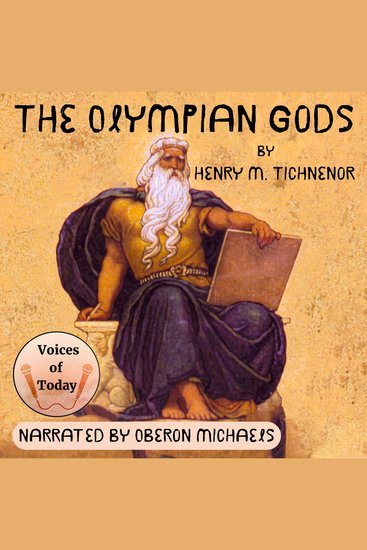
    The Olympian GodsBy Henry M. Tichenor Narrated by Oberon MichaelsHenry Mulford Tichenor (1858 - 1922) was a writer and journalist, who was a very active free thinker in the early Twentieth Century.A special target of Tichenor was organized religion, which he viewed as an absurdly contrived cultural artefact. In The Olympian Gods he applies a critical scalpel to the religion of the ancient Greeks,  which he regarded as an obvious precursor to Christianity.   Production copyright 2024 Voices of Today
    Zum Buch
  • Socialism: Utopian and Scientific - cover

    Socialism: Utopian and Scientific

    Friedrich Engels

    • 0
    • 0
    • 0
    The main idea of "Socialism: Utopian and Scientific" (1880) was distinguishing scientific socialism and utopian socialism. Engels begins by chronicaling the thought of utopian socialists, starting with Saint-Simon. He then proceeds to Fourier and Robert Owen. In chapter two, he summarizes dialectics, and then chronicles the thought from the ancient Greeks to Hegel. Chapter three summarizes dialectics in relation to economic and social struggles, essentially echoing the words of Marx. (Introduction by Wikipedia)
    Zum Buch
  • Ancient Egyptian Astronomy and Astrology: The History of Celestial Observations in Egypt - cover

    Ancient Egyptian Astronomy and...

    Charles River Editors

    • 0
    • 0
    • 0
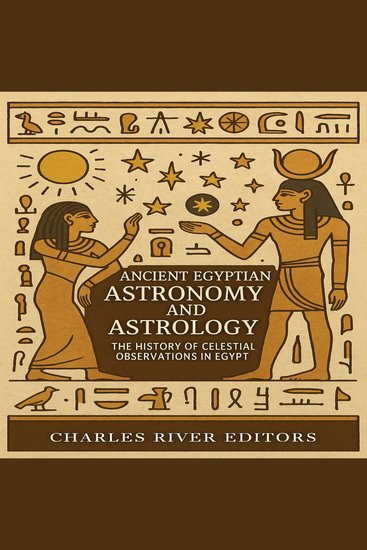
    Among the most intriguing aspects of ancient Egyptian culture is the relationship between their observations of the heavens and their beliefs about life, death, and cosmic order. While modern Egyptologists debate whether the Egyptians practiced astrology in the sense familiar to people today, it is universally acknowledged that they maintained a profound “Star Religion” from very early times. The term “Star Religion” encompasses a reverence for celestial phenomena, especially the stars, and their integration into religious ritual, calendar systems, and mythology. However, whether this system extended to linking human birth and life with celestial positions remains contentious. 
    	Some independent researchers, such as John Anthony West, an American Egyptologist and writer, argue that the Egyptians did indeed incorporate astrology as part of their sacred science. West contends that astronomical observations were closely connected to the timing of human life and the divine order, implying that celestial patterns influenced both earthly events and the lives of individuals. Traditional Egyptologists, however, caution against projecting later astrological practices backward into the prehistoric or early dynastic periods of Egypt, emphasizing that surviving textual evidence primarily reflects religious and ritualistic use of celestial phenomena rather than predictive or personal astrology. 
    Regardless of how they’re analyzed, from the earliest periods of their civilization, the Egyptians observed the night sky with remarkable attention to detail. Astronomical phenomena were integrated into their ritual calendar, architecture, and mythological narratives, and the brightest star visible from Earth, Sirius (known in ancient Egypt as Spdt), is mentioned as early as 2300 BCE in the Pyramid Texts, although it was undoubtedly observed much earlier.
    Zum Buch