Begleiten Sie uns auf eine literarische Weltreise!
Buch zum Bücherregal hinzufügen
Grey
Einen neuen Kommentar schreiben Default profile 50px
Grey
Jetzt das ganze Buch im Abo oder die ersten Seiten gratis lesen!
All characters reduced
Psychology of Addiction - cover

Psychology of Addiction

Gabriel Barnes

Übersetzer A AI

Verlag: Publifye

  • 0
  • 0
  • 0

Beschreibung

Psychology of Addiction explores the complex psychological factors driving addictive behaviors, emphasizing that addiction is not simply a moral failing but a multifaceted adaptation to emotional distress and cognitive biases. Understanding these psychological processes is crucial for effective prevention and treatment.

 
The book delves into how early childhood experiences and trauma can predispose individuals to addiction, highlighting the role of emotional regulation deficits and cognitive distortions in perpetuating the cycle. The book uniquely integrates insights from developmental, cognitive, and affective psychology to provide a nuanced understanding of addiction. It presents empirical evidence from behavioral psychology, cognitive neuroscience, and clinical research, offering a rigorous analysis. For example, the book explores how reward pathways in the brain are affected by addictive substances or behaviors, leading to reinforcement learning and dependence. It also examines the impact of cognitive distortions, such as rationalizing addictive behavior despite negative consequences.

 
Progressing from core concepts to practical implications, the book explores prevention, treatment, and recovery strategies. It offers evidence-based approaches for individuals, families, and clinicians, making it a valuable resource for anyone seeking to understand and address the psychological roots of addiction. The book's approach is professional and approachable, using clear language and real-world examples to illustrate complex concepts across its chapters.
Verfügbar seit: 27.02.2025.
Drucklänge: 105 Seiten.

Weitere Bücher, die Sie mögen werden

  • Skateboarding capital - The skateboarding story in Brazil - cover

    Skateboarding capital - The...

    Victor Augustus Graciotto

    • 0
    • 0
    • 0
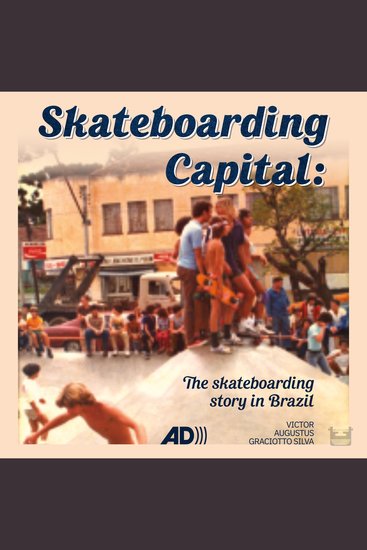
    Ao longo de quase duas décadas, entre 1990 a 2007, tínhamos as duas principais marcas nacionais, que realizavam os principais campeonatos e circuitos nacionais, investiam em pistas e patrocinavam skatistas, que despontam nos campeonatos mundiais subindo ao pódio e levando títulos. Tudo isso inserido em uma ebulição musical e de moda onde o principal público era de adolescentes e jovens, que viam no skate uma forma de expressão. Desde o carrinho até as roupas streetwear, produziam e reproduziam um comportamento e uma identidade própria. Surgiu um estilo de vida, o skate como um lifestyle, e Curitiba reconhecida como a capital do skate brasileiro. A cultura do skate é resiliente, diversa e se reinventa. Desde 1972, quando tudo era desconhecido e novo, os pioneiros do skate paranaense criaram as referências. A nossa essência começou ali. E o skate passou de mão em mão, evoluiu de geração para geração. A criatividade e a liberdade movem nossa história do skate. É o que buscamos expressar neste livro.
    Zum Buch
  • Urban School Dynamics - Understanding Black Student Behavior - cover

    Urban School Dynamics -...

    Dr. Josh J. Mack

    • 0
    • 0
    • 0
    In the bustling corridors of urban schools, a narrative has quietly taken root, often painting a monochrome picture of Black student behavior. This narrative, woven from threads of misunderstanding, oversimplification, and occasional bias, rarely captures the complexities and richness of the experiences these students bring into the classroom. "Urban School Dynamics: Understanding Black Student Behavior" delves deep into the intricate mosaic of influences, challenges, and aspirations that shape the actions and choices of Black students in city schools. 
    The urban educational landscape, with its unique challenges and dynamics, often amplifies the struggles faced by students. Within these walls, Black students, shaped by a myriad of socio-economic, cultural, and personal factors, navigate their educational journey. But why do some of these journeys manifest in ways that are perceived as disruptive or counterproductive? Are these behaviors indicative of deeper systemic issues, unmet needs, or cultural misunderstandings? 
    This book embarks on an exploratory quest, dismantling stereotypes and debunking myths, while shedding light on the intricate interplay of factors like socio-economic pressures, historical context, cultural values, and personal aspirations. Along the way, I will amplify the voices of Black students, educators, and parents, providing a comprehensive, empathetic, and nuanced understanding of behavior in urban school contexts. 
    By the end, my hope is that readers will not only gain insights into the dynamics influencing Black student behavior but will also be equipped with knowledge and empathy to foster more inclusive, understanding, and supportive educational environments.
    Zum Buch
  • The Children's Train - Escape on the Kindertransport - cover

    The Children's Train - Escape on...

    Jana Zinser

    • 0
    • 0
    • 0
    This compelling Holocaust action adventure story tells of bravery, sacrifice, and the survival of the human spirit against Hitler and the horrors of war."Gripping and impossible to put down. I cried several times throughout. Perfect ending, emotional but complete." - Goodreads reviewIt begins in November 1938 on The Night of the Broken Glass, when Jewish people of Germany are terrified as Hitler's men shatter their store windows, steal and destroy their belongings, and arrest many Jewish fathers and brothers.Parents face unparalleled fear for their own lives but their focus is on protecting their beloved children.When England arranges to take the children out of Germany by train, the Kindertransport is organized and parents scramble to get places on the trains for their young family members, worried about what the future will hold.Soon, trains filled with Jewish children escaping the Nazis chug over the border into Holland, where they are ferried across the English Channel to England and to freedom. But for Peter, the shy violin player, his sister Becca, and his friends Stephen and Hans, life in England holds challenges as well. Peter's friend Eva, who did not get a seat on the Kindertransport, is left to the evil plans of Hitler.Peter, working his musician's hands raw at a farm in Coventry, wonders if they should have stayed and fought back instead of escaping. When the Coventry farm is bombed as the Nazis reach England, Peter feels he has nothing left. He decides it's time to stand and fight Hitler.Peter courageously returns to Germany to join the Jewish underground resistance, search desperately for his mother and sister he left behind in Berlin, and try to rescue his friend Eva."A beautifully written book. Sadly, the historical details are true and this makes the story all the more poignant. At times heartbreaking, at times hopeful and optimistic, this book will stay with the reader for a long time. The author is definitely one to watch" ~ Dorothy M Calderwood (Media Professional) for NetGalley". . . Jana Zinser brilliantly expresses the horror, confusion and fear that not only Peter but the other children in the novel are feeling and thinking when witnessing the atrocities by the Nazis . . When I began this book I thought that I had quite a lot of knowledge about the Holocaust but I was surprised to learn about the Kindertransport children. Although this novel is fiction, the Kindertransport was not and I will never forget about the ones that made it on those trains and also the ones who did not . . ." - Amanda - NetGalley and Goodreads reviews". . . The Children's Train by Jana Zinser absolutely blew me away! Heartbreaking, terrifying and traumatic it was also filled with hope and courage, determination and inspiration. Over six million Jews died at the hands of the Nazis and many of them were children. Though The Children's Train is fiction, the sad and tragic truth stands out and stays with you. I know this book will stay with me! The Children's Train is an absolute credit to this author and I have no hesitation in recommending it extremely highly. . . " - Brenda, Goodreads review"I'm positive that I held my breath for most of this book. I wouldn't be surprised if I'd held my breath for the entire time I'd been reading this. This book was so unlike any other I've read. It's gripping, powerful, heartbreaking and intense --- so, so, so intense . . . I honestly have no words right now; this book was amazing and thrilling, and so sad." - Leah, Goodreads review 
    Zum Buch

  • Shut Up and Listen - How to Save Your Relationship Using Active Listening Techniques to Increase Trust Avoid Misunderstandings and Live a Happier Life with Your Loved One - cover

    Shut Up and Listen - How to Save...

    Suzanne C. Carlsson

    • 0
    • 0
    • 0
    Do you want to avoid misunderstandings and live a happier life with your loved one? 
    In that case, active listening can be the key. 
    In a world filled with constant chatter and distractions, we often forget the profound impact that genuine listening can have on our relationships. The book is engaging and a quick, practical, and enjoyable read that will help you embark on a journey to unlock the secret to forge a deeper relationship with your loved one. 
    Misunderstandings can sow seeds of doubt and mistrust, eroding even the strongest bonds. Without listening skills, minor misunderstandings can grow into big problems. Listening to your loved one in new ways can be the key to a new kind of closeness and trust. 
    With the help of this practical guidebook, you will:Understand what active listening is and how it can help you transform your relationshipUnderstand why empathy is a foundation for active listening and how you practice itWhat the obstacles to active listening are, and how to avoid themGet 11 practical exercises to help you become an active listener and create a deeper bond with your loved oneGet many examples of how the exercises have helped othersAnd much more! 
    Be ready to experience the true power of active listening and take your relationship to the next level.
    Zum Buch
  • The Rise and Fall of Brazil's Economic Giants - cover

    The Rise and Fall of Brazil's...

    Anya Solace

    • 0
    • 0
    • 0
    Brazil’s industrial foundations were shaped by its colonial past, rich natural resources, and evolving economic policies. The country’s transition from an agrarian economy to an industrial powerhouse was a long and complex process influenced by global trade dynamics, government intervention, and social changes. Understanding these foundations provides insight into the rise and fall of Brazil’s economic giants. 
    The origins of Brazil’s economy date back to the colonial period under Portuguese rule. Initially, the country’s economic activities were centered around agriculture, particularly the production of sugarcane, which became the backbone of Brazil’s early commerce. The Portuguese established large sugar plantations, or engenhos, along the northeastern coast, relying heavily on enslaved labor from Africa. This agricultural-based economy set the stage for Brazil’s role as a key exporter of raw materials, a trend that would persist for centuries. As global demand for sugar declined in the 17th and 18th centuries, Brazil’s economy diversified into gold mining, particularly in the state of Minas Gerais. The discovery of gold and diamonds attracted European settlers and boosted trade, but much of the wealth was extracted by the Portuguese crown, limiting local reinvestment. The reliance on commodity exports, without substantial industrial development, created a pattern that continued into modern times. 
    Brazil’s shift toward industrialization began in the late 19th and early 20th centuries, spurred by the decline of slavery, urbanization, and increasing foreign investment. The abolition of slavery in 1888 led to significant demographic changes, with many freed individuals moving to urban centers in search of work. Around the same time, European immigrants arrived in large numbers, bringing skills that contributed to Brazil’s growing workforce. The coffee boom of the late 19th century played a crucial role in financing Brazil’s early industries.
    Zum Buch
  • Emotional Sugar - cover

    Emotional Sugar

    Brittany Forrester

    • 0
    • 0
    • 0
    From cupcakes to pies to iced coffee drinks, sugar is found in many foods and is almost impossible to avoid. Emotional or psychological dependence on sugary foods and beverages, also known as sugar addiction, is a fundamental cause of concern for health officials in America. Processed foods and refined grains create additional sugar in the body once the body metabolizes the food. Sugar in moderation is not harmful; however, many overdo it. A recent study suggests Americans eat far too much sugar. Specifically, approximately 75% of Americans eat excessive amounts of sugar, many of whom could be classified as having a sugar addiction.Sugar consumption can create a short-term high and a spark of energy in the body. Some studies have suggested sugar is as addictive as cocaine. People often enjoy the dopamine release sugar brings. However, due to the addictive nature of sugar, long-term health effects like obesity and diabetes are a risk of sugar overindulgence. Like other compulsions or behavioral addictions, sugar addiction is a risk for people with low moods, anxiety, and stress.This book explored sugar use, as an additive process, through the lens of emotional regulation, addressing the research question: What is the lived experience of emotional regulation through sugar addiction? This book aimed to a greater understanding of the interdependent nature of sugar and emotions. What might a sugar-addicted population express that facilitates recovery and emotional regulation? The lived experience revealed that envy, deprivation, fear of sugar control, and lack of support from authority figures contributed to an inability to get enough comfort foods or stop overconsumption and to feelings of guilt, shame, and loss.
    Zum Buch