Begleiten Sie uns auf eine literarische Weltreise!
Buch zum Bücherregal hinzufügen
Grey
Einen neuen Kommentar schreiben Default profile 50px
Grey
Jetzt das ganze Buch im Abo oder die ersten Seiten gratis lesen!
All characters reduced
Senescence the Last Half of Life - cover

Senescence the Last Half of Life

G. Stanley Hall

Verlag: DigiCat

  • 0
  • 0
  • 0

Beschreibung

In "Senescence, the Last Half of Life," G. Stanley Hall delves into the psychological and social dimensions of aging, offering a groundbreaking exploration of human development in the latter stages of life. Combining a scholarly approach with a rich narrative style, Hall critiques the prevailing perceptions of senescence, championing a more nuanced understanding of the emotional and cognitive experiences that accompany aging. Rooted in the late 19th and early 20th centuries, his work reflects the era's growing interest in psychology and human behavior, marking a significant contribution to gerontology and developmental psychology. G. Stanley Hall was a pioneering psychologist, often regarded as the father of educational psychology and the first president of the American Psychological Association. His extensive work in child psychology and his role in the establishment of child study movements provided a unique perspective on the continuum of human development. Hall's personal and professional interests in the psychological implications of aging stem from his lifelong dedication to understanding life's stages, imbuing this book with both scientific rigor and compassionate insight. This seminal work is essential for anyone keen on understanding the complexities of aging, highlighting its myriad challenges and opportunities. Hall's profound insights not only inform academic discourse but also offer practical guidance for caregivers and individuals navigating the later stages of life, making it a must-read for scholars and laypersons alike.
Verfügbar seit: 21.11.2023.
Drucklänge: 448 Seiten.

Weitere Bücher, die Sie mögen werden

  • The Art of Forgiveness - cover

    The Art of Forgiveness

    Rachael Coopes

    • 0
    • 0
    • 0
    A how-to on letting go, and finding peace.  
     
    Are you suffering from anger, bitterness or regret? Or are you simply yearning to live a calmer and more connected life? 
     
    By exploring a range of winning philosophies – from the Stoics to Zen Buddhism – author Rachael Coopes shares how to properly let go and find peace. 
     
    Combining personal stories and advice mixed with solid, expert-based research, anecdotal evidence and case studies, The Art of Forgiveness is a compassionate guide underpinned by sensible philosophies to help you live a calmer, happier life.
    Zum Buch
  • Roman Architecture - Building the Empire's Legacy - cover

    Roman Architecture - Building...

    Rogan Fish

    • 0
    • 0
    • 0
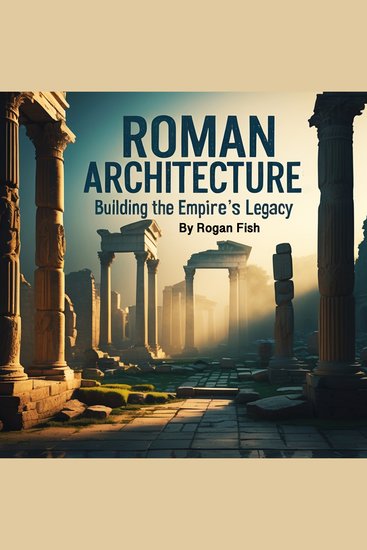
    Roman architecture emerged as a distinctive style that blended elements from earlier civilizations, primarily Greek and Etruscan influences. As Rome expanded from a small settlement into a powerful empire, its architectural identity evolved, incorporating new techniques and materials that allowed for grander and more functional structures. The early foundations of Roman architecture set the stage for innovations that would shape the empire’s urban landscape for centuries. 
    One of the most significant influences on Roman architecture came from the Etruscans, a civilization that dominated central Italy before Rome’s rise. The Etruscans were skilled builders who introduced techniques such as the use of the arch and vault, both of which would later become hallmarks of Roman engineering. Etruscan temples, with their high podiums and deep porches, also served as models for early Roman religious structures. Another major influence was Greek architecture, which Romans admired and adapted to suit their needs. The Greeks provided inspiration in the use of columns, decorative friezes, and symmetrical design, elements that were later integrated into Roman temples, public buildings, and monuments. 
    Roman architectural development was also shaped by advancements in building materials and construction techniques. The early Romans initially built using wood and mudbrick, but as they refined their skills, they transitioned to more durable materials like stone and concrete. The introduction of concrete was a groundbreaking innovation, allowing for stronger and more flexible structures. Unlike the Greeks, who relied heavily on marble, the Romans preferred concrete for its affordability and adaptability, enabling them to construct larger and more complex buildings, such as amphitheaters, aqueducts, and domes.
    Zum Buch
  • Breathers of an Ampler Day - Victorian Views of Heaven - cover

    Breathers of an Ampler Day -...

    Ian Bradley

    • 0
    • 0
    • 0
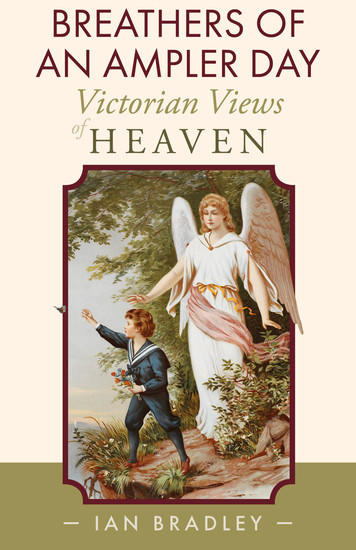
    The Victorians thought, wrote and preached much more about heaven than we do today. As the subject of death comes out of the closet after 120 years when it has been largely shunned and avoided, this book presents the views on the afterlife of a number of well-known Victorians, and others not so well known, in the belief that they may help us today as we seek to get over our fear of death and what lies beyond it and to rescue ourselves from its privatization and over-medicalization.
    Zum Buch
  • Byzantine Empire for Kids The: A Captivating Guide to the Eastern Roman Empire - cover

    Byzantine Empire for Kids The: A...

    Captivating History

    • 0
    • 0
    • 0
    How does the Byzantine Empire, which fell in 1453, still apply to us today? 
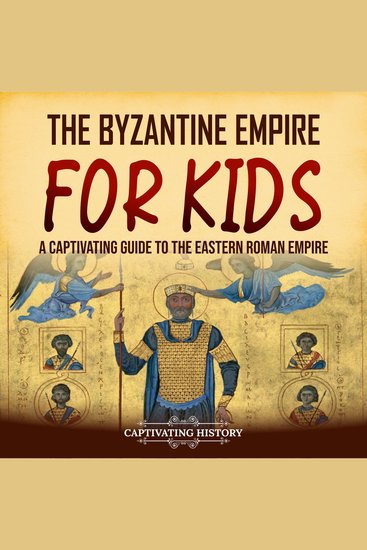
    Many of us do not know much about the Byzantine Empire; it lived on in the East after the Roman Empire fell, but its one-thousand-year history is full of innovations that have changed how we create art, write laws, and think about our lives today. The Byzantine Empire was a key factor that started the Italian Renaissance and moved Western Europe out of the Middle Ages. Far from being ancient history, the Byzantine Empire still impacts our lives today. 
    Scholars have studied individual emperors or specific battles during the Byzantine Empire for years. They have discussed people like Emperor Justinian I or events like the Fall of Constantinople or The Great Schism. But the Byzantine Empire was more than a couple of important leaders or their final loss to the Ottomans. This empire survived for many years against great odds, filled with new ideas about religion, art, and how to live life.  
    It's time to look back into history and discover the many parts of the Byzantine Empire. In this new and captivating audiobook, you’ll learn what made the Byzantine Empire so special and how it still influences us today. 
    Here are some of the questions you will uncover by listening to this audiobook:How was Constantinople so well guarded against attackers?Why was the Byzantine Empire concerned about the Crusades?How was Rome related to the Byzantine Empire?Who founded Constantinople?Why was Emperor Justinian I so important?When did Eastern Orthodoxy separate from Roman Catholicism? Why did the Crusaders attack Constantinople during the Fourth Crusade?Who were the Ottomans?Why did the Byzantines maintain Greek and Roman culture? 
    Scroll up and click the “add to cart” button to learn more about the history of the Byzantine Empire!
    Zum Buch
  • Aristotle: A short biography - 5 Minutes: Short on time - long on info! - cover

    Aristotle: A short biography - 5...

    5 Minutes, 5 Minute Biographies,...

    • 0
    • 0
    • 0
    Aristotle, Greek philosopher: Life and works in a short biography! Everything you need to know, brief and concise. Infotainment, education and entertainment at its best!
    Zum Buch
  • The Biography Of Satan - cover

    The Biography Of Satan

    Kersey Graves

    • 0
    • 0
    • 0
    In this controversial book, Kersey Graves presents a historical and comparative analysis of the concept of Satan in various religious traditions. The book explores the origins of the devil figure, tracing its roots in ancient mythologies and religious beliefs. "The Biography of Satan" challenges conventional religious interpretations and sheds light on the diverse and evolving perceptions of evil and temptation throughout human history. Key Aspects of the Book "The Biography of Satan": Religious History: Graves' book provides a comprehensive study of the concept of Satan in different religious and mythological contexts. The author examines the symbolic significance and interpretations of Satan in ancient and modern belief systems. Controversial Perspectives: "The Biography of Satan" presents alternative viewpoints on the devil figure, encouraging readers to critically examine religious narratives and their cultural implications. Kersey Graves is best known for his controversial works on comparative religion, mythology, and freethought. Graves' writings challenged conventional religious beliefs and sought to promote a more rational and humanistic worldview. His works, including "The Biography of Satan," contributed to discussions on the evolution of religious ideas and the role of mythology in shaping cultural beliefs. The Biography of Satan is a lovely collection of lore, logic, and philosophy, dating to the middle of the rational days of the 19th century. Within this work, Kersey Graves lays waste to the doctrine of eternal Hell and the very concept of a Satan, claiming that it is, within proper tradition, the Christian god himself who is the architect of evil and suffering. With numerous references to linguistics, pagan lore, and then-modern historical science, Graves' work deserves far more attention from the world at large; and for those interested in the occult, and in magic, the comprehension of proper demonology requires such concepts to be understood.
    Zum Buch