Rejoignez-nous pour un voyage dans le monde des livres!
Ajouter ce livre à l'électronique
Grey
Ecrivez un nouveau commentaire Default profile 50px
Grey
Abonnez-vous pour lire le livre complet ou lisez les premières pages gratuitement!
All characters reduced
Robert Browning (Annotated) - cover

Robert Browning (Annotated)

G. K. Chesterton

Maison d'édition: ePembaBooks

  • 0
  • 0
  • 0

Synopsis

This edition includes the following editor's introduction: G. K. Chesterton, the man beyond the writer


First published in 1903, “Robert Browning” is a multi-faceted biography and critique of Browning‘s work by English writer G. K. Chesterton.

In “Robert Browning”, Chesterton takes us from his early life to his early poems and shows us how his life impacted on his work to produce a biography of great depth and sensitivity. The book gives the reader a closer look at Robert Browning’s life along with a detailed analysis of some of his work through the thoughtful and highly biased eye of the author.
Chesterton declares that it is fashionable to boast that one cannot understand Browning but he reveals in this fascinating literary biography how Browning ‘combines the greatest brain with the simplest temperament’.

“Robert Browning” is a marvellous book that does justice to Robert Browning's huge personality and startlingly modern approach to storytelling, poetry, and epistemology.
Disponible depuis: 17/09/2022.
D'autres livres qui pourraient vous intéresser

  • Life at the Chalkface - Tales from a Career in Teaching - cover

    Life at the Chalkface - Tales...

    Graham Lacey

    • 0
    • 0
    • 0
    From his first day of teaching in one of the most deprived towns in the United Kingdom to the end of his career as headteacher of a large international school, Graham Lacey reflects on thirty-five years at the 'chalkface', through a number of specific experiences that helped shape his views, practical and theoretical, on educational matters.
    
    While Graham is convinced there are certain prerequisites for a successful career in the profession, his tales illustrate that there can be no substitute for bitter experience. They reveal the steadily narrowing gap between the heady idealism with which Graham entered the profession and the painful reality as he progressed through it.
    
    His anecdotes are laced with humour and predicaments that are likely to resonate with members of the teaching profession and shed light on human behaviour for other readers.
    
    In short, Graham suggests that a comical or chastening experience may turn into a salutary lesson learnt. In that sense, Graham implies, the school classroom is perhaps no more nor less different from the world outside it.
    Voir livre
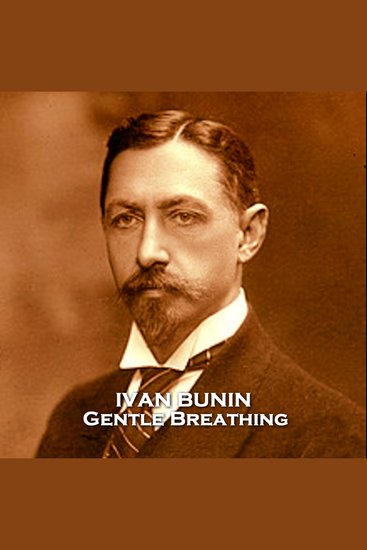
  • Gentle Breathing - From their pens to your ears genius in every story - cover

    Gentle Breathing - From their...

    Ivan Bunin

    • 0
    • 0
    • 0
    Ivan Alekseyevich Bunin was born on 22nd October 1870 in Voronezh province, in the South-West of the Russian Empire. 
    His early life was plagued by his Father’s gambling habits which caused his education to be erratic and the family to lose most of their wealth. 
    Bunin published his first poem in 1887 in St Petersburg and later in Oryol he worked for the local paper and became its editor, handily allowing him to publish his own poems and short stories.  There he met and married Varvara Pashchenko.  Ivan Bunin's debut book of poetry ‘Poems (1887–1891)’ was published in 1891. 
    This poetry and his translation of Longfellow garnered him his first Pushkin Prize.  Now he switched to writing prose and his novella ‘Antonov Apples’ is regarded as his first masterpiece.  Many more would follow. 
    The October Revolution of 1905 found Bunin in the Crimea.  Scenes of ‘class struggle’ he saw more as the oppressed people's craving for anarchy and destruction. 
    In November 1906 he began a passionate affair with Vera Muromtseva, within a few months they were touring through Egypt and Palestine.  ‘The Bird's Shadow’ collection was the result.   
    His second Pushkin Prize came in 1909 for Poems (1903–1906) and further translations.  He was now elected to the prestigious Russian Academy. 
    More widespread fame came in 1910 with ‘The Village’, a controversial and bleak portrayal of Russian country life.  Travel too beckoned them back to the Middle East, Ceylon (now Sri Lanka) and for winters in Capri with their friend Maxim Gorky.  
    That friendship suddenly ended in April 1917 as the revolution began to ferment in war-ravaged Russia.  After the Bolsheviks took power and the upheavals continued, he decided to leave Russia, finally achieving that in early 1920.  
    It would take some time to heal the wounds and stress he had been under and for his writing to begin again.  Settled in France, Bunin published many of his previous works and collections of novellas.  He also made regular contributions to the Russian emigre press.  
    Although reluctant to become involved in politics, Bunin was now feted as both a writer and the figurehead of non-Bolshevik Russian values and traditions.  In 1933 he became the first Russian to be awarded the Nobel Prize for Literature ‘for following through and developing with chastity and artfulness the traditions of Russian classic prose.’  
    In 1938 Bunin began working on the celebrated cycle of nostalgic, and erotically themed stories known Dark Avenues (or Dark Alleys).  
    As World War II broke out he chose to remain in Grasse spending the war at his remote Villa Jeanette, high in the mountains.  
    Ivan Bunin was a staunch anti-Nazi, and often, under difficult conditions, sheltered fugitives after Vichy was occupied by the Germans.  He wrote but did not publish during these years until on August 23rd the Nazi’s fled Grasse without a fight.  The next day the Americans came.  
    In May 1945 he returned to Paris and, apart from convalescing at times in Juan-les-Pins, he stayed for the rest of his life. 
    After 1948, with his health deteriorating, Bunin concentrated upon writing his memoirs and a book on Chekhov.  His last years were overshadowed by bitterness and despair at the situation in Russia and the treatment of its peoples.  He was suffering now from asthma, bronchitis and chronic pneumonia. 
    Ivan Alekseyevich Bunin died in a Paris attic flat on 8th November 1953.  Heart failure, cardiac asthma and pulmonary sclerosis were given as the causes of death.  He was 83.
    Voir livre
  • Cicero - Biography of a Roman Lawyer Writer and Statesman - cover

    Cicero - Biography of a Roman...

    Kelly Mass

    • 0
    • 0
    • 0
    Marcus Tullius Cicero was a Roman statesman, lawyer, scholar, philosopher, and Academic skeptic who became a prominent figure in the political and intellectual life of the late Roman Republic. He is best remembered for his eloquence and his staunch defense of ethical ideals in the face of political turmoil, a period that ultimately led to the rise of the Roman Empire. Cicero’s influence extended far beyond his time as he became one of Rome's most revered orators and prose stylists, producing an extensive body of work encompassing treatises on rhetoric, philosophy, and politics. His works remain fundamental to the study of Latin and Western philosophy today. 
    Cicero was born into a wealthy municipal family within the Roman equestrian order and held the esteemed office of consul in 63 BC, a significant achievement in his career. His oratorical prowess was unrivaled, and his skill in public speaking earned him a reputation that endured through the centuries. His publications spanned a broad range of subjects, from the theoretical aspects of rhetoric to the practical concerns of governance and philosophy. Cicero’s mastery of the Latin language was profound—he is said to have written over three-quarters of all surviving Latin literature from his time. His works, characterized by their clarity and depth, formed the foundation for subsequent Latin prose, influencing European languages and thinkers well into the 19th century.
    Voir livre
  • Escaping - How I Broke Out of an Abusive Marriage - cover

    Escaping - How I Broke Out of an...

    Angela Joann Mitchell

    • 0
    • 0
    • 0
    Angela Mitchell's "Escaping: How I Broke Out of an Abusive Marriage" is a compelling and courageous account of her journey from the oppressive confines of an abusive marriage to finding freedom and empowerment. Set against the backdrop of Atlanta, Georgia, Angela shares the complex details of her life, beginning with a peaceful upbringing in a religious household and progressing through her educational and professional achievements as a Licensed Nursing Assistant. Her narrative takes a dramatic turn when she meets her ex-husband, whose initially charming demeanor quickly gives way to a pattern of verbal, emotional, and physical abuse. Angela candidly recounts the toll the abuse took on her self-esteem, health, and overall well-being, painting a vivid picture of the challenges faced by those in abusive relationships. Her escape is a physical departure and a profound emotional and psychological journey toward healing and rediscovery. "Escaping: How I Broke Out of an Abusive Marriage" is an inspiring and moving memoir that sheds light on the complexities of domestic abuse and the triumph of finding one's voice and freedom.
    Voir livre
  • Dreaming of Ramadi in Detroit - Essays - cover

    Dreaming of Ramadi in Detroit -...

    Aisha Sabatini Sloan

    • 0
    • 0
    • 0
    An electric essay collection about Blackness, art, and dreaming of new possibilities in a time of constriction 


    This collection of innovative, penetrating, and lively essays features swimming pools and poets, road trips and museums, family dinners and celebrity sightings. In a voice that is at once piercing, mournful, and slyly comic, Aisha Sabatini Sloan inhabits several roles: she is an art enthusiast in Los Angeles during a city-wide manhunt; a daughter on a road trip with her father; a professor playing with puppets in the wilds of Vermont; an interloper on a police ride-along in Detroit; a collector of the dreams of scientists at a biostation. As she watches cell phone video recordings of murder and is haunted in her sleep by the news, she reflects on her formative experiences with aesthetic and spiritual discovery, troubling those places where Blackness has been conflated with death. 


    Sabatini Sloan's lively style is perfectly suited to the way she circles a subject or an idea before cinching it tight. The curiosity that guides each essay, focusing on the period between the 2016 election and the onset of the pandemic, is rooted in the supposition that there is an intrinsic relationship between the way we conceptualize darkness and our collective opportunity for awakening.
    Voir livre
  • Hidden Histories - 100 Wild Stories You Never Learned in History Class - cover

    Hidden Histories - 100 Wild...

    Tim Rayborn

    • 0
    • 0
    • 0
    Discover the little known facts about some of the world’s greatest historical icons. 
    We all know what was written in the history books. There are some stories we’ve heard a hundred times—but often our understanding of these events and people is narrow. Have you ever wondered about the lesser known details that influenced major events and figures behind-the-scenes? This hilarious compendium of fascinating facts and dizzying what-ifs will delight and shock history buffs and trivia lovers alike. From Abraham Lincoln’s wrestling champ background to the day Napoleon was attacked by a horde of hungry rabbits, this book will give you a new perspective. Including:Walt Disney gave his housekeeper Disney stock every year on her birthday and Christmas. By the time she retired, she was a multi-millionaire.Charlie Chaplin entered a lookalike contest as a joke…and got 20th place.Henry Ford, the founder of Ford Motor Company, convinced Thomas Edison’s son to collect Edison’s last breath in a test tube. It is on display at The Henry Ford Museum in Detroit.Before Galileo Galilei was buried, three of his fingers and a tooth were removed from his body by his admirers. The body parts are on display at the Museo Galileo in Florence, Italy. 
      
    From ancient civilization to modern times, history is full of mysterious and downright bizarre circumstances. With these crazy and compelling facts, Hidden Histories will change your view of history
    Voir livre