¡Acompáñanos a viajar por el mundo de los libros!
Añadir este libro a la estantería
Grey
Escribe un nuevo comentario Default profile 50px
Grey
Suscríbete para leer el libro completo o lee las primeras páginas gratis.
All characters reduced
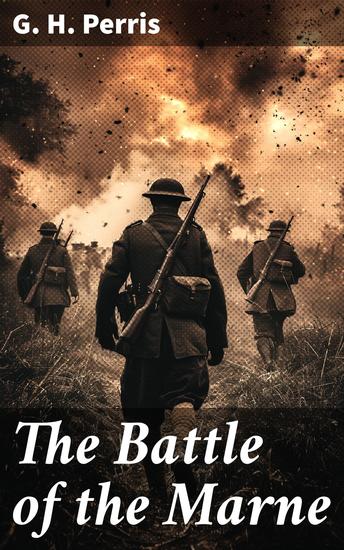
The Battle of the Marne - Unveiling the Strategies and Impact of a Pivotal Battle in World War I - cover

The Battle of the Marne - Unveiling the Strategies and Impact of a Pivotal Battle in World War I

G. H. Perris

Editorial: Good Press

  • 0
  • 0
  • 0

Sinopsis

G. H. Perris'Äôs "The Battle of the Marne" masterfully recounts the pivotal moments of the First Battle of the Marne (1914), a confrontation that ultimately shifted the tide of World War I. Through a meticulous narrative, Perris weaves together military strategy, historical detail, and vivid eyewitness accounts to convey not only the logistics of battle but also the human experience of warfare. His literary style is characterized by a blend of journalistic immediacy and reflective analysis, situating the battle within the broader context of international politics and the onset of trench warfare, thus providing readers with a comprehensive understanding of its significance. G. H. Perris, a journalist and war correspondent, was immersed in the tumult of early 20th-century Europe, which profoundly influenced his work. His experiences on the front lines and interactions with military leaders informed his ability to articulate the chaos and heroism inherent in battle. Passionate about documenting the realities of war, Perris'Äôs insights reflect both the strategic elements and the emotional weight borne by soldiers and civilians alike during this tumultuous period. For readers interested in military history, social commentary, or the intricacies of World War I, "The Battle of the Marne" stands as an indispensable resource. Offering both a gripping narrative and thoughtful analysis, it invites readers to reflect on the sacrifices made during this critical moment in history and the enduring consequences that shaped our modern world.
Disponible desde: 01/11/2023.
Longitud de impresión: 218 páginas.

Otros libros que te pueden interesar

  • Ukraine History: From Medieval Rus To Modern Ukraine: 3 Books In 1 - Kievan Rus Cossacks World War Revolution Ussr Chernobyl And The War Against Russia - cover

    Ukraine History: From Medieval...

    HISTORY FOREVER

    • 0
    • 0
    • 0
    ★ Do you want to discover the History of Ukraine? ★ 
    If your answer is yes, get this book now! 
    3 BOOKS IN 1! 
    ·       BOOK 1 - MEDIEVAL UKRAINE HISTORY: UKRAINE BETWEEN EUROPE AND RUSSIA 
    THE GOLDEN AGE OF KIEVAN RUS, KINGDOM OF GALICIA AND THE COSSACKS 
    ·       BOOK 2 - HISTORY OF UKRAINE: UKRAINE HISTORY OF THE 20TH CENTURY 
    UKRAINE IN WORLD WAR, UKRAINE REVOLUTION AND THE SOVIET UNION 
    ·       BOOK 3 - MODERN UKRAINE HISTORY: UKRAINE AT WAR RUSSIA 2014-2022 
    ZELENSKY VS PUTIN AND THE FUTURE OF UKRAINE, RUSSIA AND EUROPE 
      
    ★ BUY THIS BOOK NOW AND DISCOVER MORE ABUOT UKRAINE TODAY! ★
    Ver libro
  • On Decline - Stagnation Nostalgia and Why Every Year is the Worst One Ever - cover

    On Decline - Stagnation...

    Andrew Potter

    • 0
    • 0
    • 0
    A Winnipeg Free Press Top Read of 2021
    		 
    What if David Bowie really was holding the fabric of the universe together?
    		 
    The death of David Bowie in January 2016 was a bad start to a year that got a lot worse: war in Syria, the Zika virus, terrorist attacks in Brussels and Nice, the Brexit vote—and the election of Donald Trump. The end-of-year wraps declared 2016 “the worst … ever.” Four even more troubling years later, the question of our apocalypse had devolved into a tired social media cliché. But when COVID-19 hit, journalist and professor of public policy Andrew Potter started to wonder: what if The End isn’t one big event, but a long series of smaller ones?
    		 
    In On Decline, Potter surveys the current problems and likely future of Western civilization (spoiler: it’s not great). Economic stagnation and the slowing of scientific innovation. Falling birth rates and environmental degradation. The devastating effects of cultural nostalgia and the havoc wreaked by social media on public discourse. Most acutely, the various failures of Western governments in their responses to the COVID-19 pandemic. If the legacy of the Enlightenment and its virtues—reason, logic, science, evidence—has run its course, how and why has it happened? And where do we go from here?
    Ver libro
  • The Evolutions of Social Media - Trends and Impact - cover

    The Evolutions of Social Media -...

    Craig Dames

    • 0
    • 0
    • 0
    Social media has transformed the way people connect, communicate, and share information. What started as simple online forums and chat rooms has evolved into a powerful ecosystem of platforms that shape global conversations, influence public opinion, and drive business strategies. The rise of social media can be traced through key technological advancements and shifting user behaviors that have continuously redefined digital interactions. 
    In the early days of the internet, online communities were primarily built around forums, message boards, and early blogging platforms. Websites like Usenet and bulletin board systems (BBS) allowed users to engage in discussions based on shared interests, but they lacked the real-time engagement that modern social media provides. As internet speeds improved and web design became more sophisticated, platforms such as Friendster and MySpace emerged in the early 2000s, marking the beginning of social networking as we know it. These sites introduced profile customization, digital friendships, and a sense of online identity that encouraged users to invest more time in their virtual presence. 
    The launch of Facebook in 2004 marked a major shift in how people engaged with social media. Unlike its predecessors, Facebook prioritized real-world connections and streamlined communication. Instead of anonymous interactions, users connected with friends, family, and colleagues in a structured and highly interactive digital space. This approach quickly gained popularity, and other platforms such as Twitter, LinkedIn, and Instagram followed, each introducing unique features that catered to different aspects of online interaction. Twitter revolutionized real-time communication with its microblogging format, LinkedIn redefined professional networking, and Instagram capitalized on the growing demand for visual content.
    Ver libro
  • Maladies of Empire - How Colonialism Slavery and War Transformed Medicine - cover

    Maladies of Empire - How...

    Jim Downs

    • 0
    • 0
    • 0
    Most stories of medical progress come with ready-made heroes. John Snow traced the origins of London's 1854 cholera outbreak to a water pump, leading to the birth of epidemiology. Florence Nightingale's contributions to the care of soldiers in the Crimean War transformed hospitals from crucibles of infection to sanctuaries of recuperation. Yet histories of individual innovators ignore many key sources of medical knowledge. 


    Reexamining the foundations of modern medicine, Jim Downs shows that the study of infectious disease depended crucially on the unrecognized contributions of nonconsenting subjects—conscripted soldiers, enslaved people, and subjects of empire. Plantations, slave ships, and battlefields were the laboratories in which physicians came to understand the spread of disease. Military doctors learned about the importance of air quality by monitoring Africans confined to the bottom of slave ships. Statisticians charted cholera outbreaks by surveilling Muslims in British-dominated territories returning from their annual pilgrimage. 


    The scientific knowledge derived from discarding and exploiting human life is now the basis of our ability to protect humanity from epidemics. Boldly argued and eye-opening, Maladies of Empire gives a full account of the true price of medical progress.
    Ver libro
  • Well Beings - How the Seventies Lost Its Mind and Taught Us to Find Ourselves - cover

    Well Beings - How the Seventies...

    James Riley

    • 0
    • 0
    • 0
    James Riley, author of the cult hit The Bad Trip: Dark Omens, New Worlds and the End of the Sixties, returns with another incisive and thought-provoking cultural history, turning his trenchant eye to the wellness industry that emerged in the 1970s.
    
    Concepts such as wellness and self-care may feel like distinctly twenty-first century ideas, but they first gained traction as part of the New Age health movements that began to flourish in the wake of the 1960s. Riley dives into this strange and hypnotic world of panoramic coastal retreats and darkened floatation tanks, blending a page-turning narrative with illuminating explorations of the era's music, film, art and literature.
    Well Beings delves deep into the mind of the seventies - its popular culture, its radical philosophies, its approach to health and its sense of social crisis. It tells the story of what was sought, what was found and how these explorations helped the 'Me Decade' find itself. In so doing, it questions what good health means today and reveals what the seventies can teach us about the strange art of being well.
    Ver libro
  • The secret of the mummies - cover

    The secret of the mummies

    KidsChoice

    • 0
    • 0
    • 0
    KidsChoice: World knowledge for Children is an engaging audiobook series that takes young listeners on a fascinating journey to explore and understand the world around them. Aimed at curious children aged 7 to 99, this series dives into a variety of topics in science, society, and culture, making complex ideas accessible and exciting.  Each episode brings a unique theme to life—whether exploring the mysteries of space, uncovering the secrets of the human body, or discovering the diversity of cultures and traditions worldwide. With lively narration, interesting facts, and interactive elements, the series guides young listeners on an adventure full of discovery, encouraging them to ask questions and expand their understanding in a fun way.  In the scientific world of KidsChoice, children learn about the wonders of nature and the universe. Concepts like the solar system, animal behavior, the human body, and Earth's various ecosystems are explained in a way that is easy for kids to grasp and find fascinating. Exciting analogies and vivid examples help spark curiosity, turning learning into an adventure.  Societal topics also have a special place in the series. KidsChoice introduces young listeners to the basics of community, compassion, and making a positive impact. Children learn what it means to be a good citizen and how they can make small, meaningful contributions to their communities.  Additionally, KidsChoice opens a window to the vibrant world of global cultures. Through a virtual journey around the globe, children discover how people in other countries live, the customs and traditions they follow, the languages they speak, and the foods they enjoy. This fosters understanding and respect for diverse ways of life, celebrating the richness of human experience as a beautiful, valuable part of the world.  With its vivid language and captivating soundscapes, "KidsChoice: World knowledge for Children" turns learning into an exciting experience, sparking a lifelong curiosity and a deeper understanding of the world around them.
    Ver libro