Junte-se a nós em uma viagem ao mundo dos livros!
Adicionar este livro à prateleira
Grey
Deixe um novo comentário Default profile 50px
Grey
Assine para ler o livro completo ou leia as primeiras páginas de graça!
All characters reduced
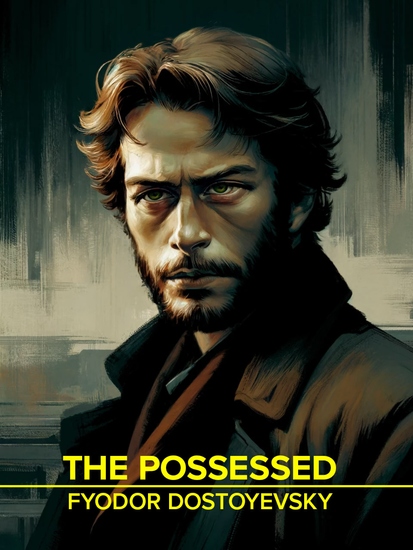
The Possessed (The Devils) - cover
LER

The Possessed (The Devils)

Fyodor Dostoyevsky

Editora: Wildside Press

  • 0
  • 0
  • 0

Sinopse

In The Possessed, Fyodor Dostoevsky tells the gripping tale of a small Russian town overtaken by political turmoil. A group of revolutionaries, led by the cunning Pyotr Verkhovensky, seeks to upend the social order with radical ideas. Amidst this chaos, the enigmatic Nikolai Stavrogin grapples with his own inner demons and moral dilemmas. As tensions rise, the town plunges into violence and disorder, revealing the dangerous consequences of extreme beliefs.
 
This powerful novel explores themes of ideology, faith, and the human spirit, making it a timeless classic of Russian literature.
Disponível desde: 06/06/2024.
Comprimento de impressão: 598 páginas.

Outros livros que poderiam interessá-lo

  • The Problem of Thor Bridge - cover

    The Problem of Thor Bridge

    Arthur Conan Doyle

    • 0
    • 0
    • 0
    The Problem of Thor Bridge is a Sherlock Holmes murder mystery by Arthur Conan Doyle in The Case-Book of Sherlock Holmes, first published in 1922 in The Strand Magazine (UK) and Hearst's International (US).Neil Gibson, the Gold King and former Senator from "some Western state", approaches Holmes to investigate the murder of his wife Maria in order to clear his children's governess, Grace Dunbar, of the crime. It soon emerges that Mr. Gibson's marriage had been unhappy and he treated his wife very badly. He had fallen in love with her when he met her in Brazil, but soon realised they had nothing in common. He became attracted to Miss Dunbar; since he could not marry her, he had attempted to please her in other ways, such as trying to help people less fortunate than himself.Maria Gibson was found lying in a pool of blood on Thor Bridge with a bullet through the head and note from the governess, agreeing to a meeting at that location, in her hand. A recently discharged revolver with one shot fired is found in Miss Dunbar's wardrobe. Holmes agrees to look at the situation in spite of the damning evidence....Famous works of the author Arthur Conan Doyle: A Study in Scarlet, The Sign of the Four, The Adventures of Sherlock Holmes, The Memoirs of Sherlock Holmes, The Hound of the Baskervilles, The Return of Sherlock Holmes, The Valley of Fear, His Last Bow, The Case-Book of Sherlock Holmes, Stories of Sherlock Holmes, The Lost World.
    Ver livro
  • Chimes The - A Goblin Story (Unabridged) - cover

    Chimes The - A Goblin Story...

    Charles Dickens

    • 0
    • 0
    • 0
    The Chimes: A Goblin Story of Some Bells that Rang an Old Year Out and a New Year In, commonly referred to as The Chimes, is a novella written by Charles Dickens and first published in 1844, one year after A Christmas Carol. It is the second in his series of "Christmas books," five novellas with strong social and moral messages that he published during the 1840s. In addition to A Christmas Carol and The Chimes, the Christmas books include The Cricket on the Hearth (1845), The Battle of Life (1846), and The Haunted Man and the Ghost's Bargain (1848).
    Ver livro
  • A Wireless Message - From their pens to your ears genius in every story - cover

    A Wireless Message - From their...

    Ambrose Bierce

    • 0
    • 0
    • 0
    Ambrose Gwinnett Bierce was born on 24th June 1842 at Horse Cave Creek in Meigs County, Ohio. His parents were poor but they introduced him to literature at an early age, instilling in him a deep appreciation of books, the written word and the elegance of language.  
    Growing up in Koscuisko County, Indiana poverty and religion were defining features of his childhood, and he would later describe his parents as “unwashed savages” and fanatically religious, showing him little affection but always quick to punish. He came to resent religion, and his introduction to literature appears to be their only positive effect. 
    At age 15 Bierce left home to become a printer’s devil, mixing ink and fetching type at The Northern Indian, a small Ohio paper. Falsely accused of theft he returned to his farm and spent time sending out work in the hopes of being published. 
    His Uncle Lucius advised he be sent to the Kentucky Military Institute. A year later he was commissioned as an Officer.  As the Civil War started Bierce enlisted in the 9th Indiana Infantry Regiment.  
    In April 1862 Bierce fought at the Battle of Shiloh, an experience which, though terrifying, became the source of several short stories. Two years later he sustained a serious head wound and was off duty for several months. He was discharged in early 1865.  
    A later expedition to inspect military outposts across the Great Plains took him all the way to San Francisco. He remained there to become involved with publishing and editing and to marry, Mary Ellen on Christmas Day 1871.  They had a child, Day, the following year.  
    In 1872 the family moved to England for 3 years where he wrote for Fun magazine. His son, Leigh, was born, and first book, ‘The Fiend’s Delight’, was published.  
    They returned to San Francisco and to work for a number of papers where he gained admiration for his crime reporting. In 1887 he began a column at the William Randolph Hearst’s San Francisco Examiner.  
    Bierce’s marriage fell apart when he discovered compromising letters to his wife from a secret admirer. The following year, 1889 his son Day committed suicide, depressed by romantic rejection. 
    In 1891 Bierce wrote and published the collection of 26 short stories which included ‘An Occurrence at Owl Creek Bridge’.  Success and further works including poetry followed.  
    Bierce with Hearst’s resources helped uncover a financial plot by a railroad to turn 130 million dollars of loans into a handout. Confronted by the railroad and asked to name his price Bierce answered “my price is $130 million dollars. If, when you are ready to pay, I happen to be out of town, you may hand it over to my friend, the Treasurer of the United States”.  
    He now began his first foray as a fabulist, publishing ‘Fantastic Fables’ in 1899.  But tragedy again struck two years later when his second son Leigh died of pneumonia relating to his alcoholism.  
    He continued to write short stories and poetry and also published ‘The Devil’s Dictionary’.  
    At the age of 71, in 1913 Bierce departed from Washington, D.C., for a tour of the battlefields where he had fought during the civil war. At the city of Chihuahua he wrote his last known communication, a letter to a friend. It’s closing words were “as to me, I leave here tomorrow for an unknown destination,” Ambrose Bierce then vanished without trace.
    Ver livro
  • Leda - cover

    Leda

    Aldous Huxley

    • 0
    • 0
    • 0
    “Their Ethiop wives—sleek wineskins of black silk, Jellied and huge from drinking asses’ milk Through years of tropical idleness, to pray For offspring (whom he ever sent away With prayers unanswered, lest their ebon race Might breed and blacken the earth’s comely face.”? Aldous Huxley, LedaThough he gained recognition for his later essays and novels, Aldous Huxley started his writing career as a poet. Published in 1920, Leda is his fourth compilation of poetry. It begins with the passionate and slightly erotic poem "Leda", which recalls the love affair between Queen Leda, the mother of Helen of Troy, and her swan, Zeus in disguise. Some short poems follow. The book ends with two long sections. The first, "Beauty," is a short collection of vignettes where the author reflects on the concept of beauty through an ideal model of physical desire, Helen of Troy. The second, "Soles Occidere et Redire Possunt," or "Suns Can Set, and Suns Can Rise Again," is another long poem that reflects a day in the life of John Ridley, a deceased friend of Huxley's, who was mentally challenged throughout his entire life. Author Aldous Huxley was an English writer and philosopher. He wrote nearly fifty books, both novels and non-fiction works—as well as wide-ranging essays, narratives, and poems.Born into the prominent Huxley family, he graduated from Oxford, with an undergraduate degree in English literature. Early in his career, he published short stories and poetry and edited the literary magazine Oxford Poetry, before going on to publish travel writing, satire, and screenplays. Huxley spent the latter part of his life in the United States, living in Los Angeles from 1937 until his death. By the end of his life, Huxley was widely acknowledged as one of the foremost intellectuals of his time.
    Ver livro
  • Esme - From their pens to your ears genius in every story - cover

    Esme - From their pens to your...

    Saki Saki

    • 0
    • 0
    • 0
    Hector Hugh Munro, more familiarly known by his pen-name ‘Saki’ was born in what was then Akyab in British Burma on 18th December 1870. His father was an Inspector General for the Indian Imperial Police, and his mother the daughter of a Rear Admiral. 
    When he was 2 his mother died and he and his siblings were sent back to England to be raised by their grandmother and paternal maiden aunts in a strict, puritanical household near Barnstaple, Devon. Educated by governesses Saki used many of these women as character models for his later writing. 
    At 17 his father retried and returned to England and then embarked on a series of European travels with Saki and his siblings. 
    After a short stint working in Burma with the Indian Imperial Police Saki decided to move to London to make a living as a writer. Initially he wrote as a journalist for a number of newspapers and magazines before attempting an historical study, ‘The Rise of the Russian Empire’, whose real value lay in directing him to writing short stories instead, the first of which, ‘Dogged’, he published in 1899. 
    From here it was a short stab of the pen to writing political satire before in 1902 he became the foreign correspondent for The Morning Post, first in the Balkans, then Russia, Paris and back to London in 1908, where 'the agreeable life of a man of letters with a brilliant reputation awaited him.'  
    Collections of his short stories full of witty, mischievous and often macabre stories that satirized Edwardian society and two novels now appeared in the years up to the Great War.  At its’ outbreak he was 43 but managed to join as an ordinary trooper. More than once he returned to the battlefield when officially too sick or injured.  
    On 14th November 1916 Hector Hugh Munro was sheltering in crater during the Battle of the Ancre, when he was shot and killed by a German sniper. According to several sources, his last words were "Put that bloody cigarette out!"
    Ver livro
  • General Custer - Folly At Little Bighorn - The Classic Tale - cover

    General Custer - Folly At Little...

    Elizabeth Bacon Custer

    • 0
    • 0
    • 0
    Since the Battle of Little Bighorn, George Armstrong Custer (1839-1876) possessed one of the most unique places in American history. Although he was a capable cavalry officer who served honorably during the Civil War, he remains one of the most instantly identifiable and famous military men in American history due to the fact he was killed during one of the country’s most well known and ignominious defeats, the Battle of Little Bighorn. And yet, this one relatively insignificant battle during America’s Indian Wars has become one of the country’s most mythologized events and continues to fascinate Americans nearly 140 years later. Though he’s now best remembered for “Custer’s Last Stand”, Custer mastered the art of public relations, dressing impeccably and having newspaper correspondents accompany him on the campaign, all in an effort to help cultivate and enhance his legacy.  
     
    For nearly 58 years, Elizabeth Bacon Custer was probably the most famous widow in the world. In this lively, fascinating, loving portrait of life on the plains with her already-famous husband, Libbie tells a civilized audience of the excitement, fun, and perils endured at a remote frontier post. Intelligent and beautiful, Libbie was a partner, confidant, and booster to the general, as well as an important figure in the social life of the posts he commanded. This book has been used as source material on the general's life as well as the frontier army for well over a century. Celebrated among the prominent people of her day, Libbie never remarried after Custer's death at the Little Bighorn in 1876. She spent the rest of her life writing and lecturing about him, burnishing his reputation and keeping his memory alive. Long a jewel of western Americana, this book continues to find and entertain new audiences in the 21st century.
    Ver livro