Begleiten Sie uns auf eine literarische Weltreise!
Buch zum Bücherregal hinzufügen
Grey
Einen neuen Kommentar schreiben Default profile 50px
Grey
Jetzt das ganze Buch im Abo oder die ersten Seiten gratis lesen!
All characters reduced
The Idiot - cover

The Idiot

Fyodor Dostoyevsky

Übersetzer Eva Martin

Verlag: DigiCat

  • 0
  • 0
  • 0

Beschreibung

In "The Idiot," Fyodor Dostoyevsky presents a profound exploration of the human soul through the character of Prince Myshkin, a man whose innate goodness and innocence starkly contrast with the moral ambiguities of 19th-century Russian society. Written in a highly psychological style, the novel delves into themes of compassion, existential angst, and the complexities of human relationships. Dostoyevsky's narrative is imbued with rich symbolism and dramatic dialogue, reflecting the tumultuous socio-political landscape of Russia during the period, making it a quintessential work of the realist tradition while also engaging with the philosophical inquiries characteristic of existential literature. Dostoyevsky, a prominent figure in Russian literature, often grappled with concepts of morality and spirituality, influenced by his own tumultuous life experiences, including poverty and imprisonment. These hardships imbue his work with a deep understanding of humanity's struggles. "The Idiot" was conceived after Dostoyevsky's own transformative journey through mental and emotional turmoil, where he sought to explore the paradoxes of goodness amidst a society marked by cynicism and corruption. This remarkable novel is highly recommended for readers interested in psychological depth and moral philosophy. Dostoyevsky's intricate characterizations and profound insights invite readers to reflect upon the complexities of human behavior and the nature of goodness itself. "The Idiot" serves as both a compelling narrative and a philosophical treatise, making it an essential read for anyone seeking to understand the nuances of the human condition.
Verfügbar seit: 10.08.2022.
Drucklänge: 590 Seiten.

Weitere Bücher, die Sie mögen werden

  • The Big Four - cover

    The Big Four

    Agatha Christie

    • 0
    • 0
    • 0
    Detective Hercules Poirot is put to the test in this fast-moving tale of skulduggery and intrigue. He needs all his skills to not only solve murder but to survive as well! Accompanied and supported by the inimitable Captain Hastings, Poirot once again shows why he is considered the greatest detective in the world!
    Zum Buch
  • Inspiration An - From their pens to your ears genius in every story - cover

    Inspiration An - From their pens...

    George Gissing

    • 0
    • 0
    • 0
    George Robert Gissing was born on November 22nd, 1857 in Wakefield, Yorkshire.  
    He was educated at Back Lane School in Wakefield. Gissing loved school. He was enthusiastic with a thirst for learning and always diligent.  By the age of ten he was reading Dickens, a lifelong hero. 
    In 1872 Gissing won a scholarship to Owens College. Whilst there Gissing worked hard but remained solitary. Unfortunately, he had run short of funds and stole from his fellow students. He was arrested, prosecuted, found guilty, expelled and sentenced to a month's hard labour in 1876. 
    On release he decided to start over.  In September 1876 he travelled to the United States. Here he wrote short stories for the Chicago Tribune and other newspapers. On his return home he was ready for novels. 
    Gissing self-published his first novel but it failed to sell.  His second was acquired but never published. His writing career was static.  Something had to change.  And it did. 
    By 1884 The Unclassed was published.  Now everything he wrote was published. Both Isabel Claren-don and Demos appeared in 1886. He mined the lives of the working class as diligently as any capitalist. 
    In 1889 Gissing used the proceeds from the sale of The Nether World to go to Italy. This trip formed the basis for his 1890 work The Emancipated. 
    Gissing's works began to command higher payments. New Grub Street (1891) brought a fee of £250.  
    Short stories followed and in 1895, three novellas were published; Eve's Ransom, The Paying Guest and Sleeping Fires. Gissing was careful to keep up with the changing attitudes of his audience.  
    Unfortunately, he was also diagnosed as suffering from emphysema. The last years of his life were spent as a semi-invalid in France but he continued to write. 1899; The Crown of Life. Our Friend the Charlatan appeared in 1901, followed two years later by The Private Papers of Henry Ryecroft. 
    George Robert Gissing died aged 46 on December 28th, 1903 after catching a chill on a winter walk.
    Zum Buch
  • The Old Curiosity Shop - cover

    The Old Curiosity Shop

    Charles Dickens

    • 0
    • 0
    • 0
    In London, Little Nell lives in The Old Curiosity Shop with her grandfather, who has a weakness for gambling. Hoping to mend his finances, the old man borrows money from Quilp, a moneylender and swindler. After losing that money as well, the grandfather flees to the country with Nell in a desperate attempt to escape the clutches of Quilp, who has designs on Nell and believes that the grandfather is secretly a rich miser. Out of devotion to Nell, Kit Nubbles, the shop' s errand boy, pursues the pair and in the process earning the wrath of Quilp.
    Zum Buch
  • Beatrix Potter 3 Complete Works - Return To The Rabbit Hutch Adventures of Peter Rabbit Magic Of Beatrix Potter - cover

    Beatrix Potter 3 Complete Works...

    Beatrix Potter

    • 0
    • 0
    • 0
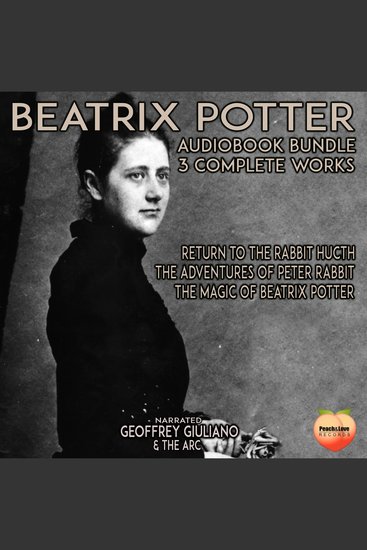
    Beatrix Potter, a beloved children's author and illustrator, led a life filled with creativity, curiosity, and a deep love for nature. Born in 1866 in London, Potter developed a passion for the natural world from an early age, spending much of her childhood exploring the English countryside. Her interactions with animals and her keen observation of their behaviors inspired her timeless tales, most notably "The Tale of Peter Rabbit" and "The Tale of Benjamin Bunny." 
     
    Potter's legacy lies in her groundbreaking contributions to children's literature. Her beautifully illustrated stories, featuring anthropomorphic animal characters, captured the hearts of readers worldwide. With her meticulous attention to detail, Potter created a whimsical world where animals embarked on enchanting adventures and learned valuable life lessons. Her tales not only entertained children but also imparted moral values, emphasizing the importance of kindness, responsibility, and respect for the natural world. 
     
    In addition to her imaginative storytelling, Potter's legacy extends to her role as a conservationist. Her deep connection with nature fueled her commitment to land preservation. In the early 1900s, she became a dedicated farmer and landowner in the Lake District of England, actively working to protect the region's landscapes and wildlife. Through her books, she conveyed the beauty and wonder of the natural world, fostering an appreciation for nature and the importance of conservation in young readers. 
     
    Beatrix Potter's writing and illustrations have left an indelible mark on children's literature. Her legacy as a pioneering author, artist, and conservationist continues to inspire generations. Through her enchanting tales and exquisite artwork, Potter introduced generations of children to the joy of reading, the wonders of the natural world, and the enduring power of imagination.
    Zum Buch
  • The Chamomile Drops - From their pens to your ears genius in every story - cover

    The Chamomile Drops - From their...

    Jaroslav Hasek

    • 0
    • 0
    • 0
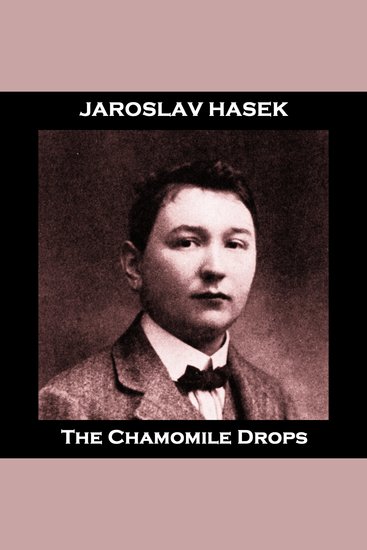
    The bookshelves of European literature are incredible collections that have gathered together centuries of very talented authors.  From this continent their fame spread and whilst among their number many are now forgotten or neglected their talents endure.  Among them is Jaroslav Hasek.
    Zum Buch
  • The Hunter's Family - cover

    The Hunter's Family

    Robert Louis Stevenson

    • 0
    • 0
    • 0
    There is quite a large race or class of people in America, for whom we scarcely seem to have a parallel in England. Of pure white blood, they are unknown or unrecognizable in towns; inhabit the fringe of settlements and the deep, quiet places of the country; rebellious to all labour, and pettily thievish, like the English gipsies; rustically ignorant, but with a touch of wood-lore and the dexterity of the savage. Whence they came is a moot point.
    Zum Buch