¡Acompáñanos a viajar por el mundo de los libros!
Añadir este libro a la estantería
Grey
Escribe un nuevo comentario Default profile 50px
Grey
Suscríbete para leer el libro completo o lee las primeras páginas gratis.
All characters reduced
The Idiot - Enriched edition - cover

The Idiot - Enriched edition

Fyodor Dostoyevsky

Traductor Eva Martin

Editorial: DigiCat

  • 0
  • 0
  • 0

Sinopsis

In "The Idiot," Fyodor Dostoyevsky presents a profound exploration of the human soul through the character of Prince Myshkin, a man whose innate goodness and innocence starkly contrast with the moral ambiguities of 19th-century Russian society. Written in a highly psychological style, the novel delves into themes of compassion, existential angst, and the complexities of human relationships. Dostoyevsky's narrative is imbued with rich symbolism and dramatic dialogue, reflecting the tumultuous socio-political landscape of Russia during the period, making it a quintessential work of the realist tradition while also engaging with the philosophical inquiries characteristic of existential literature. Dostoyevsky, a prominent figure in Russian literature, often grappled with concepts of morality and spirituality, influenced by his own tumultuous life experiences, including poverty and imprisonment. These hardships imbue his work with a deep understanding of humanity's struggles. "The Idiot" was conceived after Dostoyevsky's own transformative journey through mental and emotional turmoil, where he sought to explore the paradoxes of goodness amidst a society marked by cynicism and corruption. This remarkable novel is highly recommended for readers interested in psychological depth and moral philosophy. Dostoyevsky's intricate characterizations and profound insights invite readers to reflect upon the complexities of human behavior and the nature of goodness itself. "The Idiot" serves as both a compelling narrative and a philosophical treatise, making it an essential read for anyone seeking to understand the nuances of the human condition.

In this enriched edition, we have carefully created added value for your reading experience:
- A succinct Introduction situates the work's timeless appeal and themes.
- The Synopsis outlines the central plot, highlighting key developments without spoiling critical twists.
- A detailed Historical Context immerses you in the era's events and influences that shaped the writing.
- An Author Biography reveals milestones in the author's life, illuminating the personal insights behind the text.
- A thorough Analysis dissects symbols, motifs, and character arcs to unearth underlying meanings.
- Reflection questions prompt you to engage personally with the work's messages, connecting them to modern life.
- Hand‐picked Memorable Quotes shine a spotlight on moments of literary brilliance.
- Interactive footnotes clarify unusual references, historical allusions, and archaic phrases for an effortless, more informed read.
Disponible desde: 10/08/2022.
Longitud de impresión: 590 páginas.

Otros libros que te pueden interesar

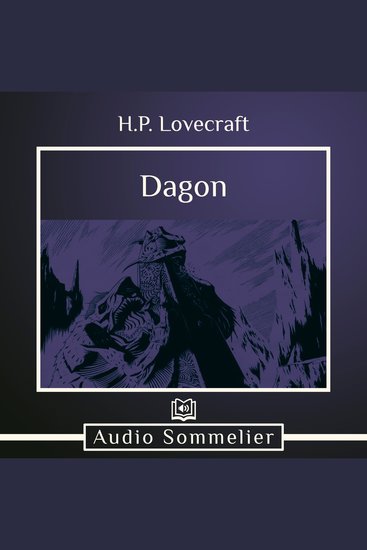
  • Dagon - cover

    Dagon

    H.P. Lovecraft

    • 0
    • 0
    • 0
    Cthulhu lovers take note, this early story of the sea god Dagon is considered to be part of the Cthulhu mythos. In Dagon, the protagonist is lost at sea for days, wading through dead fish and other foulness, until he comes to an island with a monolith on a rocky hillside. After reading the pictographs, his eyes land on the terrible image of a monster rising from the sea. When he wakes up in a San Francisco hospital he thinks the ordeal is over—that is, until the sea god comes to haunt his waking and sleeping life.  
    Ver libro
  • Eumenides - cover

    Eumenides

    Aeschylus

    • 0
    • 0
    • 0
    The final play of the Oresteia, called The Eumenides (Εὐμενίδες, Eumenídes), illustrates how the sequence of events in the trilogy ends up in the development of social order or a proper judicial system in Athenian society. 
    In this play, Orestes is hunted down and tormented by the Furies, a trio of goddesses known to be the instruments of justice, who are also referred to as the "Gracious Ones" (Eumenides). They relentlessly pursue Orestes for the killing of his mother. However, through the intervention of Apollo, Orestes is able to escape them for a brief moment while they are asleep and head to Athens under the protection of Hermes. Seeing the Furies asleep, Clytemnestra's ghost comes to wake them up to obtain justice on her son Orestes for killing her.
    Ver libro
  • In Bayswater - One family is home to many secrets in this classic modernist short story - cover

    In Bayswater - One family is...

    Mary Butts

    • 0
    • 0
    • 0
    Mary Frances Butts was born on 13th December 1890 in Poole, Dorset. 
     
    Her early years were spent at Salterns, an 18th-century house overlooking Poole Harbour.  Sadly in 1905 her father died, and she was sent for boarding at St Leonard's school for girls in St Andrews. 
     
    Her mother remarried and, from 1909, Mary studied at Westfield College in London, and here, first became aware of her bisexual feelings.  She was sent down for organising a trip to Epsom races and only completed her degree in 1914 when she graduated from the London School of Economics.  By then Mary had become an admirer of the occultist Aleister Crowley and she was given a co-authorship credit on his ‘Magick (Book 4)’. 
     
    In 1916, she began the diary which would now detail her future life and be a constant reference point for her observations and her absorbing experiences. 
     
    During World War I, she was doing social work for the London County Council in Hackney Wick, and involved in a lesbian relationship.  Life changed after meeting the modernist poet, John Rodker and they married in 1918. 
     
    In 1921 she spent 3 months at Aleister Crowley's Abbey of Thelema in Sicily; she found the practices dreadful and also acquired a drug habit.  Mary now spent time writing in Dorset, including her celebrated book of short stories ‘Speed the Plough’ which saw fully develop her unique Modernist prose style. 
     
    Europe now beckoned and several years were spent in Paris befriending many artists and writing further extraordinary stories.   
     
    She was continually sought after by literary magazines and also published several short story collections as books. Although a Modernist writer she worked in other genres but is essentially only known for her short stories.  Mary was deeply committed to nature conservation and wrote several pamphlets attacking the growing pollution of the countryside. 
     
    In 1927, she divorced and the following year her novel ‘Armed with Madness’ was published.  A further marriage followed in 1930 and time was spent attempting to settle in London and Newcastle before setting up home on the western tip of Cornwall.  By 1934 the marriage had failed. 
     
    Mary Butts died on 5th March 1937, at the West Cornwall Hospital, Penzance, after an operation for a perforated gastric ulcer. She was 46. 
     
    Her story ‘In Bayswater’ grippingly describes a man’s friendship with a dysfunctional family he rents a room from.  As each facet reveals itself his opinion and decisions change, back and forth, this way and that….
    Ver libro
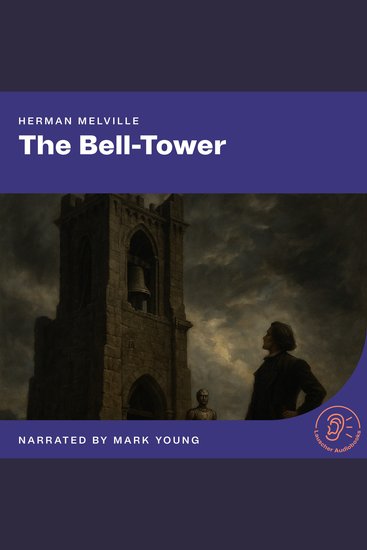
  • The Bell-Tower - cover

    The Bell-Tower

    Herman Melville

    • 0
    • 0
    • 0
    "The Bell-Tower" appeared in 1855 in Putnam's Monthly Magazine no. 32 (August).
    In the south of Europe, nigh a once frescoed capital, now with dank mould cankering its bloom, central in a plain, stands what, at distance, seems the black mossed stump of some immeasurable pine, fallen, in forgotten days, with Anak and the Titan.
    Ver libro
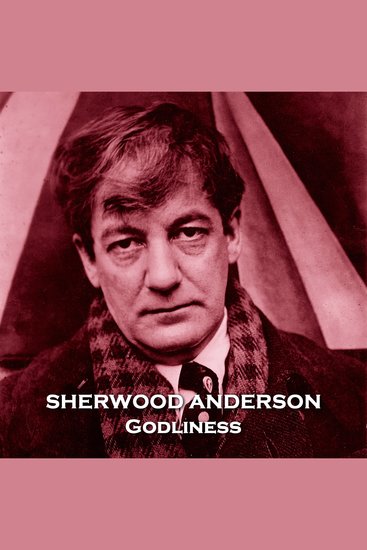
  • Godliness - From their pens to your ears genius in every story - cover

    Godliness - From their pens to...

    Sherwood Anderson

    • 0
    • 0
    • 0
    Sherwood Anderson was born on 13th September 1876 in Camden, Ohio. 
    When his father’s business failed the family was forced to move on a regular basis before finally settling in Clyde, Ohio.   
    Anderson, one of 7 children, left school at 14 to take a number of jobs to help with the family finances. These were difficult years. 
    He moved to Chicago in search of opportunities before joining the Army for the US-Spanish War of 1898.  He then entered Wittenberg Academy in Springfield, Ohio to complete his education before moving back to Chicago to take up a writing job. 
    In 1904 he married Cornelia Lane, her family had resources and Anderson was keen, with this family backing, to run a business. 
    The early years of their marriage produced 3 children but a nervous breakdown in 1907 and another in 1912, despite his success as a business entrepreneur, resulted in him abandoning his family and deciding that a literary career would be best for him.   
    A move back to Chicago resulted in a job in advertising, a divorce from Cornelia and marriage to Tennessee Mitchell.  
    That same year his first book ‘Windy McPherson’s Son’ was released and in 1919, his most famous book, ‘Winesburg, Ohio’, a collection of short stories about life in an Ohio town was released. 
    Anderson continued to write short stories, novels and non-fiction but his only true bestseller came with ‘Dark Laughter’.  His influence on writers that followed, from Faulkner to Hemingway, was immense. He also married a further two times.   
    Sherwood Anderson died in in Colón, Panama, on the 8th March, 1941. He was 64. An autopsy revealed that a swallowed toothpick had resulted in peritonitis. 
    His headstone epitaph reads ‘Life, Not Death is the Great Adventure.’
    Ver libro
  • Lady Susan - cover

    Lady Susan

    Jane Austen

    • 0
    • 0
    • 0
    This high-spirited tale, told through an exchange of letters, is unique in Jane Austen’s small body of work. It is the story of Lady Susan, a brilliant, beautiful and morally reprehensible coquette who delights in making men fall in love with her, deceiving their wives into friendship and even tormenting her own daughter, cruelly bending her to her will.
    
    Austen clearly delighted in her wicked heroine—tracing Lady Susan’s maneuverings to remarry yet continue on with her lover, and to marry off her young daughter, with great wit, zest and unfailing panache.
    
    This little-known gem, Austen’s only epistolary work, is perhaps both her funniest and bitchiest book.
    
    ©2020 Pandora's Box (P)2020 Pandora's Box
    Ver libro