Begleiten Sie uns auf eine literarische Weltreise!
Buch zum Bücherregal hinzufügen
Grey
Einen neuen Kommentar schreiben Default profile 50px
Grey
Jetzt das ganze Buch im Abo oder die ersten Seiten gratis lesen!
All characters reduced
AN UNPLEASANT PREDICAMENT - Enriched edition A Satire - cover

AN UNPLEASANT PREDICAMENT - Enriched edition A Satire

Fyodor Dostoyevsky

Übersetzer Constance Garnett

Verlag: Musaicum Books

  • 0
  • 0
  • 0

Beschreibung

In Fyodor Dostoyevsky's 'An Unpleasant Predicament', readers are immersed in a gripping tale of moral dilemmas, existential struggles, and the complexities of human nature. Written in Dostoyevsky's signature literary style characterized by deep psychological insight and philosophical depth, this novella explores themes of guilt, redemption, and free will. Set against the backdrop of 19th-century Russia, the story follows the protagonist as he navigates through a series of unfortunate events that ultimately lead to a profound internal reckoning. Dostoyevsky's evocative prose and nuanced characterizations elevate this work to a timeless literary masterpiece. Fyodor Dostoyevsky, a prominent Russian novelist and philosopher, drew inspiration from his own tumultuous life experiences to craft compelling narratives that delve into the darkest corners of the human psyche. His profound understanding of human nature and keen observations of society's moral decay are evident throughout 'An Unpleasant Predicament'. Dostoyevsky's enduring legacy as one of the greatest literary minds of his time solidifies his position as a master storyteller and provocateur of thought. I highly recommend 'An Unpleasant Predicament' to readers who appreciate thought-provoking literature that delves into the complexities of the human condition. Dostoyevsky's captivating narrative and profound insights make this novella a must-read for those seeking a literary exploration of morality, redemption, and the nature of human existence.

In this enriched edition, we have carefully created added value for your reading experience:
- A succinct Introduction situates the work's timeless appeal and themes.
- The Synopsis outlines the central plot, highlighting key developments without spoiling critical twists.
- A detailed Historical Context immerses you in the era's events and influences that shaped the writing.
- An Author Biography reveals milestones in the author's life, illuminating the personal insights behind the text.
- A thorough Analysis dissects symbols, motifs, and character arcs to unearth underlying meanings.
- Reflection questions prompt you to engage personally with the work's messages, connecting them to modern life.
- Hand‐picked Memorable Quotes shine a spotlight on moments of literary brilliance.
- Interactive footnotes clarify unusual references, historical allusions, and archaic phrases for an effortless, more informed read.
Verfügbar seit: 06.10.2017.
Drucklänge: 200 Seiten.

Weitere Bücher, die Sie mögen werden

  • The Theory and Practice of Alchemy - cover

    The Theory and Practice of Alchemy

    Manly Palmer Hall

    • 0
    • 0
    • 0
    ALCHEMY, the secret art of the land of Khem, is one of the two oldest sciences known to the world. The other is astrology. The beginnings of both extend back into the obscurity of prehistoric times. According to the earliest records extant, alchemy and astrology were considered as divinely revealed to man so that by their aid he might regain his lost estate. According to old legends preserved by the Rabbins, the angel at the gate of Eden instructed Adam in the mysteries of Qabbalah and of alchemy, promising that when the human race had thoroughly mastered the secret wisdom concealed within these inspired arts, the curse of the forbidden fruit would be removed and man might again enter into the Garden of the Lord. As man took upon himself "coats of skins" (physical bodies) at the time of his fall, so these sacred sciences were brought by him into the lower worlds incarnated in dense vehicles, through which their spiritual transcendental natures could no longer manifest themselves. Therefore they were considered as being dead or lost. 
    The earthly body of alchemy is chemistry, for chemists do not realize that half of The Book of Torah is forever concealed behind the veil of Isis (see the Tarot), and that so long as they study only material elements they can at best discover but half of the mystery. Astrology has crystallized into astronomy, whose votaries ridicule the dreams of ancient seers and sages, deriding their symbols as meaningless products of superstition. Nevertheless, the intelligentsia of the modern world can never pass behind the veil which divides the seen from the unseen except in the way appointed--the Mysteries.
    Zum Buch
  • Searching for Franklin - New Answers to the Great Arctic Mystery - cover

    Searching for Franklin - New...

    Ken McGoogan

    • 0
    • 0
    • 0
    Two of Arctic explorer Sir John Franklin's expeditions were monumental failures. Yet many still see the Royal Navy man as a heroic figure who sacrificed himself to discover the Northwest Passage. 


    This book interweaves two narratives. The first treats the Royal Navy's Arctic Overland Expedition of 1819, a harbinger-misadventure during which Franklin rejected the advice of Dene and Métis leaders and lost eleven of his twenty-one men. The second discovers a startling new answer to that greatest of Arctic mysteries: what was the root cause of the catastrophe that engulfed Franklin's last expedition? 


    The well-preserved wrecks of Erebus and Terror promise to yield more clues about what cost the lives of the expedition members, some of whom were reduced to cannibalism. Contemporary researchers continue to seek conclusive evidence both underwater and on land. 


    Drawing on his own research and Inuit oral accounts, McGoogan teases out many intriguing aspects of Franklin's expeditions, including the explorer's lethal hubris in ignoring the expert advice of the Dene leader Akaitcho. Franklin disappeared into the Arctic in 1845, yet people remain fascinated with his final doomed voyage: what happened?
    Zum Buch
  • Asia Minor’s Most Prominent Ancient Cities: The History and Legacy of the Influential Cities that Dominated the Region in Antiquity - cover

    Asia Minor’s Most Prominent...

    Editors Charles River

    • 0
    • 0
    • 0
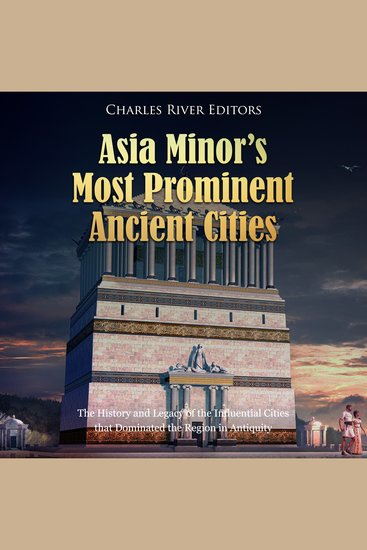
    The pages of world history textbooks contain a litany of “lost” empires and civilizations, but usually, upon further review, it is revealed that these so called lost empires are often just lesser known cultures that had a less apparent impact on history than other more well-known civilizations. When one scours the pages of history for civilizations that seem inexplicably lost but had a great impact during its time, a number of places in Asia Minor pop up. 
    	For example, Troy is unquestionably one of the most famous and legendary cities of antiquity, yet it is also the most mysterious. While ancient cities like Rome and Athens survived, and the destruction of others like Carthage and Pompeii were well-documented, the fame of Troy rested entirely on Homer’s epic poems, The Iliad and The Odyssey. The poems were so famous in the ancient world that Augustus had Virgil associate Rome’s foundation with the destruction of Troy and Aeneas’s own odyssey in the Aeneid. Augustus went so far as to have a new settlement, New Ilium, built in the region. 
    	In 1595 BCE, a mysterious new army struck Babylon without warning, spreading terror throughout the city. These warriors would cross the ancient Near East, destroying anything in their way with ruthless efficiency. In a time of war and conquest, they were the mightiest military power of their age. They were the Hittites, a warlike civilization that rose in central Anatolia from the capital city of Hattusa. At its height from around 1400 to 1200 BCE, the Hittite empire extended over a wide area of modern day Turkey and northern Syria.  
    Western civilization is directly linked to the incredible things that happened in Miletus during the 6th and 5th centuries BCE. In the context of the dynamic political and mercantile interactions between different lands, philosophy and science were able to arise in Miletus because of the presence of a group of rich traders.
    Zum Buch
  • The Trickster Gods - Deities of Deception and Wit - cover

    The Trickster Gods - Deities of...

    Odessa Nightshade

    • 0
    • 0
    • 0
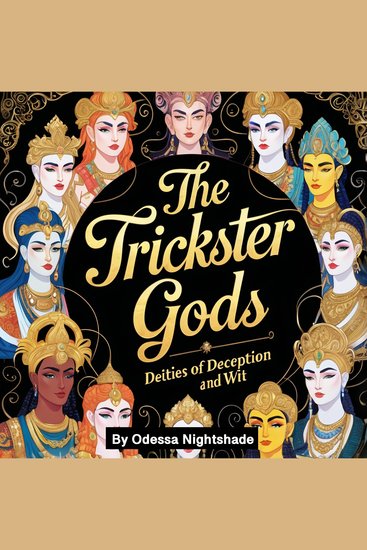
    The trickster god is a figure that appears in mythologies across the world, embodying deception, wit, and unpredictability. These deities challenge societal norms, defy authority, and blur the boundaries between good and evil. Often mischievous and cunning, they are not bound by conventional morality, instead operating through trickery, subversion, and humor to achieve their goals. While they may appear as troublemakers, their actions frequently lead to unexpected wisdom, transformation, or creation.  
      
    Trickster gods serve as both disruptors and innovators. By breaking rules, they expose the rigidity of societal structures, forcing individuals and cultures to reconsider what they believe to be true. In some traditions, they are creators who shape the world through cunning rather than brute force. In others, they act as divine messengers, weaving chaos into cosmic order. Their duality—both destructive and constructive—makes them some of the most compelling figures in mythology.  
      
    Loki, the infamous Norse trickster, is a master of deception, shifting alliances and playing both hero and villain within the same myths. Anansi, the spider god of West African folklore, uses intelligence and cleverness to outwit stronger opponents, often teaching moral lessons through his trickery. Hermes, the Greek god of thieves and messengers, personifies swift cunning, charming even the mightiest gods with his persuasive words. Native American traditions tell of Coyote, a shape-shifter whose antics bring both laughter and misfortune, illustrating the fine line between wisdom and folly. Across the Pacific, Maui, the Polynesian trickster, steals fire and slows the sun, securing gifts for humankind through his mischievous daring. 
    Zum Buch
  • Animals and the Greco-Roman World: The History of the Ways the Ancient Greeks and Romans Used Animals in Religion and Daily Life - cover

    Animals and the Greco-Roman...

    Editors Charles River

    • 0
    • 0
    • 0
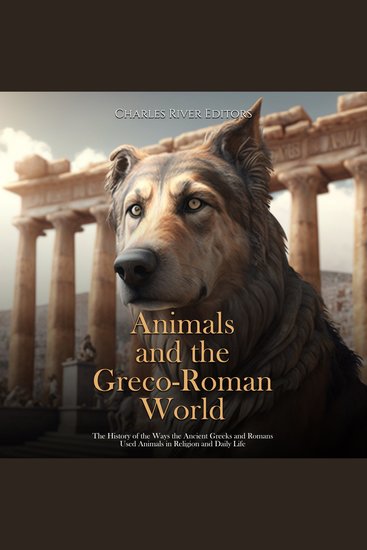
    There were approximately 1,500 Greek city-states (poleis) in the Classical era, and sacrifices featured in every one of them. As such, animals were constantly involved in the core elements of Greek society and cults, and this centrality could be found in the numerous depictions of animals on coins and vases throughout Greece and Greek colonies. Greek thinkers and philosophers also endlessly debated issues relating to animals, which resulted in the Greeks acquiring formidable knowledge about the creatures with whom they came in contact. All the while, animals were important sources of food, companionship, and labor, and they also featured significantly in warfare. 
    Another use for foreign animals was in the preparation of medicines. Animals captured during military conflicts were considered spoils of war, suggesting their status was that of an object. On the other hand, reflecting the Greek ambiguity and ambivalence toward their status, various philosophical debates of the time indicate that animals could also be prosecuted for committing crimes and punished accordingly. It is also apparent that ancient Greeks knew a considerable amount about their animals, as various written works that survived often reflected the ethical and scientific debates surrounding them. 
    Other than the tale of the she-wolf with Romulus and Remus, the overriding images and stories of Roman animals that have come down through popular culture to modern times largely concern the vicious animal fights put on in the Colosseum, stories of Christians being thrown to the lions, and Hannibal's invasion of Italy with elephants. Indeed, the widely accepted view is that Romans were uncommonly brutal to their animals and had little empathy for them, and in terms of the Romans' scientific knowledge about animals, it appears much of it came to them from the Greeks.
    Zum Buch
  • Harvard Business Review Emotional Intelligence Collection - Happiness Resilience Empathy Mindfulness - cover

    Harvard Business Review...

    Anonym

    • 0
    • 0
    • 0
    How to be human at work. 


    Each book in the HBR's Emotional Intelligence series offers proven research showing how our emotions impact our work lives, practical advice for managing difficult people and situations, and inspiring essays on what it means to tend to our emotional well-being at work. Uplifting and practical, these books describe the social skills that are critical for ambitious professionals to master. 


    This four-volume set includes Happiness, Resilience, Mindfulness, and Empathy.
    Zum Buch