Begleiten Sie uns auf eine literarische Weltreise!
Buch zum Bücherregal hinzufügen
Grey
Einen neuen Kommentar schreiben Default profile 50px
Grey
Jetzt das ganze Buch im Abo oder die ersten Seiten gratis lesen!
All characters reduced
Notes from Underground (The Unabridged Garnett Translation) - Enriched edition Exploring Existential Depths in 19th Century Russia - cover

Notes from Underground (The Unabridged Garnett Translation) - Enriched edition Exploring Existential Depths in 19th Century Russia

Fyodor Dostoevsky

Verlag: Good Press

  • 0
  • 0
  • 0

Beschreibung

In "Notes from Underground," Fyodor Dostoevsky presents a profound exploration of existentialism and the complexities of the human psyche through the voice of the unnamed Underground Man. Written in a fragmented, confessional style, the narrative oscillates between biting satire and deep philosophical inquiry, revealing the tensions between individual autonomy and societal expectations. Set against the backdrop of 19th-century Russian society, the text critiques rationalism and utopian ideals, inviting readers to engage with the darker aspects of the human condition. Fyodor Dostoevsky, a pivotal figure in psychological literature, drew from his own tumultuous experiences'—imprisonment, financial hardship, and the spiritual crises of his time. His encounters with political radicalism and the Russian Orthodox faith deeply influenced his writing, allowing him to probe the underlying motives of his disenchanted characters. "Notes from Underground" stands as a direct response to the philosophical currents of his era, particularly the ideas of Western rationalists, marking Dostoevsky's evolution into a profound thinker of existential despair. This unabridged Garnett translation captures the nuanced complexities of Dostoevsky's prose, making it accessible to contemporary readers. It is essential for anyone interested in the intersection of philosophy and literature, as well as those seeking to understand the roots of modern existentialism. Readers will find themselves contemplating the nature of freedom, alienation, and the human struggle inherent in the Underground Man's poignant reflections.

In this enriched edition, we have carefully created added value for your reading experience:
- A succinct Introduction situates the work's timeless appeal and themes.
- The Synopsis outlines the central plot, highlighting key developments without spoiling critical twists.
- A detailed Historical Context immerses you in the era's events and influences that shaped the writing.
- An Author Biography reveals milestones in the author's life, illuminating the personal insights behind the text.
- A thorough Analysis dissects symbols, motifs, and character arcs to unearth underlying meanings.
- Reflection questions prompt you to engage personally with the work's messages, connecting them to modern life.
- Hand‐picked Memorable Quotes shine a spotlight on moments of literary brilliance.
- Interactive footnotes clarify unusual references, historical allusions, and archaic phrases for an effortless, more informed read.
Verfügbar seit: 20.12.2023.
Drucklänge: 233 Seiten.

Weitere Bücher, die Sie mögen werden

  • The Castle of Otranto - cover

    The Castle of Otranto

    Horace Walpole

    • 0
    • 0
    • 0
    "The Castle of Otranto" is a novel written by Horace Walpole and first published in 1764. It is considered the first Gothic novel, setting the stage for a genre that would become popular in the late 18th and early 19th centuries. The book is known for its blend of supernatural elements, romance, and suspense. The story is set in the medieval Castle of Otranto in Italy and revolves around the mysterious and supernatural events that unfold within its walls. The narrative involves a cursed noble family, secret passages, prophecies, and a large helmet that seems to portend doom. The novel explores themes of power, love, and the supernatural, creating an atmospheric and suspenseful tale.
    Zum Buch
  • Manuscript Found in a Bottle - cover

    Manuscript Found in a Bottle

    Sampi Books, Edgar Allan Poe

    • 0
    • 0
    • 0
    "Manuscript Found In A Bottle" is a short story by Edgar Allan Poe that tells the story of a man who, after a shipwreck caused by a storm, finds himself on board a mysterious ghost ship with a crew destined for an unknown and catastrophic fate.
    Zum Buch
  • Wuthering Heights - cover

    Wuthering Heights

    Emily Brontë

    • 0
    • 0
    • 0
    Step into the windswept moors of Wuthering Heights, Emily Brontë’s haunting tale of passion, revenge, and the complexities of human nature. This Gothic masterpiece follows the turbulent relationship between the brooding Heathcliff and the strong-willed Catherine Earnshaw, whose intense connection defies social boundaries and time itself. As love turns to obsession, their story spirals into a saga of betrayal and vengeance, leaving its mark on everyone at Wuthering Heights. 
    With vivid, atmospheric prose and unforgettable characters, Brontë creates a dark, emotional world that explores love’s power to both elevate and destroy. Wuthering Heights stands as one of literature’s greatest tragedies, capturing the wild beauty and raw intensity of unrestrained emotion. 
    Narrated with passion and depth, this audiobook brings the haunting landscape and rich characters to life, immersing listeners in Brontë’s unique vision. 
    Start listening to Wuthering Heights today and experience a classic story of love, fury, and redemption that has captivated readers for generations.
    Zum Buch
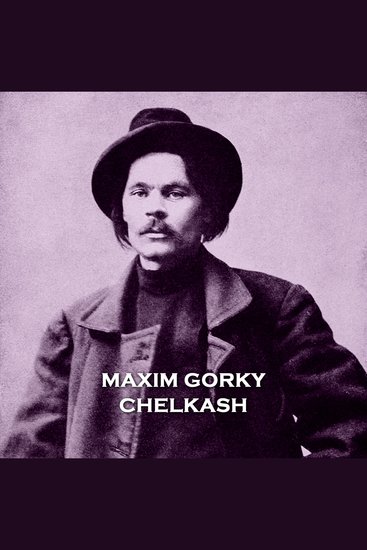
  • Chelkash by Maxim Gorky - A small time thief is caught up in a larger scheme testing his willpower and showing the dangers of greed - cover

    Chelkash by Maxim Gorky - A...

    Maxim Gorky

    • 0
    • 0
    • 0
    Alexei Maximovich Peshkov was born on 28th March 1868, in Nizhny Novgorod, Russia. 
     
    Better known as Maxim Gorky he was orphaned at 11 and ran away from home at 12.  At 19 he had already attempted suicide and thereafter travelled, by foot, across the Russian Empire for 5 years. 
     
    His first book ‘Essays & Stories’ in 1898 was a sensation and so began a long career as an author of short stories, novels and plays.  Gorky saw writing as a moral and political act that would help to change the unjust world around him.  He was an ardent early advocate of the emerging Marxist movement and publicly opposed the Tsarist regime leading several times to his arrest.  
     
    In 1904 he began his own theatre but the censor banned every play and Gorky was forced to abandon the project. 
     
    But Gorky was a financially successful author, editor, and playwright and gave monies to political parties as well as for civil rights and social reform.  The brutal shooting of workers, which set in motion the Revolution of 1905, pushed Gorky more decisively toward radical solutions.  
     
    In 1906 he went to the United States to raise funds for the Bolsheviks. Those experiences including a scandal over travelling with his lover and not his wife deepened his contempt for the ‘bourgeois soul.’ 
     
    Gorky now moved to Capri in Italy, both for health reasons and to escape the increasingly repressive times in Russia.  
     
    An amnesty for the 300th anniversary of the Romanov dynasty saw him return to Russia in 1914. His politics remained close to the Bolshevik cause.  But soon, after the 1918 revolution, his essays referred to Lenin as a tyrant for his senseless arrests and repression.  He was soon appealing to the outside world for food aid after the catastrophic crop failure. 
     
    In October 1921 Gorky returned to Italy, now in Fascist hands, and settled in Sorrento until 1932.  His health worsened with the onset of tuberculosis. 
     
    He wrote several successful books there but now decided to find an understanding with the communist regime. Stalin invited him home and his return was hailed as a major propaganda victory.  He was decorated with the Order of Lenin, and a province, a park, and various streets re-named in his honour. 
     
    But he had his faults too.  In 1933, Gorky co-edited a book on the White Sea-Baltic Canal and denied even a single prisoner died during its construction, but thousands had. As well, knowing that some Nazis were homosexual, a phrase was attributed to him that said ‘exterminate all homosexuals and fascism will vanish’.  Although he was himself was quoting another he was decidedly homophobic. 
     
    With the increase of Stalinist repression in 1935 Gorky was placed under unannounced house arrest. 
     
    Maxim Gorky died on the 18th June 1936 from pneumonia.  He was 68. 
     
    Stalin and Molotov were among those who carried Gorky's urn of ashes at his funeral.  
     
    In Gorky’s story, a thief, Chelkash, ensnares a young man into his scheme to steal silk from a ship.  When he then sells the stolen goods he is set upon by the young accomplice.  What happens then is as unexpected as it is remarkable.
    Zum Buch
  • 10 Great Russian Short Stories - Nikolai Gogol Fyodor Dostoevsky Leo Tolstoy Anton Chekhov Ivan Turgenev Leonid Andreyev - cover

    10 Great Russian Short Stories -...

    Nikolai Gogol, Fyodor...

    • 0
    • 0
    • 0
    This audiobook includes 10 Great Russian Short Stories:
    The Mantle by Nikolai Gogol
    Mumu by Ivan Turgenev 
    First love by Ivan Turgenev 
    An Avenger by Anton Chekhov
    Darkness by Anton Chekhov 
    The Death of Ivan Illyich by Leo Tolstoy
    Notes from the Underground by Fyodor Dostoevsky
    The Little Angel by Leonid Andreyev
    The Dream of a Ridiculous Man by Fyodor Dostoyevsky
    A Troublesome Visitor by Anton Chekhov
    Zum Buch
  • What Christmas is as We Grow Older - cover

    What Christmas is as We Grow Older

    Charles Dickens

    • 0
    • 0
    • 0
    “What Christmas is as We Grow Older” is a short Christmas-Story by Charles Dickens: Time was, with most of us, when Christmas Day encircling all our limited world like a magic ring, left nothing out for us to miss or seek; bound together all our home enjoyments, affections, and hopes; grouped everything and every one around the Christmas fire; and made the little picture shining in our bright young eyes, complete.
    Zum Buch