Rejoignez-nous pour un voyage dans le monde des livres!
Ajouter ce livre à l'électronique
Grey
Ecrivez un nouveau commentaire Default profile 50px
Grey
Abonnez-vous pour lire le livre complet ou lisez les premières pages gratuitement!
All characters reduced
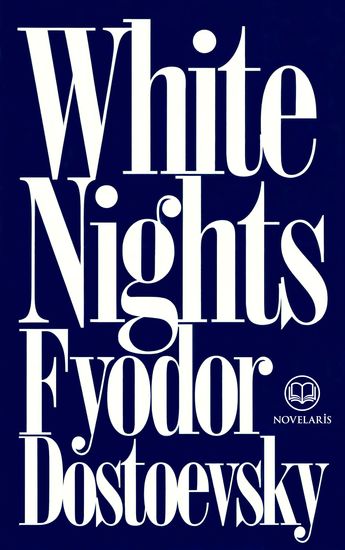
Fyodor Dostoevsky: White Nights - Original Translation by Constance Garnett (Novelaris Classics) - cover

Fyodor Dostoevsky: White Nights - Original Translation by Constance Garnett (Novelaris Classics)

Fyodor Dostoevsky

Maison d'édition: Novelaris Verlag

  • 0
  • 0
  • 0

Synopsis

In the luminous summer nights of St. Petersburg, a lonely dreamer encounters a troubled young woman. Fyodor Mikhailovich Dostoevsky's "White Nights" unfolds as an intimate tale of four evenings that hover between hope and melancholy. Through shared confidences and tender moments, the bond between Nastenka and the nameless narrator grows into something as fragile as it is profound. As she awaits her long-absent fiancé, their connection deepens into a love story that captures the ache of what cannot be.
This 1848 novella captures the poignant space between romantic fantasy and reality in Dostoevsky's distinctive prose, leaving readers with an unforgettable meditation on solitude and the fleeting nature of love.
Disponible depuis: 29/01/2025.
Longueur d'impression: 40 pages.

D'autres livres qui pourraient vous intéresser

  • The Encantadas - cover

    The Encantadas

    Herman Melville

    • 0
    • 0
    • 0
    "The Encantadas, or Enchanted Isles" is a novella by American author Herman Melville. First published in Putnam's Magazine in 1854, it consists of ten philosophical "Sketches" on the Encantadas, or Galápagos Islands. It was collected in The Piazza Tales in 1856. The Encantadas was a success with the critics, and contained some of Melville's "most memorable prose".
    An anonymous narrator unites the ten disparate "Sketches", each of which begin with a few lines of poetry, mostly taken from Edmund Spenser's The Faerie Queene. All of the stories are replete with symbolism reinforcing the cruelty of life on the Encantadas. "Sketch First" is a description of the islands; though they are the Enchanted Isles they are depicted as desolate and hellish. "Sketch Second" is a meditation on the narrator's encounter with ancient Galápagos tortoises, while "Sketch Third" concerns the narrator's trip up the enormous tower called the Rock Rodondo. "Sketch Fourth" details the narrator's musings from atop the tower, and his recollection of the islands' accidental discovery by Juan Fernández. "Sketch Fifth" describes the USS Essex' encounter with a phantom British ship near the area during the War of 1812.
    Voir livre
  • Queen Bee The - Story Time Episode 44 (Unabridged) - cover

    Queen Bee The - Story Time...

    Brothers Grimm

    • 0
    • 0
    • 0
    Two sons of a king went out to seek their fortunes, but fell into disorderly ways. The third and youngest son, Simpleton, went out to find them, but they mocked him. They traveled on, and Simpleton prevented his brothers from destroying an ant hill, killing some ducks, and suffocating a bee hive with smoke.
    Voir livre
  • The Adventures of a Lady Pearl Broker Detective - From their pens to your ears genius in every story - cover

    The Adventures of a Lady Pearl...

    Beatrice Heron-Maxwell

    • 0
    • 0
    • 0
    The bookshelves of British literature are incredible collections that have gathered together centuries of very talented authors.  From these Isles their fame spread and whilst among their number many are now forgotten or neglected their talents endure.  Among them is Beatrice Heron-Maxwell.
    Voir livre
  • The Spy - A Tale of the Neutral Ground - cover

    The Spy - A Tale of the Neutral...

    James Fenimore Cooper

    • 0
    • 0
    • 0
    This historical adventure with a hint of romance takes place during the American Revolution, when a man, only known as Mr. Harper, requests shelter at The Locusts during a storm. When another unknown stranger appears in want of shelter, Mr. Harper, and the Locust family, become quite suspicious. As the battle between the Patriots and the British is fought in their midst, an internal struggle occurs in the house of one family.
    Voir livre
  • Gabriel-Ernest - From their pens to your ears genius in every story - cover

    Gabriel-Ernest - From their pens...

    Saki Saki

    • 0
    • 0
    • 0
    Hector Hugh Munro, more familiarly known by his pen-name ‘Saki’ was born in what was then Akyab in British Burma on 18th December 1870. His father was an Inspector General for the Indian Imperial Police, and his mother the daughter of a Rear Admiral. 
    When he was 2 his mother died and he and his siblings were sent back to England to be raised by their grandmother and paternal maiden aunts in a strict, puritanical household near Barnstaple, Devon. Educated by governesses Saki used many of these women as character models for his later writing. 
    At 17 his father retried and returned to England and then embarked on a series of European travels with Saki and his siblings. 
    After a short stint working in Burma with the Indian Imperial Police Saki decided to move to London to make a living as a writer. Initially he wrote as a journalist for a number of newspapers and magazines before attempting an historical study, ‘The Rise of the Russian Empire’, whose real value lay in directing him to writing short stories instead, the first of which, ‘Dogged’, he published in 1899. 
    From here it was a short stab of the pen to writing political satire before in 1902 he became the foreign correspondent for The Morning Post, first in the Balkans, then Russia, Paris and back to London in 1908, where 'the agreeable life of a man of letters with a brilliant reputation awaited him.'  
    Collections of his short stories full of witty, mischievous and often macabre stories that satirized Edwardian society and two novels now appeared in the years up to the Great War.  At its’ outbreak he was 43 but managed to join as an ordinary trooper. More than once he returned to the battlefield when officially too sick or injured.  
    On 14th November 1916 Hector Hugh Munro was sheltering in crater during the Battle of the Ancre, when he was shot and killed by a German sniper. According to several sources, his last words were "Put that bloody cigarette out!"
    Voir livre
  • Tom Sawyer Abroad - cover

    Tom Sawyer Abroad

    Mark Twain

    • 0
    • 0
    • 0
    Tom Sawyer Abroad features Tom Sawyer & Huckleberry Finn in a parody of Jules Verne-esque adventure stories. In the story, Tom, Huck & Jim set sail to Africa in a futuristic hot air balloon, where they survive encounters with lions, robbers & fleas to see some of the world's greatest wonders, including the Pyramids & the Sphinx.Echoing Adventures of Huckleberry Finn & Tom Sawyer, Detective, the story is told using the 1st-person narrative voice of Huck Finn.
    Voir livre