Join us on a literary world trip!
Add this book to bookshelf
Grey
Write a new comment Default profile 50px
Grey
Subscribe to read the full book or read the first pages for free!
All characters reduced
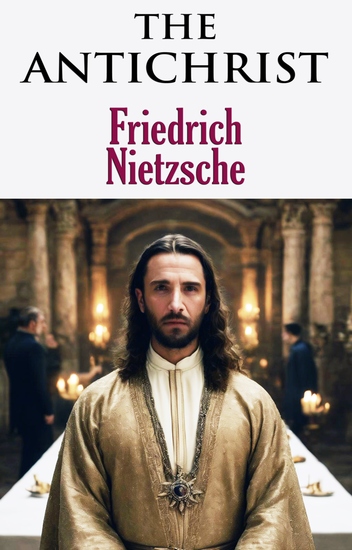
The Antichrist - cover

The Antichrist

Friedrich Nietzsche

Publisher: E-Kitap Projesi & Cheapest Books

  • 0
  • 0
  • 0

Summary

Save for his raucous, rhapsodical autobiography, "Ecce Homo," "The Antichrist" is the last thing that Nietzsche ever wrote, and so it may be accepted as a statement of some of his most salient ideas in their final form. Notes for it had been accumulating for years and it was to have constituted the first volume of his long-projected magnum opus, "The Will to Power." His full plan for this work, as originally drawn up, was as follows:

VOL. I: The Antichrist: an Attempt at a Criticism of Christianity
VOL. II: The Free Spirit: a Criticism of Philosophy as a Nihilistic Movement
VOL. III: The Immoralist: a Criticism of Morality, the Most Fatal Form of Ignorance
VOL. IV: Dionysus: the Philosophy of Eternal Recurrence

The first sketches for "The Will to Power" were made in 1884, soon after the publication of the first three parts of "Thus Spake Zarathustra," and thereafter, for four years, Nietzsche piled up notes. They were written at all the places he visited on his endless travels in search of health—at Nice, at Venice, at Sils-Maria in the Engadine (for long his favourite resort), at Cannobio, at Zürich, at Genoa, at Chur, at Leipzig. Several times his work was interrupted by other books, first by "Beyond Good and Evil," then by "The Genealogy of Morals" (written in twenty days), then by his Wagner pamphlets. Almost as often he changed his plan. Once he decided to expand "The Will to Power" to ten volumes, with "An Attempt at a New Interpretation of the World" as a general sub-title. Again he adopted the sub-title of "An Interpretation of All That Happens." Finally, he hit upon "An Attempt at a Transvaluation of All Values," and went back to four volumes, though with a number of changes in their arrangement. In September, 1888, he began actual work upon the first volume, and before the end of the month it was completed. The Summer had been one of almost hysterical creative activity. Since the middle of June he had written two other small books, "The Case of Wagner" and "The Twilight of the Idols," and before the end of the year he was destined to write "Ecce Homo." Some time during December his health began to fail rapidly, and soon after the New Year he was helpless. Thereafter he wrote no more.
Available since: 01/26/2024.
Print length: 200 pages.

Other books that might interest you

  • Thales - Thoughts and Ideas from the First Philosopher - cover

    Thales - Thoughts and Ideas from...

    Hector Davidson

    • 0
    • 0
    • 0
    Thales of Miletus, often hailed as the first philosopher in Western history, was born in the ancient Greek city of Miletus, around 624 BCE. As a figure whose contributions have shaped the course of philosophy, science, and mathematics, Thales stands as a foundational figure in intellectual history. Although much of his life remains shrouded in mystery due to the passage of time, the few details that have survived reveal a thinker whose ideas and insights went beyond the conventional beliefs of his era. 
    Thales is traditionally considered the first to break away from mythological explanations of the world. Prior to Thales, the Greek understanding of nature was largely dominated by myth and religious explanations, where gods and divine forces were invoked to explain the natural phenomena. Thales, however, proposed a radical shift by seeking rational, natural explanations. He is best known for his theory that water is the fundamental substance from which everything originates. This insight marks a profound moment in intellectual history because it moved away from mythological thinking and introduced the idea of a unifying principle underlying all things. 
    In addition to his contributions to philosophy, Thales was also a mathematician and astronomer, and his influence in these fields is considerable. He is credited with being the first to predict a solar eclipse, using his understanding of the stars and celestial movements. His work in geometry is equally important—he is famously known for Thales’ Theorem, which laid the groundwork for the development of geometry. This theorem states that if two points are on a circle, and a line is drawn through them, then the center of that line will always lie on a straight line through the center of the circle. This geometric insight shows his ability to understand and systematize mathematical concepts that were previously unexamined.
    Show book
  • Tecumseh and Tenskwatawa: The Lives and Legacies of the Shawnee’s Famous Leaders - cover

    Tecumseh and Tenskwatawa: The...

    Editors Charles River

    • 0
    • 0
    • 0
    Throughout the 19th century, American settlers pushing across the Western frontier came into contact with diverse American tribes, producing a series of conflicts ranging from the Great Plains to the Southwest, from the Trail of Tears to the Pacific Northwest. Indian leaders like Geronimo became feared and dreaded men in America, and Sitting Bull’s victory over George Custer’s 7th Cavalry at Little Bighorn was one of the nation’s most traumatic military endeavors.  
    	Given this history, Tecumseh’s reputation among Americans has been both the most unique and anomalous. As the leader of the Shawnee, Tecumseh was the most famous Native American of the early 19th century, and he attempted to peacefully establish a Native American nation east of the Mississippi River in the wake of the American Revolution. While Native Americans, especially in the “Old Northwest” (present-day land west of the Appalachian Mountains and east of the Mississippi River), understood and recognized their own, long established territories and those of other tribes, these boundaries and territories were ignored and unappreciated by the incoming settlers.  
    	What makes Tecumseh’s legacy ironic is that the Shawnee were nominally led by a different man altogether, and that man just so happened to be Tecumseh’s brother. Lalawethika’s early life mostly consisted of abject failures, and he became an alcoholic, but in one of his alcohol-soaked stupors, he began to have visions of the Master of Life that turned him into the Open Door, the prophet named Tenskwatawa. It was Tenskwatawa who brought a new vision to the Shawnee, transforming himself from an object of pity and contempt into a religious leader who had thousands of followers. When the Americans fought at Tippecanoe, the gathering of Native Americans who they were attempting to disperse had congregated at a place colloquially known as Prophetstown. 
    Show book
  • Doc Watson - A Life in Music - cover

    Doc Watson - A Life in Music

    Eddie Huffman

    • 0
    • 0
    • 0
    Arthel "Doc" Watson (1923–2012) is arguably one of the most influential musicians Appalachia has ever produced. A musician's musician, Doc grew up on a subsistence farm in the North Carolina mountains during the Depression, soaking up traditional music and learning to play guitar even though he was blind. Rising to fame in the 1960s as part of the burgeoning folk revival scene, Doc became the face of traditional music for many listeners, racking up multiple Grammys and releasing dozens of albums over the course of his long career. Eddie Huffman tells the story of Doc's life and legacy, drawing on extensive interviews and hundreds of hours of archival research. In making the most comprehensive biography of Watson ever, Huffman gives us an affecting and informative portrait of the man they called Doc. 


    Full of fascinating stories—from Doc's first banjo made from his grandmother's cat to the founding of MerleFest—this promises to be the definitive biography of the man and how he came to be synonymous with roots music in America and shows how his influence is still felt in music today.
    Show book
  • Lady Glenconner's Picnic Papers - cover

    Lady Glenconner's Picnic Papers

    Glenconner Anne

    • 0
    • 0
    • 0
    'Full of delightful stories...a wonderful insight into the British obsession with al fresco eating' - Travel Gourmet
    From the peaks of the Himalayas to the historic grounds of Hampton Court, there's always a perfect spot for a picnic!
    Anne Glenconner invites both old friends and new acquaintances to join her in The Picnic Papers. Featuring contributions from Bryan Adams, Graham Norton, Lorraine, Rupert Everett, Tina Brown, Freya Stark and many more, they explore the curious British obsession with dining alfresco, despite our famously unpredictable weather.
    Picnics, it turns out, spark strong opinions. HRH Princess Margaret insisted on having hers at a proper table, while the indefatigable John Julius Norwich enjoyed 147 picnics over seven weeks in the Sahara. In stark contrast, writer James Lees-Milne simply loathed them.
    Brimming with extraordinary tales and a few nostalgic recipes (though this is not a recipe book!) Lady Glenconner's The Picnic Papers is an invitation to a delightful feast of memories and culinary delights.
    Show book
  • The Last Bookseller - A Life in the Rare Book Trade - cover

    The Last Bookseller - A Life in...

    Gary Goodman

    • 0
    • 0
    • 0
    When Gary Goodman wandered into a run-down, used-book shop that was going out of business in East St. Paul in 1982, he had no idea the visit would change his life. He walked in as a psychiatric counselor and walked out as the store's new owner. In The Last Bookseller Goodman describes his sometimes desperate, sometimes hilarious career as a used and rare book dealer in Minnesota. 


    Here we meet the infamous St. Paul Book Bandit, Stephen Blumberg, who stole 24,000 rare books worth more than fifty million dollars; John Jenkins, the Texas rare book dealer who (probably) was murdered while standing in the middle of the Colorado River; and the eccentric Melvin McCosh, who filled his dilapidated mansion with half a million books. In 1990, with a couple of partners, Goodman opened St. Croix Antiquarian Books in Stillwater, one of the Twin Cities region's most venerable bookshops until it closed in 2017. 


    The internet changed the book business forever, and Goodman details how, after 2000, the internet made stores like his obsolete. In the 1990s, the Twin Cities had nearly fifty secondhand bookshops; today, there are fewer than ten. As both a memoir and a history of booksellers and book scouts, criminals and collectors, The Last Bookseller offers an ultimately poignant account of the used and rare book business during its final Golden Age.
    Show book
  • Rediscovering Life: A Journey Back Home - Ignite your soul! Discover captivating audio guides for your journey back home to Rediscovering Life - cover

    Rediscovering Life: A Journey...

    Adrian Crowlerson

    • 0
    • 0
    • 0
    Rediscovering Life: A Journey Back Home 
    ⭐⭐ Simplified Audio Guide ⭐⭐ 
    Are you on a journey to find peace and purpose by rediscovering life's essence? 
    Searching for an enlightening guide that provides all the necessary elements to embrace life fully? 
    Your search ends here! 
    This audiobook serves as your definitive companion for deepening your understanding, applying your insights, and engaging in introspective exercises. With this, you're geared for a meaningful transformation. 
    Updated with a thoughtful approach for self-discovery and enlightenment. 
    Key features of this enriched guide: 
    - Profound insights about rediscovering the essence of life 
    - Comprehensive exploration of finding peace and purpose 
    - Effective strategies for personal growth and self-reflection 
    Our guide distinguishes itself through comprehensive coverage, which is essential for your journey. Concepts aren't merely skimmed; they are delved into with precision. 
    Please note that this guide is not affiliated with any official entity and is purely an independent resource for your personal growth. 
    Designed with a clear structure and easy-to-understand language, our guide ensures smooth transitions between topics. Say goodbye to dense jargon and welcome clear, precise, and introspective content. 
    So, why wait? Click the BUY NOW button, secure your guide, and begin your journey to inner peace and fulfillment!
    Show book