Rejoignez-nous pour un voyage dans le monde des livres!
Ajouter ce livre à l'électronique
Grey
Ecrivez un nouveau commentaire Default profile 50px
Grey
Abonnez-vous pour lire le livre complet ou lisez les premières pages gratuitement!
All characters reduced
BEYOND GOOD AND EVIL (Modern Philosophy Series) - Exploring Nietzsche's Radical Philosophy of Morality and Power - cover

BEYOND GOOD AND EVIL (Modern Philosophy Series) - Exploring Nietzsche's Radical Philosophy of Morality and Power

Friedrich Nietzsche

Traducteur Helen Zimmern

Maison d'édition: Good Press

  • 0
  • 0
  • 0

Synopsis

In "Beyond Good and Evil," Friedrich Nietzsche challenges the underpinnings of traditional morality, offering a penetrating critique of established philosophical doctrines. The book diverges from Nietzsche's earlier work, "Thus Spoke Zarathustra," by employing a more aphoristic style, which allows for nuanced exploration of complex ideas. Through subtle prose and provocative assertions, Nietzsche dissects the duality of morality, asserting that the dichotomy of good versus evil stifles individual creativity and authentic existence. Positioned within the larger context of 19th-century European philosophy, this work serves as a cornerstone for modern existential and postmodern thought, inviting readers to rethink the foundations of moral judgment. Friedrich Nietzsche, a prominent figure in the realm of philosophy, was deeply influenced by the cultural and intellectual currents of his time, including the rise of scientific rationalism and the decline of traditional religious values. His experiences of illness and isolation further catalyzed his philosophical inquiries, leading him down the path of radical skepticism that permeates "Beyond Good and Evil." Nietzsche's work embodies a profound struggle against nihilism, seeking to redefine values through the lens of individual perspective and will. Readers seeking to engage with the provocative ideas of modern philosophy will find "Beyond Good and Evil" essential. It not only invites profound self-reflection but also challenges societal norms, making it an indispensable text for those eager to explore the intricacies of morality, power, and the human condition. Nietzsche's powerful prose and insightful critiques make for a compelling read, ensuring the book's relevance to contemporary philosophical discourse.
Disponible depuis: 16/01/2024.
Longueur d'impression: 167 pages.

D'autres livres qui pourraient vous intéresser

  • Rocking in the Free World - Popular Music and the Politics of Freedom in Postwar America - cover

    Rocking in the Free World -...

    Nicholas Tochka

    • 0
    • 0
    • 0
    Progressive and libertarian, anti-Communist and revolutionary, Democratic and Republican, quintessentially American but simultaneously universal. By the late 1980s, rock music had acquired a dizzying array of political labels. These claims about its political significance shared one common thread: that the music could set you free. 


    Rocking in the Free World explains how Americans came to believe they had learned the truth about rock 'n' roll, a truth shaped by the Cold War anxieties of the fifties, the countercultural revolutions (and counter-revolutions) of the sixties and seventies, and the end-of-history triumphalism of the eighties. How did rock 'n' roll become enmeshed with so many different competing ideas about freedom? And what does that story reveal about the promise-and the limits-of rock music as a political force in postwar America?
    Voir livre
  • The Einstein Syndrome - Bright Children Who Talk Late - cover

    The Einstein Syndrome - Bright...

    Thomas Sowell

    • 0
    • 0
    • 0
    The Einstein Syndrome is a follow-up to Late-Talking Children, which established Thomas Sowell as a leading spokesman on the subject of late-talking children. While many children who talk late suffer from developmental disorders or autism, there is a certain well-defined group who are developmentally normal or even quite bright, yet who may go past their fourth birthday before beginning to talk. These children are often misdiagnosed as autistic or retarded, a mistake that is doubly hard on parents who must first worry about their apparently handicapped children and then see them lumped into special classes and therapy groups where all the other children are clearly very different. Since he first became involved in this issue in the mid-90s, Sowell has joined with Stephen Camarata of Vanderbilt University, who has conducted a much broader, more rigorous study of this phenomenon than the anecdotes reported in Late-Talking Children. Sowell can now identify a particular syndrome, a cluster of common symptoms and family characteristics, that differentiates these late-talking children from others; relate this syndrome to other syndromes; speculate about its causes; and describe how children with this syndrome are likely to develop.
    Voir livre
  • Homo habilis and Homo erectus: The History and Legacy of Modern Humans’ Direct Ancestors - cover

    Homo habilis and Homo erectus:...

    Editors Charles River

    • 0
    • 0
    • 0
    The evolutionary path from the original primates to modern man is a long one and has taken many twists and turns, but naturally, as the fossil record grows, scientists gain a more complete understanding of our own mental and physical history in terms of genetics and anatomy. However, the correct order and relationships of the various specimen types are difficult to pin down. Many representative samples have been found in such minute amounts as to not preclude anomalies. They have been discovered in various stages of wear. Modern features did not occur simultaneously or uniformly, taking millions of years to become manifest in later types. Up to the present day’s Homo sapiens, examples of the main types have been hybrids of older and more modern features. 
    	One of the earliest species of the genus Homo to be discovered is Homo habilis, which basically means “handy man.” The name comes from the belief at the time of its discovery that this species was the first to start using stone tools. The first fossils to be uncovered in Olduvai Gorge were from the same stratigraphic layer as simple stone tools. Fossils of the crania and postcranial skeleton for this species have been found in both eastern and southern Africa and date to around 2.5–1.6 million years ago.  
    	Given the gradual changes that take place in evolution, Homo habilis shares a number of characteristics that are similar to the genus Australopithecus, such as in the postcranial elements. That said, the size and shape of the Homo habilis skull are markedly different. The size of the brain is much larger relative to the size of the body, being around 680 cc. In order to house a larger brain, the skull features a more vertical frontal bone, creating a more vertical forehead. The brow ridges that sit on the lower portion of the frontal bone are also reduced in size.
    Voir livre
  • In Her Own Words - The Political Speeches of Kamala Harris - cover

    In Her Own Words - The Political...

    Davis Truman

    • 0
    • 0
    • 0
    This book delves into Kamala Harris's powerful and nuanced speeches and offers an in-depth analysis of her use of language. A meticulous examination reveals how Harris's choice of words and pronouns, such as "we" and "I," is deliberately crafted to connect with her audience, balance personal authority with collective identity, and foster a sense of unity and shared purpose. 
    Kamala Harris presents herself as relatable and empathetic, aligning her experiences and emotions with her audience. Highlighting the importance of careful attention to language, this book underscores how understanding and analyzing the use of pronouns and vocabulary in political speeches can enhance our appreciation of rhetorical strategies. It also serves as a guide to utilizing these techniques effectively and safeguarding ourselves from manipulation, providing valuable insights into the art of persuasion and the intricate craft of political communication.
    Voir livre
  • Korean Mythology - Tigers Tricksters and the Celestial Kingdom - cover

    Korean Mythology - Tigers...

    Matthew Fillard

    • 0
    • 0
    • 0
    Korean mythology is a rich tapestry of stories and traditions that have shaped the cultural and spiritual identity of the Korean Peninsula for millennia. Rooted in shamanistic practices, Confucian ideals, and Buddhist teachings, these myths reflect the deep connection between humanity and nature, the moral dilemmas of human life, and the celestial order of the universe. The stories span from tales of creation and mythical heroes to encounters with trickster spirits and fearsome tigers. They serve as a bridge between the past and present, offering timeless lessons on resilience, community, and respect for the unseen forces that shape our world.  
    The unique characteristics of Korean mythology are closely tied to the geography and history of the region. The Korean Peninsula, surrounded by mountains, forests, and the sea, provided a fertile backdrop for the imagination of its people. Myths and legends often feature these elements as symbolic representations of life, death, and the balance of power between the human and the divine. From the founding myth of Dangun, the legendary progenitor of Korea, to the tales of celestial dragons and fox spirits, these stories capture the dynamic interplay between the mundane and the mystical. 
    Voir livre
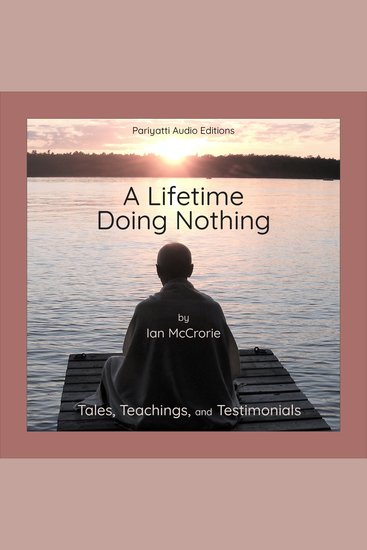
  • A Lifetime Doing Nothing - Tales Teachings and Testimonials - cover

    A Lifetime Doing Nothing - Tales...

    Ian McCrorie

    • 0
    • 0
    • 0
    This book is a compilation of teachings told in short stories about the author's attempts to undo the done. He offers this little book as a more ardent, and hopefully lucid, attempt to explain the paramount importance of doing nothing as a way to undo oneself. 
     
    ----------------------------- 
     
    "In my experience, all our problems do indeed stem from this hyperactive and delusional thinking we have acquired over time. 
     
    There is a way to eradicate the light-speed, blind reactions and the habitual confusion. The way is very simple. It boils down to just two words: do nothing. That s it. Do nothing. Sit quietly in a room alone and do nothing. Watch the monkey mind and do not try to fix it or eliminate it or drown it out or engage it. 
     
    This is doing non-doing. Observe the mind, on autopilot as usual, screaming editorial comments from the sidelines like some frenzied play-by-play announcer and do nothing about it. Don't turn the monologue into a dialogue. Do nothing. 'Nothing to see here, folks. Let s keep it moving.'" 
     
    —Ian McCrorie
    Voir livre