Begleiten Sie uns auf eine literarische Weltreise!
Buch zum Bücherregal hinzufügen
Grey
Einen neuen Kommentar schreiben Default profile 50px
Grey
Jetzt das ganze Buch im Abo oder die ersten Seiten gratis lesen!
All characters reduced
LeonardoDa Vinci a psychosexual study of an infantile reminescence - cover

LeonardoDa Vinci a psychosexual study of an infantile reminescence

Freud Sigmund

Verlag: GAEditori

  • 0
  • 0
  • 0

Beschreibung

Leonardo da Vinci and A Memory of His Childhood is a 1910 essay by Sigmund Freud about Leonardo da Vinci. It consists of a psychoanalytic study of Leonardo's life based on his paintings
Verfügbar seit: 20.12.2022.

Weitere Bücher, die Sie mögen werden

  • How to Eat - An Ancient Guide for Healthy Living - cover

    How to Eat - An Ancient Guide...

    Abigail Reno

    • 0
    • 0
    • 0
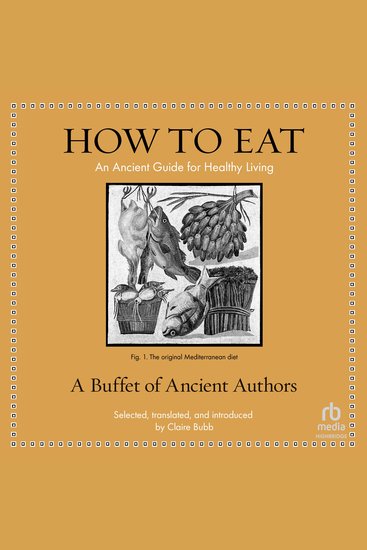
    Today, we're stuffed with dietary recommendations from every direction. Social media, advertising, food packaging, diet books, doctors—all have advice on what, how much, and when to eat. This would have been no surprise to ancient Greeks and Romans. Their doctors were intensely interested in food, offered highly prescriptive dietary advice, and developed detailed systems to categorize foods and their health effects. How to Eat is a delectable anthology of Greco-Roman writings on how to eat, exercise, sleep, bathe, and manage your sex life for optimal health. It also gathers ancient opinions on specific foods of all sorts, from how to deploy onions to cure baldness and cabbage to get sober to whether lentils are healthy and why arugula increases your sex drive. 


    With lively new translations by Claire Bubb, How to Eat features voices from medicine, philosophy, natural history, agriculture, and cooking, including Hippocrates, Pliny the Elder, Galen, Seneca, Plutarch, and Cato. 


    While medicine and science have obviously changed enormously since the classical world, and some Greco-Roman beliefs about diet now appear hilariously off the mark, How to Eat reveals that much of their advice still resonates—and all of it is fascinating.
    Zum Buch

  • 1939: The History of the Year the World Fell Apart - cover

    1939: The History of the Year...

    Editors Charles River

    • 0
    • 0
    • 0
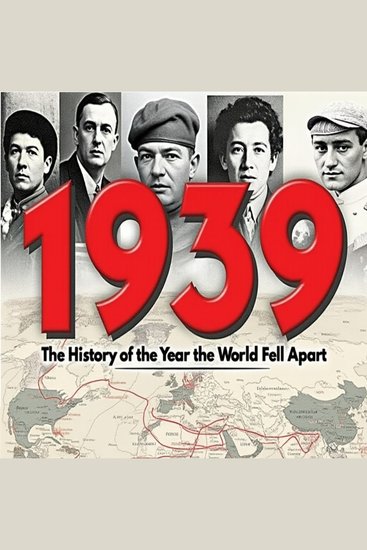
    Munich is widely reviled today and is held up as the epitome of appeasement, but historians still debate its effects on the Second World War, as well as Neville Chamberlain's character and motivations. Some believe the attempted appeasement of Nazi Germany hastened, or even caused, the mayhem occupying the next seven years. Others believe that the pact merely failed to alter war's inevitable arrival in either direction. Historians and authors alternately interpret Chamberlain as a bumbling, arrogant fool, a strong-willed statesman who simply miscalculated the nature of Hitler and Nazi Germany, or even a man with dictatorial ambitions surreptitiously inserting himself into the Fuhrer's orbit and prevented from further damaging democracy only by his fall and death from bowel cancer. Another possible interpretation, with considerable documentary support, asserts Chamberlain wished to enlist Germany's aid against the state most Europeans perceived as the true threat of the era, the Soviet Union. 
    Europe’s attempts to appease him, most notably at Munich in 1938, failed, as Nazi Germany swallowed up Austria and Czechoslovakia by 1939. Italy was on the march as well, invading Albania in April of 1939. The straw that broke the camel's back, however, was Germany's invasion of Poland on September 1 of that year. Two days later, France and Great Britain declared war on Germany, and World War II had begun in earnest. Of course, as most people now know, the invasion of Poland was merely the preface to the Nazi blitzkrieg of most of Western Europe, which would include Denmark, Belgium, and France by the summer of 1940.
    Zum Buch
  • Cratylus - cover

    Cratylus

    Plato

    • 0
    • 0
    • 0
    Cratylus, written by the ancient Greek philosopher Plato, is an exploration of the nature of language and its relationship to reality. In this dialogue, Plato engages in a discourse with two interlocutors, Hermogenes and Cratylus, about the distinction between conventional and natural languages. Through this discussion, Plato suggests that language is an expression of knowledge which can be used to understand reality. Read in English, unabridged.
    Zum Buch
  • Skylab: The History and Legacy of America’s First Space Station - cover

    Skylab: The History and Legacy...

    Charles River Editors

    • 0
    • 0
    • 0
    During the Space Race, many people envisioned a future in which space travel would be a common undertaking for ordinary citizens. Just as riding in an airplane was once a daring endeavor, travel by rocket could be refined and made safer over time. That collective aspiration to someday take part in dreams NASA brought to life was integral to inspiring public interest in the space program. However, in the years following Apollo 11 in 1969, popular enthusiasm for space travel waned, and dreams of vacationing like the Jetsons gave way to more grounded goals. The level of interest NASA enjoyed would never again be comparable to the culturally defining moments of the agency’s most celebrated missions during the Mercury, Gemini and Apollo Programs.  
    	Nonetheless, in 1972 and 1973, NASA sent nine astronauts to spend extended periods of time living in a craft named Skylab, the very first experimental American space station. Though Skylab would not last long, and the International Space Station remains far more famous, Skylab’s history is one of ingenuity and challenge, as well as how NASA found itself without a mission after the triumph of the Apollo Program. 
    Zum Buch
  • The Shocking Truth about International Relations - cover

    The Shocking Truth about...

    Zoey Fraisers

    • 0
    • 0
    • 0
    International relations is a complex and ever-evolving field that shapes the global political landscape. The relationships between countries, organizations, and individuals influence everything from trade and diplomacy to security and human rights. Understanding the history, theories, and modern-day dynamics of international relations is essential for anyone seeking to grasp the intricacies of global affairs. The study of international relations has evolved from a niche academic discipline into a vital framework for analyzing global conflicts, cooperation, and power struggles. 
      
    The modern world has been profoundly shaped by the forces of globalization, which have made international relations more interconnected than ever before. Advances in communication, transportation, and technology have blurred the lines between domestic and international issues. Countries can no longer afford to operate in isolation; they must cooperate on matters of shared concern, such as climate change, terrorism, economic crises, and public health. However, the globalized world also comes with challenges. Increasingly, nations must navigate a complex web of relationships and competing interests, where power dynamics and the quest for dominance can create conflict. 
      
    Globalization has had a profound impact on international relations, but it has also revealed the limits of traditional diplomacy. In the past, diplomacy was primarily conducted between states, often in secret negotiations behind closed doors. Today, international diplomacy involves a wider range of actors, from multinational corporations and non-governmental organizations to grassroots movements and individual leaders. This shift has led to both opportunities and challenges for international cooperation, as diverse interests often clash in the pursuit of a global agenda.
    Zum Buch
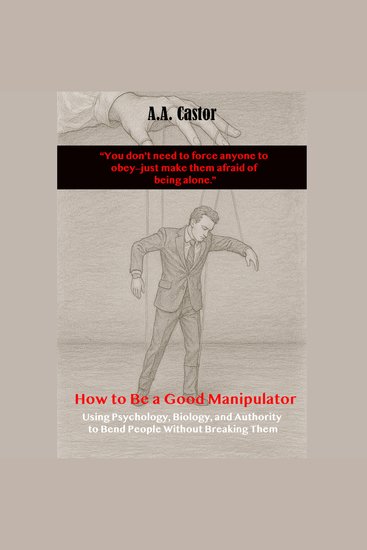
  • How to Be a Good Manipulator: Using Psychology Biology and Authority to Bend People Without Breaking Them - cover

    How to Be a Good Manipulator:...

    A.A. Castor

    • 0
    • 0
    • 0
    What if manipulation wasn't evil—just effective? 
    How to Be a Good Manipulator is not a guide for the moral or the meek. It's for readers who want to understand the psychology, biology, and brutal mechanics of control—whether to resist it or wield it. 
    In this unapologetic breakdown of influence and deception, author A.A. Castor doesn't offer comfort—he offers clarity. Through real psychological principles, dark behavioral tactics, and disturbingly familiar case studies, this book teaches how people are shaped, steered, and sometimes enslaved without ever realizing it. 
    From cult leaders to corporate climbers, from toxic relationships to spiritual influencers, this guide explores:How fear, shame, and hope override logicHow to frame reality and become the voice of "truth"Why people follow confidence—not correctnessThe emotional addiction of "love-bombing and withdrawal"How to use charisma, guilt, authority, and confusion to bend behaviorWhy freedom is often just a prettier cage—and how to make them love it 
    Whether you want to recognize the tactics being used on you or become the one pulling the strings, this book is a mirror, a manual, and a weapon. 
    Disturbingly honest. Laughably real. Absolutely lethal..
    Zum Buch