Begleiten Sie uns auf eine literarische Weltreise!
Buch zum Bücherregal hinzufügen
Grey
Einen neuen Kommentar schreiben Default profile 50px
Grey
Jetzt das ganze Buch im Abo oder die ersten Seiten gratis lesen!
All characters reduced
The Ponson case - cover

The Ponson case

Freeman Wills Crofts

Verlag: Good Press

  • 0
  • 0
  • 0

Beschreibung

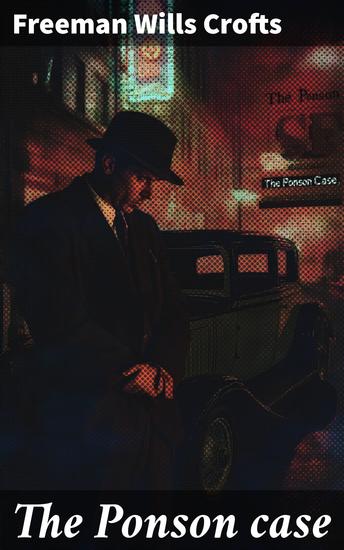
In "The Ponson Case," Freeman Wills Crofts intricately weaves a compelling narrative that delves into the complexities of a singular crime through the lens of meticulous police procedural. The novel is characterized by Crofts' signature attention to detail and methodical plot development that reflects the principles of the Golden Age of detective fiction. Set against the backdrop of early 20th-century Britain, the story unfolds with the mysterious disappearance of a wealthy businessman, triggering a chain of events that lead to complex investigations and unexpected twists, ultimately revealing profound social commentary on the era's moral and ethical dilemmas. Freeman Wills Crofts, an established figure in crime fiction, was notably inspired by his background in engineering and his deep involvement in railway operations. This experience not only honed his analytical skills but also provided him with a rich tapestry of environments and characters to draw upon. Crofts' distinguished career as an author, marked by his pioneering focus on the detective's methodical approach, reflects his indelible influence on the genre and his commitment to realism that captivates readers. This book will appeal to both ardent fans of classic detective fiction and contemporary readers looking for a masterfully crafted mystery. Crofts' deft interplay of characterization and intricate plotting offers a thrilling reading experience that invites readers to engage with the text on a deeper level, making "The Ponson Case" an indispensable addition to any literary collection.
Verfügbar seit: 02.03.2025.
Drucklänge: 210 Seiten.
Weitere Bücher, die Sie mögen werden

  • Gulliver's Travels - cover

    Gulliver's Travels

    Jonathan Swift

    • 0
    • 0
    • 0
    "I told him that should he happen to see a man who was extremely tall, he would be very much mistaken if he thought him a giant."
    
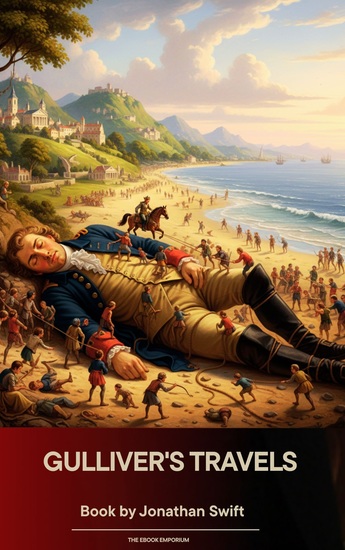
    Shipwrecked physician Lemuel Gulliver embarks on four extraordinary journeys that challenge his—and the reader's—perception of reality. From the tiny, war-mongering citizens of Lilliput to the towering, moral giants of Brobdingnag, and from the floating pseudo-intellectual city of Laputa to the noble, rational horses known as Houyhnhnms, Gulliver encounters civilizations that mirror the best and worst of humanity. What begins as a quest for discovery turns into a devastating critique of British society, religious conflict, and the very definition of being "human."
    
    The Scale of Perspective: In the first two books, Swift uses physical size as a metaphor for moral stature. In Lilliput, Gulliver is a giant among petty, small-minded politicians who fight over which end of an egg to crack. In Brobdingnag, he becomes a literal "toy," forced to defend the "grandeur" of Europe to a King who views humans as "the most pernicious race of little odious vermin."
    
    The Critique of Reason: The voyage to the flying island of Laputa serves as a hilarious yet biting attack on theoretical science and useless "intellectualism." Here, Swift mocks the Royal Society with "Projectors" who try to extract sunbeams from cucumbers while their people starve in the ruins of neglected farms.
    
    The Final Epiphany: Man vs. Beast: The novel reaches its peak in the land of the Houyhnhnms, where rational horses rule over the filthy, impulsive Yahoos—creatures that Gulliver realizes, with horror, are actually human beings. This final encounter forces Gulliver into a state of misanthropy, forever changing how he views his own family and kind.
    
    Experience the world through a different lens. Purchase "Gulliver's Travels" today and discover why it remains the most dangerous comedy ever written.
    Zum Buch
  • Sense and Sensibility - cover

    Sense and Sensibility

    Jane Austen

    • 0
    • 0
    • 0
    First published in 1811, "Sense and Sensibility" is a romantic fiction novel by English author Jane Austen. The story revolves around the Dashwood sisters, Elinor and Marianne, who must navigate love, heartbreak, and societal expectations after their father's death leaves them financially strained. While Elinor is guided by 'sense' and prudence, Marianne is driven by 'sensibility' and emotion. The novel is a classic examination of the complex interplay between love, class, and social decorum during the Regency era in England.
    Zum Buch
  • All Quiet on the Western Front - cover

    All Quiet on the Western Front

    Eric Maria Remarque

    • 0
    • 0
    • 0
    All Quiet on the Western Front" is one of the most significant literary works of the 20th century. Its characters, like the author himself, belong to the "lost generation" - a generation whose youth was lost in the trenches of World War I. 
    Eighteen and nineteen-year-olds arrive at the front almost directly from school, encouraged by their teachers to fulfill their duty to the fatherland. Yet they question what this duty means, aware they're shooting at young enemies just like themselves, who similarly long for home and peace and question the war's purpose. 
    The cruelty of the war machine, in which they are mere cogs, first strips them of their humanity and eventually their lives - making them quite literally a "lost generation."
    Zum Buch
  • Northanger Abbey - cover

    Northanger Abbey

    Jane Austen

    • 0
    • 0
    • 0
    "Northanger Abbey" is a satirical novel that tells the story of Catherine Morland, a young, naïve girl who is taken to Bath by family friends for a season of socializing and romance. Catherine is a great reader of gothic novels, which often lead her to imagine plots and intrigues where there are none. At Bath, Catherine meets the charming Henry Tilney and his sister Eleanor, who introduce her to their family estate, Northanger Abbey. Catherine becomes infatuated with Henry and begins to imagine that his family is hiding secrets and mysteries, much like the gothic novels she loves to read. She begins to explore the Abbey with this in mind, but her fantasies soon come crashing down when she discovers that there is no hidden intrigue at Northanger Abbey. Read in English, unabridged.
    Zum Buch
  • Silas Marner - cover

    Silas Marner

    George Eliot

    • 0
    • 0
    • 0
    In the town of Reveloe, there lives a man called Silas Marner. A strange little man, a weaver by trade, and seen with suspicion by the other villagers. He's been beset by bad luck all his life. Cast out of his simple religious life in Lantern Yard, and then returns home to find his money stolen.But then, on new years day, his luck changes when he finds a small child sitting before his hearth...Published in 1861, this was the third novel by George Elliot, and delves into the topics of religion, industrialisation and community, and was praised at the time for its realism.Narrated by Michael Ward.
    Zum Buch
  • The Model Millionaire - cover

    The Model Millionaire

    Oscar Wilde

    • 0
    • 0
    • 0
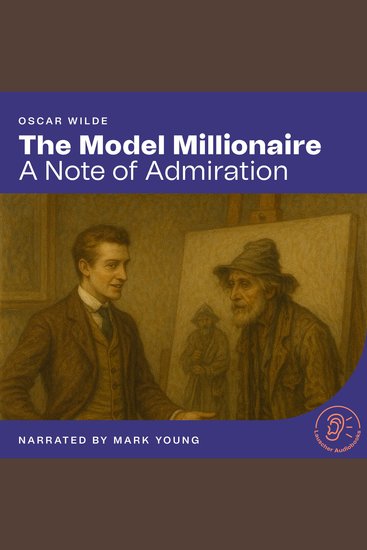
    "The Model Millionaire" First published in The World in June 1887. Hughie Erskine is in love and wants to marry, but the girl's father will not allow it, since Erskine has no money. Erskine's friend Alan Trevor is a painter, and he visits him at his studio one day to find him with a pitiable beggar—the model for his painting. Erskine only has one coin, on which he depends for transportation, but he decides he can walk for a couple of weeks and gives the beggar the coin.
    Zum Buch