Rejoignez-nous pour un voyage dans le monde des livres!
Ajouter ce livre à l'électronique
Grey
Ecrivez un nouveau commentaire Default profile 50px
Grey
Abonnez-vous pour lire le livre complet ou lisez les premières pages gratuitement!
All characters reduced
Big Laurel - cover

Big Laurel

Frederick Orin Bartlett

Maison d'édition: Good Press

  • 0
  • 0
  • 0

Synopsis

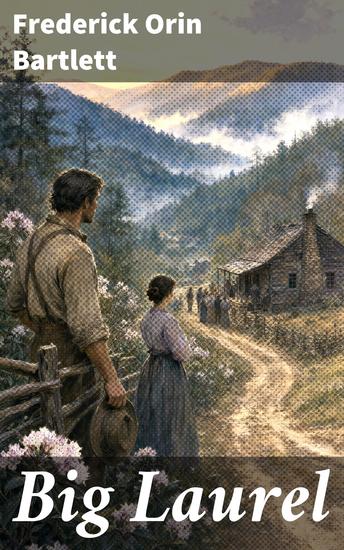
Frederick Orin Bartlett's Big Laurel is a regional American novel that turns to the mountain South to examine character, community, and the pressures of social change. Rooted in the textures of Appalachian life, the book combines vivid natural description with a disciplined realism, presenting landscape not merely as setting but as a shaping moral force. Bartlett writes in a clear, observant prose attentive to local speech, custom, and hierarchy, placing the novel within the early twentieth-century tradition of socially conscious fiction that sought to render overlooked American worlds with seriousness and nuance. Bartlett was an American novelist and journalist whose work often reveals a sharp interest in social environments and the individuals formed by them. His background in reportage likely sharpened his eye for concrete detail and human motive, while the literary climate of his era encouraged explorations of regional identity and class tensions. In Big Laurel, these influences seem to converge: Bartlett approaches his material with both documentary attentiveness and novelistic sympathy, suggesting a writer concerned with how place conditions aspiration, conflict, and belonging. This is a rewarding book for readers interested in regional literature, American realism, and depictions of rural society that avoid sentimentality. Big Laurel deserves attention for its literary craftsmanship and for its thoughtful rendering of a distinct cultural landscape.
Disponible depuis: 29/06/2026.
Longueur d'impression: 137 pages.
D'autres livres qui pourraient vous intéresser

  • The Recent Telepathic Occurrence in the British Museum - From their pens to your ears genius in every story - cover

    The Recent Telepathic Occurrence...

    Amy Levy

    • 0
    • 0
    • 0
    Amy Levy was born in London, England in 1861, the second of seven in a fairly wealthy Anglo-Jewish family. The children read and participated in secular literary activities and became firmly integrated into Victorian life. 
    Her education was at Brighton High School, Brighton, before studies at Newnham College, Cambridge; she was the first Jewish student when she arrived in 1879, but left after four terms. 
    Amy’s writing career began early; her poem ‘Ida Grey’ appeared when she was only fourteen. Her acclaimed short stories ‘Cohen of Trinity’ and ‘Wise in Their Generation,’ were published by Oscar Wilde in his magazine ‘Women's World’. 
    Her poetic writings reveal feminist concerns; ‘Xantippe and Other Verses’, from 1881 includes a poem in the voice of Socrates's wife. ‘A Minor Poet and Other Verse’ from 1884 comprises of dramatic monologues and lyric poems. 
    In 1886, Amy began a series of essays on Jewish culture and literature for the Jewish Chronicle, including ‘The Ghetto at Florence’, ‘The Jew in Fiction’, ‘Jewish Humour’ and ‘Jewish Children’. 
    That same year while travelling in Florence she met the writer Vernon Lee. It is generally assumed they fell in love and this inspired the poem ‘To Vernon Lee’. 
    Her first novel ‘Romance of a Shop’, written in 1888 is based on four sisters who experience the pleasures and hardships of running a London business during the 1880s. This was followed by Reuben Sachs (also 1888) and concerned with Jewish identity and mores in the England of her time and was somewhat controversial. 
    Her final book of poems, ‘A London Plane-Tree’ from 1889, shows the beginnings of the influence of French symbolism. 
    Despite many friendships and an active life, Amy suffered for many years with serious depressions and this, together with her growing deafness, led her to commit suicide by inhaling carbon monoxide on September 10th, 1889. She was 27.
    Voir livre
  • The Japanese Quince - From their pens to your ears genius in every story - cover

    The Japanese Quince - From their...

    John Galsworthy

    • 0
    • 0
    • 0
    John Galsworthy was born on the 14th August 1867 on the family estate, Parkfield, in Kingston-upon-Thames.  His family’s wealth came from the shipping industry 
    At age nine he began his education at Saugeen, a Bournemouth preparatory school, before moving to Harrow school in 1881, distinguishing himself as an athlete.  
    Galsworthy attended New College, Oxford to read law and left with a second-class degree with honours in 1889. The bar called him in 1890 but Galsworthy decided he would rather run the family’s shipping business. This also meant travelling to destinations such as Vancouver, South Africa and Australia. 
    In 1895 Galsworthy began a decade long affair with Ada Nemesis Pearson Cooper, the wife of his first cousin. It was only when, in 1905, she divorced and married Galsworthy that their affair became known. 
    His literary career began in 1897 with a short story volume, ‘From the Four Winds’, with the pseudonym John Sinjohn as were three further works. Under his own name, in 1904, came ‘The Island Pharisees’, a novel of social observation, seasoned with flashes of satire and propaganda. He also switched from small, independent publishers to the larger Heinemann and to whom he remained for the duration of his career. 
    1906 saw first major play, ‘The Silver Box’, and the novel ‘The Man of Property’. Each to considerable acclaim. The latter was the first in ‘The Forsyte Saga’ trilogy written between 1906 and 1921. It dealt with the questions of status, class and materialism through Soames Forsyte, who is acutely aware of his ‘new money’ status. Jealous of his wife, his machinations drive her into the arms of another. Soames engages in a terrible revenge with terrible consequences.  
    His social agenda was enlightened particularly in his condemnation over the use of solitary confinement in prisons, his attacks on theatrical censorship and campaigning for animal rights. 
    Galsworthy, having been passed over for active service, spent much of the First World War working as an orderly in a field hospital in France. 
    Despite his it was only in 1920 that he had his first blockbuster play ‘The Skin Game’, a melodrama dealing with ethics, property and class.  
    In 1920 ‘In Chancery’ also arrived with further discourse on the marital disharmony between Soames Forsyte and his wife.  
    The appreciation of his work gradually shifted from plays to novels, particularly through his detailing English social difference, tension and pretension with the Forsytes.  A second trilogy, ‘A Modern Comedy’, followed, examining his love for his daughter Fleur and the English commercial upper-middle class, its ideologies and Soames’ poisonous materialism.  
    Having rejected a knighthood in 1918 he was appointed, in 1929, to the Order of Merit. Galsworthy spent his last years writing a third Forsythe trilogy, ‘End of the Chapter’.   
    In 1932 he was awarded the Nobel Prize, but by now failing health meant he was too ill to attend the ceremony. 
    John Galsworthy died at his Hampstead home of a brain tumour on 31st January, 1933. He was cremated and his ashes scattered from an aeroplane over the South Downs.
    Voir livre
  • Liliecrona's Home - cover

    Liliecrona's Home

    Selma Lagerlöf

    • 0
    • 0
    • 0
    At the bottom of the dried out Svartsjö lake (Black Lake) lies the Lövdala Parsonage with its stables and outhouses. There resides the good-hearted, widowed Pastor Lyselius and his beautiful daughter. One day, his new wife arrives and she turns out to be a wicked stepmother. She torments her servants and especially the parson's daughter, Maia Lisa. We follow Maia Lisa through torments and sufferings where she gets ever new and harder burdens to carry on her weak shoulders. But by her side through it all is clear-eyed Little Maid, who is never afraid to say what she thinks. It is hard to see her stepmother take control Lövdala and to see her father's his nice personality vanish as he becomes a marionette in his new wife's hands."Liliecrona's Home" was first published in Sweden in 1911 and was translated to English by Anna Barwell in 1913. Selma Lagerlöf (1858-1940) has written a series of novels and short stories about peasant life in Sweden. Her first novel “Gösta Berling's Saga” was made into the 1924 eponymous silent film featuring Greta Garbo, as well as into the 1925 Zandonai opera “I Cavalieri di Ekebù”. Lagerlöf was the first female writer to win the Nobel Prize in literature, which was awarded to her in 1909. She was also the first female member of the Swedish Academy, which she entered in 1914.
    Voir livre
  • Bertie Changes His Mind - cover

    Bertie Changes His Mind

    P. G. Wodehouse

    • 0
    • 0
    • 0
    Some decisions are made with great seriousness. Others are made, reconsidered, revised, and ultimately regretted—usually by Bertie Wooster.
    In Bertie Changes His Mind, P. G. Wodehouse explores the delicate art of mental revision under pressure. This time, however, the situation is observed with the calm detachment of Jeeves, who watches his employer's latest conviction shift with alarming speed.
    Bertie's sudden enthusiasm leads him into a sequence of decisions involving unexpected responsibility and an ill-advised journey to Brighton. Each step forward generates an immediate and elegant reversal.
    What follows is a familiar equilibrium: well-meaning intentions colliding softly with reality, producing consequences that no one explicitly ordered. A light, perfectly timed comedy of hesitation, where certainty is temporary, and trouble is remarkably persistent under careful supervision.
    Voir livre
  • Martin Eden - cover

    Martin Eden

    Jack London

    • 0
    • 0
    • 0
    Martin Eden by Jack London is the story of a self-taught sailor turned writer who rises from poverty to literary fame. Martin Eden, a working-class dreamer, falls in love with Ruth Morse, an upper-class woman whose family initially rejects him. Driven by ambition and passion, he educates himself voraciously, transforming into a skilled writer. As his works gain recognition, Martin grapples with alienation, disillusionment, and the emptiness of success. While Ruth embraces his achievements, their class differences and evolving values drive them apart. Ultimately, Martin’s existential despair leads to a tragic conclusion, reflecting London’s exploration of ambition, individualism, and the cost of pursuing one's dreams.
    Voir livre
  • Hills Like White Elephants - cover

    Hills Like White Elephants

    Ernest Hemingway

    • 0
    • 0
    • 0
    This audiobook is narrated by an AI Voice. At a sun-scorched railway junction in the Ebro valley, a man and a young woman wait for the express train to Madrid. They order beers, try a new drink, and talk — about the hills across the valley, which she says look like white elephants, and about "an awfully simple operation" that he insists is really nothing at all. Beneath the small talk, an entire relationship hangs in the balance: what he wants, what she fears, and everything neither of them will say aloud. A masterclass in Hemingway's iceberg theory, where the true story lies almost entirely beneath the surface, this brief, devastating dialogue remains one of the most analyzed and haunting short stories in American literature — proof that the deepest wounds are inflicted in the quietest conversations.
    Voir livre