Begleiten Sie uns auf eine literarische Weltreise!
Buch zum Bücherregal hinzufügen
Grey
Einen neuen Kommentar schreiben Default profile 50px
Grey
Jetzt das ganze Buch im Abo oder die ersten Seiten gratis lesen!
All characters reduced
The Mission; or Scenes in Africa - cover

The Mission; or Scenes in Africa

Frederick Marryat

Verlag: DigiCat

  • 0
  • 0
  • 0

Beschreibung

Frederick Marryat's "The Mission; or Scenes in Africa" is a compelling narrative that captures the adventures of a missionary in the continent's rugged landscapes and complex cultures. Marryat's prose is imbued with vivid descriptions and lively dialogue, reflecting a Romantic style while incorporating elements of realism. The text also serves as a social commentary on colonial ideologies and morality, offering readers a nuanced portrayal of the interactions between European missionaries and African societies, thereby situating the work within the broader context of 19th-century colonial literature. A former naval officer, Frederick Marryat drew upon his own extensive maritime experiences and encounters in Africa to shape this narrative. His background uniquely positioned him to navigate the delicate interplay between exhilarating adventure and the moral quandaries of imperialism. Having witnessed various cultures firsthand, Marryat's intentions unfold as both educational and entertaining; he aims to inform his readers about Africa while advocating for the benevolent potential of mission work amid colonial expansion. Readers seeking a thought-provoking exploration of mission life intertwined with a thrilling adventure will find "The Mission; or Scenes in Africa" an engaging read. Marryat's work not only entertains but also invites reflection on the cultural and ethical complexities of his time, making it essential for scholars and enthusiasts of colonial literature.
Verfügbar seit: 16.09.2022.
Drucklänge: 262 Seiten.
Weitere Bücher, die Sie mögen werden

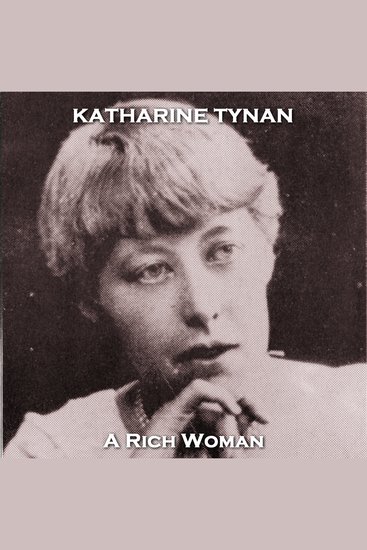
  • A Rich Woman - From their pens to your ears genius in every story - cover

    A Rich Woman - From their pens...

    Katharine Tynan

    • 0
    • 0
    • 0
    Katharine Tynan was born on 23rd January 1859 into a large family in Clondalkin, County Dublin. 
    The family business was cattle rearing and the farmhouse, set with the mountains for a backdrop, was a wonderful world for a young mind to learn and imagine. 
    She was educated at the convent school, St Catherine of Sienna, in Drogheda.  A stubborn streak inhibited her ability to learn as easily as the school wished. However she did learn on her own terms and soon began to take her ‘forbidden literature’, hidden in her clothing, to her loft in a stable hideaway.  
    Until she turned seventeen nothing appeared to point to a literary career.  But some verse printed in a Dublin newspaper changed everything. It led to a sonnet being printed in the Spectator.  Thereafter the Graphic published several others and even paid a half guinea for the privilege.   
    In 1884 Katharine dispatched herself to London and made an abiding friendship in Alice Meynell.  Alice was an established poet and helped, with her husband Wilfred, to publish many poets. The following year it was arranged for the publication of her first poetry volume, ‘Louise de la Vallière’.  
    She formed valuable friendships with the poets Gerard Manley Hopkins, William Butler Yeats and later Francis Ledwidge.  
    As she gathered friends and contacts into her life her literary output began to gather pace. Katharine had begun to write prose for the Speaker and for the Scots and National Observer.  
    In 1892 she married Henry Albert Hinkson, a fellow writer and a barrister.  They moved to England and had five children although two were to tragically die in infancy.   
    By now her output was prolific and ranged from poetry to novels to short stories.  It would later include a biography and further extend to editing and reviewing.   
    In 1912 the family returned to Claremorris, County Mayo, when her husband was appointed magistrate, a post he held until his early death in 1919.     
    Tynan is sometimes grouped amongst the War Poets of the First World War. Her experience was not direct but as a Mother with one son serving in France and another in Palestine, the emotions, fears and doubts are expressed in a beautiful and heart-felt way.  
    Involved in the Irish Literary Revival, Tynan expressed concern for feminist causes, the poor, and the effects of World War I in her work. She also meditated on her Catholic faith. 
    She is said to have written over 100 novels, 12 collections of short stories, plays and many volumes of enduring poetry as well as five volumes of autobiography. 
    Katharine Tynan Hinkson died at age 72 on 2nd April 1931 in London and is buried in Kensal Green Cemetery.
    Zum Buch
  • Antigone (unabridged) - cover

    Antigone (unabridged)

    Sophocles

    • 0
    • 0
    • 0
    Experience the timeless power of Greek tragedy with our unabridged audiobook of "Antigone". This classic play by Sophocles explores themes of loyalty, honor, and the price of defiance against unjust laws.In the aftermath of a brutal civil war, Antigone is torn between the laws of the city and her duty to her family. Her decision to honor her fallen brother sets her on a tragic path of resistance against the king's decree.Our audiobook brings this ancient drama to life with a clear and engaging narration. Every line of Sophocles' poetic dialogue is delivered with precision, immersing you in the emotional turmoil of Antigone's struggle.Whether you're a student studying Greek literature, a lover of classic drama, or someone seeking a thought-provoking listen, "Antigone" is a compelling choice. Experience the tragedy and triumph of one of literature's most enduring heroines. Add "Antigone" to your audiobook collection today!
    Zum Buch
  • Thérèse Raquin - Audiobook - cover

    Thérèse Raquin - Audiobook

    Émile Zola, Classic Audiobooks,...

    • 0
    • 0
    • 0
    Thérèse Raquin is Émile Zola's chilling psychological novel about passion, guilt, and the destructive power of suppressed desire. Trapped in a loveless marriage, Thérèse begins a dangerous affair with her husband's friend, leading to a crime that will haunt them both. As their shared guilt festers, Zola examines the dark corners of human conscience with cold precision.Written in stark, naturalistic style, this early masterpiece shocked readers of the 19th century and still unsettles today. Thérèse Raquin is a gripping and tragic exploration of moral decay, suffocating domesticity, and the consequences of forbidden love.
    Zum Buch
  • Masque of the Red Death - cover

    Masque of the Red Death

    Edgar Allan Poe

    • 0
    • 0
    • 0
    The Masque of the Red Death, a short story written by Edgar Allan Poe, follows Prince Prospero's attempts to avoid a dangerous plague known as the Red Death by hiding in his abbey. He, along with many other wealthy nobles, has a masquerade ball within seven rooms of his abbey, each decorated with a different color. In the midst of their revelry, a mysterious figure enters and makes his way through each of the rooms. When Prospero confronts this stranger, he falls dead. The story follows many traditions of Gothic fiction and is often analyzed as an allegory about the inevitability of death, though some critics advise against an allegorical reading. Many different interpretations have been presented, as well as attempts to identify the true nature of the disease of the "Red Death."
    Zum Buch
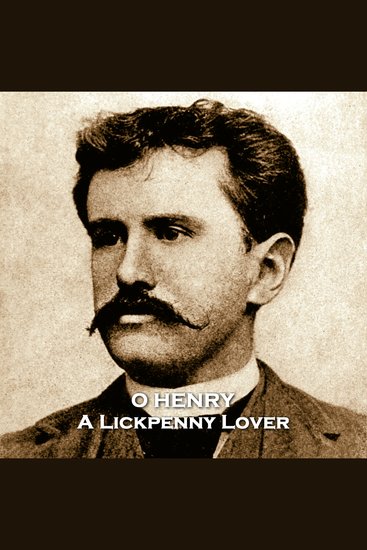
  • A Lickpenny Lover - From their pens to your ears genius in every story - cover

    A Lickpenny Lover - From their...

    O Henry

    • 0
    • 0
    • 0
    William Sydney Porter was born on 11th September 1862 in Greensboro, North Carolina. At age 3 his mother died from tuberculosis. From an early age it was clear Porter had a large appetite for reading as he absorbed the world around him. 
    He first attended at a school run by his aunt before enrolling at the Lindsey Street High School and then worked at his uncle’s drugstore and gained a pharmacists’ license in 1881.  
    A persistent cough took him to Texas in the hope that a change of climate would help his symptoms. He took on various types of work, initially from ranch hand and cook and then as varied as pharmacist, draftsman, bank teller and journalist. He also began to write, though for now, purely as a hobby. 
    He was a member of several singing and dramatic groups when he met 17 year old Athol Estes, daughter of a wealthy Austin family. Despite her mother’s objection owing to Athol’s tuberculosis, they began courting and in July 1887, they eloped and soon married. 
    Athol, impressed by his writing, encouraged him to get them published. A job as a draftsman at the Texas General Land Office paid a healthy $100 dollars per month and life was good. 
    But then life turned cruel. His son died a few hours after birth although a daughter, Margaret, came the following year.  His job had to be vacated but another was found at the First National Bank of Austin. The bank operated informally and Porter was careless in keeping the books. He lost that job but began writing for the humourous weekly The Rolling Stone and the Houston Post. Some time later the federal Bank auditors went through his former accounts and he was arrested on charges of embezzlement. 
    Porter fled the day before his trial to Honduras. Holed up for several months he began to write.  Athol had become too ill to travel to meet him and learning that her health was deteriorating he surrendered to the court in February 1897.  Bail was obtained so that he could stay with Athol during her final days.  
    Porter was sentenced to five years at the Ohio Penitentiary in Columbus. His pharmacy qualifications got him the job of night druggist.  His sentence also gave him time to write and publish fourteen short stories. In December 1899 in McClure’s Magazine he published a short story as O Henry.  
    He was released two years early in July 1901, and reunited with Margaret, now 11, in Pittsburgh.  He now began his most prolific period of writing; a short story per week for the New York World, while also publishing works in other magazines.  Eventually over 600 of his short stories were published. 
    Porter was a heavy drinker and in 1908 his health, which had deteriorated for several years, took a dramatic turn for the worse, as did his writing.  
    O Henry died of cirrhosis of the liver complicated by diabetes and an enlarged heart on 5th June 1910.
    Zum Buch
  • A Middle-Sized Artist - From their pens to your ears genius in every story - cover

    A Middle-Sized Artist - From...

    Charlotte Perkins Gilman

    • 0
    • 0
    • 0
    Charlotte Perkins Gilman was born on 3rd July 1860 in Hartford, Connecticut, to an unaffectionate mother and a father who abandoned her and her older brother to a life of poverty. 
    Inevitably her schooling was limited and by 15 she had attended seven different schools but received only four years education.  However Charlotte was resourceful and did spend time with her father’s aunts – the suffragist Isabella Beecher Hooker and the ‘Uncle Tom Cabin’s’ author, Harriet Beecher Stowe as well as many hours at the public library studying ancient civilisations. 
    In 1878, she enrolled in classes at the Rhode Island School of Design where she met Martha Luther and they developed a close relationship until Luther married in 1881. Charlotte was devastated and detested romance and love until she met and married the artist Charles Walter Stetson.  
    Their only child, Katharine Beecher Stetson, was born in 1885 but left Charlotte with post-natal depression, then often dismissed as a case of hysteria or nerves.  Unsuited to domestic life she ruptured her life and moved to California with Katherine.  She divorced in 1894 and then sent Katharine east to live with her father and his second wife confirming that his paternal rights be acknowledged and that Katherine establish a relationship with her father. 
    After her mother died in 1893, Charlotte moved back east and became involved with her first cousin, Wall Street attorney, Houghton Gilman who she married in 1900. After his death she moved back to California, where Katherine now lived.   
    Her most popular story is ‘The Yellow Wallpaper’ which touched on her own post-partum depression and underlined the need for women to be responsible for their mental and physical well-being, as the narrator is ordered by her husband/doctor to take compete rest in her room where she is isolated and becomes obsessed with the revolting yellow wallpaper.   
    She wrote other notable short stories the best of which we also include.   
    Charlotte lectured widely for social reform, wrote important non-fiction works that questioned our patriarchal system and left a legacy as a leading and positive spokesperson for feminism.  
    She was diagnosed with incurable breast cancer in 1932 and, as she wrote in her suicide note and autobiography, she ‘chose chloroform over cancer’    
    Charlotte Perkins Gilman took her own life on 17th August 1935, aged 75, in Pasadena, California.
    Zum Buch