Begleiten Sie uns auf eine literarische Weltreise!
Buch zum Bücherregal hinzufügen
Grey
Einen neuen Kommentar schreiben Default profile 50px
Grey
Jetzt das ganze Buch im Abo oder die ersten Seiten gratis lesen!
All characters reduced
Why is the Negro Lynched? - cover

Why is the Negro Lynched?

Frederick Douglass

Verlag: DigiCat

  • 0
  • 0
  • 0

Beschreibung

In "Why is the Negro Lynched?", Frederick Douglass presents a compelling and urgent inquiry into the pervasive violence against African Americans, particularly the horrific act of lynching. Masterfully articulated, Douglass employs a poignant yet accessible literary style, leveraging both emotional appeal and stark factual evidence to expose the systemic racism embedded in American society. His essay not only highlights the immediate horrors of lynching but also situates it within the broader context of slavery's legacy, racism, and the struggle for civil rights, illustrating a grim narrative that confronts readers with the reality of human suffering and moral failure in a purportedly civilized society. Frederick Douglass, a former enslaved person and renowned abolitionist, dedicated his life to advocating for justice and equality. His personal experiences with oppression and his profound understanding of societal injustices profoundly informed his writing. Douglass's eloquence and passion arose from a direct confrontation with inequality, which shaped his lifelong mission to illuminate the disenfranchisement of Black people in America and challenge the moral conscience of his contemporaries. This essential work is a clarion call for awareness and action against racial violence, making it a crucial read for anyone seeking to understand the roots and repercussions of systemic racism. Douglass's incisive analysis and heartfelt plea invite readers to engage with the moral imperative of justice, urging them to confront the uncomfortable truths of history and their present implications.
Verfügbar seit: 15.08.2022.
Drucklänge: 40 Seiten.


Weitere Bücher, die Sie mögen werden

  • Cambodian Genocide - Pol Pot’s Khmer Rouge and the Killing Fields - cover

    Cambodian Genocide - Pol Pot’s...

    Kelly Mass

    • 0
    • 0
    • 0
    It’s insane to think that mass murder didn’t stop at the end of World War II. Since the Holocaust, various genocides have taken place in different areas of the world. In this book, we’ll talk about something that has often been shoved under the rug, but was definitely a consequence of the Vietnam War, the bombings by the Americans, and a domino effect into an already fragile political country: The nation of Cambodia. 
    The Cambodian genocide was the methodical abuse and death of Cambodians by the Khmer Rouge, led by Pol Pot, the general secretary of the Communist Party of Kampuchea, who pushed Cambodia towards being an entirely self-dependent agrarian socialist state. Between 1975 and 1979, 1.5 to 2 million people were murdered, representing about a quarter of Cambodia's population in 1975. (c. 7.8 million). 
    When we look back on this, their ideology seems completely paradoxical, far-fetched, and illogical. Yet, through a considerately high number of propaganda resources and sheer force, the coup forced millions of people from the cities to farmlands, leaving them there to die or be shot because of supposed conspiracies against the regime. Let’s take a deep dive into the history of this ancient Southeast Asian area and learn from what happened.
    Zum Buch
  • Don't Bite the Apple Eve - cover

    Don't Bite the Apple Eve

    Kimolee Eryn

    • 0
    • 0
    • 0
    Don't Bite The Apple, Eve is a book of prose, poetry, musings, statements of my beliefs, hopes and experiences. It shares a delicate combination of past darkness and future light through stories of self, family, love and faith.
    Zum Buch
  • Colonialism - The Expansion of European Powers and its Global Consequences - cover

    Colonialism - The Expansion of...

    Arlo Holders

    • 0
    • 0
    • 0
    Colonialism, at its core, refers to the practice of one country establishing control over another, typically by settling its own population and exploiting the resources, labor, and markets of the colonized region. This system of domination, which spans several centuries, began to take on its modern form during the Age of Exploration in the 15th and 16th centuries. However, its roots can be traced back to earlier periods in history, when ancient empires expanded their territories through military conquest, trade, and settlement. Colonialism, as it is most commonly understood today, is a product of European powers' ambition to extend their political and economic influence across the globe. 
    The motivations for colonial expansion were multifaceted. European nations were driven by the desire for wealth, resources, and new trading routes. The establishment of colonies in foreign lands provided access to valuable commodities such as spices, precious metals, and later, sugar, cotton, and tobacco. Equally important was the drive for prestige, as colonial ventures served to enhance a nation's status on the global stage. Religion, too, played a crucial role; missionaries sought to spread Christianity to indigenous populations, often justifying the subjugation of these peoples in the name of religious salvation. 
    Technological advancements during the late medieval period enabled European nations to explore and map distant lands. Navigational tools like the compass, the astrolabe, and advances in shipbuilding made transoceanic voyages possible, laying the groundwork for the so-called "Age of Discovery." Figures such as Christopher Columbus, Vasco da Gama, and Ferdinand Magellan were among the first to chart new routes to Africa, Asia, and the Americas. Their voyages marked the beginning of an era in which European powers, armed with superior weaponry and navigational skills, would expand their reach to the furthest corners of the globe.
    Zum Buch
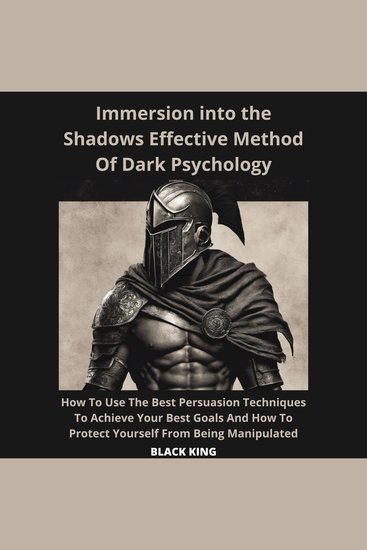
  • Inmersion Into The Shadown Effective Method Of Dark Psychology How To Use The Best Persuasion Techniques To Achieve Your Best Goals And How To Protect Yourself From Being Manipulated - cover

    Inmersion Into The Shadown...

    Black King

    • 0
    • 0
    • 0
    The dark side of our society is everywhere. Whether or not we are aware that it exists, it has an impact on our lives, our dreams and our ability to achieve. 
    People who have been able to master the techniques of dark psychology, and discover the hidden techniques of manipulation have experienced tremendous results throughout their lives. Not only have they used the techniques of dark psychology to remove the obstacles that prevent them from achieving success, but they have used the same techniques to prevent those who commit dark psychology manipulation techniques from achieving their goals. 
    This book is a practical guide that will enable you to understand how dark psychology affects our behavior. It will also teach you the most effective methods of manipulation, as well as persuasion techniques to ensure that you will have a mindset that allows you to experience the most that life has to offer.
    Zum Buch
  • Reimagining Government - Achieving the Promise of AI - cover

    Reimagining Government -...

    Thomas H. Davenport, Faisal...

    • 0
    • 0
    • 0
    How AI can help the government lead with speed, trust, and impact.Artificial Intelligence is reshaping what is possible across every sector—and public service is no exception. Reimagining Government is a bold, practical playbook for harnessing AI to deliver smarter, faster, and more effective outcomes. Inside, you'll find: 
    · Clear breakdowns of AI opportunities and challenges in the government space 
    · Proven frameworks and maturity models for responsible, scalable adoption 
    · Insights and examples from real-world government innovators 
    · Strategies to transform leadership, culture, and public impactWritten for policymakers, technologists, and civic leaders, this book is a guide to making AI work—for people as well as for systems.
    Zum Buch
  • America Made Me a Black Man - A Memoir - cover

    America Made Me a Black Man - A...

    Boyah J. Farah

    • 0
    • 0
    • 0
    NAACP Image Award Nominee · NPR Best Book of 2022 
    A searing memoir of American racism from a Somalian-American who survived hardships in his birth country only to experience firsthand the dehumanization of Blacks in his adopted land, the United States. 
    “No one told me about America.”  
     Born in Somalia and raised in a valley among nomads, Boyah Farah grew up with a code of male bravado that helped him survive deprivation, disease, and civil war. Arriving in America, he believed that the code that had saved him would help him succeed in this new country. But instead of safety and freedom, Boyah found systemic racism, police brutality, and intense prejudice in all areas of life, including the workplace. He learned firsthand not only what it meant to be an African in America, but what it means to be African American. The code of masculinity that shaped generations of men in his family could not prepare Farah for the painful realities of life in the United States.  
    Lyrical yet unsparing, America Made Me a Black Man is the first book-length examination of American racism from an African outsider’s perspective. With a singular poetic voice brimming with imagery, Boyah challenges us to face difficult truths about the destructive forces that threaten Black lives and attempts to heal a fracture in Black men’s identity.
    Zum Buch