Rejoignez-nous pour un voyage dans le monde des livres!
Ajouter ce livre à l'électronique
Grey
Ecrivez un nouveau commentaire Default profile 50px
Grey
Abonnez-vous pour lire le livre complet ou lisez les premières pages gratuitement!
All characters reduced
Hilaire Belloc: No Alienated Man; A Study in Christian Integration - cover

Hilaire Belloc: No Alienated Man; A Study in Christian Integration

Frederick D. Wilhelmsen

Maison d'édition: DigiCat

  • 0
  • 0
  • 0

Synopsis

In "Hilaire Belloc: No Alienated Man; A Study in Christian Integration," Frederick D. Wilhelmsen delivers a profound analysis of Hilaire Belloc's life and writings, arguing that Belloc's unwavering commitment to his Catholic faith serves as a foundation for his philosophy of integration and community. The text deftly intertwines narrative with scholarly critique, utilizing a rich literary style that is both accessible and intellectually rigorous. Wilhelmsen situates Belloc within the broader context of early 20th-century thought, particularly the tensions between modernism and traditionalism, revealing how Belloc's integrationist philosophy responds to the alienation and fragmentation prevalent in contemporary society. Frederick D. Wilhelmsen, a noted philosopher and educator, drew upon his extensive background in metaphysics and theology, alongside his deep appreciation for Belloc's work, to craft this insightful study. His familiarity with Catholic intellectual traditions allows him to illuminate Belloc's role as a defender of faith amidst an increasingly secular landscape, reflecting a personal conviction that resonates throughout the text. Wilhelmsen's scholarly endeavors, underscored by a passion for the integrationist perspective, shed light on Belloc's enduring relevance. This book is essential for anyone interested in Christian philosophy, literary studies, or the socio-political challenges of the modern era. Wilhelmsen's compelling exploration not only illuminates Belloc's thought but also invites readers to reflect on their own experiences of faith and community in a fragmented world. It is a necessary read for scholars and casual readers alike, offering profound insights into the quest for meaning amidst the complexities of modern existence.
Disponible depuis: 21/11/2023.
Longueur d'impression: 88 pages.

D'autres livres qui pourraient vous intéresser

  • Swapped by a Bully - Gender Swap - cover

    Swapped by a Bully - Gender Swap

    Kinky Press

    • 0
    • 0
    • 0
    Bullies grow up – and not all of them change. 
      
    Peter has bulked up since his younger days. A chance meeting with a bully from his past leaves him with no doubt he now has the upper hand. They step outside for one last brawl, but his bully speaks, and Peter is enthralled. He finds himself unable to deny his bully any request, and he learns humiliation all over again. 
      
    Peter is transformed by a single word, molded into his bully's every desire and expected to please him in every way. 
      
    PSA: This story contains a man who does not get his way – and one who does. One is not eager to become a woman and give it all, but the other is fully expecting compliance. And he will get it. There will be mindless submission to men with complete mastery.
    Voir livre
  • Why Johnny Still Can't Read or Write or Understand Math - And What We Can Do About It - cover

    Why Johnny Still Can't Read or...

    Andrew Bernstein

    • 0
    • 0
    • 0
    The current school system churns out millions of illiterates and mental zombies—but here's how we're going to fix it, starting today. 


    Coming out of the COVID-19 pandemic, parents across the nation grapple with a new and horrifying understanding of just how bad our educational system has become. It all adds up to a system that seems hopelessly, terribly, and irrevocably broken. But as an educator and author, Andrew Bernstein reminds us that American education in the nineteenth through early-twentieth century was superb. This nation once knew how to turn out the brightest, most resourceful and independent-thinking people the world had ever seen. We can do it again.
    Voir livre
  • Readings in Russian Civilization Volume II - Imperial Russia 1700–1917 - cover

    Readings in Russian Civilization...

    Thomas Riha

    • 0
    • 0
    • 0
    "This new and enlarged version of Readings in Russian Civilization is the result of fairly extensive revisions. There are now 72 instead of 64 items; 20 of the selections are new. The first volume has undergone the least change with 3 new items, of which 2 appear in English for the first time. In the second volume there are 6 new items; all of them appear in English for the first time. The third volume has undergone the greatest revision, with 11 new items, of which 6 are newly translated from the Russian. It is the editor's hope that items left out in the new edition will not be sorely missed, and that the new selections will turn out to be useful and illuminating. The aim, throughout, has been to cover areas of knowledge and periods which had been neglected in the first edition, and to include topics which are important in the study of the Russian past and present. "The bibliographical headnotes have been enlarged, with the result that there are now approximately twice as many entries as in the old edition. New citations include not only works which have appeared since 1963, but also older books and articles which have come to the editor's attention."—From the Editor's Preface ". . . a judicious combination of seminal works and more recent commentaries that achieves the editor's purpose of stimulating curiosity and developing a point of view."—C. Bickford O'Brien, The Russian Review "These three volumes cover quite well the main periods of Russian civilization. The choice of the articles and other material is made by a competent and unbiased scholar."—Ivan A. Lopatin, Professor of Asian and Slavic Studies, University of Southern California
    Voir livre
  • On James Baldwin - cover

    On James Baldwin

    Colm Tóibín

    • 0
    • 0
    • 0
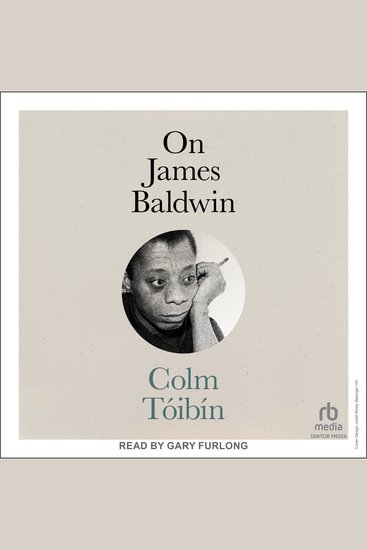
    Acclaimed Irish novelist Colm Tóibín first read James Baldwin just after turning eighteen. He had completed his first year at an Irish university and was struggling to free himself from a religious upbringing. Inspired by the novel Go Tell It on the Mountain, Tóibín found a writer who would be a lifelong companion and exemplar. 


    From On James Baldwin: 


    Baldwin was interested in the hidden and dramatic areas in his own being, and was prepared as a writer to explore difficult truths about his own private life. In his fiction, he had to battle for the right of his protagonists to choose or influence their destinies. He knew about guilt and rage and bitter privacies in a way that few of his White novelist contemporaries did. And this was not simply because he was Black and homosexual; the difference arose from the very nature of his talent, from the texture of his sensibility. "All art," he wrote, "is a kind of confession, more or less oblique. All artists, if they are to survive, are forced, at last, to tell the whole story, to vomit the anguish up." 


    On James Baldwin is a magnificent contemporary author's tribute to one of his most consequential literary progenitors.
    Voir livre
  • What’s Within You - Your Roadmap to Living Life With No Barriers - cover

    What’s Within You - Your Roadmap...

    Tom Lillig, David Shurna

    • 0
    • 0
    • 0
    What’s Within You Is Stronger Than What’s In Your Way 
    No one believes this more than David Shurna and Tom Lillig, co-founders of No Barriers USA. In 2003, they launched this award-winning nonprofit with the mission to help people reach their fullest potential, no matter the obstacles they face. Now, in What’s Within You, they use the proven No Barriers framework to teach you step-by-step how to break through your own challenges and live a driven, purposeful life. This narrative guide will introduce you to world-famous barrier breakers like fellow co-founder Erik Weihenmayer, the first blind person to summit Mt. Everest, and Mandy Harvey, the deaf jazz vocalist whose America's Got Talent performances captured the hearts of half a billion people. 
    Despite the barriers—both big and small—that each of us face, we can learn how to push past them, reconnect with our purpose, and unleash the best in ourselves and others.
    Voir livre
  • Aztec Myths and Legends - Gods Rituals and the Cosmic Worldview - cover

    Aztec Myths and Legends - Gods...

    Odessa Nightshade

    • 0
    • 0
    • 0
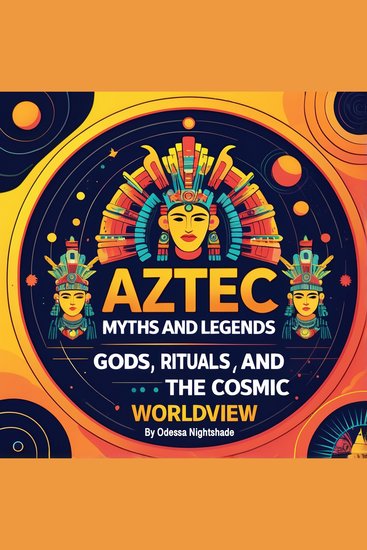
    The myths and legends of the Aztecs offer a glimpse into a world both vibrant and complex, where gods walked among mortals, and cosmic forces shaped the destiny of an empire. Rooted in the beliefs of the Nahua peoples of central Mexico, Aztec mythology was more than just a collection of stories—it was a sacred system that explained the origins of the universe, the role of humanity, and the ever-present struggle between order and chaos. These myths provided meaning to daily life, justified political and military expansion, and reinforced the religious practices that were central to Aztec society.  
    The origins of Aztec mythology are intertwined with the migrations and conquests that shaped their civilization. The Mexica, the people who would later establish the powerful city of Tenochtitlan, believed they were divinely chosen. According to their legends, they embarked on a long journey from a mythical homeland called Aztlán under the guidance of their patron god, Huitzilopochtli. Their eventual settlement on an island in Lake Texcoco fulfilled a prophecy that marked the beginning of their great empire. By weaving their own history into the fabric of myth, the Aztecs established their right to rule and their connection to the gods.  
    In Aztec society, mythology was inseparable from religion, politics, and even warfare. The gods required constant nourishment through human sacrifice, a practice that was not seen as cruel but as essential for maintaining cosmic balance. Warriors who died in battle were honored as they were believed to ascend to the sun’s domain, while sacrificial victims were thought to sustain the gods with their blood. Mythology also shaped the Aztec worldview through their intricate calendar system, which guided ceremonies, agriculture, and daily life. Time was cyclical, and each era was destined to end and be reborn—a belief that influenced their response to the arrival of the Spanish. 
    Voir livre