Begleiten Sie uns auf eine literarische Weltreise!
Buch zum Bücherregal hinzufügen
Grey
Einen neuen Kommentar schreiben Default profile 50px
Grey
Jetzt das ganze Buch im Abo oder die ersten Seiten gratis lesen!
All characters reduced
Beyond Good and Evil - cover

Beyond Good and Evil

Frederich Nietzche

Verlag: BookRix

  • 0
  • 0
  • 0

Beschreibung

Beyond Good and Evil is a book by philosopher Friedrich Nietzsche. It draws on and expands the ideas of his previous work, Thus Spoke Zarathustra, but with a more critical and polemical approach. In Beyond Good and Evil, Nietzsche accuses past philosophers of lacking critical sense and blindly accepting dogmatic premises in their consideration of morality. Specifically, he accuses them of founding grand metaphysical systems upon the faith that the good man is the opposite of the evil man, rather than just a different expression of the same basic impulses that find more direct expression in the evil man. The work moves into the realm "beyond good and evil" in the sense of leaving behind the traditional morality which Nietzsche subjects to a destructive critique in favor of what he regards as an affirmative approach that fearlessly confronts the perspectival nature of knowledge and the perilous condition of the modern individual.

Of the four "late-period" writings of Nietzsche, Beyond Good and Evil most closely resembles the aphoristic style of his middle period. In it he exposes the deficiencies of those usually called "philosophers" and identifies the qualities of the "new philosophers": imagination, self-assertion, danger, originality, and the "creation of values". He then contests some of the key presuppositions of the old philosophic tradition like "self-consciousness," "knowledge," "truth," and "free will", explaining them as inventions of the moral consciousness. In their place he offers the "will to power" as an explanation of all behavior; this ties into his "perspective of life", which he regards as "beyond good and evil", denying a universal morality for all human beings. Religion and the master and slave moralities feature prominently as Nietzsche re-evaluates deeply held humanistic beliefs, portraying even domination, appropriation and injury to the weak as not universally objectionable.
Verfügbar seit: 19.12.2023.
Drucklänge: 249 Seiten.
Weitere Bücher, die Sie mögen werden

  • Genghis Khan: A short biography - 5 Minutes: Short on time – long on info! - cover

    Genghis Khan: A short biography...

    5 Minutes, 5 Minute Biographies,...

    • 0
    • 0
    • 0
    Genghis Khan, founder of the Mongol empire : Life and work in a short biography! Everything you need to know, brief and concise. Infotainment, education and entertainment at its best!
    Zum Buch
  • The Unreachable Riches - Exploring the Eternal Elusiveness of a Legendary Cache - cover

    The Unreachable Riches -...

    John Harpoon

    • 0
    • 0
    • 0
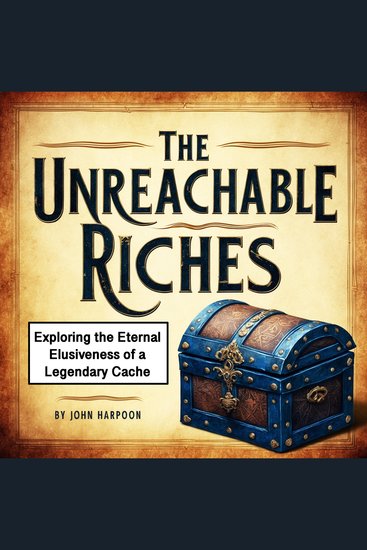
    Throughout history, the allure of hidden treasure has captured the human imagination like few other pursuits. Tales of vast riches buried beneath shifting sands, concealed within uncharted jungles, or locked away in remote mountain fortresses have been passed down through generations. These stories, often shrouded in mystery, promise more than mere material wealth; they offer the thrill of discovery, the romance of adventure, and the tantalizing possibility of rewriting history. 
    What makes the pursuit of treasure so compelling is its intersection of myth and reality. While some caches are purely the stuff of legend—stories crafted to entertain or to warn—others are firmly rooted in historical fact. The line between these two realms is often blurred, with legends growing over time as details are exaggerated, misunderstood, or simply lost to the passage of years. Yet, the faint possibility that a hoard of gold, jewels, or ancient artifacts could be lying undiscovered somewhere in the world continues to ignite the spark of curiosity in countless individuals. 
    The search for hidden riches is not just a quest for monetary gain. It is an expression of humanity's enduring desire to explore the unknown, to solve mysteries, and to leave a mark on history. Treasure hunters are often driven by a profound sense of purpose, believing that their discoveries might unveil truths about the past or provide new insights into forgotten cultures. Some searches span decades, even lifetimes, as these seekers devote themselves wholly to their pursuits, undeterred by failure or skepticism.
    Zum Buch
  • Secrets & Spires - cover

    Secrets & Spires

    Dominic N. Ashen

    • 0
    • 0
    • 0
    Can they make it to the top before it all comes crashing down? 
    Khazak has been feeling a little lost lately. By the age of thirty, he'd become the youngest Ranger Captain in his city's history. He thought he had the rest of his life figured out until he was betrayed by people he trusted and forced to resign. The one bright spot is David, his human lover and former captive (though "former" doesn't always apply in the bedroom). After coming so close to losing him, Khazak didn't think twice about leaving everything behind to follow after him. Things are still new, but they have all the time in the world for David to grow comfortable with their relationship. 
    David's having a rough time himself. After miraculously surviving a deadly attack, he's left looking for answers and seeking revenge on those responsible. His search brings him to the city of Pákannon, and he's not alone: not only is his entire team behind him—he also has Khazak, the orc who loves him and once owned him (and technically, still does). Just as he's getting used to the idea of people knowing they're together, someone from his past shows up and threatens all of his progress. Lucky for him, a side-quest to a mysterious city in the mountains should be exactly the distraction he needs. It's not like anything bad or dangerous could happen, right? 
    This is a book filled with action, comedy, tent sex, giant snakes, and ghost stories! Read the next chapter of Khazak & David's story and join them as they explore more of the magical world they inhabit. Readers of gay/male-on-male romances that feature kinky power-exchange relationships, BDSM, and Dom/sub elements: this book is for you! 
    Custom Fields
    Zum Buch
  • Emerging Domestic Markets - How Financial Entrepreneurs Reach Underserved Communities in the United States - cover

    Emerging Domestic Markets - How...

    Gregory Fairchild

    • 0
    • 0
    • 0
    The term "emerging market" refers to a country where incomes are currently low but that is likely to experience rapid growth and increasing economic competitiveness. Yet many of the characteristics of emerging markets—including demographic shifts, rising educational attainment, and growing urbanization—are also found closer to home, in communities that have been underserved by the existing financial-services system. 


    Gregory Fairchild introduces listeners to the rising set of entrepreneurs whose efforts to reach marginalized groups are reshaping the emerging markets of the United States. He explores how minority-owned and community-development institutions are achieving innovations in consumer- and small-business-targeted financial services to further economic development and reduce inequality. He analyzes the models of these organizations, measures their successes and failures, and provides suggestions for sustainable growth of similar organizations. Bringing together quantitative research, powerful stories of real-world entrepreneurs, and nuanced insights on public policy, Emerging Domestic Markets offers a vital set of prescriptions for inclusive financial development.
    Zum Buch
  • Hell With the Fire Out: A History of the Modoc War - cover

    Hell With the Fire Out: A...

    Arthur Quinn

    • 0
    • 0
    • 0
    Written by Arthur Quinn 
    Read by Ed Quinn (with an introduction written and read by Julia Whelan) 
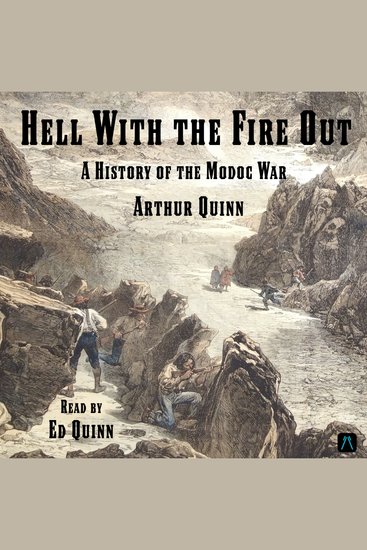
    The final book from esteemed Berkeley historian Arthur Quinn, Hell With the Fire Out is both a complex chronicle of a forgotten chapter in American Indian history and a vivid detailing of human foible, folly, and failure. With a novelistic flair, Quinn outlines the sad inevitability of America's westward expansion in its post-Civil War era. Wrangling all the inherent contradictions — Quaker Peace Policy vs Grant and Sherman's War Department; inter- and inner-tribal conflicts; the opposing attitudes of the region's White settlers — Quinn gives us a battle story not merely between nations and governments, but within the hearts of the very individuals at its center. 
    This is the first time an audio version of this book has been available and it is read by none other than the author's son, actor Ed Quinn (Two Broke Girls, One Day at a Time, Tyler Perry's The Oval).
    Zum Buch
  • Negotiating in Civil Conflict - Constitutional Construction and Imperfect Bargaining in Iraq - cover

    Negotiating in Civil Conflict -...

    Haider Ala Hamoudi

    • 0
    • 0
    • 0
    In 2005, Iraq drafted its first constitution and held the country’s first democratic election in more than fifty years. Even under ideal conditions, drafting a constitution can be a prolonged process marked by contentious debate, and conditions in Iraq are far from ideal: Iraq has long been racked by ethnic and sectarian conflict, which intensified following the American invasion and continues today. This severe division, which often erupted into violence, would not seem to bode well for the fate of democracy. So how is it that Iraq was able to surmount its sectarianism to draft a constitution that speaks to the conflicting and largely incompatible ideological view of the Sunnis, Shi’ah, and Kurds? Haider Ala Hamoudi served in 2009 as an adviser to Iraq’s Constitutional Review Committee, and he argues here that the terms of the Iraqi Constitution are sufficiently capacious to be interpreted in a variety of ways, allowing it to appeal to the country’s three main sects despite their deep disagreements. While some say that this ambiguity avoids the challenging compromises that ultimately must be made if the state is to survive, Hamoudi maintains that to force these compromises on issues of central importance to ethnic and sectarian identity would almost certainly result in the imposition of one group’s views on the others. Drawing on the original negotiating documents, he shows that this feature of the Constitution was not an act of evasion, as is sometimes thought, but a mark of its drafters’ awareness in recognizing the need to permit the groups the time necessary to develop their own methods of working with one another over time.
    Zum Buch