Rejoignez-nous pour un voyage dans le monde des livres!
Ajouter ce livre à l'électronique
Grey
Ecrivez un nouveau commentaire Default profile 50px
Grey
Abonnez-vous pour lire le livre complet ou lisez les premières pages gratuitement!
All characters reduced
A Mediterranean mystery - cover

A Mediterranean mystery

Fred E. Wynne

Maison d'édition: Librorium Editions

  • 0
  • 0
  • 0

Synopsis

I HATE the sight of those terra-cotta envelopes that telegrams come in. They have often announced ill news to me, and even in the absence of ill news they bear with them an atmosphere of emergency, suggestions of sudden action, which is always detestable to me.
Bates stood by while I read the ugly puce form which announced, had I known it, the opening of the curious chapter in my otherwise quiet life which I am now trying to recall and to record in its incredible details.
Incredible I mean from my then point of view, for a life and circumstances more remote from adventure than mine were then, it would be hard to imagine.
“There is no reply,” I said to Bates, who stood awaiting instructions. “It’s Mr. Edmund coming for a few nights. Tell Mrs. Rattray he will be here for dinner, and see that a room is ready.”
“Yes, sir. And if he comes without luggage again?”
[10]A little pang of a kind of jealousy shot through me.
Disponible depuis: 01/10/2024.

D'autres livres qui pourraient vous intéresser

  • The Short Stories of Kenneth Grahame - Known for Wind in the Willows but wrote impressive stories for adults too as you can hear in this collection - cover

    The Short Stories of Kenneth...

    Kenneth Grahame

    • 0
    • 0
    • 0
    Kenneth Grahame was born on 8th March 1859 in Edinburgh. 
     
    At age 5 his mother succumbed to puerperal fever.  His father, who had a drinking problem, now sent his 4 children to live with their grandmother at her large house in Cookham, Berkshire. Here the children lived in large open grounds next to the river.  These early experiences would in later years, be retold in his writing through a myriad of characters. 
     
    Grahame loved being a pupil at St Edward's School, Oxford and wanted to enroll at the university there but his guardian demurred on account of the cost. 
     
    Instead, a banking career was chosen for him, starting in 1879 at the Bank of England, where he rose steadily to the rank of its Secretary until retiring, with a pension, in 1908 due to ill health. 
     
    Alongside his commercial career Grahame had written and published various stories and essays in several periodicals. Some were anthologized as ‘Pagan Papers’ in 1893, and two years later ‘The Golden Age’ and later still ‘Dream Days’ and its masterpiece ‘The Reluctant Dragon’ became part of many home libraries.  His ability to view life through the lens of a young and curious child was superb, enabling the reader to easily identify with the character.   
     
    Grahame married Elspeth Thomson in 1899 and they had one child; Alastair, born semi-blind and plagued by health problems.  In a heart-rending tragedy he would later take his own life whilst attending Oxford University in 1920.   
     
    In 1908 Grahame reworked many of the bedtime stories he had fashioned for his son into the enduring favourite; ‘The Wind in the Willows’, describing the heart-warming adventures of Mr Toad and his friends.   
     
    Kenneth Grahame died in Pangbourne, Berkshire, on 6th July 1932. 
    01 - Kenneth Grahame - A Short Story Collection - An Introduction 
    02 - A Saga of the Seas by Kenneth Grahame 
    03 - Dies Irae by Kenneth Grahame 
    04 - The Magic Ring by Kenneth Grahame 
    05 - Mutabile Semper by Kenneth Grahame 
    06 - The Inquity of Oblivion by Kenneth Grahame
    Voir livre
  • Edgar Allan Poe - Selected Tales (Volume 2) - cover

    Edgar Allan Poe - Selected Tales...

    Edgar Allan Poe

    • 0
    • 0
    • 0
    Though he is most often remembered as the architect of the modern tale of terror, Edgar Allan Poe's short fiction ranges far beyond the confines of the macabre. In these 13 selected stories, he deals not merely with fear, but with consciousness itself: its obsessions, its perversities, its fragile hold upon identity, memory, and reason. 
    Ligeia – A meditation on beauty, intellect, and the terrifying possibility that the will may conquer death itself. 
    Berenice – A stark study of monomania, in which intellectual obsession descends into horror. 
    Eleonora – A gentle tale, exploring idealised love, memory, and the redemptive power of beauty. 
    Morella – A dark philosophical romance concerning the persistence of the self beyond death. 
    Three Sundays in a Week – A playful tale of ingenuity and deception. 
    The Imp of the Perverse – Poe’s chilling exploration of the irrational impulse that drives us toward self-destruction. 
    The Assignation – A tale of passion and fatalism, set against a decaying aristocratic world . 
    The Facts in the Case of M. Valdemar – A disturbing experiment at the border of life and death, told with clinical precision. 
    The Cask of Amontillado – A masterclass in cool revenge, where pride, cruelty, and calculation lead to perfect atrocity. 
    Silence – A Fable – A haunting parable about the terror of absolute stillness. 
    Shadow – A Parable – A solemn meditation on death and inevitability. 
    The Man of the Crowd – An early exploration of urban alienation and the unsettling mystery of the unknowable individual. 
    Some Words with a Mummy – A sharp satire skewering modern arrogance through an encounter with the ancient past.
    Voir livre
  • The Ursula K Le Guin Collection - April in Paris The Masters Darkness Box - cover

    The Ursula K Le Guin Collection...

    Ursula K. Le Guin

    • 0
    • 0
    • 0
    "The Ursula K. Le Guin Collection. Illustrated" is a captivating anthology featuring three remarkable works by the renowned author Ursula K. Le Guin: "April in Paris," "The Masters," and "Darkness Box."
    In "April in Paris," Le Guin weaves a mesmerizing tale set in the enchanting city of Paris, exploring themes of love, loss, and self-discovery. The story follows a young artist who embarks on a journey of artistic awakening and personal transformation during the vibrant month of April in the City of Light.
    "The Masters" delves into the complexities of power, privilege, and morality in a society ruled by a mysterious elite known as the Masters. Through intricate world-building and profound character development, Le Guin challenges readers to question the nature of authority and the pursuit of knowledge.
    "Darkness Box" takes readers on a gripping adventure into a world shrouded in darkness, where a young protagonist discovers a mysterious box that holds the key to unlocking ancient secrets. As the protagonist delves deeper into the mysteries of the box, they must confront their deepest fears and make choices that will shape the fate of their world.
    With stunning illustrations that bring Le Guin's vivid imagination to life, this collection offers readers a visual and literary feast that will transport them to worlds of wonder, introspection, and exploration. "The Ursula K. Le Guin Collection. Illustrated" is a must-read for fans of speculative fiction, philosophical storytelling, and immersive world-building.
     
    April in Paris
    The Masters
    Darkness Box
    Voir livre
  • Hop-Frog - cover

    Hop-Frog

    Edgar Allan Poe

    • 0
    • 0
    • 0
    More classic horror narrations on Jonathan's YouTube channel: https://www.youtube.com/@JonathanDunneHorrorAudiobooks 
    Title: Hop-Frog 
    Author: Edgar Allan Poe 
    Narrator: Jonathan Dunne 
    Original Publication: 1849 
    Public Domain: Yes 
    Series Placement: Timeless Terrors No. 85 
    Description: 
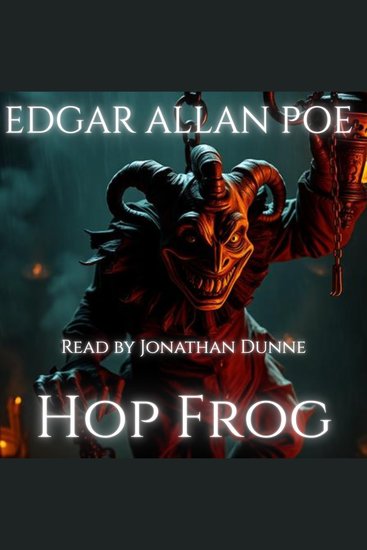
    Hop-Frog is one of Edgar Allan Poe’s most viciously ironic tales of psychological and moral horror—a dark exploration of cruelty, humiliation, and the devastating power of revenge. Set within the grotesque decadence of a royal court, the story follows Hop-Frog, a physically disabled jester whose sharp intellect stands in stark contrast to the barbarity of those who rule over him. 
    Central to the narrative is the sustained abuse inflicted upon Hop-Frog by a sadistic king and his courtiers, whose mockery and violence are disguised as amusement. Poe slowly builds tension through repeated acts of degradation, revealing how cruelty, when normalized, becomes a catalyst for catastrophic consequences. Beneath the trappings of comedy and festivity, an atmosphere of moral rot festers, awaiting ignition. 
    Rather than relying solely on supernatural elements, Poe crafts horror through psychological inevitability and grim poetic justice, culminating in a masquerade that transforms spectacle into terror. The story’s final act is both shocking and disturbingly earned, forcing the reader to confront the true cost of unchecked power and dehumanization. 
    Narrated by Amazon-bestselling horror author Jonathan Dunne, this performance captures the story’s escalating malice, bitter irony, and explosive conclusion. Hop-Frog endures as one of Poe’s most unsettling revenge tales—a reminder that those treated as monsters may one day decide to become them.
    Voir livre
  • King Pest - cover

    King Pest

    Edgar Allan Poe

    • 0
    • 0
    • 0
    More classic horror narrations on Jonathan's YouTube channel: https://www.youtube.com/@JonathanDunneHorrorAudiobooks 
    Title: King Pest 
    Author: Edgar Allan Poe 
    Narrator: Jonathan Dunne 
    Original Publication: 1835 
    Public Domain: Yes 
    Series: Timeless Terrors 
    Number: 108 
    Description: 
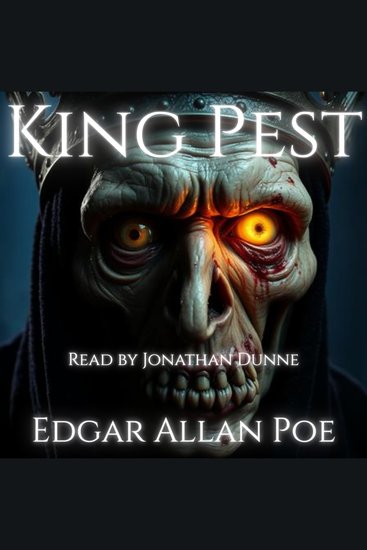
    King Pest is a grotesque and darkly comic tale set in plague-ravaged London during the time of a devastating epidemic. Amid the fear and desolation, two drunken sailors, Leggs and Hugh Tarpaulin, wander away from their ship and into a forbidden quarter of the city abandoned to death and decay. Drawn by curiosity and bravado, they stumble into a nightmarish banquet held in a charnel-house, where a bizarre court presides over a feast among coffins and bones. 
    At the center of this macabre assembly sits the self-proclaimed King Pest, a grotesque monarch ruling over a mock kingdom of pestilence. Surrounded by equally ghastly courtiers — each bearing names and appearances befitting their morbid titles — King Pest delivers bombastic proclamations while reveling in the trappings of death. The sailors soon find themselves unwilling guests in this grotesque parody of royalty, where horror and absurdity mingle beneath the shadow of the plague. 
    In this strange and atmospheric story, Edgar Allan Poe blends satire, gothic horror, and dark humor to create a vivid tableau of decay and delirium. The claustrophobic setting, the grotesque imagery, and the exaggerated pageantry of the plague court showcase Poe’s flair for the macabre as well as his biting wit. 
    Narrated by Amazon-bestselling horror author Jonathan Dunne, this performance brings Poe’s eerie humor and grim spectacle vividly to life. King Pest remains a striking example of Poe’s early tales — a bizarre and unforgettable descent into a kingdom where death reigns supreme.
    Voir livre
  • The Rocking Horse Winner - From their pens to your ears genius in every story - cover

    The Rocking Horse Winner - From...

    D H Lawrence

    • 0
    • 0
    • 0
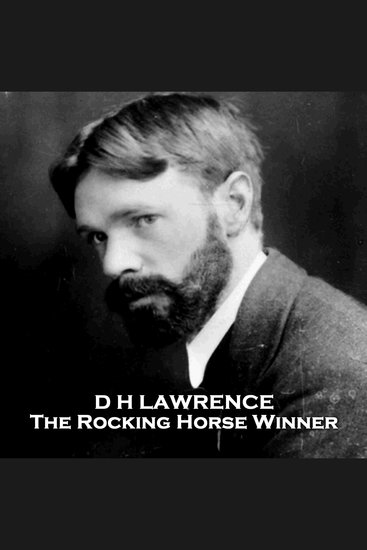
    David Herbert Lawrence was born on the 11th September 1885 in Eastwood, Nottinghamshire, a coal mining town where the reality of a harsh life was only useful as experiences for future literary works. 
    He was educated at Beauvale Board School and became the first local boy to receive a scholarship to attend Nottingham High School. After 3 years he became a junior clerk in Haywood’s surgical appliances factory. He was also attempting a literary career which, in the short term, led to a teacher training position in Eastwood and later a teaching qualification from University College, Nottingham.  
    Lawrence’s first efforts were poems, short stories and a draft of ‘The White Peacock’. Moving to London and a teaching position in Croydon his writing attracted the attention of Ford Madox Ford, editor of The English Review, and he commissioned him to write ‘Odour of Chrysanthemums’.  
    Wanting to write full-time he now began work on what would become ‘Sons and Lovers.   
    In 1912 he met the older and married mother-of-three Frieda Weekley. They eloped to Germany and here Lawrence could see for himself the growing tensions with France.  So keen was his interest that he was arrested and accused of being a British spy.  
    In early 1914 Frieda obtained her divorce and they returned to Britain to be married just days before the outbreak of war. Owing to her German parentage, and his own public dislike of militarism and violence, the couple were treated with contempt and suspicion throughout the war years.  
    Despite this he continued to write but his reputation in England was so tarnished and, mirrored by his own disdain for the country, he and Frieda left England in November 1919, first for Europe and then America via Ceylon and Australia. 
    They bought a ranch in Taos, New Mexico and visited Mexico several times. The third visit in March 1925 caused a near fatal attack of malaria. To convalesce they moved to Florence. Here he continued work on ‘Lady Chatterley’s Lover’ which for many years would cause controversy. A renewed interest in oil painting resulted in an exhibition in 1929 which was raided by the police and several works were confiscated.  
    D H Lawrence died of complications arising from a bout of tuberculosis on the 2nd of March 1930 in Vence, France.  He was 44.
    Voir livre