Rejoignez-nous pour un voyage dans le monde des livres!
Ajouter ce livre à l'électronique
Grey
Ecrivez un nouveau commentaire Default profile 50px
Grey
Abonnez-vous pour lire le livre complet ou lisez les premières pages gratuitement!
All characters reduced
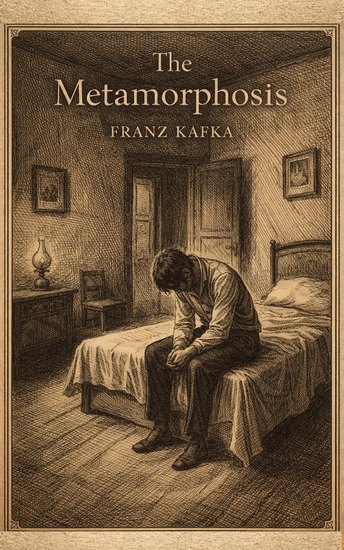
The Metamorphosis - cover

The Metamorphosis

Franz Kafka

Maison d'édition: CLXBX

  • 0
  • 0
  • 0

Synopsis

A haunting exploration of identity, isolation, and the fragile boundaries of humanity, The Metamorphosis by Franz Kafka stands as one of the most influential works of twentieth-century literature. First published in 1915, this unforgettable novella delves into the psychological and emotional consequences of alienation in a world governed by duty, expectation, and silent despair.

The story begins with one of the most startling openings in literary history: Gregor Samsa, a traveling salesman and devoted son, awakens one morning to find himself transformed into a monstrous insect. Trapped within his altered body and confined to his bedroom, Gregor struggles to comprehend his new existence while worrying more about missing work than about his inexplicable condition. As he attempts to adapt, his family—once financially dependent on him—must confront the burden of his transformation.

Kafka masterfully shifts the focus from the surreal event itself to the quiet unraveling of family bonds. Gregor's metamorphosis exposes underlying tensions, resentments, and unspoken frustrations within the household. His parents and sister, initially shocked and sympathetic, gradually grow fearful, ashamed, and impatient. The room that once offered him refuge becomes a symbol of his increasing isolation, and the apartment that housed a family unit transforms into a space of emotional distance and moral ambiguity.

Through sparse yet powerful prose, Kafka examines themes of alienation, guilt, responsibility, and the search for meaning in a modern, impersonal world. Gregor's condition can be read as a metaphor for social exclusion, mental anguish, or the dehumanizing pressures of work and conformity. The story's surreal premise heightens its emotional realism, inviting readers to confront uncomfortable questions about compassion, identity, and the value of an individual when usefulness fades.

Both unsettling and deeply moving, The Metamorphosis continues to resonate with readers for its profound insight into the human condition. Kafka's distinctive blend of absurdity and psychological depth creates a narrative that is as thought-provoking today as it was over a century ago. This timeless classic remains a powerful meditation on transformation—not only of the body, but of relationships, perception, and self-worth.
Disponible depuis: 14/02/2026.
Longueur d'impression: 75 pages.

D'autres livres qui pourraient vous intéresser

  • The Raven - cover

    The Raven

    Edgar Allan Poe

    • 0
    • 0
    • 0
    The Raven by Edgar Allan Poe is one of literature's most iconic poems, weaving a haunting narrative of loss, despair, and the supernatural. In this mesmerizing and atmospheric tale, a grieving man, tormented by the memory of his lost love Lenore, finds himself visited by a mysterious raven late at night. As the raven perches above his chamber door, it speaks a single word: "Nevermore." 
    Poe's use of vivid imagery and melodic language captures the narrator’s descent into madness as he desperately seeks meaning in the raven’s cryptic response. Is it a messenger from beyond, or merely a cruel reminder of his sorrow? The poem masterfully explores themes of death, mourning, and the futility of seeking solace in the face of overwhelming grief. 
    This audiobook version of The Raven brings Poe's dark and melancholic vision to life, enveloping listeners in its eerie, gothic ambiance. With its rhythmic cadence and poignant storytelling, the poem remains a timeless work that resonates with anyone who has ever experienced the haunting echoes of lost love. 
    Perfect for fans of gothic poetry and classic literature, this rendition captures the essence of Poe’s masterful storytelling, making it an unforgettable listening experience. 
    Start Listening to The Raven today and immerse yourself in the chilling and poetic world of Edgar Allan Poe!
    Voir livre
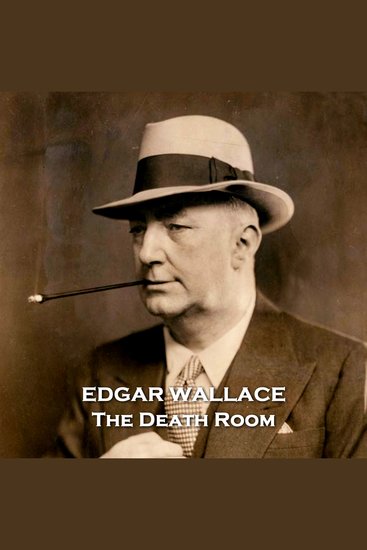
  • The Death Room - Former soldier and journalist that became a revered author and screenwriter - cover

    The Death Room - Former soldier...

    Edgar Wallace

    • 0
    • 0
    • 0
    Richard Horatio Edgar Wallace was born on the 1st April 1875 in Greenwich, London.  Leaving school at 12 because of truancy, by the age of fifteen he had experience; selling newspapers, as a worker in a rubber factory, as a shoe shop assistant, as a milk delivery boy and as a ship’s cook.  
     
    By 1894 he was engaged but broke it off to join the Infantry being posted to South Africa. He also changed his name to Edgar Wallace which he took from Lew Wallace, the author of Ben-Hur.  
     
    In Cape Town in 1898 he met Rudyard Kipling and was inspired to begin writing. His first collection of ballads, The Mission that Failed! was enough of a success that in 1899 he paid his way out of the armed forces in order to turn to writing full time.  
     
    By 1904 he had completed his first thriller, The Four Just Men. Since nobody would publish it he resorted to setting up his own publishing company which he called Tallis Press. 
      
    In 1911 his Congolese stories were published in a collection called Sanders of the River, which became a bestseller. He also started his own racing papers, Bibury’s and R. E. Walton’s Weekly, eventually buying his own racehorses and losing thousands gambling.  A life of exceptionally high income was also mirrored with exceptionally large spending and debts.  
     
    Wallace now began to take his career as a fiction writer more seriously, signing with Hodder and Stoughton in 1921. He was marketed as the ‘King of Thrillers’ and they gave him the trademark image of a trilby, a cigarette holder and a yellow Rolls Royce. He was truly prolific, capable not only of producing a 70,000 word novel in three days but of doing three novels in a row in such a manner. It was estimated that by 1928 one in four books being read was written by Wallace, for alongside his famous thrillers he wrote variously in other genres, including science fiction, non-fiction accounts of WWI which amounted to ten volumes and screen plays. Eventually he would reach the remarkable total of 170 novels, 18 stage plays and 957 short stories. 
     
    Wallace became chairman of the Press Club which to this day holds an annual Edgar Wallace Award, rewarding ‘excellence in writing’.  
     
    Diagnosed with diabetes his health deteriorated and he soon entered a coma and died of his condition and double pneumonia on the 7th of February 1932 in North Maple Drive, Beverly Hills. He was buried near his home in England at Chalklands, Bourne End, in Buckinghamshire.
    Voir livre
  • Selected Short Stories - by F Scott Fitzgerald - cover

    Selected Short Stories - by F...

    F. Scott Fitzgerald

    • 0
    • 0
    • 0
    Selected Short Stories is a collection of some of F. Scott Fitzgerald's most memorable and thought-provoking works. Published in 1931, the collection includes several of his best-known stories, such as "The Diamond as Big as the Ritz," "Bernice Bobs Her Hair," and "The Curious Case of Benjamin Button." These stories explore themes of social class, love, loss, and the search for meaning in a rapidly changing world. Fitzgerald's writing style is characterized by its elegance, wit, and poetic language, making his stories both engaging and thought-provoking. 
     
    One of the recurring themes in Fitzgerald's stories is the tension between the individual and society. In many of his stories, the characters are struggling to find their place in a society that values wealth, status, and conformity. This is particularly evident in "Bernice Bobs Her Hair," in which the protagonist, Bernice, must decide whether to conform to the expectations of her wealthy cousin or to follow her own desires. Similarly, in "The Curious Case of Benjamin Button," the protagonist must come to terms with his unusual condition, which sets him apart from the rest of society. 
     
    Another important theme in Fitzgerald's stories is the fleeting nature of happiness and the inevitability of change. Many of his characters are searching for love, success, or fulfillment, but find that these things are elusive and ultimately fleeting. This is particularly evident in "The Diamond as Big as the Ritz," in which the protagonist discovers a hidden mountain of diamonds, only to realize that his wealth is meaningless in the face of the vastness of the universe. Fitzgerald's stories remind us that life is both beautiful and fragile and that the pursuit of happiness can be both exhilarating and heartbreaking. 
    Overall, Selected Short Stories is a testament to Fitzgerald's talent as a writer and his ability to capture the spirit of his time.
    Voir livre
  • Nightingale and the Rose The (Unabridged) - cover

    Nightingale and the Rose The...

    Oscar Wilde

    • 0
    • 0
    • 0
    "The Nightingale and the Rose" A nightingale overhears a student complaining that the professor's daughter will not dance with him, as he is unable to give her a red rose; a lizard, a butterfly and a daisy laugh at the student for doing so. The nightingale visits all the rose-trees in the garden, and one of the roses tells her there is a way to produce a red rose, but only if the nightingale is prepared to sing the sweetest song for the rose all night with her heart pressing into a thorn, sacrificing her life.
    Voir livre
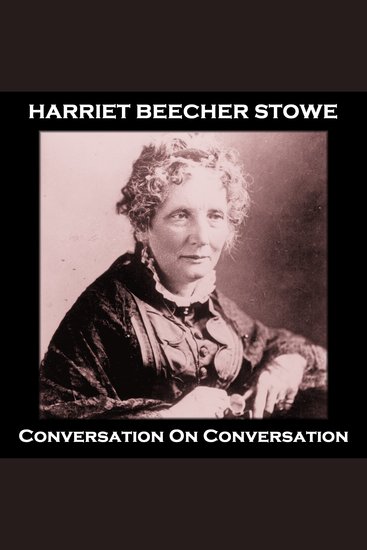
  • Conversation On Conversation - From their pens to your ears genius in every story - cover

    Conversation On Conversation -...

    Harriet Beecher Stowe

    • 0
    • 0
    • 0
    The bookshelves of American literature are incredible collections that have gathered together centuries of very talented authors.  From this continent their fame spread and whilst among their number many are now forgotten or neglected their talents endure.  Among them is Harriet Beecher Stowe.
    Voir livre
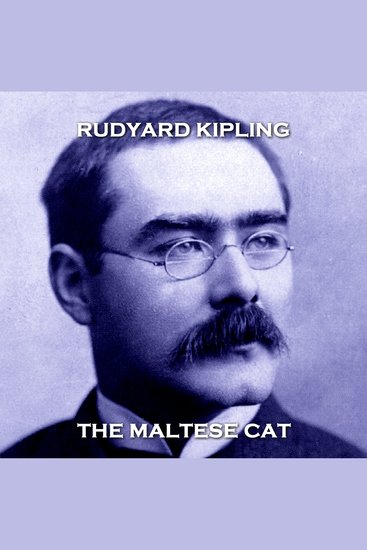
  • The Maltese Cat - Celebrated author of The Jungle Book Kipling brings another marvellous story from the perspective of an animal this time about a game of polo set in India during British rule - cover

    The Maltese Cat - Celebrated...

    Rudyard Kipling

    • 0
    • 0
    • 0
    Joseph Rudyard Kipling was born in Mumbai, India on 30th December 1865.   
     
    As was the custom in those days, he and his sister were sent back to England when he was 5.  The ill-treatment and cruelty by the Portsmouth couple they boarded with Kipling said contributed to the onset of his literary life.  
     
    At 16 he returned to India to work on a local paper where he was soon contributing and writing.  It also exposed him to the issues of identity and national allegiance which pervade much of his work.  
     
    In 1886, his ‘Departmental Ditties’, collection of verse appeared in print followed by 39 short stories for his newspaper over only 8 months.  These were then published as ‘Plain Tales from the Hills’, shortly after his 22nd birthday.  
     
    He continued his prolific pace of writing before being dismissed in a dispute and, taking his pay-off and the profits from the sale of some publishing rights, decided to return to London, travelling via Rangoon, Hong Kong, Japan and the United States, all the while writing articles, and arriving at Liverpool in October 1889. 
     
    Over the next two years he saw further works published as books and in magazines, as well as a nervous breakdown for which he was prescribed a sea voyage, to South Africa, Australia, New Zealand and India.  
     
    Happier times came with marriage to Caroline Starr Balestier in January 1892.  The honeymoon began in Vermont and ended in Yokahama where they heard their bank had failed.  They returned to Vermont and settled.  Caroline was now pregnant and he was planning the ‘Jungle Books’.  
     
    A failed arbitration between the US and England resulted in an argument between Caroline’s brother and Kipling, and then his arrest.  At the hearing he was mortified by the exposure of his private life and after settling the matter they returned to England and life in Torquay.  ‘Kim’ was published in 1902, and ‘Just So Stories for Little Children’, a year later.  
     
    In 1907 he was awarded the Nobel Prize for Literature with the citation “in consideration of the power of observation, originality of imagination, virility of ideas and remarkable talent for narration which characterise the creations of this world-famous author”.   
     
    When the Great War erupted, he scorned those who refused conscription.  His son enlisted and was killed at the Battle of Loos in September 1915, at 18, an exploding shell had ripped his face apart.  This death inspired Kipling’s writing thereafter, but the tragedy broke his life and by 1930 his prolific pen had almost ceased. 
     
    Rudyard Kipling died on 18th January 1936 from a perforated duodenal ulcer.  He was 70.  His ashes are buried at Poets’ Corner in Westminster Abbey. 
     
    In the Maltese Cat Kipling returns once more to India and the British Empire.  A polo match is being played.  The fierce competitive instincts of two social classes are fighting for dominance.  All told through the voice of the Maltese Cat, the most cunning of the horses.
    Voir livre