Begleiten Sie uns auf eine literarische Weltreise!
Buch zum Bücherregal hinzufügen
Grey
Einen neuen Kommentar schreiben Default profile 50px
Grey
Jetzt das ganze Buch im Abo oder die ersten Seiten gratis lesen!
All characters reduced
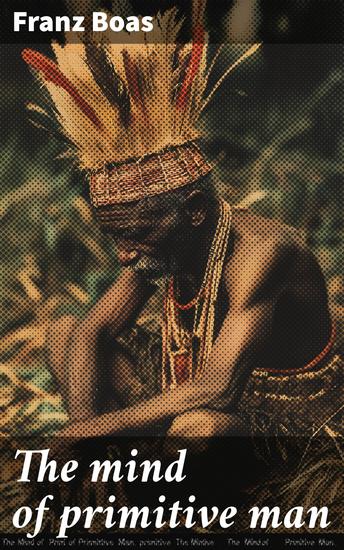
The mind of primitive man - cover

The mind of primitive man

Franz Boas

Verlag: Good Press

  • 0
  • 0
  • 0

Beschreibung

In "The Mind of Primitive Man," Franz Boas offers a pioneering exploration of the psychological underpinnings of so-called "primitive" cultures. Through a comparative lens, Boas critiques prevailing theories of cultural evolution, positing that the minds of all humans, regardless of their societal context, operate on similar cognitive principles. His literary style is characterized by a meticulous attention to ethnographic detail, combining empirical observation with psychological insights. This work emerges within the early 20th-century intellectual milieu, as Boas challenges the ethnocentric biases of contemporary anthropological thought, urging for a more nuanced understanding of cultural relativism. Franz Boas, often regarded as the father of American anthropology, was profoundly influenced by his background in natural sciences and his deep appreciation for diverse cultures. His formative experiences among Indigenous populations exposed him to the complexities of human societies, ultimately driving him to advocate for the validity of all cultural expressions. Boas's commitment to understanding human behavior through a cultural lens played a crucial role in shaping this book, which seeks to dismantle stereotypes surrounding so-called primitive mentalities. Readers seeking a comprehensive and thought-provoking examination of cultural psychology will find "The Mind of Primitive Man" indispensable. Boas's insights not only challenge entrenched assumptions but also invite readers to engage with the rich tapestry of human experience. This book is essential for anyone interested in anthropology, psychology, or the dynamics of culture.
Verfügbar seit: 02.03.2025.
Drucklänge: 210 Seiten.

Weitere Bücher, die Sie mögen werden

  • Mysteries of Secret Societies - Uncover the mysteries of secret societies from ancient times to the modern era - cover

    Mysteries of Secret Societies -...

    Nora Arman

    • 0
    • 0
    • 0
    Have you ever wondered how secret societies have shaped our history? Their symbols and rituals continue to influence modern culture and inspire conspiracy theories. This guide explores the following topics: Origins and Early History: Discover the beginnings of secret societies.Rituals and Symbols: Decode the meanings of their symbols over time.Impact on History: Learn about their roles in significant events like the American Revolution.Key Figures: Explore the lives of influential members.Cultural Analysis: Compare secret societies from around the world.Myth Debunking: Separate fact from fiction regarding these organizations.Modern Relevance: Examine the secret societies that exist today.Psychological Insights: Understand the motivations behind joining these groups.Societal Influence: Assess the impact of secret societies on different demographics.Personal Accounts: Read narratives from members and historians
    Zum Buch
  • The Norman Conquest - 1066 and Beyond - cover

    The Norman Conquest - 1066 and...

    Harris Ropes

    • 0
    • 0
    • 0
    The Norman Conquest of England in 1066 was not an isolated event but the culmination of complex political, social, and military developments. Understanding the factors that led to this momentous invasion requires an exploration of the Anglo-Saxon world, the rise of Normandy, and the political landscape that shaped the conflict. 
    By the mid-11th century, England was a prosperous but politically volatile kingdom. The Anglo-Saxon rule, established centuries earlier, had seen periods of stability and turmoil. King Edward the Confessor, who reigned from 1042 to 1066, was deeply religious but lacked a direct heir, leading to uncertainty about the kingdom’s future. His court was divided between powerful noble factions, including Earl Harold Godwinson, one of England’s most influential figures. This internal division made England vulnerable to external threats. 
    At the same time, Normandy, a powerful duchy in northern France, had been rising as a formidable force under the leadership of Duke William. The Normans, originally descended from Viking settlers, had adopted French customs, built strong political institutions, and developed an efficient military system. William, known for his ambition and strategic mind, had a close relationship with Edward the Confessor, who had supposedly promised him the English throne. However, this claim was disputed, setting the stage for conflict.
    Zum Buch
  • Wings of Justice - The Tuskegee Airmen and the War That Changed America - cover

    Wings of Justice - The Tuskegee...

    Davis Truman

    • 0
    • 0
    • 0
    Soar into the untold story of the heroes who defied gravity and racism. 
    In Wings of Justice, bestselling author Davis Truman delivers a gripping, emotionally charged tribute to the legendary Tuskegee Airmen, America’s first Black military pilots, who not only fought against the Axis powers during World War II but also challenged the deep-rooted injustice of segregation at home. 
    With vivid storytelling and powerful historical insight, this book follows the Airmen from the segregated airfields of Tuskegee, Alabama, to the skies over war-torn Europe. As they battled enemies abroad and prejudice within the ranks, these brave men rewrote the narrative of American heroism. 
    More than a story of war, this is a story of triumph, of courage, resilience, and the fight for equality. Wings of Justice will leave you inspired, enraged, and ultimately hopeful. It’s a must-read for anyone who believes in the power of history to shape a more just future. 
    History remembered. Justice reclaimed. Heroes are never forgotten.
    Zum Buch
  • The Death of Expertise - The Campaign against Established Knowledge and Why it Matters 2nd Edition - cover

    The Death of Expertise - The...

    Tom Nichols

    • 0
    • 0
    • 0
    Fully updated chapters continue to address how technology and increasing levels of education have exposed people to more information than ever before. These societal gains, however, have also helped fuel a surge in narcissistic and misguided intellectual egalitarianism that has crippled informed debates on any number of issues. Over the past several years, the rise of populism and conspiracy theories have taken this to new levels. All voices, even the most ridiculous, demand to be taken with equal seriousness, and any claim to the contrary is dismissed as undemocratic elitism. 


    Tom Nichols' The Death of Expertise, Second Edition, follows up on how this rejection of experts has occurred: the openness of the internet, the emergence of a customer satisfaction model in higher education, the transformation of the news industry into a 24-hour entertainment machine, and importantly, the election of Donald Trump. Paradoxically, the increasingly democratic dissemination of information, rather than producing an educated public, has instead created an army of ill-informed and angry citizens who denounce intellectual achievement. When ordinary citizens believe that no one knows more than anyone else, democratic institutions themselves are in danger of falling either to populism or to technocracy or, in the worst case, a combination of both.
    Zum Buch
  • Empath Healing - Empaths' Self-Confidence Guide to Stop Absorbing Negative Energies Overcome Fears and Improve Intuition with Emotional Intelligence (2022 Edition for Beginners) - cover

    Empath Healing - Empaths'...

    Buck Francis

    • 0
    • 0
    • 0
    Can you sense the emotions of others even when they are not present? 
    Do you want to learn what it means to be empathic and how to improve your life and the lives of those around you? 
    Are you tired of absorbing other people's emotions like a sponge? 
    Dealing with all of the above and more can be extremely overwhelming and exhausting. It doesn't help to know that empaths account for only 1-2 percent of the US population. You may feel isolated, which can lead to self-pity and self-loathing. 
    This book has made things easier for you because it teaches you more about being an empath, addresses all of your questions and doubts, and teaches you how to heal yourself from all of the negative energy that you may absorb, as well as how to adopt a positive mindset amidst all of the negativity that you may absorb. 
    You will also discover:To determine if you are an empath, you must first understand what an empath is.What qualifies you as an empath?Are you an empath or just a sensitive person?What does this mean if you're an empathetic person?How do you deal with stimulation if you're an empathetic person?What is the most beneficial aspect of being an empathetic person?How to Recognize the Different Energy Types That Affect the EmpathWhat are your empathic abilities?Empathy can benefit from practical exercises to help them deal with negative energy. 
    You're just a click away from discovering how to stop absorbing negative energy, heal yourself, and maintain a positive mindset! 
    Do you want to learn more? 
    Scroll up and press the "Add to Cart" button RIGHT NOW.
    Zum Buch
  • Drama Box and the Social Theatre of Singapore - Cultural Intervention and Artistic Autonomy 1990–2006 - cover

    Drama Box and the Social Theatre...

    How Wee Ng

    • 0
    • 0
    • 0
    This pioneering study provides an essential guide to the formative years of Drama Box, a leading Chinese-language theatre company in Singapore. How Wee Ng presents a compelling narrative of how Drama Box has emerged as a prominent force in the field of theatre for social intervention, effectively amplifying the voices of marginalised communities and establishing itself as a foremost advocate of cutting-edge, socially oriented artistic practice. Ng’s in-depth analysis of Drama Box’s most influential works during this pivotal period, and his meticulous examination of the social, political, and economic contexts of their productions, illuminate the remarkable balance the company has achieved in its engagement with government policy, censorship, and financial imperatives, while fiercely defending its artistic autonomy. As well as unveiling the remarkable history of Drama Box, the book offers readers a unique lens through which to understand the complex relationship between the arts and state authority, and the broader socio-cultural and political landscape of contemporary Singapore.
    Zum Buch