Rejoignez-nous pour un voyage dans le monde des livres!
Ajouter ce livre à l'électronique
Grey
Ecrivez un nouveau commentaire Default profile 50px
Grey
Abonnez-vous pour lire le livre complet ou lisez les premières pages gratuitement!
All characters reduced
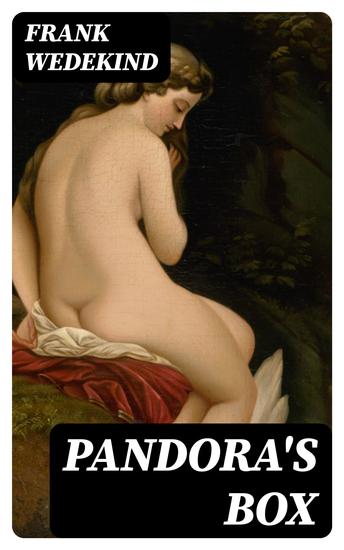
Pandora's Box - A Tragedy in Three Acts - cover

Nous sommes désolés! L'éditeur ou l'auteur a retiré ce livre de notre catalogue. Mais ne vous inquiétez pas, vous pouvez toujours choisir les livres que vous souhaitez parmi plus de 500 000 titres!

Pandora's Box - A Tragedy in Three Acts

Frank Wedekind

Traducteur Samuel A. Eliot

Maison d'édition: DigiCat

  • 0
  • 0
  • 0

Synopsis

In 'Pandora's Box', German dramatist Frank Wedekind continues to explore the complexities of human desire, morality, and societal decay that he initiated in 'Earth Spirit'. The play, set in the tumultuous climate of early 20th-century Germany, delves deep into the tragic life of Lulu, an enigmatic femme fatale who becomes an allegory for both victim and victor within the Nietzschian dynamics of power and decadence. Wedekind's expressionistic narrative unfolds in bold strokes, with a literary style that eschews convention and a raw depiction of sexuality and the subconscious that underscores the literary context of burgeoning Modernism.

Frank Wedekind, a seminal figure in the transition from naturalism to expressionism in German theatre, possessed a profound understanding of the societal undercurrents that informed his work. His writings often mirrored the clashes between repressive societal norms and unbridled human instincts, a dichotomy distilled from his personal experiences and the socio-political environment of pre-World War I Germany. In writing 'Pandora's Box', Wedekind not only sought to challenge audiences but to reflect the relentless march of a society towards self-destruction through the lens of Lulu's tumultuous existence.

'Pandora's Box' is a compelling recommendation for readers interested in the searing and unapologetic dissection of human drives set against the backdrop of a society in flux. Wedekind's work resonates with those who appreciate bold, avant-garde literature that interrogates the darkness and duality of the human soul. This play invites a scholarly audience to grapple with the complexities it presents, appealing to those invested in literary modernism, gender studies, and the psycho-social landscape of pre-war Europe.
Disponible depuis: 10/08/2022.
Longueur d'impression: 49 pages.


D'autres livres qui pourraient vous intéresser

  • The Stuttering Magician - cover

    The Stuttering Magician

    Jay MacNamee

    • 0
    • 0
    • 0
    Tired of life in a noisy city, a group of magicians gathers together and POOF! -- they create their very own town. Being rather self-centered, they elect themselves to various positions in the town. When the voting is over, every magician has been elected to office; everyone, that is, except young Abracadabra Bartholomew Brown. Why not Bartholomew? Because he stutters, which causes some people to tease him and think less of him. As a result, Bartholomew is terribly shy and afraid to speak up. When the town's first birthday arrives, people realize that the town was never named when it was made. And since everyone else in town already holds office, the role of Namer of Towns falls to young Mr. Brown, despite the objections of one mean old magician. Now Bartholomew must think up a name and say it out loud to the assembled crowd, a task that fills him with dread. Will he come up with a name that pleases his fellow magicians? Will he be able to say it out loud? How will folks respond? Using cleverly rhymed couplets, The Stuttering Magician tells a humorous, heartfelt, and ultimately uplifting story that not only helps build self-esteem in young people people who stutter, but encourages greater empathy towards and understanding of the affliction among their peers and adults alike. Proceeds from the sale of this audiobook benefit the National Stuttering Association.
    Voir livre
  • A Rare Recording of Sylvia Plath Reading Her Best Poems - cover

    A Rare Recording of Sylvia Plath...

    Sylvia Plath

    • 0
    • 0
    • 0
    Sylvia Plath born on October 27, 1932, in Boston, MA, was an American poet, novelist, and short story writer. She is credited with advancing the genre of confessional poetry and is best known for two of her published collections, The Colossus and Other Poems (1960) and Ariel (1965), and also The Bell Jar, a semi-autobiographical novel published shortly before her suicide on February 11, 1963. In this recording, Plath reads "Tulips," "Poppies In October," "Daddy," "Ariel," "Lady Lazarus," and "The Applicant."
    Voir livre
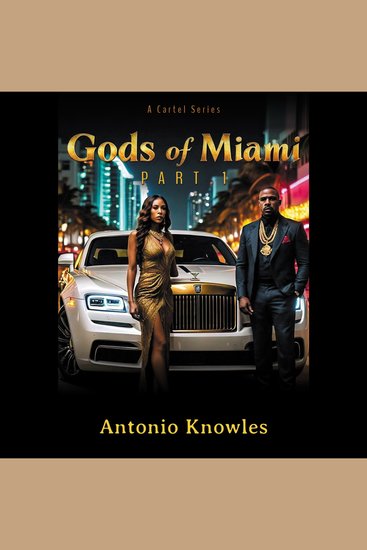
  • Gods Of Miami - cover

    Gods Of Miami

    Antonio Knowles

    • 0
    • 0
    • 0
    In the scintillating underworld of Miami, Zeus rules with an iron fist. As the formidable leader of the Family of God (F.O.G.), his ambitions stretch far beyond the city's glittering lights, aiming to monopolize both the United States and the Caribbean. 
    But Zeus's reign isn't just about power—it's about style, elegance, and high-stakes sophistication. 
    By his side is Destiny, his girlfriend and lover, whose beauty and cunning are matched only by her loyalty to Zeus. Together, they navigate a world where every move is a calculated risk, and every relationship is a fragile alliance. 
    Their lives are a mix of high fashion and deadly deals, blending the art of luxury with the ruthlessness of their operations. 
    Standing as Zeus's unwavering right hand is his best friend, Reel.  
    His loyalty to Zeus is unshakeable, forged through years of shared victories and narrow escapes. 
    Zeus is the tactical mastermind, the silent force behind F.O.G.'s most daring exploits. 
     His strategic brilliance and unflinching resolve make him an indispensable pillar in the F.O.G. empire, always ready to dive into the fray and turn the tide in their favor. 
    As the F.O.G. expands its influence, threats loom on the horizon. Rivals challenge their authority, and law enforcement inches closer, driven by a relentless desire to dismantle their empire. 
    The stakes are perilously high, and as love and loyalty are tested, Zeus and Destiny must use every ounce of their wit and charm to stay ahead. 
    "Gods of Miami" is a dazzling tale of power, seduction, and ambition, set in a city that is as dangerous as it is beautiful. 
    In this world, the boundaries between elegance and evil blur, and only the most cunning will rise to divine h 
    eights.  
      
     .
    Voir livre
  • The Poetry of Dante Gabriel Rossetti - Renowned poet and painter who founded the Pre-Raphaelite Brotherhood and influenced the Aesthetic movement - cover

    The Poetry of Dante Gabriel...

    Dante Gabriel Rossetti

    • 0
    • 0
    • 0
    Dante Gabriel Rossetti was born on May 12th 1828 in London, England. 
    As a youth he was "self-possessed, articulate, passionate and charismatic" but also "ardent, poetic and feckless". Like his siblings, including famed poet Christina Georgina Rossetti, he most wished to be a poet but had a keen eye as a painter, having shown a great interest in Medieval Italian art.  
    Together with William Holman Hunt and John Everett Millais they developed and founded the Pre-Raphaelite Brotherhood. It’s mission; to reform English art and return to the detail, intense colours, and complex compositions of Quattrocento Italian and Flemish art.  
    The brotherhood's magazine, The Germ, was first published in 1850 with Rossetti contributing a poem, "The Blessed Damozel", and a story about a fictional Italian artist inspired by a vision of a woman who bids him combine the human and the divine in his art. 
    Rossetti first met his future wife, Elizabeth Siddal, a model, in 1849 who was later sitting for him and involved in an intense relationship.  By 1852 they withdrew from society; totally absorbed in each other. The lovers nicknamed each other; "Guggums" and "Dove".   
    In 1861, Rossetti, together with William Morris, became a founding partner in the decorative arts firm, Morris, Marshall, Faulkner & Co. Rossetti contributed designs for stained glass and other decorative objects. 
    Meanwhile his marriage to Lizzie was troubled.  The terrible hurt of Rossetti’s affairs with other women had caused her stress leading to depression and other illnesses. She now began to take, and become addicted to, laudanum. In 1861, Lizzie became pregnant but the resultant birth was a stillborn daughter.  Lizzie’s post-partum depression was followed by an overdose of laudanum the following year.  Rossetti was devastated and, at her funeral in Highgate Cemetery, he buried the bulk of his unpublished poems with her body. 
    Poetry and painting are closely entwined in Rossetti's work. He frequently wrote sonnets to accompany his pictures, while also creating art to illustrate poems such as "Goblin Market" by his sister. 
    His personal life was closely woven into his work, especially his relationships with his models and muses.  William Morris’s wife, Jane, regularly sat for him during the next few years, and it was said she "consumed and obsessed him in paint, poetry, and life".  
    During these years, Rossetti was prevailed upon by friends to exhume his poems from his wife's grave which he eventually did, collating and publishing them in 1870.  Their eroticism and sensuality caused much offence. One, "Nuptial Sleep", described a couple falling asleep after sex. It was part of the sonnet sequence The House of Life, a complex series tracing the physical and spiritual development of an intimate relationship.  Rossetti described the sonnet form as a "moment's monument" and these were his crowning literary achievement.  
    Toward the end of his life, he sank into a morbid state, shadowed by addiction to chloral hydrate and increasing mental instability. He spent his last years as a recluse at Cheyne Walk and died on Easter Sunday, April 9th, 1882. 
     This volume comes to you from Portable Poetry, a specialized imprint from Deadtree Publishing.  Our range is large and growing and covers single poets, themes, and many compilations.
    Voir livre
  • Top 10 Poets The - The War Poets - Five poems each from some of the best war poets ever - cover

    Top 10 Poets The - The War Poets...

    Wilfred Owen

    • 0
    • 0
    • 0
    The language of Poetry is an art that most of us attempt at some point in our lives.  Although its commonplace exposure has been somewhat marginalised in today’s often fast-paced lives we all recognise good verse that can empathise with our thoughts or open us up to experience new things in new ways, to better understand and to enjoy the many strands of our lives. 
     
    But finding a starting point can be overwhelming, even off-putting, so in this series we offer up our Top 10 classic poets, who brim with talent and verse, on a range of subjects and themes that we can all enjoy. 
     
    War may be called diplomacy by other means but for the youth of a nation, pressed into service for that nation, its effects are horror, terror, injury, trauma and the likelihood of death.  Within the words of these 10 poets, dreams, ambition and reality collide into some very vivid and moving words. 
    1 - The Top 10 Poets - The War Poets - An Introduction 
    2 - Soldier's Dream by Wilfred Owen 
    3 - Anthem For Doomed Youth by Wilfred Owen 
    4 - Futility by Wilfred Owen 
    5 - From My Diary July 1914 by Wilfred Owen 
    6 - Sonnet - On Seeing A Piece of Our Heavy Artillery Brought into Action by Wilfred Owen 
    7 - This Is No Case of Petty Right or Wrong by Edward Thomas 
    8 - These Things That Poets Said by Edward Thomas 
    9 - The Trumpet by Edward Thomas 
    10 - Cock Crow by Edward Thomas 
    11 - Adlestrop by Edward Thomas 
    12 - Libido by Rupert Brooke 
    13 - Dead Men's Love by Rupert Brooke 
    14 - Desertion by Rupert Brooke 
    15 - The Funeral of Youth. Threnody by Rupert Brooke 
    16 - Soldier by Rupert Brooke 
    17 - Killed in Action by Isaac Rosenberg 
    18 - August 1914 by Isaac Rosenberg 
    19 - Spring 1916 by Isaac Rosenberg 
    20 - Isolation A Fragment by Isaac Rosenberg 
    21 - Break of Day in the Trenches by Isaac Rosenberg 
    22 - The Lost Ones by Francis Ledwidge 
    23 - A Soldier's Grave by Francis Ledwidge 
    24 - Lament for the Poets, 1916 by Francis Ledwidge 
    25 - Growing Old by Francis Ledwidge 
    26 - The Call to Ireland by Francis Ledwidge 
    27 - Blighty by Ivor Gurney 
    28 - Sonnets 1917 - V - England the Mother by Ivor Gurney 
    29 - On Somme by Ivor Gurney 
    30 - Strange Hells by Ivor Gurney 
    31 - In Memoriam (Easter 1915) by Ivor Gurney 
    32 - The Dying Patriot by James Elroy Flecker 
    33 - No Coward's Song by James Elroy Flecker 
    34 - Pillage by James Elroy Flecker 
    35 - Destroyer of Ships, Men, Cities by James Elroy Flecker 
    36 - Epithalamion by James Elroy Flecker 
    37 - The English Graves by Laurence Binyon 
    38 - The Distant Guns by Laurence Binyon 
    39 - For the Fallen by Laurence Binyon 
    40 - England's Poet by Laurence Binyon 
    41 - Ypres by Laurence Binyon 
    42 - A Call to Action by Charles Sorley 
    43 - A Letter From the Trenches to An Old School Friend by Charles Sorley 
    44 - Such Such Is Death by Charles Sorley 
    45 - German Rain by Charles Sorley 
    46 - To Germany by Charles Sorley 
    47 - Prayer Before Battle by Alfred Lichtenstein 
    48 - The Battle at Saarburg by Alfred Lichtenstein 
    49 - Monday in the Courtyard of the Barracks by Alfred Lichtenstein 
    50 - Soldiers' Songs by Alfred Lichtenstein 
    51 - The End by Alfred Lichtenstein
    Voir livre
  • Kaleidoscope - cover

    Kaleidoscope

    Mallory Rowse

    • 0
    • 0
    • 0
    Come  and marvel at how life at large can be encapsulated into a microcosm in  the form of poetic license.  Let this book be your companion when seeking to have some me-time and to chill out in your own chosen surroundings. 
     
    Or,  discuss Mallory’s poems in more depth with others. Poetry can truly dazzle and serves as an equal alternative to the excitement of reading novels. 
     
    The  beauty of poetry is the choice given to read any extract to another appropriate age group that can introduce them into this wonderful genre of literature. Similar  to music, the titles stay with the reader and will, in virtual speak, stamp its date and location to induce its messages across the wide spectrum of what everyone likes to imagine or likes to encounter. 
     
    Poetry is the perfect treat or gift for anyone who would like to travel on a magic carpet away from the madding crowd. Soothe yourself instead - in contrast to an edge of seat thriller novel or film. 
     
    Enjoy!
    Voir livre