Join us on a literary world trip!
Add this book to bookshelf
Grey
Write a new comment Default profile 50px
Grey
Subscribe to read the full book or read the first pages for free!
All characters reduced
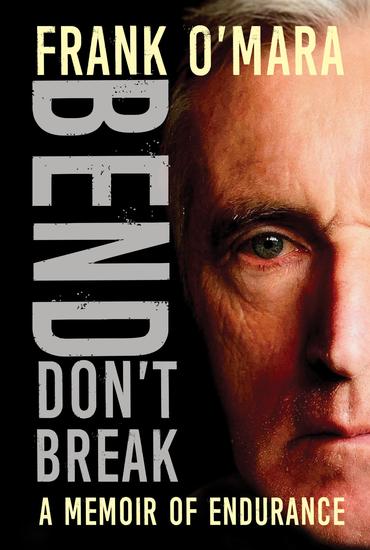
Bend Don't Break - A Memoir of Endurance - cover

Bend Don't Break - A Memoir of Endurance

Frank O'Mara

Publisher: The O'Brien Press

  • 0
  • 0
  • 0

Summary

'Victory is a life well lived or a day enjoyed.'
Limerick man Frank O'Mara had the athletics career most only dream of, competing for Ireland in three Olympic Games and breaking Irish and world records. After his retirement from running, he settled in the US with his family and made his way to the top of the telecoms industry.   
Then at age forty-eight, his life changed forever when he was diagnosed with early onset Parkinson's disease. The progression was rapid, causing severe muscle cramps, tremors, and eventually the inability to walk and at times even speak.
In this inspiring memoir, Frank recounts his battle with Parkinson's. At first in denial, he eventually found the strength that made him successful as an athlete and in business – using determination, and humour to weather the worst phases of the disease. He learned to face each hurdle as he came to it: to bend, but not break.
One man's life-affirming story of facing adversity with grace and courage.
Available since: 02/19/2024.
Print length: 288 pages.

Other books that might interest you

  • Steve Jobs: Visionary Innovator - A Bedtime Biography - cover

    Steve Jobs: Visionary Innovator...

    Jamie Glick

    • 0
    • 0
    • 0
    Steve Jobs: The Architect of the Future 
    The man who didn’t just predict the future—he built it. 
    Steve Jobs was a visionary artist and relentless perfectionist who transformed how we live. This biography explores the brilliant life of the Apple co-founder—from his adoption in Silicon Valley to his status as a global icon who dared to "Think Different."Innovation & RedemptionThe Garage Startup: Birth of Apple with Wozniak, from Apple I to the Apple II.The Exile: Boardroom battles and Jobs’ 1985 departure from his own company.The Wilderness: Founding NeXT and turning Pixar into a global powerhouse.The Return: The greatest comeback in history—saving Apple in 1996.The iEra: Relive the pursuit of "insanely great" products: iPod, iPhone, and iPad. 
    From a restless child to the "1984" Macintosh launch and the smartphone revolution, discover how Jobs’ obsession with design changed everything. 
    Get your copy today and go inside the mind of the man who changed the world.
    Show book
  • The Wayfinder - The Life of the Late Sheikh Zayed bin Sultan Al Nahyan Founding President of the United Arab Emirates - cover

    The Wayfinder - The Life of the...

    Daniel Slack-Smith

    • 0
    • 1
    • 0
    The Wayfinder tells the story of the life of the late Sheikh Zayed bin Sultan Al Nahyan, the founding President of the United Arab Emirates, and explores the key relationships, challenges and events that shaped his outlook on the world. 
    Extensively researched, it takes readers behind the scenes into the delicate negotiations that led to the formation of the UAE in 1971, and the gradual consolidation of the union that occurred in the often turbulent decades that followed the country’s founding. It also examines Sheikh Zayed’s responses to several major world events, including the British withdrawal from the Gulf in 1971, the Iran-Iraq War in the 1980s, the first Gulf War in 1991, the Iraq War in 2003, and the 9/11 terror attacks. 
    The Wayfinder provides new insights into the life and legacy of one of the most transformative yet historically overlooked political leaders of the 20th century, whose words and actions continue to have a lasting influence on the UAE, its leaders and its people.
    Show book
  • The Wine Lover's Daughter - A Memoir - cover

    The Wine Lover's Daughter - A...

    Anne Fadiman

    • 0
    • 0
    • 0
    A new memoir by the celebrated essayist that explores her relationship with her father, a lover of wine In The Wine Lover's Daughter, Anne Fadiman examines-with all her characteristic wit and feeling-her relationship with her father, Clifton Fadiman, a renowned literary critic, editor, and radio host whose greatest love was wine. An appreciation of wine-along with a plummy upper-crust accent, expensive suits, and an encyclopedic knowledge of Western literature-was an essential element of Clifton Fadiman's escape from lower-middle-class Brooklyn to swanky Manhattan. But wine was not just a class-vaulting accessory; it was an object of ardent desire. The Wine Lover's Daughter traces the arc of a man's infatuation from the glass of cheap Graves he drank in Paris in 1927; through the Chateau Lafite-Rothschild 1904 he drank to celebrate his eightieth birthday, when he and the bottle were exactly the same age; to the wines that sustained him in his last years, when he was blind but still buoyed, as always, by hedonism. Wine is the spine of this touching memoir; the life and character of Fadiman's father, along with her relationship with him and her own less ardent relationship with wine, are the flesh. The Wine Lover's Daughter is a poignant exploration of love, ambition, class, family, and the pleasures of the palate by one of our finest essayists.
    Show book
  • Most Famous Silent Film Actors The: The History of the Actors Who Helped Shape Hollywood in the Roaring Twenties - cover

    Most Famous Silent Film Actors...

    Editors Charles River

    • 0
    • 0
    • 0
    Only a select few actors become international stars in their time, but none had as unique a career as Charlie Chaplin. Chaplin was the first true film star, and he managed to do so even when films were still silent. He has been honored with too many awards to count, and the fact that his name remains instantly recognizable nearly a century after his first film is a testament to his influence. Chaplin is known for the singular blend of pathos and humor evinced by his films, and it is not uncommon for audiences to laugh and cry at alternate points of a Chaplin film, a trait that continues to endear audiences even to this day. 
    In the 1920s, the burgeoning movie industry was starting to come into its own, and alongside actor and director Charlie Chaplin, Buster Keaton was at the peak of Hollywood. It’s no surprise that Keaton was so effective in silent films, because he had been practicing comedy in his family’s vaudeville acts as “The Little Boy Who Can’t Be Damaged”, becoming a popular performer by the age of 5. Indeed, his physical form of comedy, which initially involved having his father throwing him around the stage, translated well onto the screen, and some of his slapstick and other comic gags remain legendary even today, in part because Keaton practiced his own stunts.  
    Everything about Rudolph Valentino, from his body to the characters he played, was exotic. His career may have been abbreviated by his premature death at the age of 31, but Valentino popularized the (somewhat racist) stereotype of the “Latin lover” in Hollywood, and even his name was markedly more out of the ordinary than those of other actors. In an era dominated by hyper-masculine actors like Douglas Fairbanks, or comedians such as Charlie Chaplin and Buster Keaton, Valentino had a more ethnic and mysterious appeal, and he was lusted after by women to a degree that remains unsurpassed in the industry.
    Show book
  • Krishna - His Life Story in the Puranas and the Mahabharata - cover

    Krishna - His Life Story in the...

    Wilfried Huchzermeyer

    • 0
    • 0
    • 0
    Krishna is one of the most famous deities of India. In this biography his complete life story is told based on the sources in the Puranas and the Mahabharata. His early time with the Gopis in Vrindavana is dealt with as well as his later role as tribal leader of the Yadavas and spiritual advisor and teacher of the Pandavas. Due to the thorough documentation with numerous references, the book also facilitates further studies in the field of Hindu religion, mythology and Indology.
    Show book
  • Ada Lovelace: The Life and Legacy of the Math Prodigy Who Pioneered Computer Science - cover

    Ada Lovelace: The Life and...

    Charles River Editors

    • 0
    • 0
    • 0
    Although a recent movie revived interest in Alan Turing’s achievements with computing during World War II, Charles Babbage and Ada Lovelace were the first to conceive the notion of a programmable and automatic universal computer, which, on top of its ability to calculate any mathematical equation at an unmatched speed, could also be used for a seemingly infinite number of other applications. In other words, they envisioned the precursor to the modern computer.  
    It was certainly an unusual path for any woman, and she managed to do so before an incredibly premature death. Augusta Ada King, Countess of Lovelace, died in 1852 at the age of 36, but during her short and tumultuous life, she was one of the first to recognize that computers could do far more than complex calculations. This was all the more surprising given that, during her life, no computers existed, and her ideas were based on an implicit understanding of the theoretical work of Charles Babbage, who himself is today recognized as the “Father of the Computer.” What makes her work truly startling is that she did this more than 100 years before the first computer had even been created. But Ada Lovelace was a woman, and in Victorian England, her work was generally either ignored or disparaged - after all, Britons in the Victorian Era assumed that women weren’t mentally equipped to be scientists or mathematicians. For that reason alone, it's likely inevitable that Ada received very little recognition for her work, but on top of that, she wasn’t simply ahead of her time - she was so far ahead that almost no one was able to recognize the importance of what she had done until more than 100 years after her death.  
    Moreover, while countless others benefited from wealthy backgrounds and noble births, Ada was regarded with suspicion by her contemporaries in large part because she was the daughter of the era’s most famous and controversial poet, Lord Byron.
    Show book