Begleiten Sie uns auf eine literarische Weltreise!
Buch zum Bücherregal hinzufügen
Grey
Einen neuen Kommentar schreiben Default profile 50px
Grey
Jetzt das ganze Buch im Abo oder die ersten Seiten gratis lesen!
All characters reduced
History of France from the Earliest Times (Vol 1-6) - Complete Edition - cover

History of France from the Earliest Times (Vol 1-6) - Complete Edition

François Guizot

Übersetzer Robert Black

Verlag: Good Press

  • 0
  • 0
  • 0

Beschreibung

Fran√ßois Guizot's "History of France from the Earliest Times (Vol. 1-6)" offers a comprehensive exploration of France's political, social, and cultural evolution from its origins to the 19th century. Employing a narrative style that marries meticulous research with an engaging prose, Guizot provides readers with deep insights into the forces that have shaped French identity. This ambitious work reflects the burgeoning intellectual climate of 19th-century France, where historical inquiry was becoming a vital tool in understanding national character and destiny, thus placing Guizot in conversation with contemporaries like Tocqueville and Michelet. A prominent historian and politician, Guizot's background as a member of the July Monarchy and his active role in political discourse undoubtedly influenced his scholarly pursuits. His tenure as France's Minister of Education and his advocacy for historical education underscore his belief in the necessity of understanding the past to shape a more informed citizenry. His rich, layered interpretations reflect his commitment to studying France'Äôs heritage and his desire to enlighten his contemporaries about the importance of history. I highly recommend Guizot's "History of France from the Earliest Times" to scholars, historians, and casual readers alike. Its intricate narrative and rigorous analysis provide a valuable perspective on the complexities of French history, making it an essential addition to any historical library.
Verfügbar seit: 18.12.2023.
Drucklänge: 2422 Seiten.

Weitere Bücher, die Sie mögen werden

  • Paging God - Religion in the Halls of Medicine - cover

    Paging God - Religion in the...

    Wendy Cadge

    • 0
    • 0
    • 0
    While the modern science of medicine often seems nothing short of miraculous, religion still plays an important role in the past and present of many hospitals. When three-quarters of Americans believe that God can cure people who have been given little or no chance of survival by their doctors, how do today’s technologically sophisticated health care organizations address spirituality and faith? 
      
    Through a combination of interviews with nurses, doctors, and chaplains across the United States and close observation of their daily routines, Wendy Cadge takes readers inside major academic medical institutions to explore how today’s doctors and hospitals address prayer and other forms of religion and spirituality. From chapels to intensive care units to the morgue, hospital caregivers speak directly in these pages about how religion is part of their daily work in visible and invisible ways. In Paging God: Religion in the Halls of Medicine, Cadge shifts attention away from the ongoing controversy about whether faith and spirituality should play a role in health care and back to the many ways that these powerful forces already function in healthcare today.
    Zum Buch
  • Mothers of The Nation - The Ambiguous Role of Nazi Women in The Third Reich - cover

    Mothers of The Nation - The...

    Davis Truman

    • 0
    • 0
    • 0
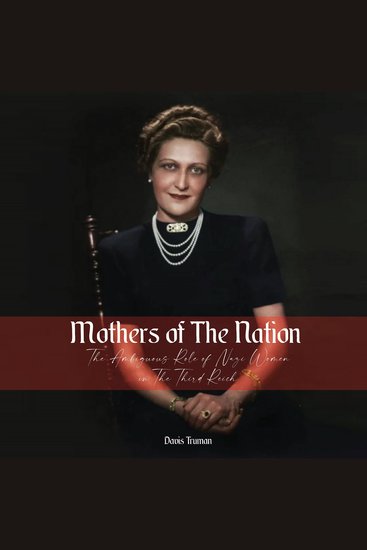
    The Third Reich, which lasted from 1933 to 1945, was a period of extreme political and social upheaval in Germany. The Nazi regime, under the leadership of Adolf Hitler, implemented a range of policies aimed at creating a totalitarian state and achieving their vision of a "pure" Aryan race. During this time, women in Germany experienced significant changes in their social and political status. The Nazi regime held a traditional view of women, emphasizing their role as wives, mothers, and homemakers. Women were expected to support the men in their lives and maintain a pure Aryan bloodline through marriage and childbirth. However, as the war progressed, women's roles in German society began to shift, and many women took on essential roles in the war effort. Despite these changes, women faced many challenges during the Third Reich, and their experiences offered insight into the complex nature of life in Nazi Germany.
    Zum Buch
  • 24 Hours in Ancient Athens - A Day in the Life of the People Who Lived There - cover

    24 Hours in Ancient Athens - A...

    Philip Matyszak

    • 0
    • 0
    • 0
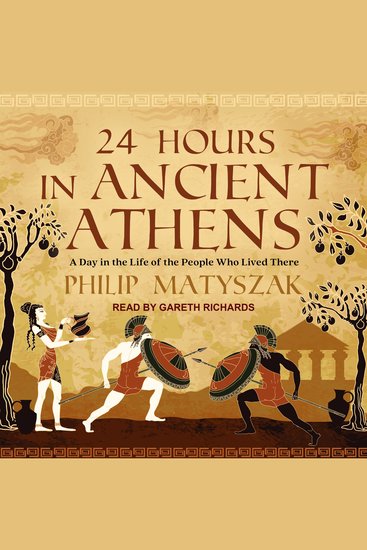
    Athens, 416 BC. A tenuous peace holds. The city-state's political and military might are feared throughout the ancient world; it pushes the boundaries of social, literary, and philosophical experimentation in an era when it has a greater concentration of geniuses per capita than at any other time in human history. Yet even geniuses go to the bathroom, argue with their spouse, and enjoy a drink with friends. 


    Few of the city's other inhabitants enjoy the benefits of such a civilized society, though—as multicultural and progressive as Athens can be, many are barred from citizenship. No, for the average person, life is about making ends meet, whether that be selling fish, guarding the temple, or smuggling lucrative Greek figs. 


    During the course of a day we meet twenty-four Athenians from all strata of society—from the slave-girl to the councilman, the vase painter to the naval commander, the housewife to the hoplite—and get to know what the real Athens was like by spending an hour in their company. We encounter a different one of these characters every chapter, with each chapter forming an hour in the life of the ancient city. We also get to spy on the daily doings of notable Athenians through the eyes of regular people as the city hovers on the brink of the fateful war that will destroy its golden age.
    Zum Buch
  • The Kierkegaard Collection - cover

    The Kierkegaard Collection

    Søren Kierkegaard

    • 0
    • 0
    • 0
    🎧 The Kierkegaard Collection – Søren Kierkegaard 📚 
    Step into the profound world of Søren Kierkegaard, the father of existentialism, with this comprehensive audiobook collection. 🎤 Dive into his reflections on faith, despair, and the human condition, exploring timeless works that challenge both the mind and spirit. 💭 
    Whether you're new to Kierkegaard or a devoted admirer, this collection offers a deep journey through his most influential and thought-provoking writings. 📖✨ 
    🎙️ Listen and explore: 
     ✅ The struggle between faith and reason 
     ✅ The search for truth and selfhood 
     ✅ Insights on anxiety, freedom, and choice 
    A must-have for philosophy enthusiasts and anyone pondering life’s biggest questions. 🤔🔍
    Zum Buch
  • Social Experiments in the 20th Century: The History of the World’s Most Famous and Infamous Psychological Experiments - cover

    Social Experiments in the 20th...

    Editors Charles River

    • 0
    • 0
    • 0
    The human psyche is one of the most complex, unpredictable, enigmatic, and therefore riveting phenomena in existence, one that psychologists have been working on deciphering since the dawn of modern science. To better understand the multifaceted intricacies of human behavior, and to unlock the secrets of the conscious mind and the subconscious, ambitious professionals in the field have conducted numerous groundbreaking – and at times, problematic – psychological experiments. The practice originated with German philosopher Wilhelm Wundt, one of the fathers of modern psychology and the creator of the world's first experimental psychology laboratory at the University of Leipzig. He sought to measure the average speed of thought processes by assigning a range of reaction time tasks to his subjects.  
    	As the nascent, yet fast-developing scientific discipline took hold around the globe, psychological experiments simultaneously diversified. As revolutionary and eye-opening as many of these experiments were, they often danced on the fine line between ethical and unethical. There was, for instance, the now-infamous Little Albert Experiment, conducted at Johns Hopkins University in 1920, in which a nine-month-old infant was deliberately manipulated into developing an irrational fear for the purpose of studying classical conditioning, and the correlation between adult fears and childhood traumas. The Monster Study, carried out at the University of Iowa in 1939, attempted to convert orphans into stutterers, half of whom were subjected to positive reinforcements and the others to negative ones. Then, there was arguably the most notorious psychological experiment in history: the 1971 Stanford Prison Experiment, in which participants were randomly assigned the character of either prisoner or prison guard. That role-playing study quickly spiraled out of control.
    Zum Buch
  • The Shortest History of Ancient Rome - A Millennium of Western Civilization from Kingdom to Republic to Empire--A Retelling for Our Times (The Shortest History Series) - cover

    The Shortest History of Ancient...

    Ross King

    • 0
    • 0
    • 0
    "For who is so indifferent or indolent as not to wish to know by what means the Romans succeeded in subjecting nearly the whole inhabited world to their sole government―a thing unique in history?"―Polybius, second century BCE 
    Ancient Rome gave rise to the Roman Empire, one of history's greatest civilizations. It flourished for roughly five hundred years and, at its height, made up at least twenty percent of the world's population. It left an indelible mark on the world, shaping politics, laws, philosophy, and architecture, and gave us Roman numerals, the calendar, aqueducts, and concrete. Alongside the Greeks, the Romans laid the groundwork for Western civilization. 
    In this fast-paced history, Ross King introduces the emperors and warriors, the madmen and upstarts, and the artists and gladiators responsible for the empire's rise, reign, and ruin. King's vivid narrative offers fresh context for key political and religious events and paints lively portraits of Rome's most formidable and notorious leaders. Spanning over one thousand years of Roman history, The Shortest History of Ancient Rome brings an ancient civilization to vibrant life, elucidating why the Romans still matter to us today.
    Zum Buch