Rejoignez-nous pour un voyage dans le monde des livres!
Ajouter ce livre à l'électronique
Grey
Ecrivez un nouveau commentaire Default profile 50px
Grey
Abonnez-vous pour lire le livre complet ou lisez les premières pages gratuitement!
All characters reduced
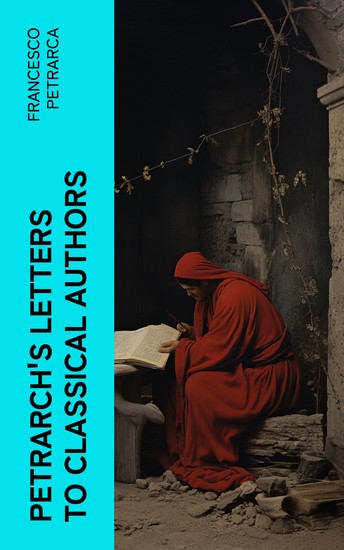
Petrarch's Letters to Classical Authors - cover

Petrarch's Letters to Classical Authors

Francesco Petrarca

Traducteur Mario Emilio Cosenza

Maison d'édition: e-artnow

  • 0
  • 0
  • 0

Synopsis

"Petrarch's Letters to Classical Authors" by Francesco Petrarca (translated by Mario Emilio Cosenza). Published by e-artnow. e-artnow publishes a wide range of titles that encompasses every genre. From well-known classics & literary fiction and non-fiction to forgotten−or yet undiscovered gems−of world literature, we issue the books that need to be read. Each e-artnow edition has been meticulously edited and formatted to boost readability for all e-readers and devices. Our goal is to produce eBooks that are user-friendly and accessible to everyone in a high-quality digital format.
Disponible depuis: 26/11/2023.
Longueur d'impression: 277 pages.

D'autres livres qui pourraient vous intéresser

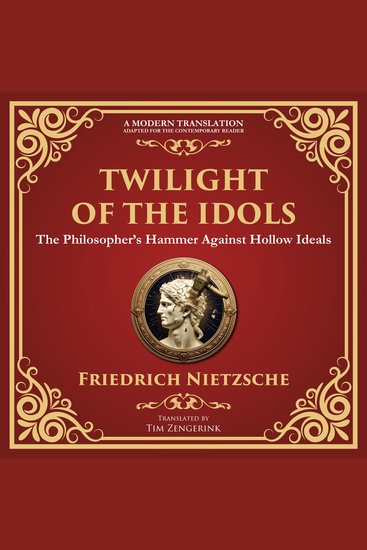
  • Twilight of the Idols - How to Philosophize with a Hammer – A Modern Translation – Adapted for the Contemporary Reader - cover

    Twilight of the Idols - How to...

    Friedrich Nietzsche

    • 0
    • 0
    • 0
    What if the ideas society holds sacred are the very barriers to its progress? How do we break free from the constraints of tradition and embrace the courage to think differently? 
    Twilight of the Idols is Friedrich Nietzsche’s incisive critique of conventional morality, philosophy, and culture. Through sharp aphorisms and fearless analysis, Nietzsche challenges the “idols” of Western thought, including traditional ethics, religion, and the idea of absolute truth. 
    This modern translation adapts Nietzsche’s provocative ideas for contemporary readers, offering clear and accessible insights into his philosophy. Twilight of the Idols is a guide to questioning societal norms, confronting outdated beliefs, and embracing the vitality of life.What You’ll Discover:Challenge Traditional Morality – Understand Nietzsche’s critique of moral values and his call for life-affirming principles.Redefine Truth and Belief – Explore how Nietzsche urges us to question long-held truths and forge our own paths.Philosophy for Modern Challenges – Apply Nietzsche’s ideas to navigate personal and professional complexities with confidence.Inspiration for Self-Empowerment – Learn how Nietzsche’s vision of self-overcoming can help you break free from limitations and achieve greatness. 
    Question outdated beliefs, confront societal idols, and live boldly. 
    Start your journey into Nietzsche’s revolutionary philosophy today. Get your copy now and transform the way you see the world.
    Voir livre
  • A Model Crime - From their pens to your ears genius in every story - cover

    A Model Crime - From their pens...

    William Pett Ridge

    • 0
    • 0
    • 0
    William Pett Ridge was born at Chartham, near Canterbury, Kent, on 22nd April 1859.  
    His family’s resources were certainly limited. His father was a railway porter, and the young Pett Ridge, after schooling in Marden, Kent became a clerk in a railway clearing-house. The hours were long and arduous, but self-improvement was Pett Ridge’s goal.  After working from nine until seven o’clock he would attend evening classes at Birkbeck Literary and Scientific Institute and then to follow his passion; the ambition to write.  He was heavily influenced by Dickens and several critics thought he had the capability to be his successor.  
    From 1891 many of his humourous sketches were published in the St James's Gazette, the Idler, Windsor Magazine and other literary periodicals of the day. 
    Pett Ridge published his first novel in 1895, A Clever Wife. By the advent of his fifth novel, Mord Em'ly, a mere three years later in 1898, his success was obvious.  His writing was written from the perspective of those born with no privilege and relied on his great talent to find humour and sympathy in his portrayal of working class life. 
    Today Pett Ridge and other East End novelists including Arthur Nevinson, Arthur Morrison and Edwin Pugh are being grouped together as the Cockney Novelists.   
    In 1924, Pugh set out his recollections of Pett Ridge from the 1890s: “I see him most clearly, as he was in those days, through a blue haze of tobacco smoke. We used sometimes to travel together from Waterloo to Worcester Park on our way to spend a Saturday afternoon and evening with H. G. Wells. Pett Ridge does not know it, but it was through watching him fill his pipe, as he sat opposite me in a stuffy little railway compartment, that I completed my own education as a smoker... Pett Ridge had a small, dark, rather spiky moustache in those days, and thick, dark, sleek hair which is perhaps not quite so thick or dark, though hardly less sleek nowadays than it was then”. 
    With his success, on the back of his prolific output and commercial success, Pett Ridge gave generously of both time and money to charity. In 1907 he founded the Babies Home at Hoxton.  This was one of several organisations that he supported that had the welfare of children as their mission.  
    His circle considered Pett Ridge to be one of life's natural bachelors. In 1909 they were rather surprised therefore when he married Olga Hentschel.  
    As the 1920’s arrived Pett Ridge added to his popularity with the movies. Four of his books were adapted into films.  
    Pett Ridge now found the peak of his fame had passed. Although he still managed to produce a book a year he was falling out of fashion and favour with the reading public and his popularity declined rapidly.  His canon runs to over sixty novels and short-story collections as well as many pieces for magazines and periodicals. 
    William Pett Ridge died, on 29th September 1930, at his home, Ampthill, Willow Grove, Chislehurst, at the age of 71. 
    He was cremated at West Norwood on 2nd October 1930.
    Voir livre

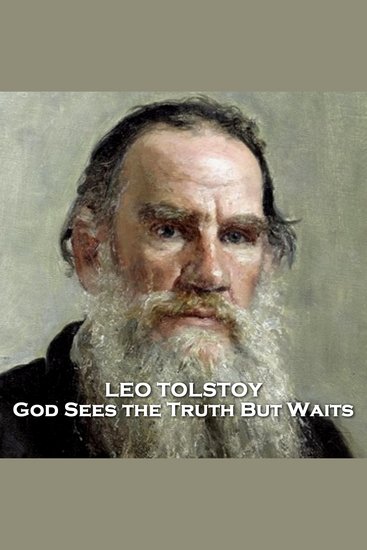
  • God Sees the Truth But Waits - From their pens to your ears genius in every story - cover

    God Sees the Truth But Waits -...

    Leo Tolstoy

    • 0
    • 0
    • 0
    Leo Tolstoy was born in 1828 in the Russian province of Tula to a wealthy noble family. As a child, he had private tutors but he showed little interest in any formal education. When he went to the University of Kazan in 1843 to study oriental languages and law, he left without completing his courses.  Life now was relaxed and idle but with some writing also taking place.  Gambling debts forced an abrupt change of path and he joined the army to fight in the Crimean War.  He was commended for his bravery and promoted but was appalled at the brutality and loss of life.  He recorded these and other earlier experiences in his diaries which formed the basis of several of his works. 
    In 1852 ‘Childhood’ was published to immediate success and was followed by ‘Boyhood’ and ‘Youth’. 
    His experience in the army and the horrors he witnessed resulted in ‘The Cossacks’ in 1862 and the trilogy ‘Sevastopol Tales’. After the war he travelled around Europe, visiting London and Paris and meeting such luminaries as Victor Hugo and Charles Darwin.  
    It was now that Tolstoy began his masterpiece, ‘War and Peace’. Published in 1869 it was an epic work that changed literature. He quickly followed this with ‘Anna Karenina’.  
    These successes made Tolstoy rich and helped him accomplish many of his dreams but also brought problems as he grappled with his faith and the lot of the oppressed poor. These revolutionary views became so popular that the authorities now kept him under surveillance.  
    He led a life of asceticism and vegetarianism and put his socialist ideals into practice by establishing numerous schools for the poor and food programmes. He also believed in giving away his wealth, which caused much discord with his wife.  
    His writing continued to bring forth classics such as ‘The Death of Ivan Ilyich’ and many brilliant and incisive short stories such as ‘How Much Land Does A Man Need’.  
    In 1901 Tolstoy was excommunicated from the Church and controversially deselected for the Nobel Prize for Literature. 
    Whilst undertaking a pilgrimage by train in October 1910 with his daughter Aleksandra he caught pneumonia in the nearby town of Astapovo.  Leo Tolstoy died on November 9th, 1910, he was 82.
    Voir livre
  • Space Crone - cover

    Space Crone

    Ursula K. Le Guin

    • 0
    • 0
    • 0
    Winner of the Locus Award 2024 for Non-Fiction  
     
    Ursula K. Le Guin witnessed and contributed to many of the twentieth century’s rebellions and upheavals, including women’s liberation, the Civil Rights movement and US anti-war and environmental activism. Spanning fifty years of her life and work, Space Crone brings together Le Guin’s writings on feminism and gender for the first time, offering new insights into her imaginative, multispecies feminist consciousness: from its roots in deep ecology and philosophies of non-violence to her self-education about racism and her writing on motherhood and ageing.
    Voir livre
  • Charles Dickens: The Complete Christmas Collection - cover

    Charles Dickens: The Complete...

    Charles Dickens

    • 0
    • 0
    • 0
    This Audiobook contains The Complete Christmas Collections of Charles Dickens:1. A Christmas Carol Start at Chapters 12. A Message From The Sea Start at Chapters 73. Doctor Marigold Start at Chapters 154. Going Into Society Start at Chapters 175. Mrs Lirripers Legacy Start at Chapters 186. Mugby Junction Start at Chapters 217. No Thoroughfare Start at Chapters 258. A Christmas tree Start at Chapters 389. Nobody's Story Start at Chapters 3910. The Child's Story Start at Chapters 4011. The Poor Relation's Story Start at Chapters 4112. The Schoolboy's Story Start at Chapters 4213. What Christmas is as We Grow Older Start at Chapters 4314. Somebodys Luggage Start at Chapters 4415. The Battle of life Start at Chapters 4816. The Chimes Start at Chapters 5417. The Cricket on the Hearth Start at Chapters 6018. The Haunted Man and the Ghosts Bargain Start at Chapters 6619. The Holly Tree Start at Chapters 7220. The Perils Of Certain English Prisoners Start at Chapters 7521. The Seven Poor Travellers Start at Chapters 8022. The Wreck of The Golden Mary Start at Chapters 8323. Tom Tiddlers Ground Start at Chapters 85
    Voir livre
  • Scratched - A Memoir of Perfectionism - cover

    Scratched - A Memoir of...

    Anonyme

    • 0
    • 0
    • 0
    “Reading Scratched gave me the feeling of standing very close to a blazing fire. It is that brilliant, that intense, and one of the finest explorations I know of what it means to be a woman and an artist.”—Sigrid Nunez, author of The Friend and Winner of the National Book Award for Fiction 
    In a bold and brilliant memoir that reinvents the form, the acclaimed author of the novel Museum Pieces and the collection Mendocino Fire explores the ferocious desire for perfection which has shaped her writing life as well as her rich, dramatic, and constantly surprising personal life. 
     
    Scratched is an intimate account of the uses a child, and the adult she becomes, will find for perfectionism and the role it will play in every part of her life. Elizabeth Tallent’s story begins in a hospital in mid-1950s suburban Washington, D.C., when her mother refuses to hold her newborn daughter, shocking behavior that baffles the nurses. Imagining her own mother’s perfectionist ideal at this critical moment, Elizabeth moves back and forth in time, juxtaposing moments in the past with the present in this innovative and spellbinding narrative. 
    Elizabeth traces her journey from her early years in which she perceived herself as “the child whose flaws let disaster into an otherwise perfect family,” to her adulthood, when perfectionism came to affect everything. In the decade between 27 and 37, she publishes five literary books with Knopf and her short stories appear in The New Yorker. But this extraordinary start to her career is followed by twenty-two years of silence. She wrote, or rather published, nothing at all. Why? Scratched is the remarkable response to that question. 
    Elizabeth’s early publications secure her a coveted teaching job at Stanford University. As she toggles between Palo Alto and the Mendocino coast where she lives, raises her son Gabriel, and pursues an important psychoanalysis, Elizabeth grapples with the perfectionism that has always been home to her. Eventually, she finds love and acceptance in the most unlikely place, and finally accepts an “as is” relationship with herself and others.  
    Her final triumph is the writing of this memoir, filled with wit, humor, and heart, and unlike any other you will find. Scratched is a brave book that repeatedly searches for the emotional truth beneath the conventional surface of existence. 
    Supplemental enhancement PDF accompanies the audiobook.
    Voir livre