Rejoignez-nous pour un voyage dans le monde des livres!
Ajouter ce livre à l'électronique
Grey
Ecrivez un nouveau commentaire Default profile 50px
Grey
Abonnez-vous pour lire le livre complet ou lisez les premières pages gratuitement!
All characters reduced
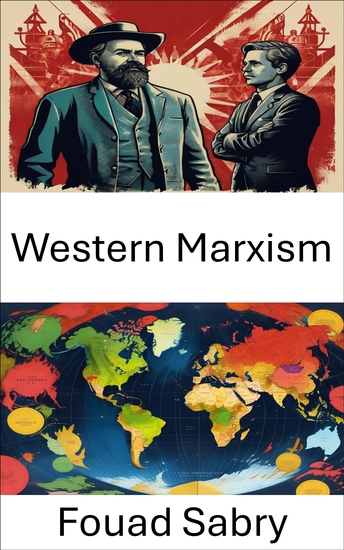
Western Marxism - Redefining Ideologies in Contemporary Thought - cover

Western Marxism - Redefining Ideologies in Contemporary Thought

Fouad Sabry

Maison d'édition: One Billion Knowledgeable

  • 0
  • 0
  • 0

Synopsis

Explore the intricate world of "Western Marxism" in the "Political Science" series. This book delves into the evolution and impact of critical theories in Western societies, providing deep insights into contemporary political thought and social movements. Whether you're a professional, student, or curious reader, "Western Marxism" elevates your understanding of complex ideas.
 
1: Western Marxism - Introduces the origins and key principles distinguishing Western Marxism from its Eastern counterpart.
 
2: Louis Althusser - Analyzes Althusser's contributions, focusing on structuralism and ideology.
 
3: Critique of Dialectical Reason - Examines Sartre's work on dialectics and historical materialism in Western discourse.
 
4: Karl Korsch - Investigates Korsch's revisionist theories and their influence on Western thought.
 
5: Praxis - Explores praxis as a crucial element in Western Marxist thought, linking theory and practice.
 
6: Raya Dunayevskaya - Surveys Dunayevskaya's contributions to Marxist humanism and reinterpretations of Marx.
 
7: Marxist aesthetics - Examines Marxism's influence on Western artistic movements and cultural criticism.
 
8: 20th-century French philosophy - Traces Marxism's impact on French philosophers like Foucault and Derrida.
 
9: Marxist schools of thought - Maps out diverse interpretations within Western Marxism.
 
10: For Marx - Revisits Althusser's work and its implications for understanding Marx.
 
11: Philosophy in the Soviet Union - Analyzes Marxist philosophy's evolution in the Soviet context.
 
12: Main Currents of Marxism - Traverses key intellectual currents within Western Marxism.
 
13: Marxist humanism - Explores the humanist dimensions of Western Marxist thought.
 
14: Young Marx - Examines Marx's early writings and their influence on Western Marxism.
 
15: Economic and Philosophic Manuscripts of 1844 - Analyzes Marx's early explorations of alienation and labor.
 
16: Marxist philosophy - Synthesizes diverse strands of Western Marxist philosophy.
 
17: György Lukács - Investigates Lukács's contributions to Western Marxism, focusing on reification and class consciousness.
 
18: Orthodox Marxism - Examines orthodox Marxism's foundational tenets and their adaptations in Western thought.
 
19: Dialectical materialism - Explores dialectical materialism in Western Marxism, contrasting historical interpretations.
 
20: History and Class Consciousness - Revisits Lukács's work on ideology, consciousness, and revolutionary praxis.
 
21: Outline of Marxism - Provides an overview of key Marxist principles in Western contexts.
 
"Western Marxism" offers essential insights and validations across critical theories, making it a must-have for any library or curriculum. This intellectual journey is key to understanding contemporary political and social dynamics.
Disponible depuis: 14/08/2024.
Longueur d'impression: 229 pages.
D'autres livres qui pourraient vous intéresser

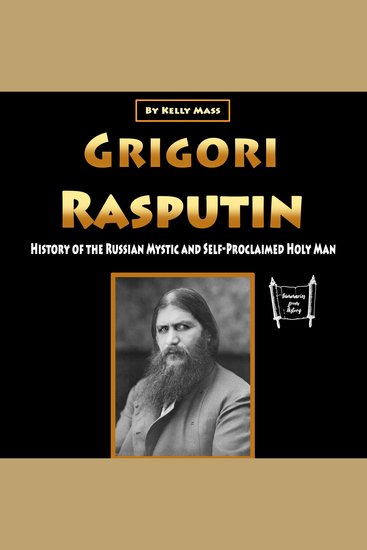
  • Grigori Rasputin - cover

    Grigori Rasputin

    Kelly Mass

    • 0
    • 0
    • 0
    Rasputin, Grigori Yefimovich, was a Russian mystic and self-declared holy man who befriended the family of Nicholas II, Russia's last emperor, and accomplished massive power in late Imperial Russia.Rasputin was born into a peasant family in the Siberian town of Pokrovskoye in Tobolsk Governorate's Tyumensky Uyezd (now Yarkovsky District of Tyumen Oblast). In the year 1897, while on a journey to an abbey, he had a spiritual conversion experience. While he held no official post in the Russian Orthodox Church, he has been referred to as a monk or a "strannik" (wanderer or pilgrim). In the year 1903 or the winter season of 1904-- 1905, he checked out Saint Petersburg, where he drew in certain church and social leaders. In November 1905, he met Emperor Nicholas and Empress Alexandra and ended up being a social figure.Let’s learn more about Grigori Rasputin in this book.
    Voir livre
  • Living Together - Inventing Moral Science - cover

    Living Together - Inventing...

    David Schmitz

    • 0
    • 0
    • 0
    Is moral philosophy more foundational than political theory? It is often assumed to be. David Schmidtz argues that the reverse is true: the question of how to live in a community is more fundamental than questions about how to live. This book questions whether we are getting to the foundations of human morality when we ignore contingent features of communities in which political animals live. 


    Schmidtz contends that theorizing about how to live together should take its cue from contemporary moral philosophy's attempts to go beyond formal theory, and ask which principles have a history of demonstrably being organizing principles of actual thriving communities at their best. Ideals emerging from such research should be a distillation of social scientific insight from observable histories of successful community building. What emerges from ongoing testing in the crucible of life experience will be path-dependent in detail even if not in general outline, partly because any way of life is a response to challenges that are themselves contingent, path dependent, and in flux. 


    Building on this view, Schmidtz argues that justice evolved as a device for grounding peace in the mutual recognition that everyone has their own life to live, and everyone has the right and the responsibility to decide for themselves what to want.
    Voir livre
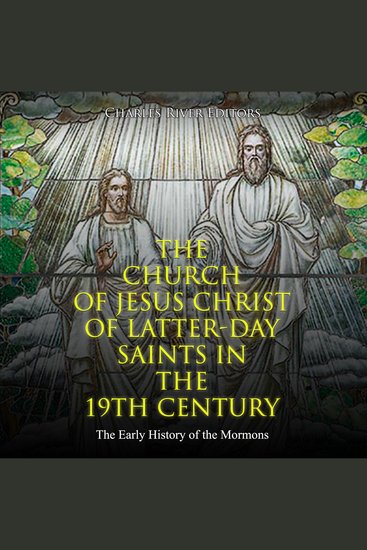
  • Church of Jesus Christ of Latter-day Saints in the 19th Century The: The Early History of the Mormons - cover

    Church of Jesus Christ of...

    Editors Charles River

    • 0
    • 0
    • 0
    Among all the various figures in 19th century America who left controversial legacies, it is hard to find one as influential as Joseph Smith (1805-1844), the founder of The Church of Jesus Christ of Latter-Day Saints, Mormonism, and the Latter-Day Saint movement. Revered as a prophet on the level of Moses by some, reviled as a perpetrator of large-scale fraud by others, what everyone can agree on is that Joseph Smith founded a religious movement that played a crucial role in the settlement of the West, especially in Utah. 
    Smith’s death was one of the catalysts for the Mormons’ great migration to Utah, and today that state and the Mormons are virtually synonymous. To this day, Mormons still form a majority of the population, and members of the Church have prominent political and economic roles. Among the most effective methods by which the Latter-Day Saints attained regional dominance was the flooding of specific areas with a like-minded population of fellow settlers and offspring, subsequently controlling the voting and government institutions through a weighty majority. Such an approach caused alarm in each region to which Mormon settlers emigrated; the church collective had already been evicted from New York and other areas for exercising the tactic. The practice of polygamy within the church may have been socially repugnant to Judaic and Christian denominations, but the schism between Mormonism and other American faiths lay deeper. This theological separatism caused the Mormon community to live apart, except in the pursuit of converts. The church became increasingly perceived as “un-American,” and over time hostile to and dismissive of those living outside the faith. In time, the Mormon belief that its members were the only heirs to the kingdom of God justified the commission of crimes, including murder. The non-Mormon population responded in kind.
    Voir livre
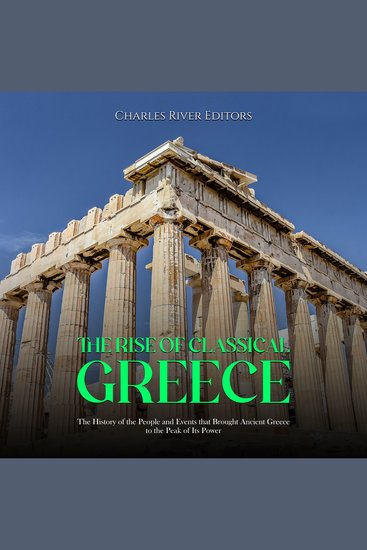
  • Rise of Classical Greece The: The History of the People and Events that Brought Ancient Greece to the Peak of Its Power - cover

    Rise of Classical Greece The:...

    Editors Charles River

    • 0
    • 0
    • 0
    When people think of ancient Greece, images of philosophers such as Plato or Socrates often come to mind, as do great warriors like Pericles and Alexander the Great, but hundreds of years before Athens became a city, a Greek culture flourished and spread its tentacles throughout the western Mediterranean region via trade and warfare. Scholars have termed this pre-Classical Greek culture the Mycenaean culture, which existed from about 2000-1200 B.C., when Greece, along with much of the eastern Mediterranean, was thrust into a centuries long Dark Ages. Before the Mycenaean culture collapsed, it was a vital part of the late Bronze Age Mediterranean system and stood on equal footing with some of the great powers of the region, such as the Egyptians and Hittites. 
    If anything, the collapse of the Mycenaeans was a drawn-out affair, and while the early centuries of the Dark Ages might be seen as a continuation of this trend, even in the worst years, there was a degree of continuity and even some innovations. These changes including the beginnings of the use of iron as an alternative to bronze and some religious practices that continued to be observed. Furthermore, enough remained to form the basis of a recovery in economic, cultural, and artistic aspects of life in the later stage of the era, and in the political sphere, changes necessitated by the collapse in the economic system certainly paved the way for the rise of the polis 
    During the Greek Renaissance of the 8th century the Greek alphabet developed and the earliest surviving Greek literature was composed, while in terms of art and architecture, sculptures and red-figure pottery began. Warfare changed significantly as well when the hoplite became the core infantry. Put simply, none of these developments could have occurred if the basis for these changes had not been secured during what came to be known as the Greek Renaissance.
    Voir livre
  • How to Tell a Story: 7 Easy Steps to Master Storytelling Story Boarding Writing Stories Storyteller & Story Structure - cover

    How to Tell a Story: 7 Easy...

    Jaiden Pemton

    • 0
    • 0
    • 0
    Are you ready to dive into the world of storytelling, but don’t know where to start?  
    Do you feel unclear about how to distinguish and use the elements of the storytelling process? 
    Are you still on the search to tell stories that will stick out to your audience, and have a lasting impact that will be passed on for years to come? 
      
    How to Tell a Story is the guide you need! We will teach you how to tell a story in 7 easy steps. This guide is designed to provide you with all the tools you need in a concise, easy to understand format that will answer all your burning questions and get you on your way to successful storytelling. 
      
    To be a successful storyteller, you have to draw your audience in immediately and keep them engaged throughout the entirety of the story. As the story reaches its end and the conflict has been resolved, you must provide a sense of satisfaction for your audience, as well as a message they can hold onto going forward. 
      
    YOU’LL LEARN:Logistics of each element of storytelling (character development, plot development, setting, point of view, theme, conflict)Common storytelling mistakes to avoidBrainstorming exercises to help you choose a story angleHow to create an emotional experience How to develop a positive story outcomeHow to create a shining moment which will stick with your audienceAnd so much more!  
      
    Whether you're just starting on the journey of storytelling and need to develop a clearer understanding of the elements, or have been at it for a while and are looking for fresh perspectives and tips for further develop how you tell stories, this guide is the companion you need. Let’s get started! 
     
    Voir livre
  • The Poverty of Philosophy - cover

    The Poverty of Philosophy

    Karl Marx

    • 0
    • 1
    • 0
    Marx started work on this book in January 1847, as can be judged from Engel's letter to Marx on January 15, 1847. By the beginning of April 1847, Marx's work was completed in the main and had gone to the press. On June 15, 1847, he wrote a short foreword.Published in Paris and Brussels in 1847, the book was not republished in full during Marx's lifetime. Excerpts from section five of Chapter Two appeared in different years, mostly between 1872 - 1875 in papers such as La Emancipacion, Der Volksstaat, Social-Demokrat, and others. In 1880 Marx attempted to publish the Poverty of Philosophy in the French socialist newspaper L'Égalité, the organ of the French Workers' Party, but only the foreword and section one of Chapter One were published.This translation is from the original 1847 French edition. It has been updated to also include the changes/corrections Marx made in the copy of the book he presented to N. Utina in 1876, as well as the corrections made by Frederick Engels in the second French edition and the German editions of 1885 and 1892. The first English edition of this work was published in 1900 by Twentieth Century Press.
    Voir livre