Begleiten Sie uns auf eine literarische Weltreise!
Buch zum Bücherregal hinzufügen
Grey
Einen neuen Kommentar schreiben Default profile 50px
Grey
Jetzt das ganze Buch im Abo oder die ersten Seiten gratis lesen!
All characters reduced
Spoilt Vote - Unheard Voices The Impact of Dissent in Elections - cover

Spoilt Vote - Unheard Voices The Impact of Dissent in Elections

Fouad Sabry

Verlag: One Billion Knowledgeable

  • 0
  • 0
  • 0

Beschreibung

"Spoilt Vote" is an insightful addition to the "Political Science" series, exploring the deliberate act of spoiling a vote and its significance in democratic processes. Challenging traditional views on voting, this book delves into civic engagement through the lens of abstention, providing essential perspectives for professionals, students, and enthusiasts of political science.
 
Chapters overviews:
 
1: Spoilt Vote - Defines spoiling a vote and its impact on democratic participation.
 
2: Voting - Examines voting’s role in voter choice and democratic legitimacy.
 
3: Voting Machine - Investigates how technology affects voting and the occurrence of spoilt votes.
 
4: Protest Vote - Analyzes using spoilt votes as a form of protest in elections.
 
5: Voter Turnout - Explores the relationship between voter turnout and spoilt votes.
 
6: Absentee Ballot - Examines absentee voting’s impact on spoilt votes.
 
7: Voter-Verified Paper Audit Trail - Highlights the role of paper trails in vote verification.
 
8: Undervote - Investigates the impact of undervoting on electoral outcomes.
 
9: Overvote - Discusses how overvoting affects election integrity.
 
10: Instant-Runoff Voting - Explores alternative voting systems that reduce spoilt votes.
 
11: Bush v. Gore - Analyzes the impact of spoilt votes in historical electoral controversies.
 
12: 2000 US Presidential Election Recount in Florida - Highlights the role of spoilt votes in a key election.
 
13: Electoral System of Australia - Discusses how Australia manages spoilt votes.
 
14: Electoral Fraud - Examines the relationship between electoral fraud and spoilt votes.
 
15: 2004 US Election Voting Controversies - Analyzes controversies around spoilt votes in the 2004 US election.
 
16: Abstention - Compares abstention and spoilt votes as forms of political expression.
 
17: Donkey Vote - Examines donkey voting and its impact on spoilt votes.
 
18: Group Voting Ticket - Discusses group voting and its influence on spoilt votes.
 
19: Optional Preferential Voting - Explores how preferential voting affects spoilt votes.
 
20: Optical Scan Voting System - Investigates optical scan systems’ role in reducing spoilt votes.
 
21: Langer Vote - Explores the Langer vote and its impact on electoral legitimacy.
 
"Spoilt Vote" offers a comprehensive exploration of electoral dynamics and the nuanced role of civic participation. From historical elections to modern voting systems, this book provides the critical insights needed to understand the impact of spoilt votes on democratic processes. Equip yourself with essential knowledge to navigate the complexities of electoral integrity.
Verfügbar seit: 15.10.2024.
Drucklänge: 318 Seiten.
Weitere Bücher, die Sie mögen werden

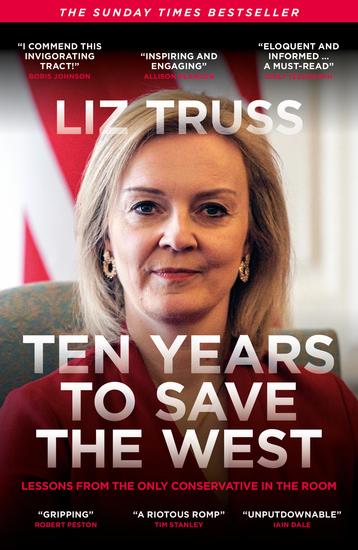
  • Ten Years to Save the West - Lessons from the only conservative in the room - cover

    Ten Years to Save the West -...

    Liz Truss

    • 0
    • 0
    • 0
    'I want to provide a call to action for fellow conservatives who believe in our nation and our way of life and who share my frustration at what has been going wrong with our politics and governance. I want others to heed the warnings of what I saw happening and learn the lessons of the battle I lost.'
    Over the course of a decade as a minister, Liz Truss sought to champion limited government and individual freedom in the face of the left-wing political agenda that frames the debate in so many institutions. Ousted by the establishment but still fighting for conservatism, Truss argues here that the rise of authoritarianism and the adoption of fashionable ideas propagated by the global left give us barely a decade to preserve the economic and cultural freedoms and institutions that the West holds so dear.
    Peppered with newsworthy anecdotes from Truss's time in public life – such as her memorable last meeting with Queen Elizabeth II, her confrontations with the regimes in Moscow and Beijing, her encounters with the Trump administration and her dismay at the political class's attempt to betray Brexit – Ten Years to Save the West is an urgent and impassioned call to conservatives about the radical changes that are needed for us to save the West. Ignore her warning at your peril.
    Zum Buch
  • Underserved - Harnessing the Principles of Lincoln's Vision for Reconstruction for Today's Forgotten Communities - cover

    Underserved - Harnessing the...

    Ja'Ron Smith, Chris Pilkerton

    • 0
    • 0
    • 0
    Underserved is a tangible blueprint for today's conservative who understands the need for a new and viable political plan of action—one that addresses the needs of the underserved communities that make up these United States of America. Utilizing the concept of the "Party of Lincoln" and the conservative principles set forth over centuries by the movement's most recognized thought leaders, Underserved examines President Lincoln's intentions for Reconstruction, President Grant's aims to implement that vision, and Frederick Douglass's influence on both men in the process. Underserved brings home the very real impact of a failed plan that has had negative implications on modern America, whether conservative, moderate, or liberal. 


    With this historical plan as the linchpin for creating a framework that services disenfranchised communities, authors Ja'Ron K. Smith and Chris Pilkerton challenge conservative policy makers to employ strategies that mirror those originally presented over 160 years ago, while making necessary concessions for its modern audience. 


    From education and workforce development to criminal justice reform and healthcare disparities, Underserved makes a bold statement about what is necessary to see a change in the current state of affairs and presents a realistic action plan to make it happen.
    Zum Buch
  • SEAL Tactics for Winning Leadership - Elevate Your Leadership Skills! Access dynamic audio lessons crafted for ultimate SEAL tactics success - cover

    SEAL Tactics for Winning...

    Clayton Merrick

    • 0
    • 0
    • 0
    SEAL Tactics for Winning Leadership   
    ⭐⭐Simplified Guide & Explanations Included⭐⭐ 
    Are you looking to progress in your career and solidify your leadership knowledge? 
    Seeking a comprehensive guide that provides all necessary elements to master SEAL tactics for winning leadership? 
    Your search ends here! 
    This guide serves as your definitive companion for deepening your understanding, applying your skills, and engaging in hands-on exercises. With this, you're geared for success. 
    Updated for current leadership strategies. 
    Key features of this enriched guide: 
    - Profound insights about SEAL Tactics for Winning Leadership Certification 
    - Detailed explanation of SEAL leadership strategies 
    - Fruitful strategies for leadership preparation and tackling challenges 
    Our guide distinguishes itself through comprehensive coverage, which is essential for your success. Concepts aren't merely skimmed; they are delved into with precision. 
    Please note that this guide is not affiliated with any official SEAL entity and is purely an independent resource for your benefit. 
    Designed with a clear structure and easy-to-understand language, our SEAL Tactics for Winning Leadership Guide ensures smooth transitions between topics. Say goodbye to dense jargon and welcome clear, precise, and technically accurate content. 
    So, why wait? Click the BUY NOW button, secure your guide, and begin your journey to mastering SEAL tactics for winning leadership success!
    Zum Buch
  • The Capital Dilemma - Balancing Growth and Fairness in the Free Market - cover

    The Capital Dilemma - Balancing...

    Arlo Holders

    • 0
    • 0
    • 0
    The free market and capitalism have long been foundational principles of economic systems around the world. At their core, they represent the idea that economic decisions, such as production, investment, and distribution, should be guided by the forces of supply and demand with minimal government intervention. In a truly free market, goods and services are exchanged in a competitive environment where prices are determined by the collective actions of consumers and producers rather than by central planning or state control. 
    Capitalism, as an economic system, emerged during the early stages of the Industrial Revolution in the 18th and 19th centuries. Its roots trace back even further to mercantilist policies that prioritized trade and accumulation of wealth through colonial ventures. Over time, capitalism has evolved from simple trade systems to complex global markets, driven by the desire for profit and the expansion of economic activities. The central tenet of capitalism is the pursuit of self-interest, where individuals or organizations are motivated to create wealth by competing in open markets. 
    This system offers several advantages, such as fostering innovation, encouraging efficiency, and enabling individuals to accumulate wealth. By allowing businesses and entrepreneurs to operate freely, capitalism encourages the creation of new products, services, and technologies, which in turn leads to economic growth and increased standards of living. Moreover, the competitive nature of free markets ensures that resources are allocated efficiently, as businesses strive to meet consumer demands at the lowest cost.
    Zum Buch
  • Who’s the Devil: the Other or the West? - cover

    Who’s the Devil: the Other or...

    Régis Le Sommier

    • 0
    • 0
    • 0
    “We’ve spent nine trillion dollars bombing the Middle East like mad. We’ve sown death there, including our own. And what has it gotten us? Nothing.” 
    Donald Trump, November 1, 2024. 
    
    The figure of the devil has haunted our collective consciousness since the dawn of time. He structures our societies, whether religious or secular. Sometimes, the devil has been a friend before being “demonized”. Sometimes, by force of circumstance, he has become an ally. And sometimes, the devil must be eliminated to mask or even justify the errors of our societies. 
    Thus, during the Second World War, we made a pact with Stalin to bring down a devil deemed more formidable: Hitler. In Northern Ireland, the British ended up talking with representatives of the IRA, just as the French did a few years earlier with the Algerian FLN. Recently, the Americans negotiated with the Taliban, another terrorist group, before handing over the keys to Afghanistan. Saddam Hussein, Muammar Gaddafi and Bashar al-Assad were friends of the West before the latter precipitated their downfall, even if it meant causing chaos in their countries.
    Régis Le Sommier has been a war reporter for 27 years, and has himself interviewed a number of infamous figures. His aim is to revisit the concept of the devil in the light of recent and current conflicts, in order to answer one question: shouldn’t the deleterious consequences of geopolitics conducted “in the name of good” lead us to doubt the validity of the actions taken by our governments, even today, against those they like to refer to as devils?
    Zum Buch
  • Democracy - A Guided Tour - cover

    Democracy - A Guided Tour

    Jason Brennan

    • 0
    • 0
    • 0
    In this short, accessible book, leading democratic theorist Jason Brennan guides listeners through the evolution of the concept of democracy and actual democratic practice over time to help them understand the foundations of this longstanding and yet newly fragile political system. 


    In his wide-ranging tour of the concept, Brennan will examine what democracy meant to the Greeks who first developed the concept before examining how it changed throughout European and later Western history. This will open up rich and perplexing questions. Over time, democracy shifted from being a fringe idea to the gold standard of political institutions: how did this change occur? How did the question of who counts as part of the ruling "people" change over time? As monarchies were replaced with democracies, what did theorists think the promises and perils of republican democracy were? How did actual democratic practice change the debates? What have we learned about how democracy functions—and in some cases, doesn't function—and what does this mean for future philosophical or empirical work? Brennan provides a curated, guided tour of the most important arguments for and against democracy, looking through the core values of stability, virtue, wisdom, freedom, and equality. The goal is to help listeners understand what is really at stake in democracy and its alternatives.
    Zum Buch