Begleiten Sie uns auf eine literarische Weltreise!
Buch zum Bücherregal hinzufügen
Grey
Einen neuen Kommentar schreiben Default profile 50px
Grey
Jetzt das ganze Buch im Abo oder die ersten Seiten gratis lesen!
All characters reduced
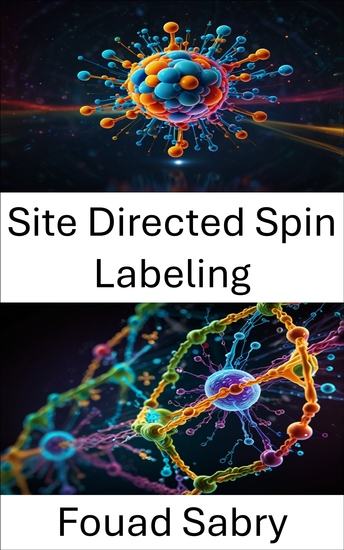
Site Directed Spin Labeling - Advances in Molecular Imaging and Protein Structure Analysis - cover

Site Directed Spin Labeling - Advances in Molecular Imaging and Protein Structure Analysis

Fouad Sabry

Verlag: One Billion Knowledgeable

  • 0
  • 0
  • 0

Beschreibung

Molecular Biophysics is at the heart of understanding the complexities of biological systems at a molecular level. Fouad Sabry’s "Site Directed Spin Labeling" delves deep into the cuttingedge techniques used to probe protein structure and function, an essential part of biophysics that is integral for breakthroughs in scientific and medical fields. This book provides an indepth exploration of SiteDirected Spin Labeling (SDSL) and its applications in structural biology, offering essential insights for professionals, undergraduate and graduate students, and enthusiasts in the field
 
Sitedirected spin labeling-This chapter introduces SDSL, a powerful technique for studying molecular structures and dynamics of proteins using spin labels
 
Structural biology-It explores how SDSL aids in determining the 3D structures of proteins and their interaction with other molecules
 
Thylakoid-This chapter focuses on the structure of thylakoid membranes and their role in photosynthesis, analyzed using SDSL
 
Bacteriorhodopsin-The unique structural features of bacteriorhodopsin, a protein involved in light energy conversion, are examined with SDSL
 
Alphasynuclein-SDSL is applied to understand the structural and functional aspects of alphasynuclein, a protein linked to neurodegenerative diseases
 
Photosystem-This chapter discusses the photosystem, essential for photosynthesis, and how SDSL reveals its molecular structure and functioning
 
Photosystem I-An indepth look at Photosystem I, a key player in the light reactions of photosynthesis, analyzed using spin labeling techniques
 
Spin label-The fundamentals of spin labeling, including its chemical properties and applications in molecular biophysics, are explored here
 
Oxygenevolving complex-This chapter highlights the role of SDSL in studying the oxygenevolving complex, central to photosynthetic water splitting
 
Electron paramagnetic resonance-The application of electron paramagnetic resonance (EPR) spectroscopy in conjunction with SDSL for studying molecular dynamics is explained
 
Cytochrome b6f complex-The Cytochrome b6f complex, a crucial component of photosynthetic electron transport, is analyzed with SDSL techniques
 
Lightharvesting complexes of green plants-This chapter investigates how lightharvesting complexes function in plants, with spin labeling used to reveal their structure
 
Photosynthetic reaction centre-It provides an understanding of the photosynthetic reaction center, a key protein complex in energy conversion in photosynthesis
 
Wayne L. Hubbell-This chapter honors Wayne L. Hubbell’s contributions to SDSL and its application in studying molecular dynamics
 
Harden M. McConnell-Harden M. McConnell’s work on the application of SDSL in molecular biology and biochemistry is discussed
 
Photosynthetic reaction centre protein family-The evolution and molecular structure of the photosynthetic reaction center protein family are explored here
 
Albumin transport function analysis by EPR spectroscopy-The chapter describes how EPR spectroscopy and SDSL are applied to study albumin's transport function in cells
 
Wolfgang Lubitz-Wolfgang Lubitz’s groundbreaking work in biophysics, particularly on the oxygenevolving complex, is covered in this chapter
 
R. David Britt-This chapter focuses on R. David Britt’s research, contributing significantly to understanding electron transfer in photosynthesis
 
Daniella Goldfarb-The chapter highlights Daniella Goldfarb’s work in applying SDSL to investigate protein structures and interactions
 
Enrica Bordignon-Enrica Bordignon’s research in biophysics, particularly using EPR spectroscopy in SDSL, is featured in this final chapter
Verfügbar seit: 17.03.2025.
Drucklänge: 197 Seiten.

Weitere Bücher, die Sie mögen werden

  • Mind Magic: Neuroscience Secrets to Transform Your Life - cover

    Mind Magic: Neuroscience Secrets...

    Elias Northwood

    • 0
    • 0
    • 0
    Mind Magic: Neuroscience Secrets to Transform Your Life 
    ⭐⭐ Simplified Audio Guide ⭐⭐ 
    Are you aiming to advance in your personal and professional life using the latest insights from neuroscience? 
    Searching for a comprehensive resource that provides all the necessary knowledge to harness the power of your mind? 
    Your search ends here! 
    This audiobook serves as your definitive companion for deepening your understanding, applying practical skills, and engaging in transformative exercises. With this, you're geared for a life-changing experience. 
    Updated for the latest neuroscience research and insights. 
    Key features of this enriched guide: 
    - Profound insights into neuroscience principles 
    - Detailed explanations of how to use neuroscience to transform your life 
    - Effective strategies for personal growth and development 
    Our guide distinguishes itself through comprehensive coverage, which is essential for your success. Concepts aren't merely skimmed; they are delved into with precision. 
    Please note that this guide is not affiliated with any official neuroscience entity and is purely an independent resource for your benefit. 
    Designed with a clear structure and easy-to-understand language, our guide ensures smooth transitions between topics. Say goodbye to dense jargon and welcome clear, precise, and technically accurate content. 
    So, why wait? Click the BUY NOW button, secure your guide, and begin your journey to transforming your life with neuroscience insights today!
    Zum Buch
  • For the Bees - A Handbook for Happy Beekeeping - cover

    For the Bees - A Handbook for...

    Tara Dawn Chapman

    • 0
    • 0
    • 0
    A handbook for what to expect the first year of beekeeping and beyond. 


    The path to becoming a successful beekeeper begins with a deep understanding of the bees themselves. Taking an approach that is both holistic and practical, Tara Chapman, founder and operator of Austin's beloved Two Hives Honey, begins with a primer on honey bee biology and nutrition as well as beehive architecture. (Did you ever wonder why honey combs are composed of tiny hexagons?) A little scientific knowledge goes a long way: a beekeeper who understands how these fascinating creatures work will be better equipped to recognize a particular colony's needs, make sound decisions when the unexpected happens, and adapt their care regimen to changing conditions. Moving beyond the basics, Chapman shows potential beekeepers how to spot pests and diseases; manage swarms (those bees aren't angry; they're just looking for a good home); and, of course, harvest delicious homegrown honey. 


    Imbued with the joy of the beekeeping journey, For the Bees provides practical visual explanations through appealing illustrations, that, alongside Chapman's own stories from the bee yard, share the charms of these essential insects.
    Zum Buch
  • Daily Mindfulness: A 31 day guide to mental clarity - cover

    Daily Mindfulness: A 31 day...

    Alex Smith-Powell

    • 0
    • 0
    • 0
    Transform your daily experience with bite-sized, science-backed mindfulness practices designed for real life. This 31-day guide builds your foundation through practical exercises that fit naturally into your day - no meditation cushion required... 
    Each day brings a concise 2-minute read or listen, grounded in research and focused on understanding your mind's natural patterns. Learn to navigate stress, improve focus, and build resilience through small, strategic changes that add up to lasting mental clarity. 
    Perfect for busy professionals, skeptics, and anyone seeking evidence-based methods for a clearer mind, this guide strips away the mysticism and delivers straightforward techniques you can start using immediately. Whether you're commuting, taking a break, or winding down for sleep, these daily insights help you build a more mindful approach to life, one day at a time.
    Zum Buch
  • Teen Skincare: The Ultimate No Nonsense Guide - cover

    Teen Skincare: The Ultimate No...

    Caroline Hirons

    • 0
    • 0
    • 0
    What every teen needs to feel great in their own skin 
    Being a teenager is hard – add in hormones, breakouts and an avalanche of dubious TikTok ‘hacks’, and it’s easy to feel overwhelmed. 
    In Teen Skincare, world-renowned skincare expert Caroline Hirons cuts through the noise to deliver the straight-talking, no-nonsense guide every teen – and their parents – have been waiting for. Forget filters, fads and viral gimmicks; this book is all about real, effective advice that genuinely works. 
    Packed with easy-to-follow routines, myth-busting insights and budget-friendly product recommendations, Teen Skincare helps teens take control of their skin with confidence. Inclusive, practical and relatable, with advice from a dermatologist, nutritionist and psychologist, this book goes beyond the surface, offering a holistic approach to self-care and well-being. 
    No unrealistic promises, no pressure to be perfect. Just the tools, tips and truths every teen needs to feel great in their own skin and build habits that last a lifetime.Say goodbye to confusion and hello to confidence. 
    In Teen Skincare, Caroline Hirons, the Sunday Times bestselling author, provides a comprehensive guide to beauty and grooming, focusing on healthy habits and self-help techniques. The book, a non-fiction masterpiece, offers a holistic approach to dermatology, emphasising the importance of body image and healthy living. 
    For fans of Lauryn Evarts (The Skinny Confidential's Get the F*ck Out of the Sun), Alice Hart-Davis (The Tweakments Guide), Sophie Fletcher (Mindful Menopause), Bobbi Brown (Bobbi Brown Beauty from the Inside Out), and Mireille Guiliano (French Women Don't Get Facelifts). 
    HarperCollins 2025
    Zum Buch
  • Birding for Boomers - And Everyone Else Brave Enough to Embrace the World’s Most Rewarding and Frustrating Activity - cover

    Birding for Boomers - And...

    Sneed B. Collard III

    • 0
    • 0
    • 0
    Birding for Boomers is a friendly, accessible, and humorous guide to discovering the joys of bird watching. Beginning birders of all ages will get answers to every question they may have, like which birds like feeders, the difference between a finch and a flicker, or which birding app to use. The guide also helps birders plan everything from local explorations to exciting "bird-cations." 


    Late-bloomer birders will appreciate Collard's personal insights and tips for overcoming aging-related challenges such as physical handicaps, poor hearing, or failing eyesight. Additional sections cover sharing birding with others and contributing to community science, habitat stewardship, and bird conservation. 


    Appealing and lighthearted, Birding for Boomers will help a wide range of listeners overcome any doubts and get started with watching, understanding, and conserving our feathered friends.
    Zum Buch
  • Beyond the Stars - The Role of Dark Energy in Cosmic Expansion - cover

    Beyond the Stars - The Role of...

    Dirk Fallon

    • 0
    • 0
    • 0
    The concept of cosmic expansion is foundational to modern cosmology. It describes the way the universe has been stretching out over time, with galaxies moving away from each other. This phenomenon was first observed in the early 20th century by astronomer Edwin Hubble, who discovered that distant galaxies were receding from the Earth. The further a galaxy was, the faster it seemed to move away. This led to the realization that the universe itself was expanding, not just galaxies moving within a static space. The discovery was groundbreaking because it suggested that the universe had a beginning—a moment when all matter and energy were concentrated in a singular point. This insight laid the groundwork for the Big Bang theory, which proposes that the universe began from an incredibly hot and dense state and has been expanding ever since. 
    Before this discovery, the prevailing belief in astronomy was that the universe was static, neither expanding nor contracting. However, Hubble’s findings, supported by the work of other scientists like Alexander Friedmann and Georges Lemaître, showed that space itself was expanding. This meant that the fabric of the universe was stretching, causing galaxies to drift apart over time. Understanding cosmic expansion was pivotal not only in explaining the universe’s origins but also in forming the basis for further study of its evolution and ultimate fate. 
    At first, scientists believed that the expansion of the universe would eventually slow down due to gravitational pull. This expectation, however, changed with the discovery of dark energy in the late 20th century. Observations of distant supernovae revealed that not only was the universe expanding, but this expansion was actually accelerating. This unexpected acceleration is attributed to dark energy, a mysterious force that permeates space and drives galaxies apart at an ever-increasing rate.
    Zum Buch