Rejoignez-nous pour un voyage dans le monde des livres!
Ajouter ce livre à l'électronique
Grey
Ecrivez un nouveau commentaire Default profile 50px
Grey
Abonnez-vous pour lire le livre complet ou lisez les premières pages gratuitement!
All characters reduced
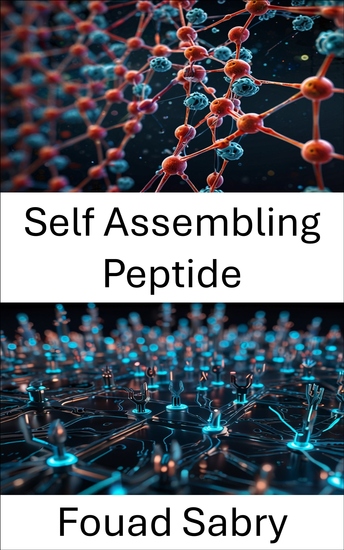
Self Assembling Peptide - Advancing Nanostructures for Targeted Molecular Assembly - cover

Self Assembling Peptide - Advancing Nanostructures for Targeted Molecular Assembly

Fouad Sabry

Maison d'édition: One Billion Knowledgeable

  • 0
  • 0
  • 0

Synopsis

Explore the fascinating world of nanotechnology with "Self Assembling Peptide," a comprehensive resource that dives deep into the molecular advancements shaping the future. This book provides a thorough examination of selfassembling peptides and their significance in the broader context of nanotechnology. Whether you're a professional in the field, an undergraduate or graduate student, or a hobbyist eager to understand the intersection of biology and technology, this book is the perfect guide to understanding cuttingedge innovations.
 
Chapters Brief Overview:
 
1: Selfassembling peptide: Discover the mechanisms behind peptide selfassembly, a crucial foundation for nanotechnology.
 
2: Nanotechnology: Gain an essential overview of nanotechnology's vast potential and applications in various fields.
 
3: Nanostructure: Explore how nanostructures are designed and manipulated to create innovative materials and devices.
 
4: Protein structure: Delve into the structure of proteins, key components in understanding molecular design at the nano scale.
 
5: DNA nanotechnology: Learn how DNA is used to build nanoscale machines, contributing to breakthroughs in biotechnology.
 
6: Biointerface: Understand the importance of biointerfaces in linking biological systems with engineered nanomaterials.
 
7: Nanomaterials: Study the properties and uses of nanomaterials that enable the development of novel technologies.
 
8: Jiban Jyoti Panda: Explore the groundbreaking work of Jiban Jyoti Panda in the context of selfassembling peptides and nanotechnology.
 
9: Peptide: Get a detailed look at peptides, their structure, and their role in selfassembly processes within nanotechnology.
 
10: M13 bacteriophage: Examine the potential of M13 bacteriophages in nanotechnology, particularly in the creation of nanomachines.
 
11: Coiled coil: Investigate the unique properties of coiled coils in peptide selfassembly and their nanotechnological applications.
 
12: Peptide therapeutics: Learn about the role of peptides in the development of therapeutic strategies and targeted drug delivery.
 
13: Hydrophobin: Delve into hydrophobins, natural proteins with remarkable properties that hold promise for nanotechnology applications.
 
14: Nanoelectronics: Uncover the exciting world of nanoelectronics and its implications for the future of computing and communication.
 
15: Shuguang Zhang: Gain insights into the innovative work of Shuguang Zhang in peptide and nanotechnology research.
 
16: Directed assembly of micro and nanostructures: Learn about the techniques used for the precise assembly of nanostructures for various applications.
 
17: Selfassembly of nanoparticles: Explore how nanoparticles are guided to selfassemble into functional structures for nanodevices.
 
18: Proteolipid: Discover proteolipids and their role in creating stable, functional structures for nanotechnology.
 
19: Hydrogel: Study hydrogels, their properties, and how they contribute to biomedical applications in nanotechnology.
 
20: Peptide amphiphile: Understand the role of peptide amphiphiles in the design of selfassembling nanomaterials for diverse uses.
 
21: Hydrophobicity scales: Learn about hydrophobicity scales and their importance in predicting molecular interactions for nanomaterial design.
 
This book is a mustread for anyone interested in the multidisciplinary field of nanotechnology. With a focus on selfassembling peptides, it provides invaluable insights into the cuttingedge techniques that are revolutionizing industries such as healthcare, electronics, and materials science. Take the next step in understanding how molecular structures can be designed to create new materials and devices for the future.
Disponible depuis: 19/03/2025.
Longueur d'impression: 269 pages.
D'autres livres qui pourraient vous intéresser

  • A Rare Recording of Astrophysicist Carl Sagan Discussing Planet Earth - cover

    A Rare Recording of...

    Carl Sagan

    • 0
    • 0
    • 0
    Carl Edward Sagan (November 9, 1934 - December 20, 1996), born in Brooklyn, NY, was an American astronomer and astrophysicist. His best-known scientific contribution was his research on the possibility of extraterrestrial life, including experimental demonstration of the production of amino acids from basic chemicals by exposure to light. He assembled the first physical messages sent into space, the Pioneer plaque and the Voyager Golden Record, which were universal messages that could potentially be understood by any extraterrestrial intelligence that might find them. The following is a lecture Sagan gave in 1977 during which he discussed the place, scale and geometry of earth--the third planet from the Sun, formed 4.5 billion years ago--in our solar system.
    Voir livre
  • Why the Dose Matters - Assessing the Health Risk of Exposure to Toxicants - cover

    Why the Dose Matters - Assessing...

    Urs A. Boelsterli

    • 0
    • 0
    • 0
    Each day we are exposed to a myriad of natural and human-made chemicals in our food, drinking water, air, soil, at home or at the workplace—pesticide residues, food additives, drugs, household products—but how can we gauge the human health risk posed by these chemicals? Should we believe the somber headlines that depict a serious threat for humans and the environment, or should we follow the reassuring voices of others who claim that the angst is totally unfounded? 


    Why the Dose Matters: Assessing the Health Risk of Exposure to Toxicants uses a rational, science-based approach to explain in plain language that a quantitative view is key for understanding and predicting potentially toxic effects of chemicals. 


    Key Features: 


    ● Explains the basics of toxicology in easily understandable terms. 


    ● Includes numerous examples. 


    ● Clears up common misconceptions and dispels myths. 


    ● Provides take-home messages for each chapter.
    Voir livre
  • Mathematical Devotionals - cover

    Mathematical Devotionals

    Dale K. Hathaway

    • 0
    • 0
    • 0
    Mathematical Devotionals serves as a guide to connect Christianity with mathematics through a year's worth of inspirational prompts and meditations. Each devotional is self-contained, including scripture verses and an image. The devotionals fall into four categories: 
    · Mathematical connections to Christianity 
    · Semi-biographical devotionals of Christian mathematicians 
    · Devotionals based on quotes either by a mathematician or about mathematics 
    · A few devotionals using logical reasoning as a form of Christian apologetics 
    The devotionals use mathematics, statistics, computer science, and even occasionally stray into the other science areas to provide a variety of engaging connections to Christianity. The book is intended to show how mathematics and other scientific fields should be considered complementary to Christianity rather than adversarial. 
    About the Author: 
    Dale K. Hathaway has been a faculty member, department chair, and recently selected as the Associate Dean for the Martin D. Walker School of STEM (Science, Technology, Engineering, and Mathematics) at Olivet Nazarene University in Bourbonnais, Illinois 
    since 1989. He received his Ph.D. in Mathematics from Boston University. Mathematically, he has a passion for finding and presenting "Birthday Problem" connections and, as a Christian, he loves finding ways to connect his profession with his faith.
    Voir livre
  • The Decision Intelligence Handbook - Practical Steps for Evidence-Based Decisions in a Complex World - cover

    The Decision Intelligence...

    L. Y. Pratt, N.E. Malcolm

    • 0
    • 0
    • 0
    Decision intelligence (DI) has been widely named as a top technology trend for several years, and Gartner reports that more than a third of large organizations are adopting it. Some even say that DI is the next step in the evolution of AI. Many software vendors offer DI solutions today, as they help organizations implement their evidence-based or data-driven decision strategies. 


    But until now, there has been little practical guidance for organizations to formalize decision making and integrate their decisions with data. 


    With this book, authors L. Y. Pratt and N. E. Malcolm fill this gap. They present a step-by-step method for integrating technology into decisions that bridge from actions to desired outcomes, with a focus on systems that act in an advisory, human-in-the-loop capacity to decision makers. 


    This handbook addresses three widespread data-driven decision-making problems: 


    ● How can decision makers use data and technology to ensure desired outcomes? 


    ● How can technology teams communicate effectively with decision makers to maximize the return on their data and technology investments? 


    ● How can organizational decision makers assess and improve their decisions over time?
    Voir livre
  • Bad Nature - How Rat Control Shapes Human and Nonhuman Worlds - cover

    Bad Nature - How Rat Control...

    Andrew McCumber

    • 0
    • 0
    • 0
    Offers insights into the social and cultural implications of humans’ relationships with rats and the natural world. Apart from the occasional pet owner who has rats, most people regard rats as disease-carrying nocturnal pests, scurrying around dumpsters and dragging slices of pizza through New York City subways. Since rats are seemingly omnipresent in human life, why do we harbor such negative feelings about them, and why are they among the creatures most frequently targeted for systematic extermination?In Bad Nature, sociologist Andrew McCumber draws out the cultural underpinnings of rat extermination across three countries and two continents. Drawing from ethnographic, interview, and textual data from the frigid prairie of Alberta, Canada; the heart of downtown Los Angeles, California; and the iconic Galápagos Islands of Ecuador, McCumber studies how humans have sought to suppress and exterminate rat populations in a variety of environmental, social, and political situations. He shows how, in these disparate locations, rat control is a social practice that draws and clarifies the spatial and symbolic boundaries between “good” and “bad” forms of nature. Rats are near the bottom of a symbolic hierarchy of species that places human life at the top, companion animals and majestic wildlife just below them, and the “invasive species” that call for systematic extermination at the very bottom. This hierarchy of living things that places rats at the bottom, McCumber argues, mirrors human systems of social inequalities and power dynamics.  Both original and engaging, Bad Nature urges readers to consider, when charting a just and sustainable future, where will the rats be placed in the worlds we envision?
    Voir livre
  • Under Alien Skies - A Sightseer's Guide to the Universe - cover

    Under Alien Skies - A...

    Philip Plait PhD

    • 0
    • 0
    • 0
    A rip-roaring tour of the cosmos with the Bad Astronomer, revealing the sky as never seen before―from everywhere but Earth. 
     
    How would Saturn’s rings look from a spaceship sailing just above them? If you were falling into a black hole, what’s the last thing you’d see before your spaghettification? What would it be like to visit the faraway places we currently experience only through high-powered telescopes and robotic emissaries? Faster-than-light travel may never be invented, but we can still take the scenic route through the universe with renowned astronomer and science communicator Philip Plait. 
     
    On this lively, immersive adventure through the cosmos, Plait draws ingeniously on the latest scientific research to transport readers to ten spectacular sites, from our own familiar Moon to the outer reaches of our solar system and far beyond. Whether strolling through a dust storm under Mars’ butterscotch sky, witnessing the birth of a star, or getting dizzy in a technicolor nebula, Plait is an illuminating, entertaining guide to the most otherworldly views in our universe.
    Voir livre