Begleiten Sie uns auf eine literarische Weltreise!
Buch zum Bücherregal hinzufügen
Grey
Einen neuen Kommentar schreiben Default profile 50px
Grey
Jetzt das ganze Buch im Abo oder die ersten Seiten gratis lesen!
All characters reduced
Right of Revolution - Power Dynamics and Popular Uprisings Redefining Governance in Modern Societies - cover

Right of Revolution - Power Dynamics and Popular Uprisings Redefining Governance in Modern Societies

Fouad Sabry

Verlag: One Billion Knowledgeable

  • 0
  • 0
  • 0

Beschreibung

Introduction:
 
Explore the profound concept of the "Right of Revolution" in this essential Political Science work. This book delves into historical precedents and modern applications of justified resistance against oppressive regimes, examining the legal, moral, and political implications. Whether you're a professional, student, or enthusiast, uncover the complexities of this principle that shapes societies globally.
 
Chapter Brief Overviews:
 
1. Right of Revolution: Foundations and evolution of the Right of Revolution.
 
2. Constitution: Constitutions as safeguards and enablers of revolutionary rights.
 
3. Divine Right of Kings: Popular sovereignty vs. outdated divine right doctrine.
 
4. Kentucky and Virginia Resolutions: State nullification as resistance to federal overreach.
 
5. Bill of Rights 1689: English liberties' role in constitutionalism and rule of law.
 
6. Social Contract: Breaches of the social contract as a basis for revolution.
 
7. Jacobins: French Revolution's radical phase and ideological roots.
 
8. Tyrant: Defining tyranny across history and cultures.
 
9. Natural Rights and Legal Rights: Inherent vs. legal rights in justifying resistance.
 
10. Tyranny of the Majority: Dangers of majority rule suppressing minority rights.
 
11. Popular Sovereignty: The people's role in legitimizing revolutions.
 
12. Fundamental Laws of England: English legal principles shaping modern constitutionalism.
 
13. Two Treatises of Government: Locke's ideas on legitimate governance and revolution.
 
14. Consent of the Governed: Government authority derived from the governed's consent.
 
15. Constitution of Argentina: Argentina's constitutional evolution and revolutionary legitimacy.
 
16. Constitution of Armenia: Contrasting constitutional approaches to governance.
 
17. Popular Sovereignty in the United States: U.S. concept's influence on revolutionary thought.
 
18. Constitution of East Timor: Post-colonial constitutions and independence struggles.
 
19. Philosophy of Human Rights: Human rights' role in justifying revolutionary resistance.
 
20. Insurrectionist Theory: Theoretical frameworks for justified revolutionary action.
 
21. Right to Resist: Contemporary debates on resisting oppressive regimes.
 
Conclusion:
 
These diverse topics converge to illuminate the enduring struggle for liberty and justice, empowering readers to grasp the complexities of revolutionary thought and action in today's world.
Verfügbar seit: 04.09.2024.
Drucklänge: 269 Seiten.


Weitere Bücher, die Sie mögen werden

  • The Santa Muerte - The Healer Protector and Guide to the Afterlife - cover

    The Santa Muerte - The Healer...

    Kelly Mass

    • 0
    • 0
    • 0
    The cult image, female divine being, and folk saint Nuestra Seora de la Santa Muerte (Spanish meaning: Our Woman of the Holy Death) is a cult image, female divine being, and folk saint in Mexican Neopaganism and folk Catholicism. 
    Her worshippers relate her with healing, security, and safe delivery to the afterlife simply because she's a personification of death. In spite of condemnation from Catholic Church leaders and, more just recently, evangelical movements, her following has grown substantially since the start of the twenty-first century. 
    Santa Muerte, who was initially portrayed as a male character, is now generally illustrated as a skeletal female figure dressed in a long cape and clutching several things, most typically a scythe and a world. 
    Let’s take a look at what she means or meant to people in Mexico, and what we can learn about it.
    Zum Buch
  • Mass Supervision - Probation Parole and the Illusion of Safety and Freedom - cover

    Mass Supervision - Probation...

    Vincent Schiraldi

    • 0
    • 0
    • 0
    We've heard a lot in recent years about the nearly 2.1 million people incarcerated in American prisons and jails. But what about the approximately four million more who are on probation and parole—monitored by the state at great expense and at risk of being sent to prison at the whim of a probation or parole officer for the least imaginable infraction? 


    Vincent Schiraldi was New York City probation commissioner under Mayor Bloomberg, supervising a system charged with monitoring 30,000 people on a daily basis. In Mass Supervision, he combines firsthand experience with deep research on the inadequately explored practices of probation and parole, to illustrate how these forms of state supervision have strayed from their original goal of providing constructive and rehabilitative alternatives to prison. They have become instead, Schiraldi argues, a "recidivism trap" for people trying to lead productive lives in the wake of a criminal conviction. 


    Schiraldi offers the first full and up-to-date account of these two key aspects of our criminal justice system, showing that these practices increase incarceration, have little impact on crime rates, and needlessly disrupt countless lives. Ultimately, he argues that they should be dramatically downsized or even abolished completely.
    Zum Buch
  • Olmecs - One of the Earliest Mesoamerican Civilizations We Know - cover

    Olmecs - One of the Earliest...

    Kelly Mass

    • 0
    • 0
    • 0
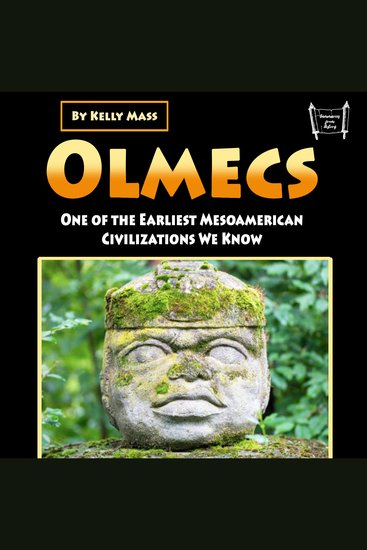
    The Olmecs are often regarded as the first significant civilization in Mesoamerica, a region that includes parts of modern-day Mexico and Central America. They emerged in the tropical lowlands of what is now the Mexican states of Veracruz and Tabasco, following a gradual development in the Soconusco region. It is believed that the Olmecs were influenced by neighboring cultures, particularly the Mokaya and Mixe–Zoque tribes, who inhabited the areas around them. These early interactions may have played a role in shaping Olmec society, laying the foundation for their eventual rise as one of the most influential cultures in Mesoamerican history. 
    The Olmecs flourished during the formative period of Mesoamerican civilization, which lasted from approximately 1500 BCE to 400 BCE. The early phase of Olmec culture began around 1600 BCE, with the establishment of their first major center at San Lorenzo Tenochtitlán, located in the southeastern Veracruz region near the coast. While pre-Olmec cultures had been developing in the region since around 2500 BCE, it was by 1600 BCE that the Olmecs began to solidify their cultural and political dominance in the region. They are considered the earliest of the Mesoamerican civilizations, and their cultural achievements and innovations would influence many of the civilizations that followed, including the Maya, Zapotec, and Aztec.
    Zum Buch
  • Christian Relics and the Arma Christi: The History of the Medieval Search for Relics Related to the Passion of Christ - cover

    Christian Relics and the Arma...

    Editors Charles River

    • 0
    • 0
    • 0
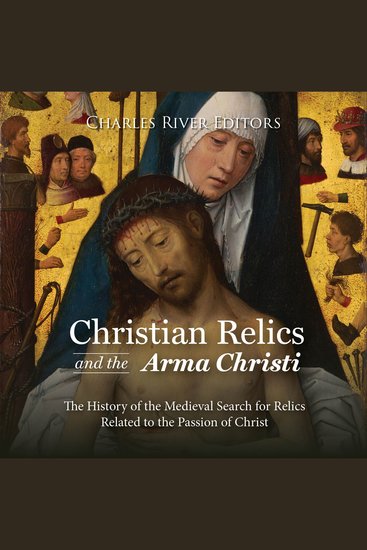
    Holy relics can be found in many different religions, whether Christian, pagan, Hindu, or Buddhist. A relic is defined as something directly associated with a revered saint, teacher, ancestor, or some miraculous manifestation of deity in the material world. A relic and a reliquary are two types of sacramental tools. A reliquary is a container or box for a relic, allowing it to be displayed to the public and thus transfer its powers to magical and liturgical works. There is another definition of a relic: anything that would be a miraculous manifestation of a deity in the material world. In Christianity, there are countless numbers of relics, most of them being associated with Jesus Christ. 
    In the early years of Christianity, it was forbidden to move and share the remains of saints and martyrs, and they were protected so that their final resting places, such as catacombs and cemeteries, remained intact. The earliest recorded Christian relics, specifically the bones and ashes of martyrs, date from the 2nd century. 200 years later, St. Ambrose and others set out to dig up the corpses and honor them. At that time, it was considered that every holy body could be dismembered and divided among the faithful to worship it. The remains of corpses sometimes came into someone else's hands as a gift, and sometimes they were stolen. At one point, the demand for holy bodies was such that bodyguards were assigned to dying saints to prevent their bodies from being dismembered after death. 
    The veneration of the relics of saints was so common among the faithful because they believed saints in Heaven interceded for believers on Earth. As a result, numerous healings and miracles were attributed to the relics, and many stories and myths about miracles arose from these beliefs. By word of mouth, the stories spread among the faithful, and finally, they were recorded in books.
    Zum Buch
  • Harriet Beecher Stowe: A short biography - 5 Minutes: Short on time - long on info! - cover

    Harriet Beecher Stowe: A short...

    5 Minutes, 5 Minute Biographies,...

    • 0
    • 0
    • 0
    Harriet Beecher-Stowe, fighter for emancipation and novelist: Life and works in a short biography! Everything you need to know, brief and concise. Infotainment, education and entertainment at its best!
    Zum Buch
  • EPICURUS and THE PLEASANT LIFE - A Philosophy of Nature - cover

    EPICURUS and THE PLEASANT LIFE -...

    Haris Dimitriadis

    • 0
    • 0
    • 0
    Welcome, seekers of truth! 
    This 619-page book intends to reintroduce pleasure as an innate guide to living a healthy and happy life—a simple yet powerful assertion based on empirical data, which stands up to the strictest scrutiny. 
    Along this journey, we will explore evidence throughout the historical evolution of philosophy up to the time of Epicurus, the ancient Greek philosopher who laid the foundations for a philosophy of nature. More specifically, it's the only philosophy that distinguishes pleasure as the inherent human guide to a healthy and happy life. 
    Author Haris Dimitriadis spent 15 years fervently researching the ancient Greek philosopher's teachings, a journey that he believes radically improved his worldview. In this detailed study, the author proposes that fear of pleasure characterizes contemporary society. Dimitriadis writes with open-hearted enthusiasm for his subject and believes that Epicurean philosophy has the power to change lives. With determination and perseverance, you too will find the happiness to which you are entitled. All the "goods" required for happiness are present in the natural world yet regularly overlooked or unappreciated. 
    This book is a labor of love, a vehicle by which to share my personal experience with you. Despite its technocratic nature, it is undeniably a deposition of my soul, brimming with emotion, pleasure, and pain throughout my quest for joy. I am pleased to present an empirically sound, well-documented philosophy of life that serves as a refreshing alternative to the prevailing idealistic culture. 
    And now, the caveat: happiness is indeed a choice. You are privileged to find it out through the lines of this book.
    Zum Buch