Begleiten Sie uns auf eine literarische Weltreise!
Buch zum Bücherregal hinzufügen
Grey
Einen neuen Kommentar schreiben Default profile 50px
Grey
Jetzt das ganze Buch im Abo oder die ersten Seiten gratis lesen!
All characters reduced
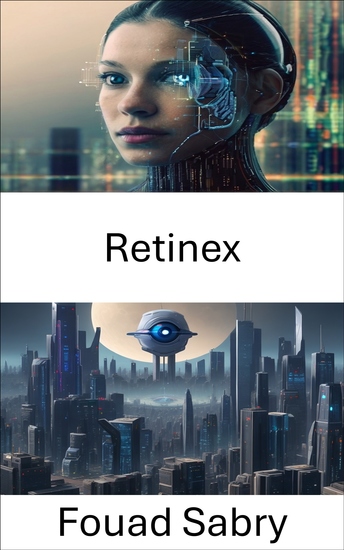
Retinex - Unveiling the Secrets of Computational Vision with Retinex - cover

Retinex - Unveiling the Secrets of Computational Vision with Retinex

Fouad Sabry

Verlag: One Billion Knowledgeable

  • 0
  • 0
  • 0

Beschreibung

What is Retinex
 
Color constancy is an example of subjective constancy and a feature of the human color perception system which ensures that the perceived color of objects remains relatively constant under varying illumination conditions. A green apple for instance looks green to us at midday, when the main illumination is white sunlight, and also at sunset, when the main illumination is red. This helps us identify objects.
 
How you will benefit
 
(I) Insights, and validations about the following topics:
 
Chapter 1: Color Constancy
 
Chapter 2: Color
 
Chapter 3: Color Vision
 
Chapter 4: Visual System
 
Chapter 5: Chromatic Adaptation
 
Chapter 6: Afterimage
 
Chapter 7: Trichromacy
 
Chapter 8: Cone Cell
 
Chapter 9: Visual Acuity
 
Chapter 10: Opponent Process
 
(II) Answering the public top questions about retinex.
 
(III) Real world examples for the usage of retinex in many fields.
 
Who this book is for
 
Professionals, undergraduate and graduate students, enthusiasts, hobbyists, and those who want to go beyond basic knowledge or information for any kind of Retinex.
Verfügbar seit: 28.04.2024.
Drucklänge: 96 Seiten.

Weitere Bücher, die Sie mögen werden

  • Fundamentals of Quantum Mechanics - Basic Principles and Concepts - cover

    Fundamentals of Quantum...

    Mark Hedges

    • 0
    • 0
    • 0
    Quantum mechanics is a fundamental branch of physics that describes the behavior of matter and energy at the smallest scales, such as atoms and subatomic particles. Unlike classical mechanics, which governs macroscopic objects, quantum mechanics introduces concepts that challenge our everyday intuition, including wave-particle duality, superposition, and uncertainty. These principles form the foundation of modern physics and have led to numerous technological advancements, including semiconductors, lasers, and quantum computing. 
    The origins of quantum mechanics can be traced back to the early 20th century when classical physics failed to explain certain experimental observations. One of the earliest challenges was black-body radiation, which classical theories could not accurately describe. Max Planck introduced the idea of quantized energy levels, proposing that energy is emitted and absorbed in discrete packets called "quanta." This marked the birth of quantum theory. Soon after, Albert Einstein extended this idea by explaining the photoelectric effect, demonstrating that light itself behaves as both a particle and a wave. This dual nature of light and matter became one of the defining principles of quantum mechanics.
    Zum Buch
  • Environmental Science - Challenges and Solutions for a Healthier Planet - cover

    Environmental Science -...

    Jeron Iris

    • 0
    • 0
    • 0
    Environmental Science is an interdisciplinary field that integrates various scientific disciplines to study the natural world and the impact of human activities on it. This branch of science explores the complex interactions between living organisms, their physical surroundings, and the broader ecosystems they form. The primary goal of environmental science is to understand how natural systems function, identify environmental problems, and develop strategies for addressing these issues. 
      
    At its core, environmental science seeks to answer fundamental questions about the earth's resources, how they are used, and how human actions influence the balance of ecosystems. It draws from biology, chemistry, physics, geology, and social sciences to provide a comprehensive understanding of the environment. For example, ecology, the study of living organisms and their relationships to each other and their surroundings, is a central component of environmental science. By examining the dynamics of ecosystems, scientists can assess the health of the environment and predict the effects of human activities such as urbanization, deforestation, and pollution. 
    One of the primary focuses of environmental science is resource management. As the global population continues to grow, the demand for natural resources such as water, energy, and food increases. Environmental scientists work to ensure that these resources are used sustainably, balancing the needs of current populations with the preservation of resources for future generations. This includes studying renewable resources, such as solar and wind energy, and nonrenewable resources, like fossil fuels, to understand their availability and impact on the environment.
    Zum Buch
  • Back to the Moon - The Next Giant Leap for Humankind - cover

    Back to the Moon - The Next...

    Joseph Silk

    • 0
    • 0
    • 0
    Just over half a century since Neil Armstrong first stepped foot on the lunar surface, a new space race to the Moon is well underway and rapidly gaining momentum. Laying out a vision for the next fifty years, Back to the Moon is astrophysicist Joseph Silk's persuasive and impassioned case for putting scientific discovery at the forefront of lunar exploration. 


    The Moon offers opportunities beyond our wildest imaginings, and plans to return are rapidly gaining momentum around the world. NASA aims to build a habitable orbiting space station to coordinate lunar development and exploration, while European and Chinese space agencies are planning lunar villages and the mining of precious resources dwindling here on Earth. Powerful international and commercial interests are driving the race to revisit the Moon, but lunar infrastructures could also open breathtaking vistas onto the cosmos. Silk describes how the colonization of the Moon could usher in a thrilling new age of scientific exploration, and lays out what the next fifty years of lunar science might look like. With lunar telescopes of unprecedented size situated in permanently dark polar craters and on the far side of the Moon, we could finally be poised to answer some of the most profound questions confronting humankind, including whether we are alone in the Universe and what our cosmic origins are.
    Zum Buch
  • Healing Grounds - Climate Justice and the Deep Roots of Regenerative Farming - cover

    Healing Grounds - Climate...

    Liz Carlisle

    • 0
    • 0
    • 0
    A powerful movement is happening in farming—farmers are reconnecting with their roots to fight climate change. 


    In Healing Grounds, Liz Carlisle tells the stories of Indigenous, Black, Latinx, and Asian American farmers who are reviving their ancestors' methods of growing food—techniques long suppressed by the industrial food system. These farmers are restoring native prairies, nurturing beneficial fungi, and enriching soil health. While feeding their communities and revitalizing cultural ties to land, they are steadily stitching ecosystems back together and repairing the natural carbon cycle. This is the true regenerative agriculture—not merely a set of technical tricks for storing CO2 in the ground, but a holistic approach that values diversity in both plants and people. 


    Cultivating this kind of regenerative farming will require reckoning with our nation's agricultural history—a history marked by discrimination and displacement. And it will ultimately require dismantling power structures that have blocked many farmers of color from owning land or building wealth. 


    By coming together to restore these farmlands, we can not only heal our planet, we can heal our communities.
    Zum Buch
  • Cosmic Alchemy - The Science Behind Dark Matter and Dark Energy - cover

    Cosmic Alchemy - The Science...

    Dirk Fallon

    • 0
    • 0
    • 0
    The cosmos, a vast and mysterious expanse, has captivated the human imagination for centuries. From ancient civilizations gazing at the stars to modern scientists peering through telescopes, the desire to understand the universe and our place within it has been a constant driving force in our pursuit of knowledge. In this chapter, we begin our journey into the cosmos, exploring its origin, structure, and the fundamental forces that shape it. 
    The origin of the universe is a topic that has intrigued scientists and philosophers alike. According to the widely accepted Big Bang theory, the universe began as an incredibly dense and hot point around 13.8 billion years ago. This singularity rapidly expanded, and over time, matter cooled, forming the stars, galaxies, and other cosmic structures we observe today. The formation of the universe marks the beginning of everything we know—space, time, and energy. As the universe continues to expand, we are left with the challenge of understanding its past and predicting its future. 
    Gravity is one of the most important forces in the cosmos. It governs the motion of celestial bodies, from the smallest particles to the largest galaxies. Gravity pulls objects together, and it is responsible for the formation of stars, planets, and galaxies. The force of gravity also plays a crucial role in shaping the universe on a cosmic scale, influencing the way matter is distributed and the way galaxies cluster together. Without gravity, the universe as we know it would not exist. It is the force that holds everything together, from the Earth we live on to the farthest reaches of space.
    Zum Buch
  • Living the Technology Revolution - How life has changed since I was a kid - cover

    Living the Technology Revolution...

    Martin K. Ettington

    • 0
    • 0
    • 0
    This isn't a book filled with dry timelines or technical blueprints of the digital revolution. Instead, it's a firsthand journey—my journey—through one of the most astonishing transformations in human history: the rise of personal computing and the dawn of the digital age. 
    I was born in November 1955, at a time when the word “computer” was barely whispered outside of military labs and universities. My earliest memories include a bulky black-and-white television with rabbit-ear antennas, broadcasting a single channel. That flickering screen was my first encounter with electronic media—a far cry from the high-definition, touch-responsive world we live in now. 
    Over the decades, my path as an engineer and software developer placed me squarely in the midst of this technological upheaval. I didn’t just watch the future arrive—I helped build it, one line of code and one innovation at a time. 
    This book is a personal time capsule—a chronicle of what it was really like to live through the shift from analog to digital, from typewriters to tablets, from rotary phones to the infinite power in our pockets today. If you're a younger reader curious about how we got here, or someone who remembers the glow of vacuum tubes and the clack of punch cards, I invite you to walk with me through the decades. 
    You may be surprised by how far we’ve come—and how much we’ve forgotten along the way. 
    Many of the chapters are identified with the years or periods of time where these changes occurred.
    Zum Buch