Begleiten Sie uns auf eine literarische Weltreise!
Buch zum Bücherregal hinzufügen
Grey
Einen neuen Kommentar schreiben Default profile 50px
Grey
Jetzt das ganze Buch im Abo oder die ersten Seiten gratis lesen!
All characters reduced
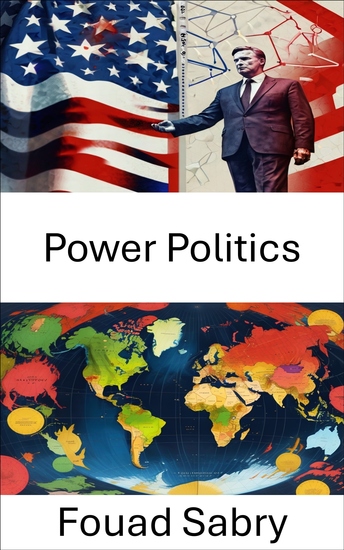
Power Politics - Mastering Influence and Strategy in Modern Governance - cover

Power Politics - Mastering Influence and Strategy in Modern Governance

Fouad Sabry

Verlag: One Billion Knowledgeable

  • 0
  • 0
  • 0

Beschreibung

Discover Power Politics, a critical addition to the Political Science series. This book explores political power dynamics, how power is gained, exercised, and its influence on governance and international relations. Suitable for professionals, students, and enthusiasts, it enhances your understanding of key political concepts and their real-world applications.
 
1: Power Politics: Defining power politics and its impact on political theory and practice.
 
2: Neorealism: Explore how states seek power and security in an anarchic global system.
 
3: Realpolitik: Focuses on pragmatic, strategic politics over ideological concerns.
 
4: International Relations: Power’s influence on nation interactions—cooperation or conflict.
 
5: Hard Power: Use of military and economic force to influence other states.
 
6: Power in IR: Examines political, economic, and military power dimensions.
 
7: National Security: Understand strategies to protect nations from external threats.
 
8: Proxy War: States using third parties in conflicts to achieve objectives.
 
9: Deterrence Theory: Prevent aggression via the potential for retaliatory force.
 
10: National Interest: How state interests drive foreign policy and behavior.
 
11: Fourth-Generation Warfare: Warfare with irregular tactics and non-state actors.
 
12: Collective Security: Maintaining peace through international cooperation.
 
13: Realism in IR: Power and national interest as drivers of international politics.
 
14: Cyberwarfare: Implications of cyber conflicts for national and global security.
 
15: Wolfowitz Doctrine: U.S. foreign policy strategy with global political impacts.
 
16: English School IR Theory: Focuses on international society, norms, and institutions.
 
17: Foreign Internal Defense: Strategies for stabilizing and defending nations from within.
 
18: Hybrid Warfare: Combines conventional and unconventional warfare tactics.
 
19: Chinese Information Warfare: China’s strategic use of information in conflicts.
 
20: International Trade & Security: Links between economic exchanges and state security.
 
21: Political Warfare: Political tactics aimed at influencing and undermining adversaries.
 
Power Politics offers critical insights into these topics, making it a key resource for understanding modern political power. It equips readers with knowledge of today's power structures and international relations.
Verfügbar seit: 08.10.2024.
Drucklänge: 299 Seiten.

Weitere Bücher, die Sie mögen werden

  • The Myths of the Maya - Cosmic Legends and Sacred Rituals - cover

    The Myths of the Maya - Cosmic...

    Julia Blacksmith

    • 0
    • 0
    • 0
    The Maya civilization, one of the most sophisticated and enduring cultures of Mesoamerica, flourished for thousands of years, leaving behind a rich legacy of myth, ritual, and cosmic understanding. Their world was deeply interconnected with the supernatural, where gods, spirits, and celestial forces played vital roles in everyday life. Through sacred texts, oral traditions, and intricate ceremonial practices, the Maya passed down their myths—stories that explained the origins of the universe, the struggles of gods and heroes, and the sacred cycles of time. These legends were not merely tales; they formed the foundation of their spiritual and societal structures, influencing everything from kingship to agriculture.  
    At the heart of Maya society was a profound connection between myth and ritual. Unlike many cultures that viewed myths as separate from daily life, the Maya saw them as living forces that required constant renewal through ceremonies, sacrifices, and offerings. Bloodletting, a sacred act performed by rulers and priests, was believed to nourish the gods and maintain cosmic balance. Grand pyramids and temple complexes, aligned with celestial events, served as sacred theaters where rituals reenacted the struggles of deities, ensuring harmony between the human and divine realms. The famous Popol Vuh, often regarded as the Maya "Book of Creation," recounts the epic journey of the Hero Twins as they navigate the treacherous underworld, triumphing over the forces of chaos and death. This myth, like many others, reflected the Maya’s deep understanding of duality, rebirth, and the cosmic order.  
    Deciphering Maya mythology has been a long and complex journey, shaped by archaeological discoveries, linguistic breakthroughs, and the resilience of indigenous communities.
    Zum Buch
  • The Psychology of Human Behavior - Analyze People Read Body Language Increase Your Emotional Intelligence and Improve Your Social Skills - cover

    The Psychology of Human Behavior...

    David Carnick

    • 0
    • 0
    • 0
    Do you struggle to understand what people are really thinking or feeling?
     
    - Do you replay conversations in your head, trying to decode what you missed?
     
    - Do your emotions take over at the worst possible moments?
     
    - Do you feel a step behind in social situations or unsure how to react?
     
    - Do you keep repeating habits you wish you could finally change?
     
    If this sounds familiar, I want you to know this: you are not alone. You want clarity, confidence, and a deeper understanding of human behavior, including your own. And you can get there.
     
    Now imagine for a moment what it would feel like to:
     
    - Understand the real meaning behind tone and expression
     
    - Stay calm and steady even when pressure rises
     
    - Sense hidden intentions through subtle behavior
     
    - Build habits that support who you want to become
     
    - Walk into any room feeling grounded and aware
     
    - Navigate conversations with ease instead of anxiety
     
    - Recognize your own patterns the moment they appear
     
    - Connect with people more naturally and deeply
     
    Inside this book you will discover:
     
    - How behavior, emotion, and environment shape every choice you make
     
    - How to read posture, gestures, and micro-expressions with clarity
     
    - What drives your emotional reactions and how to take control of them
     
    - The psychology of habits and how to rebuild them from within
     
    - The personality patterns that explain how people think and act
     
    - Ethical influence, persuasion cues, and how to spot manipulation
     
    - Practical ways to improve communication and connection
     
    - Identity-based strategies for real, sustainable transformation
     
    Your journey toward sharper perception, stronger emotional control, and deeper human understanding starts today.
    Zum Buch
  • Toxic Parents - The Ultimate Guide - Recognizing Understanding and Recovering From Narcissistic Parents This book includes: Emotionally Immature Parents Narcissistic Mothers and Fathers - cover

    Toxic Parents - The Ultimate...

    Dr. Theresa J. Covert

    • 0
    • 0
    • 0
    Do you think your parent might be toxic? 
    Do you feel like you are living with the consequences of bad parenting? 
    Does your parent still treat you badly even though you are an adult? 
    Maybe your parent has passed away, but you still seem to be affected by them and cant stop thinking about the way they treated you. 
    This Book is for anyone that has been in a toxic relationship with their parent and would like to learn more about it and learn how to recover from the long lasting traumatic effects that the relationship has left you with. 
    Does any of this sound familiar to you? 
    As a child: 
    - You felt like you were never good enough 
    - Your parent seemed wrapped up in themselves and their life 
    - Your parent didn’t seem to care about your feelings 
    - Your parent was very controlling and manipulative 
    - You were made to feel bad or wrong if you got upset 
    - Your needs weren’t met 
    As an adult: 
    - You still feel like you are not good enough 
    - You feel confused, anxious, sad in your relationship with your parent 
    - Your parent puts you down, and never celebrates your achievements 
    - You sometimes doubt your perception of events, and feel like you are going crazy 
    - You struggle to make decisions and have difficulty trusting your gut instinct or intuition 
    - Your parent is very critical, manipulative, controlling and tells lies 
    - They still don’t seem to care about your feelings or your needs 
    - You feel like you are the one parenting them 
    Maybe you have tried to talk to your partner or friends about your relationship, but they don’t understand either and they may even tell you that it couldn’t have been that bad.This Audiobook is for you if you have been in a toxic relationship with your parent and you just want to make sense of it and make some changes.
    Zum Buch
  • Being the Change - A Guide for Advocates and Activists on Staying Healthy Inspired and Driven - cover

    Being the Change - A Guide for...

    PhD Jamie Sue Bodenlos, PhD Dara...

    • 0
    • 0
    • 0
    Being the Change is written for activists who work in organizations with social missions, and those who are involved in social change outside of their jobs. This book is a practical guide that helps listeners maintain and enhance their ability to be effective agents of change. 


    You can't take care of the world without taking care of yourself. Although therapy can often help alleviate anxiety or depression, activists can also apply therapy-based strategies as part of their self-care. This book provides empirically supported strategies from cognitive behavior therapies and other psychological interventions for coping with the challenges of difficult, yet meaningful work. 


    Listeners will learn how to clarify their values, identify their strengths, manage their emotions and relationships, and incorporate self-care as part of their personal and professional development. A rich catalog of case examples, exercises, and actionable ideas make this book a comprehensive toolkit for people who want to take their social engagement to the next level in a healthy and productive way.
    Zum Buch
  • The North Korean Famine - A Chronicle of Suffering - cover

    The North Korean Famine - A...

    Sarah Willards

    • 0
    • 0
    • 0
    The roots of the North Korean famine can be traced back to a combination of political decisions, economic isolation, and environmental misfortune. In the decades following the Korean War, North Korea embraced a rigid command economy based on Juche, or self-reliance, which emphasized centralized planning and rejected significant foreign trade or aid. While this model initially allowed for rapid industrial growth and agricultural development, it was not sustainable in the long term. The system lacked flexibility and efficiency, and over time, infrastructure and productivity began to deteriorate. 
    A major turning point came with the dissolution of the Soviet Union in the early 1990s. North Korea had relied heavily on Soviet subsidies, favorable trade terms, and access to cheap fuel and machinery. The collapse of this relationship led to a sharp decline in industrial output and a severe energy crisis. The loss of external support laid bare the fragility of North Korea’s economy, which was unable to function independently at the necessary scale to support its population. 
    Compounding these issues were a series of natural disasters that struck the country in the mid-1990s. Heavy flooding in 1995 and 1996 destroyed large areas of farmland, washed away infrastructure, and further reduced the already-limited food supply. The government’s agricultural methods, which were outdated and heavily dependent on chemical fertilizers and machinery, proved ill-suited to withstand environmental shocks. Poor land management and deforestation made the country even more vulnerable to flooding and soil erosion.
    Zum Buch
  • What the Anti-Federalists Were For - The Political Thought of the Opponents of the Constitution - cover

    What the Anti-Federalists Were...

    Herbert J. Storing

    • 0
    • 0
    • 0
    The Anti-Federalists, in Herbert J. Storing’s view, are somewhat paradoxically entitled to be counted among the Founding Fathers and to share in the honor and study devoted to the founding. “If the foundations of the American polity was laid by the Federalists,” he writes, “the Anti-Federalist reservations echo through American history; and it is in the dialogue, not merely in the Federalist victory, that the country’s principles are to be discovered.” It was largely through their efforts, he reminds us, that the Constitution was so quickly amended to include a bill of rights.Storing here offers a brilliant introduction to the thought and principles of the Anti-Federalists as they were understood by themselves and by other men and women of their time. His comprehensive exposition restores to our understanding the Anti-Federalist share in the founding its effect on some of the enduring themes and tensions of American political life. The concern with big government and infringement of personal liberty one finds in the writings of these neglected Founders strikes a remarkably timely note.
    Zum Buch