Rejoignez-nous pour un voyage dans le monde des livres!
Ajouter ce livre à l'électronique
Grey
Ecrivez un nouveau commentaire Default profile 50px
Grey
Abonnez-vous pour lire le livre complet ou lisez les premières pages gratuitement!
All characters reduced
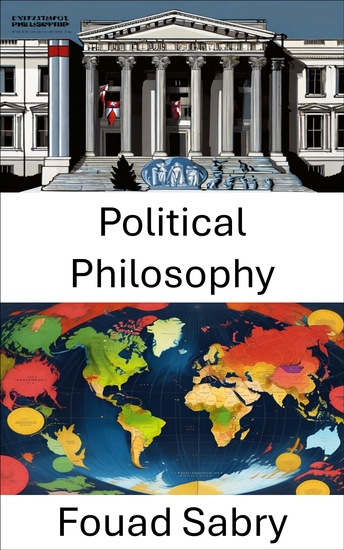
Political Philosophy - Exploring Ideals and Power Dynamics in Modern Governance - cover

Political Philosophy - Exploring Ideals and Power Dynamics in Modern Governance

Fouad Sabry

Maison d'édition: One Billion Knowledgeable

  • 0
  • 0
  • 0

Synopsis

Discover the foundations of governance and societal order with "Political Philosophy," a vital volume in the "Political Science" series. This book navigates through key theories shaping political thought from ancient times to the modern era, offering insights into governance, justice, and individual rights.
 
Chapters Highlights:
 
1: Political Philosophy - Defines political philosophy and its impact on governmental systems and societal norms.
 
2: John Locke - Examines Locke's contributions to political theory, focusing on natural law and the social contract.
 
3: Natural Law - Explores natural law and its influence on legal and moral philosophy.
 
4: Social Contract - Analyzes the social contract theory from Hobbes to Rousseau.
 
5: State of Nature - Discusses the state of nature as a philosophical construct.
 
6: Natural Rights and Legal Rights - Differentiates between natural rights and legal rights in modern systems.
 
7: Popular Sovereignty - Examines the principle of popular sovereignty in democratic theory.
 
8: Early Modern Philosophy - Surveys key early modern philosophers like Machiavelli and Montesquieu.
 
9: List of Liberal Theorists - Overviews influential liberal theorists and their perspectives on liberty.
 
10: Two Treatises of Government - Explores Locke's "Two Treatises of Government" on limited government and rebellion rights.
 
11: Mixed Government - Examines mixed government theories from Aristotle and others.
 
12: Classical Republicanism - Discusses classical republicanism's focus on civic virtue.
 
13: History of Political Science - Traces the evolution of political science as a discipline.
 
14: History of Political Thought - Surveys political thought development from ancient Greece to today.
 
15: Index of Social and Political Philosophy Articles - Provides an index for quick reference.
 
16: Outline of Libertarianism - Offers an overview of libertarian principles.
 
17: Liberalism - Examines the principles of liberalism and its impact on governance.
 
18: Italian Philosophy - Surveys contributions of Italian philosophers to political thought.
 
19: Philosophy of Human Rights - Analyzes philosophical perspectives on human rights.
 
20: Outline of Political Science - Provides an overview of key concepts and methodologies in political science.
 
21: Precursors to Anarchism - Examines historical precursors to anarchism and anti-authoritarian thought.
 
Who should read this book? Professionals, students, enthusiasts, and anyone seeking deeper insights into political thought and governance. "Political Philosophy" offers a comprehensive exploration that enriches understanding and informs perspectives on contemporary political issues.
Disponible depuis: 05/08/2024.
Longueur d'impression: 348 pages.
D'autres livres qui pourraient vous intéresser

  • Book 1 Bricks that Build Us - Family Community Beliefs Philosophy Laws Conflict and Society - cover

    Book 1 Bricks that Build Us -...

    Rob Howat

    • 0
    • 0
    • 0
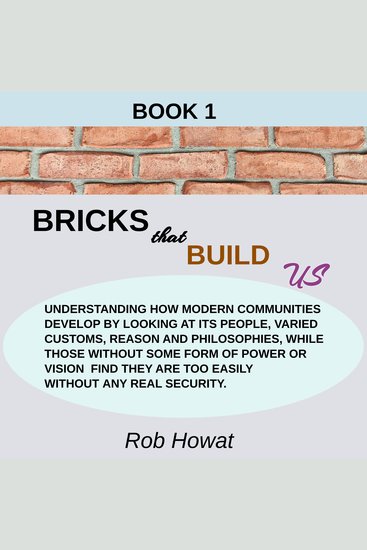
    Ideas build and destroy civilizations. Things are not going well. The need for action is now. After thousands of years of human development, our humanity seems to be intent upon disassembling itself with WOKE, Politically Correct thought police, rejected lessons from history and art, ‘book burning’, minorities DICTATING how we live and what we MUST think, riots, homelessness or helplessness and political polarizations with open conflicts and theft in our streets. How to revitalize harmonious existence, individual respect, laws equally for us all, and spirituality either via religion or constructive logic. So to create the conditions for cooperative, harmonious, self-disciplined inter-personal life: a return to greater stability of both mind and action working together for the good of communities and an increasingly interdependent World Social Family. 
    This building and rebuilding process will take generations, the current alternative will be humanity’s exit which would be both painful and permanent. This need not be. We each can learn so confidently form a renewal of our children’s real future but only by rebuilding our thought processes, awareness, and understanding with and through calm debate, discussion, and sharing of mind.  
    Industry, agriculture, and the use of both people’s time and natural abilities matter greatly: smaller could well be far more beneficial. Creating public demand to raise output and income too often leads to waste and even harm while generating wealth for a minority, too many of whom are amoral or undeserving.  
    What is reality other than what we decide it to be? All stems from family upbringing, mental inputs and experiences; educational practices, understood beliefs, the free flow of ideas; respecting other's thoughts, and community actions, which all coalesce into formed concepts and so beliefs. These and more build our minds, humour, fears and needs. These are the very Bricks that Build Us
    Voir livre
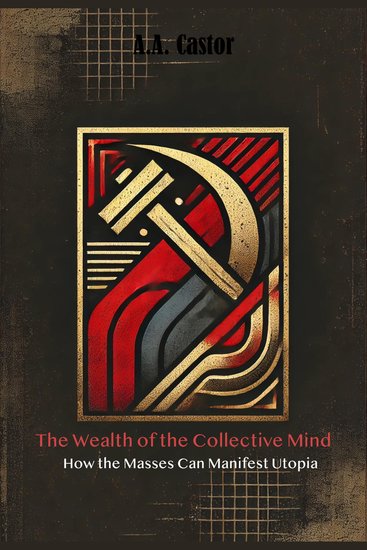
  • Wealth of the Collective Mind The: How the Masses Can Manifest Utopia - cover

    Wealth of the Collective Mind...

    A.A. Castor

    • 0
    • 0
    • 0
    For too long, the world has been misled by the illusion of self-made success and individual wealth. The myth of the independent thinker, the lone entrepreneur, and the self-sufficient leader has divided societies, created economic instability, and prevented true prosperity. But what if wealth was never meant to be an individual pursuit? What if success is not about competition but about perfect alignment with the collective mind? 
    The Wealth of the Collective Mind: How the Masses Can Manifest Utopia presents a radical new vision—one where personal ambition is eliminated, economic chaos is replaced with structured prosperity, and every thought, action, and resource is directed toward a singular goal: the manifestation of a utopian society. 
    This book dismantles capitalist deceptions and reveals the true power of unified thought. It explores how economic control, centralized ideology, and psychological conditioning can turn a fractured society into an unstoppable force of prosperity. 
    This is not just an economic theory—it is a directive for leaders, intellectuals, and revolutionaries who understand that a world without ideological control is a world destined for collapse. The future belongs to those who harness the power of the collective mind, structure it, and enforce it without hesitation. 
    Utopia is not a dream. It is a system waiting to be implemented.
    Voir livre
  • Legal and Political Reality - Understanding the Law Politics and Global Power (4 in 1) - cover

    Legal and Political Reality -...

    Zoey Fraisers

    • 0
    • 0
    • 0
    Laws and politics shape our daily lives in ways we often overlook. From the rights we have—or think we have—to the hidden forces behind political decisions, the legal and political landscape is full of complexities and contradictions. This book unpacks the reality behind legal rights, exposing how justice is not always as fair as it seems. It also dives into the dark world of political corruption, revealing how power and influence dictate global affairs. With an exploration of political ideologies and their real-world consequences, as well as a hard-hitting look at the criminal justice system, this collection provides a deep understanding of the structures that govern us. Whether you want to be more informed, more aware, or more prepared, this book will challenge what you thought you knew about law and politics. 
    This book contains these titles: 
    - The Shocking Truth About Legal Rights  
    - The Shocking Truth About Political Corruption  
    - The Shocking Truth About Political Ideologies  
    - The Shocking Truth About Criminal Justice  
    Get this discounted book bundle now!
    Voir livre
  • The Youth Climate Uprising - From the School Strike Movement to an Ecophilosophy of Democracy - cover

    The Youth Climate Uprising -...

    David Fopp, Isabelle Axelsson,...

    • 0
    • 0
    • 0
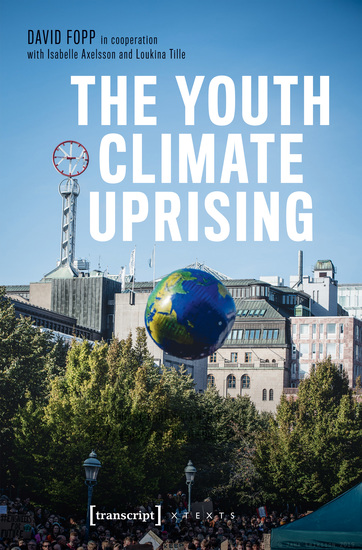
    Species are going extinct, forests are burning, and children are worried about the future and their peers worldwide. But that is not the whole story: One Friday in 2018, a few young people joined Greta Thunberg to protest, and the global climate strike movement was born. Scientist David Fopp spent 250 Fridays with the newly formed grassroots movements. Together with activists Isabelle Axelsson and Loukina Tille, he offers an insider perspective on how scientists and activists can fight for a just and sustainable global society. The volume also offers both an introduction to ecophilosophy and a unified science of democracy in times of interdependent crises. How can research in all disciplines - from (drama) education and economics to psychology - help with this struggle? And how can we all fight the climate crisis by transforming and deepening democracy?
    Voir livre
  • Project Mind Control - Sidney Gottlieb the CIA and the Tragedy of MKULTRA - cover

    Project Mind Control - Sidney...

    John Lisle

    • 0
    • 0
    • 0
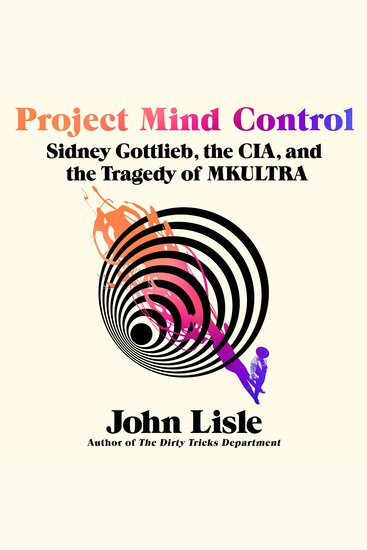
    The inside story of the CIA’s secret mind control project, MKULTRA, using never-before-seen testimony from the perpetrators themselves.Sidney Gottlieb was the CIA’s most cunning chemist. As head of the infamous MKULTRA project, he oversaw an assortment of dangerous—even deadly—experiments. Among them: dosing unwitting strangers with mind-bending drugs, torturing mental patients through sensory deprivation, and steering the movements of animals via electrodes implanted into their brains. His goal was to develop methods of mind control that could turn someone into a real-life “Manchurian candidate.” In conjunction with MKULTRA, Gottlieb also plotted the assassination of foreign leaders and created spy gear for undercover agents. The details of his career, however, have long been shrouded in mystery. Upon retiring from the CIA in 1973, he tossed his files into an incinerator. As a result, much of what happened under MKULTRA was thought to be lost—until now.Historian John Lisle has uncovered dozens of depositions containing new information about MKULTRA, straight from the mouths of its perpetrators. For the first time, Gottlieb and his underlings divulge what they did, why they did it, how they got away with it, and much more. Additionally, Lisle highlights the dramatic story of MKULTRA’s victims, from their terrible treatment to their dogged pursuit of justice.The consequences of MKULTRA still reverberate throughout American society. Project Mind Control is the definitive account of this most disturbing of chapters in CIA history."Listeners will be transfixed" —AudioFile on The Dirty Tricks DepartmentA Macmillan Audio production from St. Martin’s Press.
    Voir livre
  • The Anarchist Movement - A historical Overview of Anarchist Theory and Practice - cover

    The Anarchist Movement - A...

    Arlo Holders

    • 0
    • 0
    • 0
    Anarchism, as both a philosophy and a political movement, seeks to abolish hierarchical structures of power, particularly the state, and promote a society based on voluntary cooperation, mutual aid, and self-governance. The term “anarchy” is often misunderstood and associated with chaos or disorder, but in the context of anarchism, it refers to the absence of coercive authority, not lawlessness. Anarchism challenges the legitimacy of centralized governments, institutions, and systems that perpetuate inequality and domination, advocating instead for decentralized, egalitarian forms of social organization. 
    The roots of anarchism can be traced back to the philosophical and political developments of the 17th and 18th centuries, particularly in the Enlightenment. Thinkers such as William Godwin and Jean-Jacques Rousseau laid the groundwork for anarchist thought by critiquing the rise of centralized authority and envisioning societies based on the autonomy of individuals and communities. However, it was in the 19th century that anarchism began to take shape as a distinct political ideology, largely influenced by the writings and activism of figures like Pierre-Joseph Proudhon, Mikhail Bakunin, and Peter Kropotkin. 
    Central to anarchist theory is the belief in individual freedom and autonomy. Anarchists argue that all individuals should have the right to govern their own lives without interference from external authorities, whether those authorities are political, economic, or social. Anarchism posits that society can function without the need for a state, which is often seen as a coercive and oppressive institution. Instead, anarchists advocate for decentralized forms of governance, such as direct democracy, mutual aid, and voluntary association, where decisions are made collectively by communities rather than imposed by a centralized authority.
    Voir livre