Begleiten Sie uns auf eine literarische Weltreise!
Buch zum Bücherregal hinzufügen
Grey
Einen neuen Kommentar schreiben Default profile 50px
Grey
Jetzt das ganze Buch im Abo oder die ersten Seiten gratis lesen!
All characters reduced
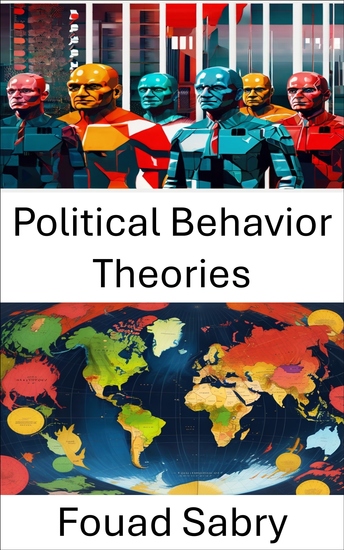
Political Behavior Theories - Rationality Unleashed - cover

Political Behavior Theories - Rationality Unleashed

Fouad Sabry

Verlag: One Billion Knowledgeable

  • 0
  • 0
  • 0

Beschreibung

"Political Behavior Theories: Insights into Political Participation"
 
Explore the dynamics of political behavior with "Political Behavior Theories." This book delves into how personal beliefs and external influences shape political engagement. Here’s a glimpse of what’s inside:
 
Chapters Highlights:
 
- Theories of Political Behavior: Discover frameworks like rational choice and psychological models explaining voting and participation.
 
- Opinion Polls: Understand how polls influence public opinion and electoral results.
 
- Philip Converse: Learn about his groundbreaking work on belief systems.
 
- Voter Turnout: Analyze why some vote while others don’t.
 
- Party Identification: Explore how party loyalty affects behavior.
 
- Political Apathy: Examine why some remain disengaged.
 
- Genopolitics: See how genetics influence political views.
 
- Voting Behavior: Uncover the psychology behind voting choices.
 
- Political Polarization: Investigate how ideological divides impact democracy.
 
- U.S. Political Parties: Study the demographics and evolution of the Democratic and Republican parties.
 
- Political Campaigns: Dissect campaign strategies from speeches to digital ads.
 
- Hispanic and Latino Americans: Explore their role in politics and policy.
 
- Independent Voters: Understand the motivations of swing voters.
 
- LGBT Demographics: Assess how LGBTQ+ citizens engage politically.
 
- Biology and Political Orientation: Look into the genetic and hormonal factors affecting political views.
 
- Michigan Model: Review this classic framework for political behavior.
 
- Sexism in Elections: Analyze gender bias in American politics.
 
"Political Behavior Theories" is more than a book—it's a valuable resource for deepening your understanding of political dynamics and enhancing your decision-making.
Verfügbar seit: 05.08.2024.
Drucklänge: 276 Seiten.

Weitere Bücher, die Sie mögen werden

  • Charles Before Diana - A King in the Making - cover

    Charles Before Diana - A King in...

    Helen Cathcart

    • 0
    • 0
    • 0
    The eldest son of Queen Elizabeth II and Prince Philip, the Duke of Edinburgh, Prince Charles has been heir to the British throne since he was three years old. 


    In this lively and illuminating account, royal biographer Helen Cathcart charts the first thirty years of Prince Charles's life, from his birth at Buckingham Palace in 1948 and rugby-playing schooldays at Gordonstoun, through his undergraduate years cycling to lectures at Trinity College, Cambridge, and subsequent military career in the Royal Air Force and the Royal Navy. 


    Cathcart reveals a young man of many interests—actor, polo player, cellist, helicopter pilot, and conservationist—and takes the listener behind the scenes of notable events in the Prince's life, including his investiture as Prince of Wales at Caernarfon Castle in 1969 and move to Chevening in 1974, before giving insight into his romantic relationships prior to his marriage to Lady Diana Spencer. 


    Drawing on an extraordinary fund of private material, Charles Before Diana is an intimate portrait of the man behind the Prince—a man with an endearing sense of comedy and a conscientious devotion to duty.
    Zum Buch
  • Holding Onto Air - The Art and Science of Building a Resilient Spirit - cover

    Holding Onto Air - The Art and...

    Michele DeMarco

    • 0
    • 0
    • 0
    A top mental health writer, trauma researcher, and survivor illuminates the dual nature of loss-the science behind it and art of transforming it with a breakthrough book and truly holistic approach. 
     
    After experiencing two rare heart attacks at the age of 33-and a third a decade later, DeMarco knows trauma intimately. Trauma breaks your relationship with time by upending your expectations, fracturing your memories and identity, and destroying your innocence. 
     
    With poignant wisdom and refreshing insight DeMarco explodes traditional myths of resilience and shows what it takes to thrive through any of life's challenges. DeMarco situates meaningful challenge and loss specifically in the context of "lost innocence," and challenges common notions that we can think our way out of despair and back to a "normal" happy life when the unimaginable shatters it. 
     
    Leveraging advances in emotion science, somatic psychology, neuroscience, and trauma, Holding Onto Air brings the body and spirit into the solution, as much as the mind, and so presents a truly integrated, "whole person" approach to recovering from lost innocence and building resilience. It also makes spirit accessible for anyone of any background or belief-or no aligned belief. 
     
    More than a rudimentary map for navigating grief and loss' rocky terrain (with tired tropes and shop-worn strategies), DeMarco offers a unique and trusted guide for an arduous journey every human being will have to face-the realization of evil, pain, or mortality that occurs after a person experiences trauma.
    Zum Buch
  • Hold Please - Stage Managing A Pandemic - cover

    Hold Please - Stage Managing A...

    Richard Hester

    • 0
    • 0
    • 0
    A Broadway Stage Manager's pandemic memoir! 
    March 12, 2020 
    Last night, after weeks of downplaying and ridiculing the virus, we were finally told by our President, that it is, in fact, serious… 
    And so, it began. Broadway shut down. Instead of sitting in a darkened theatre every night watching Jersey Boys, Richard Hester found himself sitting on his sofa glued to the news. Hold, Please chronicles what came next from the particular point of view of a career Broadway stage manager living in Manhattan. Part journal, part blog, these essays attempted to make sense of the crisis and what it was doing to us. 
    What follows is a journey through one of the most fascinating periods in both our cultural and our personal histories. Written with humor and compassion, Hold, Please provides a unique perspective on this time and delivers the most important lesson of all - Hope. 
    “I’ve watched Richard create order out of chaos for years, so it comes as no surprise when he was able to do it again with these beautiful posts. Together they create a powerful reminder of where we’ve been as well as a thoughtful and compassionate guide for moving ahead.” - Bernadette Peters 
    “I am so grateful that Richard wrote all of this down so that I don’t have to remember it myself.” - Patti LuPone  
    “(Hester) describes such experiences in a warm, conversational tone in a book in which his lyrical writing about the natural world adds dimension to humorous stories about working—and not working—from home....Hester interweaves descriptions of living through Covid-19 with stories of his colorful theatrical career…” - Kirkus Reviews
    Zum Buch
  • The Boys of the Dark - A Story of Betrayal and Redemption in the Deep South - cover

    The Boys of the Dark - A Story...

    Robin Gaby Fisher, Michael...

    • 0
    • 0
    • 0
    The harrowing true story of the abuses two boys suffered at a Florida reform school and how they came together fifty years later to confront their attackers. 
     
    “[The Boys of the Dark] reads seamlessly… . . . A worthy exploration of a regrettably long-lasting true-crime nightmare.” —Kirkus Reviews 
     
    Michael O’McCarthy and Robert W. Straley were teens when they were termed “incorrigible youth” by authorities and ordered to attend the Florida School for Boys. They discovered in Marianna, the “City of Southern Charm,” an immaculately groomed campus that looked more like an idyllic university than a reform school. But hidden behind the gates of the Florida School for Boys was a hell unlike any they could have imagined. The school’s guards and administrators acted as their jailers and tormentors. The boys allegedly bore witness to assault, rape, and possibly even murder. 
     
    For fifty years, both men—and countless others like them—carried their torment in silence. But a series of unlikely events brought O’McCarthy, now a successful rights activist, and Straley together, and they became determined to expose the Florida School for Boys for what they believed it to be: a youth prison with a century-long history of abuse. They embarked upon a campaign that would change their lives and inspire others. 
     
    Robin Gaby Fisher, a Pulitzer Prize–winning journalist and author of the New York Times–bestselling After the Fire, collaborates with Straley and O’McCarthy to offer a riveting account of their harrowing ordeal. The book goes beyond the story of the two men to expose the truth about a century-old institution and a town that adopted a Nuremberg-like code of secrecy and a government that failed to address its own wrongdoing. What emerges is a tale of strength, resolve, and vindication in the face of the kinds of terror few can imagine. 
     
    “Haunting and disturbing. The voices of the victims will forever touch my heart. To turn a deaf ear to this type of injustice is to give permission for it to continue. As a people, as a society, we should be outraged.” —Jennifer Thompson, coauthor of Picking Cotton 
     
    “This deeply moving story is highly recommended to readers of heart-wrenching memoirs, 20th-century American studies, or true crime.” —Library Journal
    Zum Buch
  • Habit Forming - Drug Addiction in America 1776-1914 - cover

    Habit Forming - Drug Addiction...

    Elizabeth Kelly Gray

    • 0
    • 0
    • 0
    Habitual drug use in the United States is at least as old as the nation itself. Habit Forming traces the history of unregulated drug use and dependency before 1914, when the Harrison Narcotic Tax Act limited sales of opiates and cocaine under US law. Many Americans used opiates and other drugs medically and became addicted. Some tried Hasheesh Candy, injected morphine, or visited opium dens, but neither use nor addiction was linked to crime, due to the dearth of restrictive laws. After the Civil War, American presses published extensively about domestic addiction. Later in the nineteenth century, many used cocaine and heroin as medicine. As addiction became a major public health issue, commentators typically sympathized with white, middle-class drug users, while criticizing such use by poor or working-class people and people of color. When habituation was associated with middle-class morphine users, few advocated for restricted drug access. By the 1910s, as use was increasingly associated with poor young men, support for regulations increased. In outlawing users' access to habit-forming drugs at the national level, a public health problem became a larger legal and social problem, one with an enduring influence on American drug laws and their enforcement.
    Zum Buch
  • Give Me a Break - How I Exposed Hucksters Cheats and Scam Artists and Became the Scourge of the Liberal Media - cover

    Give Me a Break - How I Exposed...

    Anonym

    • 0
    • 0
    • 0
    Ballooning government? Millionaire welfare queens? Tort lawyers run amok? A $330,000 outhouse, paid for with your tax dollars? John Stossel says, ""Give me a break."" 
    When he hit the airwaves thirty years ago, Stossel chased snake-oil peddlers, rip-off artists, and corporate thieves, winning the applause of his peers.  
    But along the way, he noticed that there was something far more troublesome going on: While the networks screamed about the dangers of coffee pots, worse risks were ignored.   
    In Give Me a Break, Stossel explains how ambitious bureaucrats, intellectually lazy reporters, and greedy lawyers make your life worse even as they claim to protect your interests. Taking on such sacred cows as the FDA, the War on Drugs, and scare-mongering environmental activists -- and backing up his trademark irreverence with careful reasoning and research -- he shows how the problems that government tries and fails to fix can be solved better by the extraordinary power of the free market. 
    He traces his journey from cub reporter to 20/20 co-anchor, revealing his battles to get his ideas to the public, his struggle to overcome stuttering, and his eventual realization that, for years, much of his reporting missed the point. 
    Stossel concludes the book with a modest proposal for change. It's a simple plan in the spirit of the Founding Fathers to ensure that America remains a place ""where free minds -- and free markets -- make good things happen.""
    Zum Buch